
 AU
AU CA
CA NZ
NZ UK
UK US
US IND
IND

 Share
Share
 X (Formerly Twitter)
 Whatsapp
 Facebook
 LinkedIn
 Telegram
 Email This Article
 Copy Link
 Summarize with AI
 Chat GPT
 Perplexity
Highlights
- ATO’s 2022–25 Digital Strategy targets real-time, event-based GST/PAYG reporting.
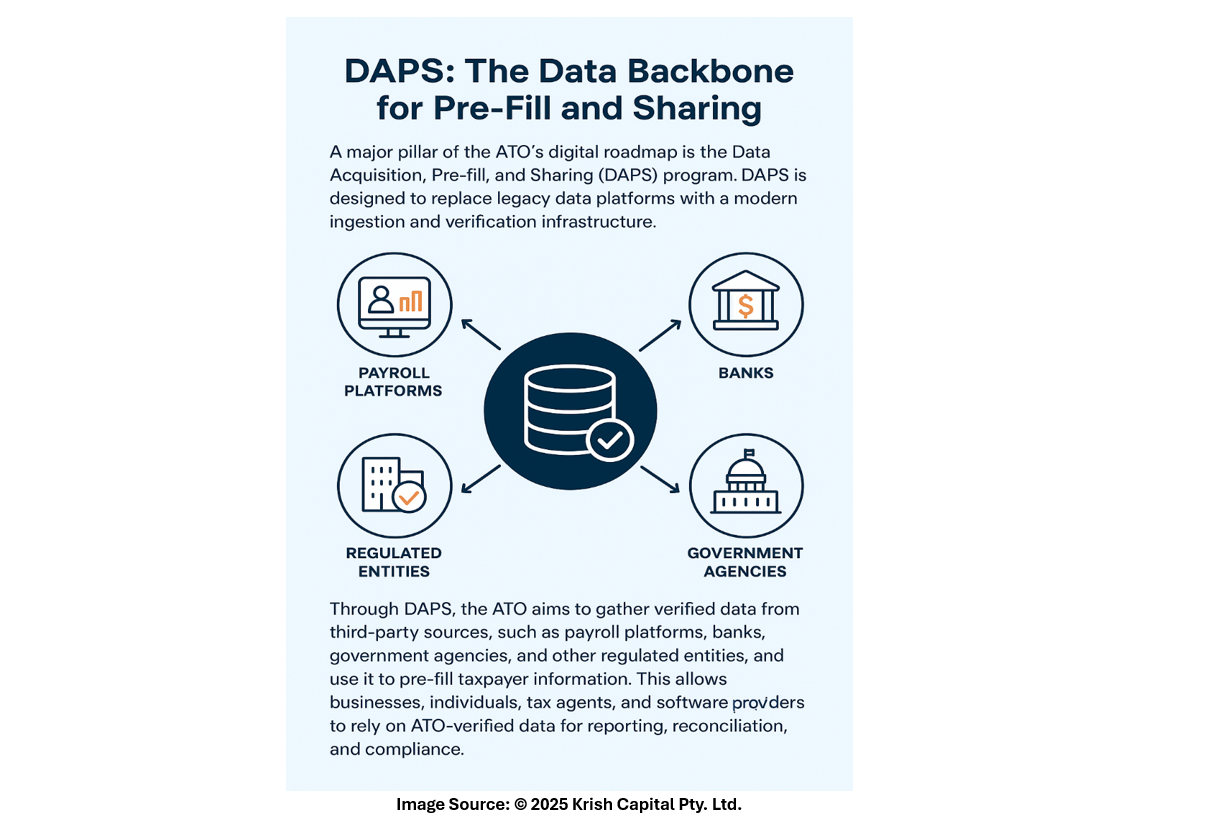
- DAPS will centralize data ingestion to support verified pre-fill for taxpayers and software.
- eInvoicing using the Peppol standard is becoming the backbone for automated GST flows.
- Expanded pre-fill now uses payroll, STP, bank, and government data for real-time accuracy.
- Businesses must adopt compliant DSPs and Peppol-ready software to stay aligned with ATO automation.
The Australian Taxation Office (ATO) is steering the national tax system toward a “right-time” reporting environment rather than periodic lodgements. The ATO’s 2022–25 Digital Strategy sets the direction for real-time monitoring of tax obligations such as GST and PAYG withholding. This represents a shift from retrospective reporting toward continuous compliance, where data flows directly from business systems to the ATO as events occur.
DAPS: The Data Backbone for Pre-Fill and Sharing
eInvoicing: The Transactional Backbone
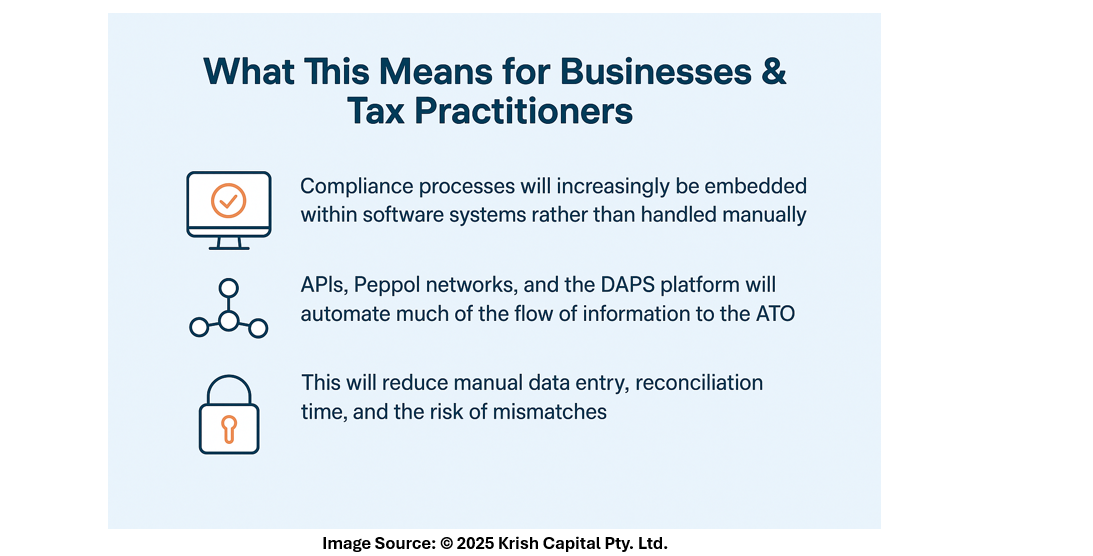
eInvoicing, built on the international Peppol standard, is emerging as the transactional backbone for real-time GST compliance. The ATO, as the Peppol Authority for Australia, is pushing widespread adoption so invoice data can flow securely and automatically between accounting systems. Structured, machine-readable invoice data reduces manual processing errors and supports automated GST calculations and future event-based reporting. As government adoption accelerates, private-sector participation is expected to scale rapidly.
Pre-Fill and Real-Time Payroll / PAYG Integration
The ATO’s existing pre-fill capabilities already allow millions of taxpayers to lodge with verified information sourced directly from employers, banks, health funds and government agencies. Single Touch Payroll (STP) plays a crucial role by feeding PAYG withholding and payroll details to the ATO in near real time. This data now appears in pre-filled tax returns and activity statement labels. As DAPS and eInvoicing mature, pre-fill is expected to expand further into GST and transactional reporting, offering more accuracy and reducing administrative workload for businesses and advisers.
Challenges and Considerations
Despite the benefits, digital transformation presents challenges. Smaller businesses may face cost and readiness barriers when transitioning to compliant eInvoicing or DAPS-ready solutions. The shift to real-time data increases the need for strong internal controls, reliable data governance, and enhanced cybersecurity. Tax professionals and software vendors will need to continually adapt as the ATO updates requirements and expands automation capabilities.
Future Outlook
As the ATO continues implementing its digital strategy, Australia is moving toward an ecosystem where GST, PAYG and other obligations may eventually be captured and processed automatically. The combination of eInvoicing, DAPS and expanded pre-fill services sets the foundation for a fully event-based compliance model. This may significantly reduce administrative effort, improve reporting accuracy and pave the way for more seamless interactions between taxpayers, software systems and the ATO.


 Mar 10, 2026




 Please wait processing your request...