
 AU
AU CA
CA NZ
NZ UK
UK US
US IND
IND

 Share
Share
 X (Formerly Twitter)
 Whatsapp
 Facebook
 LinkedIn
 Telegram
 Email This Article
 Copy Link
 Summarize with AI
 Chat GPT
 Perplexity
_03_17_2026_05_03_36_433787.png)
Highlights
- Commodity supercycles are driven by long-term structural shifts in global demand and supply imbalances
- Funds gain exposure through direct commodities, resource equities, and thematic sector allocations
- Diversification benefits arise as commodities often behave differently from equities and bonds
- Risk management remains critical due to volatility, timing challenges, and external macro factors
A commodity supercycle refers to an extended period—often lasting a decade or more—during which prices of raw materials rise above their long-term trend. These cycles are typically driven by structural shifts in global demand, supply constraints, and macroeconomic forces. For investors, especially institutional funds, supercycles present both opportunities and risks that require strategic positioning.
Understanding the Drivers
Commodity supercycles are not random. They are usually triggered by large-scale economic transformations. Industrialisation, urbanisation, and technological transitions tend to increase demand for key resources such as metals, energy, and agricultural products.
For instance, rapid infrastructure development or the global shift toward clean energy can significantly increase demand for copper, lithium, and rare earth elements. At the same time, supply often struggles to keep pace due to long project development timelines, regulatory hurdles, and capital constraints. This imbalance between supply and demand creates sustained upward pressure on prices.
Macroeconomic factors also play a role. Inflationary environments, currency fluctuations, and geopolitical tensions can further amplify commodity price movements, making them attractive to funds seeking diversification.
Fund Strategies in a Supercycle
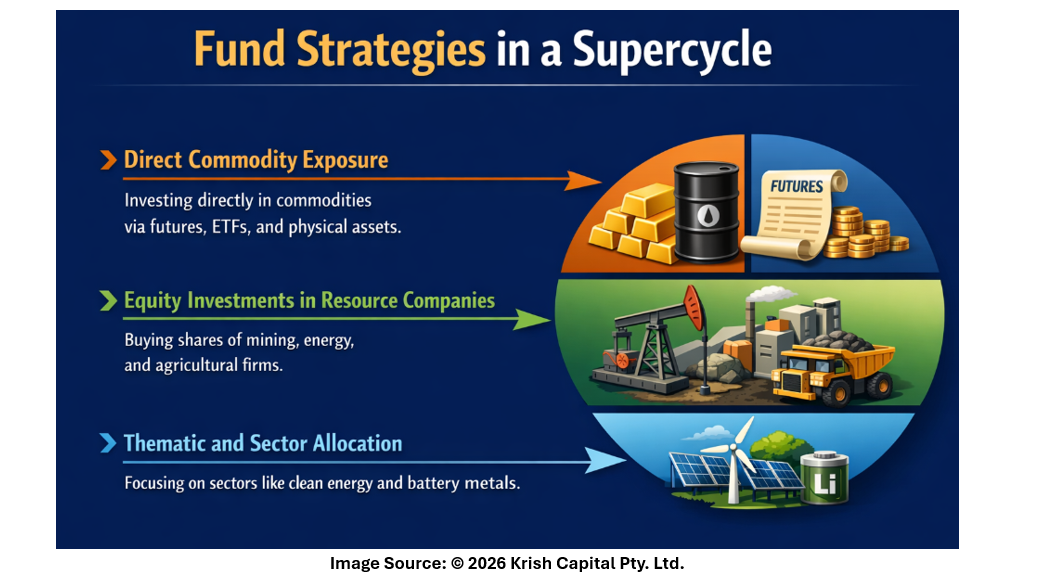
Investment funds adopt a range of strategies to capitalise on a commodity supercycle. These approaches vary depending on risk tolerance, investment horizon, and market outlook.
- Direct Commodity Exposure
Some funds invest directly in commodities through futures contracts, exchange-traded products, or physical holdings. This allows them to benefit from price movements without exposure to company-specific risks. However, such strategies require careful management due to volatility and rollover costs in futures markets. - Equity Investments in Resource Companies
A common approach is investing in mining, energy, and agricultural companies. These equities often provide leveraged exposure to commodity prices, meaning their valuations can rise faster than the underlying commodity during a bull cycle. Funds typically focus on companies with strong balance sheets, scalable assets, and low production costs. - Thematic and Sector Allocation
Funds increasingly adopt thematic strategies aligned with long-term demand trends. For example, the energy transition has led to increased allocations toward battery metals and renewable energy supply chains. This approach allows investors to align portfolios with structural growth drivers rather than short-term price movements.
Role of Portfolio Diversification
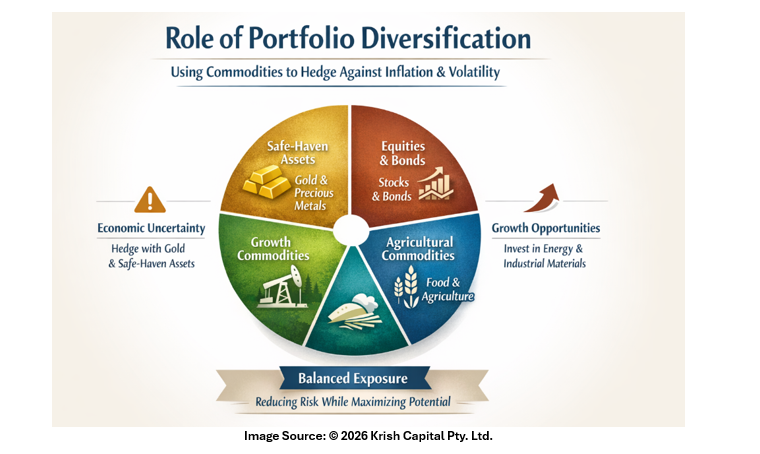
Commodities often behave differently from traditional asset classes such as equities and bonds. As a result, they can act as a hedge against inflation and market volatility. Funds use commodities to diversify portfolios and reduce overall risk.
During periods of economic uncertainty, commodities like gold may attract safe-haven flows, while industrial commodities respond more to growth expectations. By balancing exposures across different commodities, funds aim to achieve stability while still capturing upside potential.
Risk Management Considerations
While supercycles can deliver significant returns, they are not without risks. Commodity markets are inherently volatile, influenced by factors such as weather events, geopolitical developments, and policy changes.
Funds manage these risks through diversification, hedging strategies, and active monitoring of market conditions. Position sizing is also critical—overexposure to a single commodity or sector can lead to substantial losses if market conditions reverse.
Another key consideration is timing. Entering too late in a supercycle can reduce potential returns, as prices may already reflect peak optimism. Funds therefore rely on macroeconomic indicators, supply-demand analysis, and long-term forecasts to guide their decisions.
Long-Term Outlook
The concept of a commodity supercycle is closely tied to global economic evolution. Current trends such as decarbonisation, electrification, and infrastructure development suggest sustained demand for certain resources. However, technological advancements and recycling efforts could eventually ease supply pressures.
For funds, the challenge lies in distinguishing between short-term price rallies and genuine structural shifts. Successful positioning requires a combination of macro insight, sector expertise, and disciplined risk management.
Conclusion
Commodity supercycles represent periods of structural change in global resource demand. Funds position themselves through a mix of direct exposure, equity investments, and thematic strategies, while maintaining diversification and risk controls. Understanding the underlying drivers is essential for navigating these cycles effectively.


 Mar 06, 2026




 Please wait processing your request...