
 CA
 NZ
 UK
 US
 IND

 AU

 Share
 X (Formerly Twitter)
 Whatsapp
 Facebook
 LinkedIn
 Telegram
 Email This Article
 Copy Link
 Summarize with AI
 Chat GPT
 Perplexity
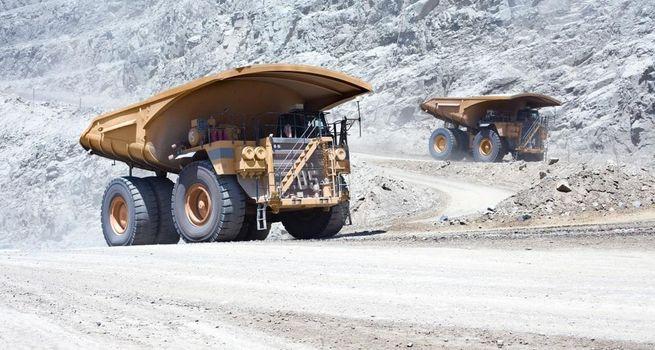
The Australian share market is intrinsically linked to the resources sector, and right now, ASX Mining stocks are attracting significant attention as global Commodity markets shift. We are currently navigating a highly complex, interconnected macroeconomic landscape characterised by fluctuating Inflation prints, shifting Interest Rate expectations, and persistent global growth concerns. Consequently, commodity markets are experiencing periods of rapid adjustment, making the mining sector a primary focal point for investors assessing their long-term portfolio allocations and researching new market opportunities.
These shifting dynamics are playing out across a wide spectrum of essential materials. Iron ore, the traditional powerhouse of the Australian export economy, continues to navigate the profound complexities of China’s broader economic transition. Global markets are carefully balancing the impact of traditional Chinese infrastructure and Manufacturing spending against the well-documented, ongoing challenges within the country's highly leveraged property sector. As China dictates the vast majority of seaborne iron ore Demand, any shifts in its domestic policy or economic growth targets create immediate ripples throughout the ASX mining landscape. This dynamic prompts investors to closely monitor the major companies exposed to this vital bulk commodity.
Simultaneously, copper is increasingly viewed through the lens of long-term structural Supply deficits. Driven by the global energy transition, the widespread electrification of transport, and massive international grid expansions, the demand outlook for copper is evolving rapidly. However, finding, permitting, and developing new, high-grade copper deposits is becoming increasingly difficult and highly Capital-intensive. This potential long-term mismatch between future supply and demand means that ASX mining stocks with significant copper Assets are frequently researched by investors looking to position their portfolios for the decades ahead.
Gold has also firmly reaffirmed its traditional role in global financial markets. With investors watching the precious metal as a potential safe-haven asset amid rising geopolitical tensions, sticky inflation data, and ongoing uncertainty around Central Bank Monetary Policy, gold miners have seen renewed interest. When fiat currencies face inflationary pressures, or when global risk sentiment deteriorates, gold historically attracts significant capital. Consequently, ASX gold producers are being closely monitored by those seeking defensive portfolio characteristics combined with direct operational Leverage to the underlying gold price.
Furthermore, commodities like aluminium and manganese remain absolutely essential components of global manufacturing, infrastructure, and modern technology. These materials are highly sensitive to global industrial output and consumer demand. At the same time, the broader basket of energy transition metals continues to draw intense focus. As the world aims to decarbonise, the raw materials required for electric vehicles, battery storage, and renewable energy infrastructure are under the spotlight, causing significant shifts in how capital is allocated within the broader resources sector.
However, researching the resources sector requires a highly cautious and balanced approach. Mining is an inherently cyclical industry. When you combine the cyclical nature of commodity pricing with the ongoing, industry-wide challenges of elevated operational costs, labour shortages, and shifting global growth forecasts, it becomes crystal clear why careful, level-headed analysis is essential. The shifting macroeconomic landscape means that ASX mining stocks may appeal to investors looking to align their portfolios with these powerful industrial themes, provided they deeply understand the associated Volatility and structural risks.
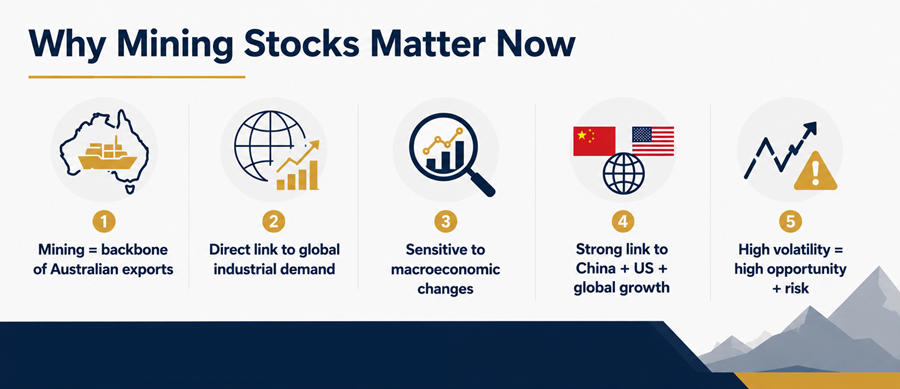
Image source: © 2026 Krish Capital Pty. Ltd.
Stock Breakdown Section
Below is a highly detailed breakdown of five major ASX mining stocks that investors are frequently watching as commodity markets shift. Each company offers a distinct type of market exposure, operational scale, and underlying risk profile. These are not guaranteed buys, but rather prominent companies for Market Participants to research.
A. BHP Group (ASX:BHP)
BHP Group, often referred to as "The Big Australian," frequently holds the title of the largest company on the ASX by market Capitalization. It is a massive, globally diversified resources giant that operates a sprawling portfolio of long-life, low-cost assets. The core pillars of BHP's current operational portfolio are its world-class iron ore operations in Western Australia, its massive, highly strategic copper assets in South America and South Australia, its metallurgical coal operations in Queensland, and a burgeoning, heavily funded presence in the global potash market.
Investors may watch BHP because its sheer global scale and deep Liquidity make it a foundational stock for many institutional and retail portfolios. The stock may offer exposure to mining-sector themes driven by broad global industrialization. The company’s Pilbara iron ore operations are highly automated, vastly efficient, and sit at the very bottom of the global cost curve, generating immense free Cash Flow in almost any price environment. This legendary cash generation has historically supported a strong Balance Sheet and robust, variable Dividend payouts, which is exactly why income-focused investors are often monitoring the stock closely.
Furthermore, investors may be watching BHP for its deliberate, highly publicised strategic pivot toward long-term macroeconomic themes. The company is actively expanding its global copper portfolio, driven by the underlying thesis that global electrification, massive grid upgrades, and electric vehicle adoption will create structural, long-term supply deficits for the metal. Additionally, its massive, multi-billion-dollar Investment in the Jansen potash project in Canada aims to provide the company with long-term exposure to global agricultural demand, population growth, and food security themes, offering a potentially non-cyclical Revenue stream entirely distinct from traditional industrial metals.
However, watching BHP also requires a clear, objective understanding of its risks. The company remains heavily and undeniably dependent on iron ore for a massive portion of its underlying Earnings, making it acutely sensitive to iron ore price weakness and any structural slowdown in Chinese infrastructure and property sectors. Cost inflation is another persistent, grinding headwind, with rising labour, diesel, and energy costs continuously pressuring operating margins across its global footprint. Furthermore, executing complex mega-projects like Jansen introduces significant Capital Expenditure risks and the potential for costly delays. Finally, commodity cyclicality remains a constant threat; if the global economy enters a severe Recession, BHP's diverse suite of industrial commodities will inevitably face severe pricing pressure.
B. Rio Tinto (ASX:RIO)
Rio Tinto is another colossal, globally diversified mining corporation that shares many overarching characteristics with BHP but possesses its own highly distinct operational footprint and strategic direction. Operating worldwide, Rio Tinto’s portfolio provides heavy, tier-one exposure to iron ore through its highly integrated network of mines, rail, and deep-water ports in Western Australia. However, it strongly differentiates itself as a major global producer of aluminium and copper, and it has been making deliberate, strategic moves into lithium-related themes to capture future Market Share in the electric vehicle battery supply chain.
Investors may monitor Rio Tinto for its exceptional cash-generation capabilities, global Diversification, and massive production scale. The stock could be worth watching for investors seeking exposure to both traditional bulk commodities and the accelerating energy transition. While its Pilbara iron ore operations act as the primary financial engine, the company is pouring immense capital into expanding its copper profile, most notably through the highly complex underground expansion of the Oyu Tolgoi copper-gold mine in Mongolia. Rio is also a key, highly active player in the development of the Simandou iron ore project in Guinea, which aims to bring vast quantities of extremely high-grade iron ore to the seaborne market, highly suitable for green-steel manufacturing.
Furthermore, Rio Tinto's legacy aluminium Business, which frequently utilizes renewable hydroelectric power in Canada, and its strategic investments in lithium projects in South America, mean the stock may appeal to investors looking for a diversified giant attempting to actively position itself for a decarbonised global economy. Like its major peers, Rio Tinto’s capacity to generate massive free cash flow has made it a traditional favourite for dividend-watching investors assessing their cyclical income streams.
The risks associated with Rio Tinto, however, are substantial and complex. The company faces profound risks tied directly to violent commodity price swings and global industrial demand. Because iron ore generates the bulk of its free cash flow, any significant downturn in Chinese steel demand poses a major, immediate threat to group earnings. Project execution is another critical, high-stakes risk; complex international developments like Simandou and Oyu Tolgoi are exceptionally capital-intensive and heavily exposed to geopolitical, logistical, and severe engineering challenges. Regulatory and sovereign issues are also elevated due to Rio's widespread operations in developing nations. Additionally, the company must manage severe cost pressures and navigate increasingly stringent global environmental, social, and governance (ESG) expectations to maintain its vital social license to operate.
C. Northern Star Resources (ASX:NST)
Northern Star Resources occupies a very different space in the resources landscape compared to the diversified bulk miners. It is a premier, large-cap ASX gold stock and has rapidly grown through highly successful acquisitions and intense organic development to become one of the largest pure-play gold miners globally. Operating exclusively in highly safe, tier-one jurisdictions—namely Western Australia and North America—the company boasts a portfolio of world-class assets, highlighted heavily by its ownership of the famous Kalgoorlie Consolidated Gold Mines (KCGM) Super Pit.
Northern Star may appeal to investors looking specifically for pure-play precious metals exposure. When inflation remains sticky, global geopolitical uncertainty rises, or interest rate expectations shift abruptly, gold miners frequently come onto the radar of macro-focused investors. Investors may be monitoring Northern Star because of its highly significant production scale and its intense operational leverage to the Australian dollar gold price. Because mining costs are relatively fixed in the short term, a rising spot gold price can rapidly expand the profit margins of an unhedged producer like Northern Star.
The company has a clear, heavily funded strategy focused on aggressively expanding its production profile, particularly through the ongoing, multi-billion-dollar mill expansion at KCGM. This major Capital Project aims to materially increase ore throughput and strongly drive down unit costs over the long term, potentially transforming the asset into one of the most efficient large-scale gold operations in the world. For investors researching potential safe-haven assets, or those seeking to monitor companies poised for significant organic expansion, Northern Star represents a highly liquid, large-cap gold vehicle on the ASX that could be worth watching.
However, the primary, inescapable risk for Northern Star is the inherent volatility of the gold price itself. If global risk sentiment strongly improves, inflation drops rapidly to central bank targets, or real interest rates rise sharply, the gold price can fall, which would directly and severely impact Northern Star’s revenues and margins. Furthermore, deep underground and large-scale open-pit gold mining is an incredibly challenging and capital-intensive endeavor. The company faces ongoing mining cost inflation, particularly regarding highly skilled underground mining labour, diesel fuel, and vital heavy consumables. Grade risk—the natural geological reality that the rock mined may contain significantly less gold than anticipated—is a constant, daily operational threat. Any massive production disruptions at its key assets, or significant capital blowouts related to its major mill expansion projects, could severely impact the company's valuation and market standing.
D. South32 (ASX:S32)
South32 was formed in 2015 following a highly successful demerger from BHP, taking with it a diverse portfolio of assets that has since been actively and aggressively reshaped by management. Today, South32 has firmly established itself as a major, globally diversified base-metals and materials stock. Its corporate portfolio is fundamentally different from the iron-ore heavy giants, deliberately focusing instead on alumina, aluminium, metallurgical coal, manganese, copper, silver, zinc, and lead.
South32 could be worth watching for investors specifically researching base metals and energy-transition materials without the overshadowing, dominant influence of bulk iron ore. The company's portfolio is heavily geared toward the vital raw materials required for global infrastructure, advanced manufacturing, massive grid electrification, and renewable energy technologies. For example, aluminium is critical for lightweighting electric vehicles and building solar infrastructure, while manganese, zinc, and copper are absolutely essential industrial building blocks.
Investors may be monitoring South32 for its active Portfolio Management and distinct strategic direction. The company has historically demonstrated a strong willingness to divest non-core or highly carbon-intensive assets while acquiring new, exciting prospects in the base metals space, such as its strategic investment in the Sierra Gorda copper mine in Chile. Additionally, the market is closely watching the complex development of its Hermosa project in the United States, a critical minerals project containing zinc, silver, and battery-grade manganese. The stock may offer deep exposure to cyclical industrial demand, global decarbonisation themes, and a geographically diverse operational footprint.
However, the fundamental risk for South32 lies heavily in cyclical demand. Base metals and industrial materials are highly sensitive to global economic growth and manufacturing output; a synchronized global recession typically crushes demand and spot prices for aluminium, zinc, and manganese. South32 also operates a highly complex, globally dispersed portfolio of assets, spanning Australia, Southern Africa, and the Americas, which significantly increases the likelihood of unpredictable operational disruptions caused by severe weather, complex logistics, or localized power grid issues. Cost inflation is heavily impacting the intensely energy-heavy aluminium smelting and alumina refining processes. Furthermore, investors must carefully watch project execution risks as the company attempts to bring complex new base metals operations online to replace its naturally depleting older assets.
E. Deterra Royalties (ASX:DRR)
Deterra Royalties offers a fundamentally unique, highly specialised business model within the ASX mining sector. Rather than physically operating heavy mines, managing massive fleets of machinery, and employing thousands of workers, Deterra holds and manages a portfolio of financial Royalty assets. Its absolute cornerstone asset is the Mining Area C (MAC) royalty, which provides the company with a lucrative, ongoing revenue stream based entirely on the massive iron ore production operated by BHP in the Pilbara region.
Deterra Royalties may appeal to investors seeking deep exposure to the mining sector but who deliberately wish to avoid the direct operational headaches and crushing capital cost burdens that traditional mining owner-operators face. A royalty business model aims to safely receive a top-line percentage of revenue linked directly to production volumes and prevailing commodity prices. Crucially, Deterra does not have to fund the diesel, the massive labour wage increases, or the sustaining capital expenditure required to keep the physical mine running. This high insulation from operating cost inflation generally results in incredibly high, robust profit margins.
Investors may watch Deterra because its exceptionally low-overhead corporate model allows it to efficiently pass a very significant portion of its free cash flow back to shareholders as fully franked dividends. The company heavily targets a 100% net profit after tax Payout Ratio. For investors researching a potentially lower-volatility, highly transparent, and income-oriented approach to gaining exposure to tier-one iron ore production, the stock could be worth watching as commodity markets shift.
However, while the royalty model effectively limits direct operating risk, it introduces severe, acute concentration risk. Deterra is currently overwhelmingly dependent on its MAC royalty; therefore, its corporate fortunes are inextricably, entirely linked to the operational decisions made by BHP and the prevailing Spot Price of iron ore. If BHP suddenly decides to alter its production profile, delay an expansion, or curtail output at MAC for any reason, Deterra’s revenue will be directly affected, and the company has absolutely zero operational control to intervene. Furthermore, Deterra faces direct commodity exposure risk—if iron ore prices plummet due to weak China demand, royalty revenues will shrink proportionally. Finally, the company faces significant challenges in diversifying its portfolio, as identifying and successfully acquiring new, high-quality, long-life royalties in a highly competitive alternative-finance market is both expensive and difficult, potentially threatening long-term dividend sustainability if capital is poorly allocated.
Conclusion
The global resources sector is currently undergoing a fascinating, highly complex multi-decade evolution. The ongoing, capital-intensive push for decarbonization, evolving Chinese domestic economic policy, and shifting, deeply unpredictable monetary conditions are fundamentally altering the supply and demand dynamics of iron ore, copper, gold, and diverse base metals. Against this exceptionally complex macroeconomic backdrop, these 5 ASX mining stocks—BHP Group, Rio Tinto, Northern Star Resources, South32, and Deterra Royalties—may be worth watching for investors actively seeking exposure to these powerful, overarching macroeconomic themes.
However, successfully navigating the resources sector requires extreme diligence and a thoroughly objective, highly analytical mindset. Investors must look far beyond the daily, often erratic fluctuations of commodity spot prices and carefully avoid chasing short-term, sensationalist market headlines. Instead, successful, long-term analysis requires a rigorous, unwavering focus on a company’s fundamental balance sheet strength, its exact position on the global cost curve, the strict mathematical sustainability of its dividend policies, the geological quality and lifespan of its underlying assets, and its proven ability to aggressively manage highly complex operational risks.


 Nov 12, 2026





 Please wait processing your request...