
 CA
 NZ
 UK
 US
 IND

 AU

 Share
 X (Formerly Twitter)
 Whatsapp
 Facebook
 LinkedIn
 Telegram
 Email This Article
 Copy Link
 Summarize with AI
 Chat GPT
 Perplexity
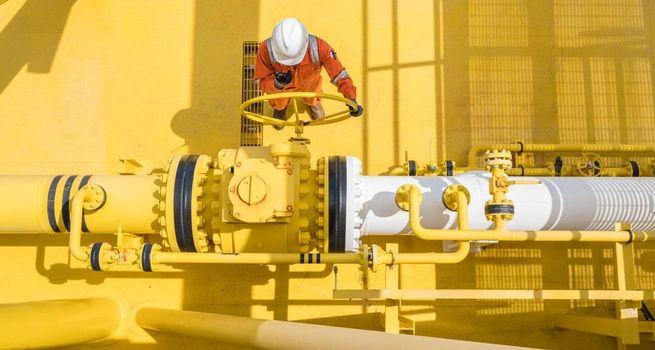
This articles provides detailed company-level analysis of the major ASX-listed oil and gas companies, examining their operational profiles, financial performance, strategic positioning, and investment merits. The coverage spans the full spectrum of the sector, from large-cap integrated producers to small-cap explorers.
1 Woodside Energy Group (ASX:WDS)
Woodside Energy Group is Australia's largest independent oil and gas company by market capitalisation and production volume. The company was formed through the merger of Woodside Petroleum and BHP's petroleum division in June 2022, creating a diversified energy company with a portfolio of world-class LNG, oil, and gas assets across Australia, the Americas, and the Asia-Pacific region. Woodside is dual-listed on the Australian Securities Exchange (ASX:WDS) and the New York Stock Exchange (NYSE: WDS), providing access to both Australian and international investor bases.
In financial year 2025, Woodside delivered record annual production of 198 million barrels of oil equivalent (MMboe), demonstrating the successful integration of the BHP petroleum assets and the ramp-up of new production sources. Full-year sales revenue reached US$12.98 billion, while net profit after tax was US$2.72 billion. The company declared dividends totalling approximately A$1.65 per share for the full year, representing a fully franked dividend yield of approximately 4.80 percent at the March 2026 share price of A$34.47. Woodside's dividend policy targets a payout ratio of 50 to 80 percent of underlying net profit, providing investors with a relatively predictable income stream that is directly leveraged to oil and LNG prices.
Woodside's asset portfolio is anchored by its Australian LNG operations, which include the North West Shelf (NWS) joint venture, one of the world's longest-operating LNG projects, and the wholly owned Pluto LNG facility on the Burrup Peninsula in Western Australia. The company also holds a 25 percent interest in the Sangomar oil development offshore Senegal, which achieved first oil in 2024, and significant positions in the Gulf of Mexico through assets acquired in the BHP merger. The Scarborough gas project, currently under development, represents Woodside's most significant near-term growth initiative, with first LNG expected from the Pluto Train 2 expansion around 2026 to 2027.
The strategic outlook for Woodside is shaped by its positioning as a premium LNG producer in an era of elevated geopolitical risk. The company's long-term LNG contracts provide revenue visibility and downside protection, while spot market exposure allows Woodside to capture upside during periods of price strength. The company has also invested in new energy technologies, including hydrogen and carbon capture, positioning itself for the energy transition while maintaining its core fossil fuel earnings base. Key risks include project execution risk on Scarborough, regulatory challenges in Australia, and the potential for a sustained decline in oil and LNG prices if geopolitical tensions ease.
2 Santos Limited (ASX:STO)
Santos Limited is Australia's second-largest oil and gas producer, with operations spanning the full value chain from exploration and production through LNG processing and gas marketing. Santos operates across five core asset hubs: the Cooper Basin in South Australia, GLNG in Queensland, Darwin LNG in the Northern Territory, Western Australia, and Papua New Guinea. The company also holds development assets including the Barossa gas-condensate project and the Pikka oil development in Alaska.
Santos reported full-year 2025 production of 88 million barrels of oil equivalent, with underlying net profit after tax of A$898 million, reflecting a 25 percent decline from the prior year due to lower average realised prices. The company's average realised price across its portfolio was US$52.80 per barrel of oil equivalent, a figure that will be substantially higher in 2026 given the surge in oil and LNG prices. Santos has a target gearing range of 20 to 30 percent net debt to net debt plus equity, and the company's balance sheet is well positioned to fund its growth projects while maintaining a progressive dividend policy.
The Barossa gas-condensate project is Santos's most important near-term growth driver. Located approximately 300 kilometres north of Darwin in the Timor Sea, Barossa is a large gas-condensate resource that will provide backfill gas to the existing Darwin LNG facility, extending its operating life by approximately 20 years. The project has faced significant environmental and legal challenges, including a Federal Court ruling in 2023 that invalidated its environmental approval, but Santos has since obtained revised approvals and the project is progressing towards first gas in 2026. When operational, Barossa is expected to produce approximately 800 terajoules per day of gas plus associated condensate.
The Pikka oil development in Alaska represents Santos's most significant international growth opportunity. Acquired through the 2022 acquisition of Oil Search, which had merged into Santos, Pikka is located on the North Slope of Alaska and is being developed with first oil expected in 2026 to 2027. The project has a design capacity of approximately 80,000 barrels per day of light, sweet crude oil, and at current oil prices would generate substantial free cash flow for Santos. Together, Barossa and Pikka are expected to lift Santos's production by 25 to 30 percent from 2024 levels by 2027, transforming the company's earnings profile and cash generation capacity.
3 Karoon Energy (ASX:KAR)
Karoon Energy is a mid-cap international oil and gas exploration and production company listed on the ASX with operations in offshore Brazil, the United States, and Australia. The company's primary producing asset is the Bauna oil field in the Santos Basin offshore Brazil, which was acquired from Petrobras in 2020. Karoon has established itself as a focused, pure-play oil producer with significant leveraged exposure to crude oil prices, making it one of the highest-beta oil stocks on the ASX.
Karoon's Brazilian operations produce approximately 25,000 to 30,000 barrels of oil per day from the Bauna and Patola fields, with production supported by ongoing infill drilling and workover programmes. The company has been evaluating further acquisition opportunities in Brazil's mature basin segment, seeking to replicate its successful Bauna acquisition strategy. Karoon has also secured exploration acreage in the US Gulf of Mexico, diversifying its geographic footprint and providing optionality for future growth. The company pays a modest dividend but is primarily positioned as a growth-oriented oil producer, with the share price highly sensitive to oil price movements.
The investment case for Karoon Energy rests on its ability to generate significant free cash flow at current oil prices, its attractive valuation relative to its reserve base and production, and the potential for value-accretive acquisitions. At USD 115 per barrel, Karoon's Brazilian operations are generating exceptional margins, with operating costs estimated at approximately USD 15 to 20 per barrel for lifting costs. Key risks include geopolitical and regulatory risk in Brazil, concentration risk given the company's reliance on a limited number of producing fields, and the inherent volatility of mid-cap oil equities during periods of commodity price correction.
4 Beach Energy (ASX:BPT)
Beach Energy is a mid-cap Australian oil and gas producer with a diversified portfolio of assets across multiple basins in Australia, including the Cooper Basin, the Bass Basin, the Perth Basin, the Otway Basin, and the Bonaparte Basin. The company has a long operating history, having been a key participant in the development of the Cooper Basin since the 1960s, and it has evolved through a series of acquisitions and organic developments into one of Australia's most diversified mid-tier energy companies.
Beach Energy's production profile is weighted towards natural gas, with domestic gas supply representing the majority of its revenue base. The company is a significant supplier to the east coast Australian gas market, providing essential energy supplies to industrial consumers, power generators, and residential customers. Beach's oil production, primarily from the Cooper Basin, provides direct exposure to crude oil prices, although at a smaller scale than the company's gas operations. The Waitsia gas project in the Perth Basin, which achieved first gas in late 2024, represents Beach's most significant recent development milestone and has added substantial new gas production capacity.
The financial profile of Beach Energy reflects its position as a mature, cash-generative mid-tier producer with moderate growth aspirations. The company generates solid free cash flow at current commodity prices, maintains a conservative balance sheet with low net debt, and pays a regular dividend to shareholders. Beach's valuation is attractive on a reserves-per-share basis relative to its larger peers, although the company's growth profile is more modest and its production base is more mature. Key risks include ongoing decline rates in the Cooper Basin, regulatory and permitting challenges for new developments, and exposure to east coast gas market dynamics.
5 Viva Energy Group (ASX:VEA)
Viva Energy Group is a downstream energy company that operates one of Australia's two remaining oil refineries, the Geelong refinery in Victoria, and manages an extensive network of fuel distribution infrastructure including terminals, pipelines, and the Shell-branded retail network. Viva Energy supplies approximately one-quarter of Australia's liquid fuel requirements and is a critical participant in the nation's fuel security supply chain.
Unlike upstream producers such as Woodside and Santos, Viva Energy's earnings are driven by refining margins and fuel distribution volumes rather than direct crude oil prices. The company benefits from elevated crack spreads, which represent the difference between the price of refined products (gasoline, diesel, jet fuel) and the cost of crude oil inputs. In 2026, refining margins have been supported by the supply disruption, as the removal of Middle Eastern refining capacity from the global market has tightened the supply of refined products and expanded crack spreads. Viva Energy's share price surged 15.2 percent in a single session on March 19, 2026, reflecting the market's recognition of the favourable refining margin environment.
Viva Energy's strategic position as one of Australia's only two remaining refineries, alongside Ampol's Lytton refinery in Brisbane, provides it with significant operational leverage and a degree of natural protection from competition. The Australian government's fuel security policy, which includes subsidies for domestic refining capacity, further supports the long-term viability of the Geelong refinery. The company has also been investing in its convenience retail network, energy infrastructure assets, and potential clean energy projects, diversifying its revenue streams beyond traditional refining and distribution.
6 Ampol Limited (ASX:ALD)
Ampol Limited, formerly known as Caltex Australia, is Australia's largest integrated fuel company, operating the Lytton refinery in Brisbane, an extensive fuel distribution network, and a national chain of convenience retail sites under the Ampol brand. The company supplies approximately 25 percent of Australia's fuel needs and is a critical participant in the national fuel supply chain.
Ampol's business model combines upstream refining with downstream distribution and retail, providing a diversified earnings base that is less directly correlated with crude oil prices than pure-play producers. The Lytton refinery has a nameplate capacity of approximately 109,000 barrels per day and processes a mix of domestic and imported crude oils into refined products including gasoline, diesel, and jet fuel. The refinery's profitability is primarily driven by refining margins (crack spreads) rather than the absolute level of crude oil prices, although sustained periods of very high oil prices can compress demand for refined products and negatively impact volumes.
The company's fuel distribution and retail operations provide a more stable earnings stream, with fuel volumes driven by population growth, economic activity, and vehicle usage patterns. Ampol has been investing in its convenience retail offering, transforming its service stations into multi-format retail destinations that generate revenues from food, beverages, and other non-fuel categories in addition to traditional fuel sales. Ampol pays a regular dividend with a target payout ratio of 50 to 70 percent of replacement cost net profit, providing investors with an attractive income stream that has been supported by strong refining margins and robust fuel demand.
7 Mid-Cap and Small-Cap Oil Explorers
Beyond the major producers and downstream operators, the ASX hosts a diverse ecosystem of mid-cap and small-cap oil and gas companies pursuing exploration, development, and production opportunities across Australian and international basins. These companies offer investors higher-risk, higher-reward exposure to the oil sector, with the potential for transformative value creation from exploration success or development milestones, but also the risk of capital destruction from drilling failures, funding constraints, or adverse commodity price movements.
Notable mid-cap and small-cap players include Cooper Energy (ASX:COE), which operates in the Otway and Cooper basins with a focus on domestic gas supply; Strike Energy (ASX:STX), which is developing gas assets in the Perth Basin; Buru Energy (ASX:BRU), an exploration-focused company with acreage in the Canning Basin of Western Australia; Bass Oil (ASX:BAS), which holds producing assets in Indonesia and onshore Australia; and Vintage Energy (ASX:VEN), a Cooper Basin-focused gas producer and explorer. Carnarvon Energy (ASX:CVN) holds a 10 percent interest in Woodside's Scarborough project, providing leveraged exposure to one of Australia's largest undeveloped gas resources.
The small-cap oil sector on the ASX is characterised by high dispersion in returns, with individual company performance driven by asset-specific factors such as drilling outcomes, permitting progress, farm-in negotiations, and funding arrangements. For institutional investors, the small-cap segment requires specialist knowledge and active monitoring, but can provide portfolio diversification and asymmetric return potential when carefully selected. The current high oil price environment is particularly supportive for small-cap oil companies, as elevated commodity prices improve the economics of marginal projects and increase the likelihood of farm-in interest from larger operators.


 Nov 12, 2026





 Please wait processing your request...