
 AU
AU CA
CA NZ
NZ UK
UK US
US IND
IND

 Share
Share
 X (Formerly Twitter)
 Whatsapp
 Facebook
 LinkedIn
 Telegram
 Email This Article
 Copy Link
 Summarize with AI
 Chat GPT
 Perplexity
Image source: © 2025 Krish Capital Pty.Ltd
Highlights
- Franking credits help prevent double taxation on dividends.
- Investors may apply franking credits to reduce their tax liability or receive a refund if eligible.
- The system supports tax transparency and benefits income-focused investors.
- Franking credits hold particular value for retirees and self-managed superannuation funds (SMSFs).
Franking credits, also known as imputation credits, are a core feature of Australia’s taxation system for shareholders. Introduced in 1987, this system ensures that the tax paid by companies on their profits is passed on to shareholders. A "franked" dividend indicates that the company has already paid tax on its profits at the current corporate rate of 30 percent.
Shareholders receive a franking credit attached to their dividend payment, which represents the tax already paid. This credit can then be used to offset their own income tax liability. If a shareholder’s marginal tax rate is below the corporate rate, the Australian Taxation Office (ATO) may refund the excess franking credit.
How It Works for Individual Investors
For example, receiving a fully franked dividend of $700 means the company has already paid $300 in tax on that income. For tax purposes, you are treated as having received $1,000 in income.
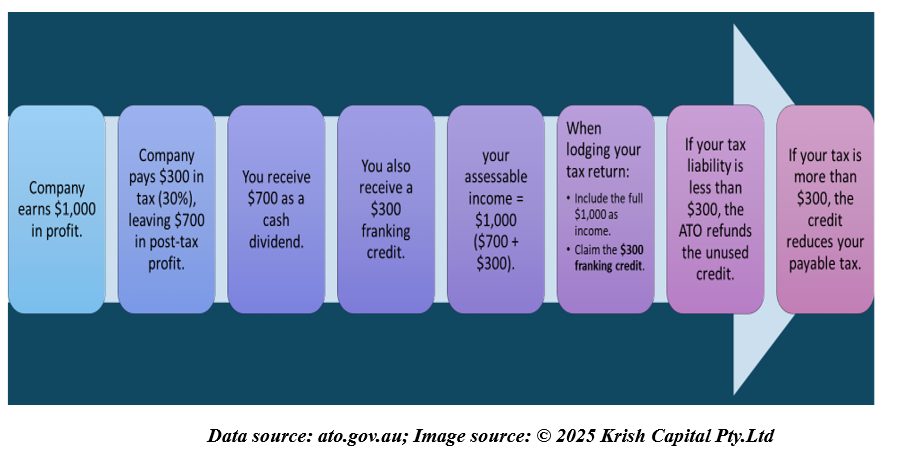
This system particularly benefits:
- Low-income earners
- Retirees not paying income tax
- Self-managed super funds in pension phase
According to the ATO, individuals and SMSFs have increasingly utilized franking credits to reduce tax liability or receive cash refunds, making them a vital part of income planning strategies.
Why It Matters for Australian Investors
The dividend imputation system improves the fairness and efficiency of Australia's tax framework. According to the Australian Treasury, the imputation system prevents double taxation by eliminating tax duplication at both the corporate and individual levels. This transparency enhances investor confidence in equity markets and supports long-term investment in Australian companies.
For domestic investors, it makes Australian shares particularly attractive compared to foreign ones, which may not offer similar tax advantages. The system also helps investors achieve better after-tax returns without necessarily increasing investment risk.
Key Considerations
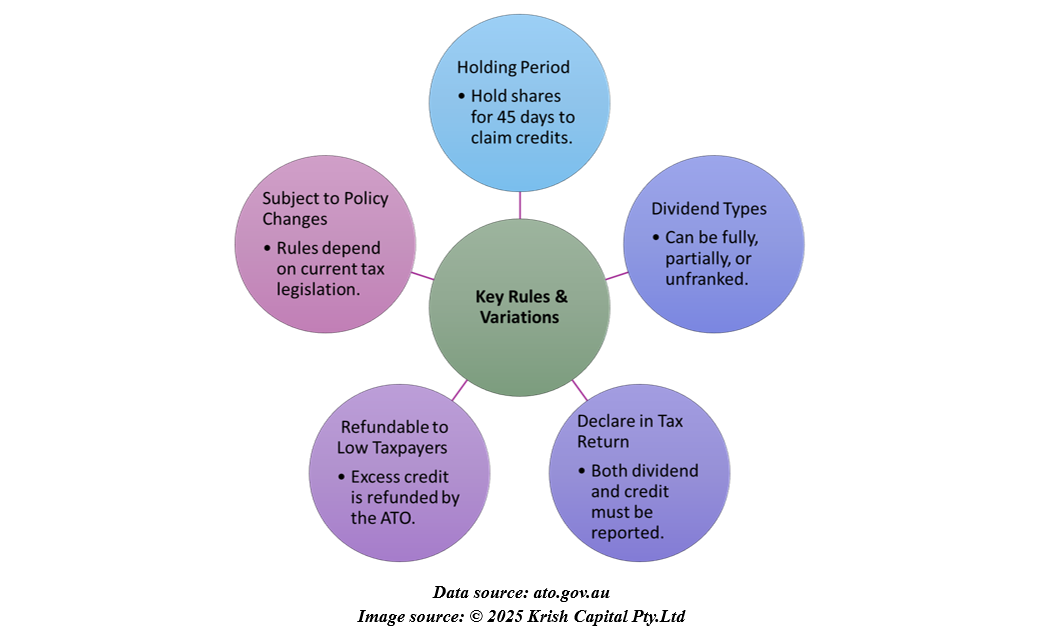
Franking credits are a powerful feature of the Australian tax system that allow investors to receive more value from dividend income. By understanding how these credits work and when they apply, investors can better plan for tax efficiency and maximize their returns. For retirees and SMSFs, especially, the system offers a rare advantage, turning investment income into tax-free or even refundable streams.


 Mar 10, 2026




 Please wait processing your request...