
 AU
AU CA
CA NZ
NZ UK
UK US
US IND
IND

 Share
Share
 X (Formerly Twitter)
 Whatsapp
 Facebook
 LinkedIn
 Telegram
 Email This Article
 Copy Link
 Summarize with AI
 Chat GPT
 Perplexity
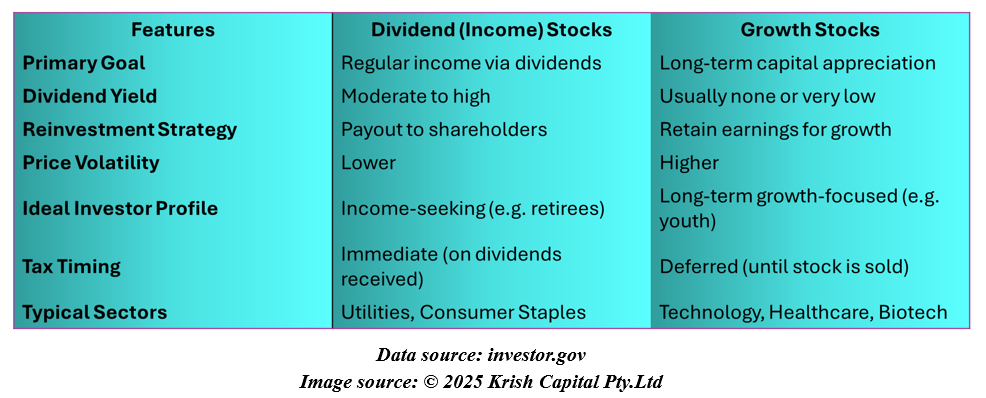
Image source: © 2025 Krish Capital Pty.Ltd
Highlights
- Dividend-paying stocks can offer stable income but may limit capital growth.
- Growth-focused stocks reinvest profits, aiming to achieve higher long-term value.
- The choice depends on individual investment goals, time horizon, and risk tolerance.
- Tax treatment differs between qualified dividends and capital gains.
Some market participants seek the reliability of regular income. Others are drawn to the compounding potential of reinvested earnings. This distinction shapes one of the most common tradeoffs in equity investing: receiving returns now or building long-term value.
Companies that consistently distribute dividends tend to operate in mature industries, often showing financial strength and reduced share price volatility. Regular payouts are appealing to those who prefer a stable income stream, such as individuals in retirement or those looking to balance risk across a portfolio.
Quick Overview
Tax Considerations in Equity Returns
The Internal Revenue Code outlines two different treatments for equity dividends and capital gains. Qualified dividends, when paid by domestic corporations and held for a minimum period, are taxed at favorable long-term capital gains rates. In contrast, non-qualified dividends are subject to ordinary income tax rates, which can be significantly higher depending on overall earnings.
On the growth side, capital gains are only taxed once the asset is sold. This allows market participants to defer taxes over time, potentially increasing long-term returns through the power of compounding. Because of this, the timing and type of return immediate dividends versus future appreciation carry different implications for after-tax results. This distinction is especially relevant in non-retirement accounts, where tax treatment is not automatically deferred.
Aligning Equity Strategies with Financial Goals
Choosing between income and growth typically depends on personal priorities and timelines. Someone seeking steady cash flow may find dividend-paying stocks more suitable, particularly when regular distributions can help manage living expenses. On the other hand, those focused on long-term capital building often lean toward companies that reinvest profits for higher future value.
A well-rounded approach can also combine both strategies. Holding a mix of dividend and growth-oriented stocks offers the potential to balance short-term income with long-term appreciation. This blend may help manage risk while taking advantage of shifting market cycles.
Dividends continue to be a critical element of equity investment, especially for those valuing income and stability. At the same time, reinvested earnings in growth-focused companies offer an alternative path geared toward future gains. Understanding the differences between these approaches and how tax rules apply can support better long-term outcomes. Making informed choices depends on aligning strategy with financial goals, time horizon, and the need for either current income or future growth.


 Mar 04, 2026
_02_19_2026_11_50_21_592067.png)

_02_11_2026_07_58_30_526403.png)

 Please wait processing your request...