
 AU
AU CA
CA NZ
NZ UK
UK US
US IND
IND

 Share
Share
 X (Formerly Twitter)
 Whatsapp
 Facebook
 LinkedIn
 Telegram
 Email This Article
 Copy Link
 Summarize with AI
 Chat GPT
 Perplexity
Highlights
- Geopolitical tensions in 2026 are driving structural, not temporary, market shifts.
- Safe-haven assets are gaining relevance amid rising volatility and inflation risks.
- Sector leadership is rotating toward energy, defense, and domestic manufacturing themes.
- Resilient portfolios now prioritise diversification and risk-adjusted returns over aggressive growth.
Global geopolitics has once again become a defining force for financial markets. From prolonged conflicts and trade realignments to strategic competition between major economies, uncertainty is reshaping how investors allocate capital. In 2026, portfolio construction is no longer just about growth and valuation — it is about resilience.
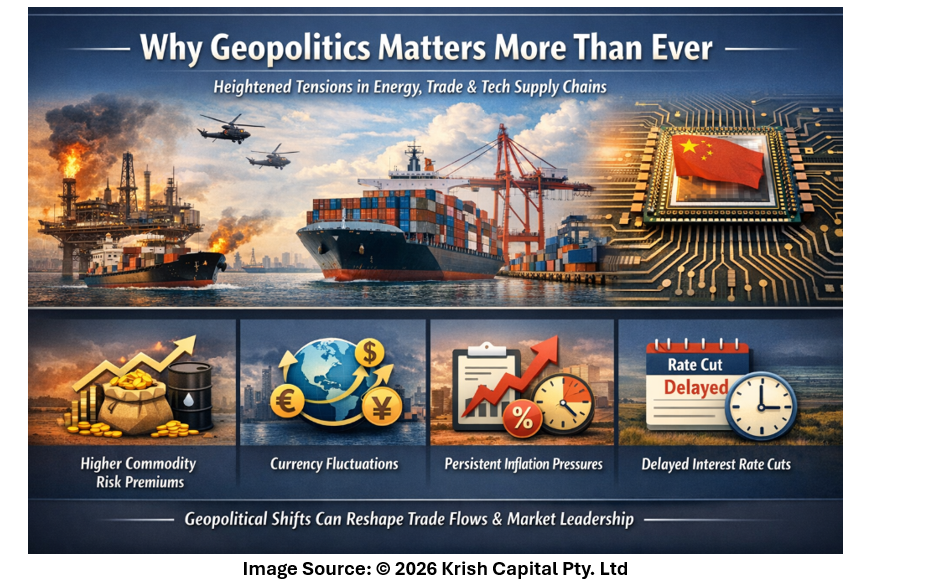
Shift Toward Safe-Haven Assets
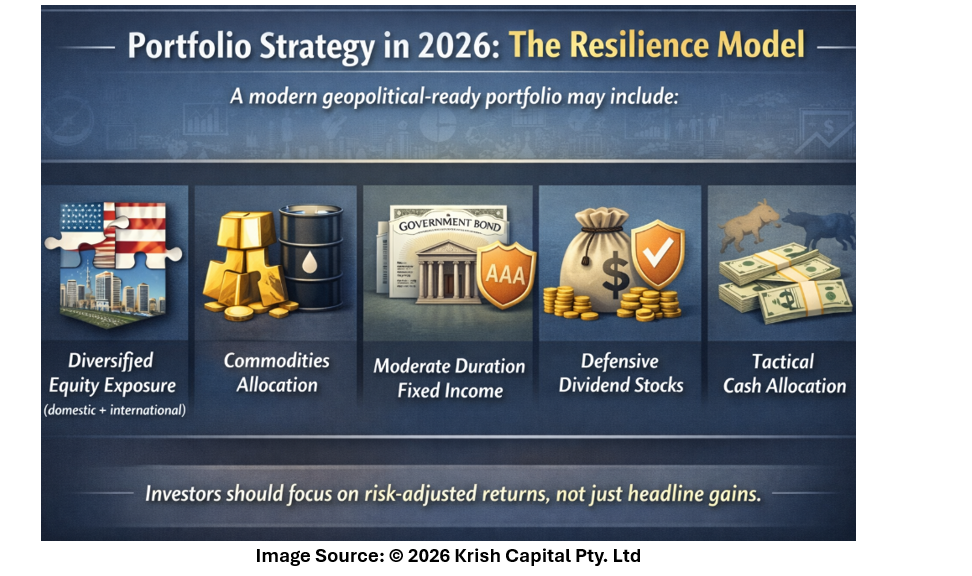
During periods of geopolitical stress, capital typically flows into perceived safe havens:
- Gold
Gold continues to act as a hedge against uncertainty, currency debasement, and inflation shocks. - US Dollar
The dollar often strengthens during global instability as investors seek liquidity and stability. - Government Bonds
High-quality sovereign bonds regain appeal when growth risks rise.
However, safe-haven positioning must be tactical. Overexposure can limit upside once tensions ease.
Sector Rotation: Winners and Losers
Geopolitical realignments are creating clear sector divergences.
Likely Beneficiaries
- Defense & Aerospace – Rising military budgets globally
- Energy – Supply constraints supporting oil & gas prices
- Domestic Manufacturing – “Friend-shoring” and supply chain diversification
Vulnerable Segments
- Export-heavy sectors
- Highly leveraged growth stocks
- Regions dependent on fragile trade corridors
The key is not abandoning growth — but balancing it with strategic defensives.
Currency Risk Is Back
With trade fragmentation and capital flow shifts, currency volatility has returned. Investors holding international assets must:
- Consider currency-hedged funds
- Monitor USD strength cycles
- Diversify across geographies
Ignoring forex risk can erode otherwise solid returns.
Inflation and Interest Rate Implications
Geopolitical disruptions often increase supply-side inflation — especially in energy, food, and logistics. This complicates central bank policy and may keep rates elevated longer than expected.
Higher-for-longer interest rates impact:
- Equity valuations
- Real estate demand
- Borrowing costs
- Growth stock multiples
Asset allocation must reflect this macro reality.
The Core Principle: Prepare, Don’t Predict
Geopolitical forecasting is notoriously difficult. Instead of attempting to predict outcomes, investors should:
- Build diversified portfolios
- Avoid concentrated sector bets
- Maintain liquidity
- Review asset allocation periodically
Resilience beats speculation.
In 2026, geopolitics is no longer a background risk — it is a primary market driver. Portfolios built solely for growth may struggle in prolonged uncertainty. Those designed with balance, diversification, and tactical flexibility are better positioned to navigate the evolving global landscape.
The objective is not to eliminate risk — but to ensure your wealth can withstand global shocks while remaining positioned for long-term growth.
FAQs
Why does geopolitics impact financial markets so strongly?
Geopolitical events influence trade flows, commodity prices, inflation, and investor confidence — all of which directly affect asset valuations.
Which assets typically perform well during geopolitical uncertainty?
Gold, strong global currencies, high-quality government bonds, and defensive sectors often attract capital during periods of instability.
Should investors completely shift to defensive assets in 2026?
Not necessarily. Over-allocating to defensive assets may limit long-term returns. A balanced and diversified approach is more sustainable.
How can retail investors manage geopolitical risk effectively?
By diversifying across asset classes and geographies, maintaining liquidity, and focusing on long-term asset allocation rather than short-term reactions.


 Feb 24, 2026
_02_19_2026_11_50_21_592067.png)

_02_11_2026_07_58_30_526403.png)


 Please wait processing your request...