
 AU
AU CA
CA NZ
NZ UK
UK US
US IND
IND

 Share
Share
 X (Formerly Twitter)
 Whatsapp
 Facebook
 LinkedIn
 Telegram
 Email This Article
 Copy Link
 Summarize with AI
 Chat GPT
 Perplexity
Highlights
- Biometric authentication and multi-factor security are reshaping protection standards in fintech systems.
- Data protection laws are driving stronger consent controls and secure data-handling practices across financial platforms.
- AI-driven decision-making is raising concerns around transparency, fairness and ethical model governance.
- Responsible AI frameworks are emerging to ensure secure, unbiased and accountable financial models.
The rapid expansion of financial technology has transformed the way people access banking, payments and investment products. This shift to digital-first channels has placed security at the center of the sector’s evolution. As fintech platforms process sensitive identity data, transaction histories and behavioral insights, they face widening exposure to cyber threats, fraud attempts and compliance risks. This has pushed companies to adopt stronger authentication and monitoring frameworks designed to balance user convenience with robust protection.
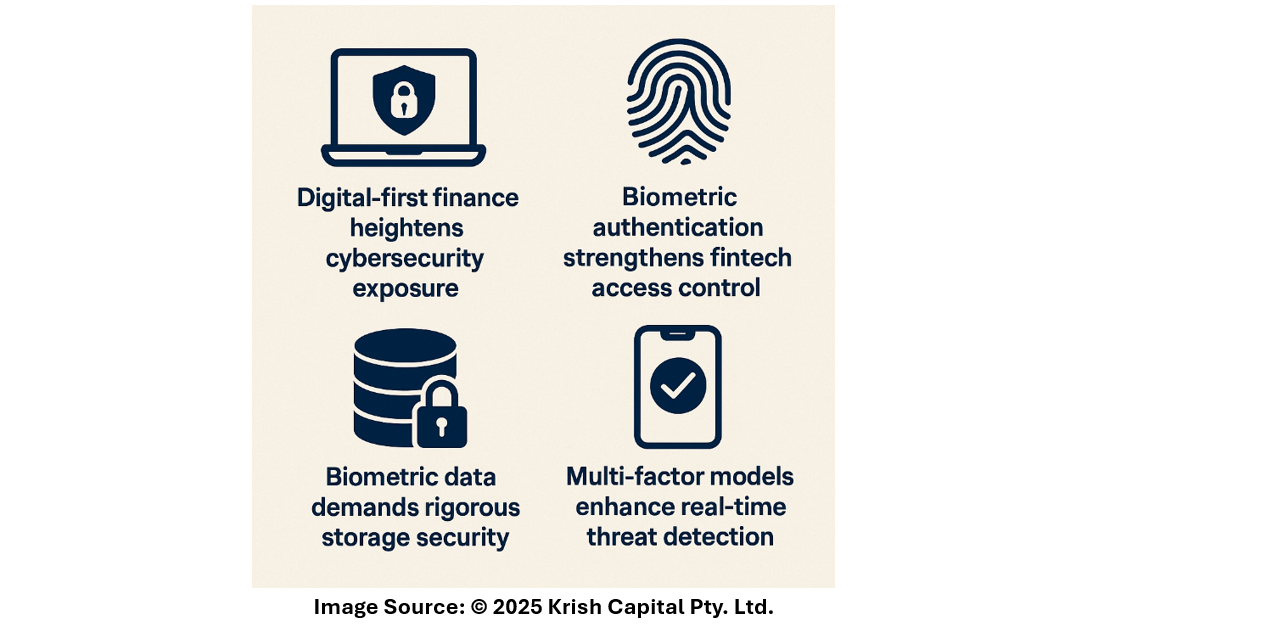
Biometric authentication has emerged as one of the most significant advances in fintech security. Fingerprint scans, facial recognition and voice identification offer faster, more seamless access to financial apps without relying on passwords that can be stolen or guessed. These technologies add a layer of protection by linking access directly to a user’s physical traits. However, the growing reliance on biometrics also introduces new kinds of vulnerabilities. Unlike a password, a compromised fingerprint or facial scan cannot be changed. This makes storage security, encryption strength and restricted access to biometric databases essential in fintech infrastructure.
Fintech companies are increasingly investing in multi-factor authentication models that combine biometrics with device-based verification and behavioral analytics. This layered approach is becoming a standard practice as platforms seek to build systems that can recognise unusual login attempts, suspicious locations or abnormal transaction patterns in real time.
Data Protection Challenges and Regulatory Expectations
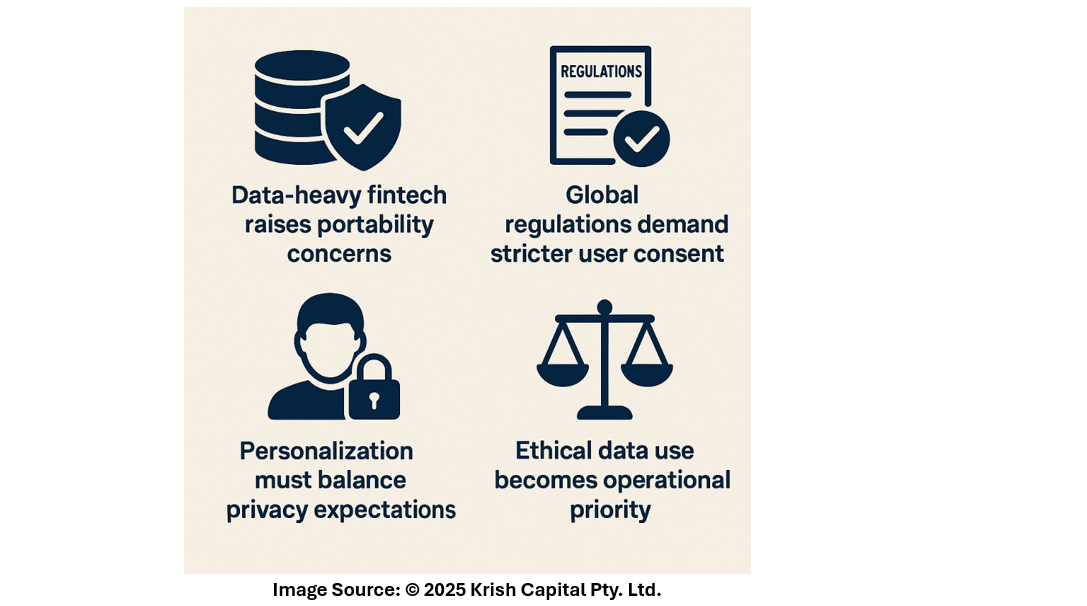
Data protection now sits at the heart of fintech risk management as platforms handle expanding volumes of customer information. The sector depends heavily on data collection to power innovation — from underwriting decisions to fraud detection algorithms. But this same dependency raises questions about data portability, informed user consent and limits on data sharing between partners and service providers.
Global regulations such as the GDPR in Europe, CCPA in California and emerging data protection laws in Asia and Africa are reshaping how fintech companies approach user data. These rules emphasise transparency, clear consent mechanisms, data minimisation and the ability for users to access or delete their information. As jurisdictions tighten compliance expectations, fintechs must redesign data architectures to ensure traceability, encryption and controlled access.
Another challenge is balancing personalisation with privacy. Fintech platforms increasingly use financial behavior data to tailor credit limits, spending insights or investment recommendations. While this personalisation enhances user experience, it also heightens scrutiny around how long data is stored, what third parties can access it, and whether automated decisions introduce unintended bias. Ensuring ethical data use has become as important as securing the data itself.
Responsible AI and Ethical Decision-Making in Finance
Artificial intelligence has become integral to modern financial systems, powering everything from credit scoring and fraud detection to risk modeling and automated advice. As AI adoption accelerates, ethics and governance are becoming central issues. Models trained on biased datasets can reinforce economic inequalities, limit credit access or misinterpret behavior from underrepresented groups.
Responsible AI frameworks are playing a key role in addressing these risks. Many fintech firms are developing internal guidelines to ensure algorithms are explainable, traceable and tested for fairness before deployment. Regulators are also signaling stronger oversight for AI-driven financial decisions, with proposals requiring financial institutions to document how models are built, monitored and updated.
Transparency is another priority. As users increasingly trust digital systems with major financial decisions, they demand clarity on how recommendations or approvals are generated. Offering simple, understandable explanations helps build confidence while maintaining ethical accountability.
Cybersecurity and AI governance are also converging. AI systems used for fraud detection can themselves become targets for manipulation, prompting fintech companies to strengthen model security through adversarial testing and continuous monitoring.
Fintech’s rapid digital shift is driving new security standards, from biometrics and multi-factor authentication to stringent data-protection requirements. As AI becomes central to financial decision-making, regulators and fintechs are prioritising responsible governance, transparency, ethical data use, and strengthened cybersecurity to safeguard users.


 Mar 04, 2026
_02_19_2026_11_50_21_592067.png)

_02_11_2026_07_58_30_526403.png)

 Please wait processing your request...