
 CA
 NZ
 UK
 US
 IND

 AU

 Share
 X (Formerly Twitter)
 Whatsapp
 Facebook
 LinkedIn
 Telegram
 Email This Article
 Copy Link
 Summarize with AI
 Chat GPT
 Perplexity

It is May 26, the financial year is winding down, and one corner of the ASX is lighting up income screens around the country: Australian property.
For the past two years, listed property has been the market's punching bag. Rates went up. Bond yields went up. Asset values came down. Sentiment, frankly, went into hibernation. But the brutal repricing left something behind that long-term income investors quietly love: fat, headline-grabbing Dividend yields.
Right now, ten ASX-listed property names are offering yields between 6.78% and a chunky 10.64%, every one of them carrying a consensus Buy rating from analysts. That is not a small thing. In a world where the typical big-bank deposit rate has been drifting and the broader ASX 200 Yield sits well below this range, real estate income trusts (REITs) are starting to look like the comeback kids of the income world.
This article walks through that exact list, name by name. We will cover what each company actually does, why investors are paying attention this week, and what the numbers can - and cannot - tell you about the risks behind the yield. We will also unpack what Dividend Yield really means, why high yield can be both attractive and dangerous, how Beta hints at Volatility, and why property stocks live and die by the Bond Market.
A few ground rules before we dive in. The Buy tag you will see next to every stock is a consensus rating from Sell-Side analysts. It is not a guarantee. It is not personal financial advice. It is a snapshot of how the market's professional researchers are leaning today, and tomorrow they could lean the other way. With that out of the way - let's get into it.
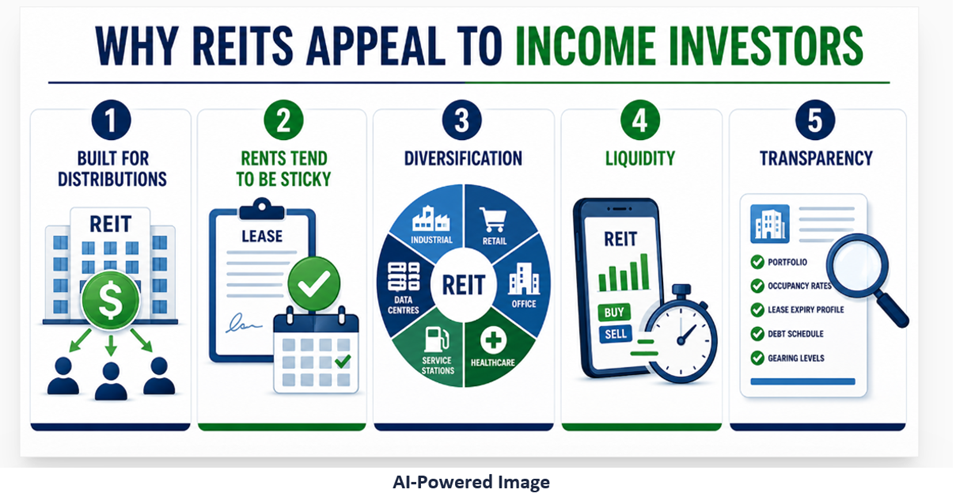
What Is Dividend Yield, Really? And Why Big Numbers Can Bite
Before we walk through the ten names, it is worth pausing on the metric that is doing all the headline work here: dividend yield.
Dividend yield is simple math. Take the total trailing distributions paid over the past 12 months, divide by today's share price, multiply by 100. A stock paying 70 cents in distributions on a $10 share price has a 7% yield.
The reason this matters: when share prices fall and distributions stay the same, yields rise. A higher yield is sometimes a sign of a great bargain. Other times, it is a flashing red light that the market expects the distribution itself to be cut.
This is why a 10%+ yield should never be celebrated without context. It can mean:
- The market is Mispricing a high-quality asset, and you are getting paid to wait.
- The market thinks the distribution is unsustainable and is pricing in a cut.
- There is something specific to the company - Debt covenants, refinancing risk, asset valuations - that the wider market knows and you are about to learn the hard way.
For REITs, the cleanest sustainability check is whether distributions are well covered by funds from operations (FFO) or adjusted funds from operations (AFFO), not just headline Earnings. Real estate accounting can throw up large non-cash Revaluation losses or gains that distort the picture. FFO and AFFO strip those out and show you what the Cash Flow really looks like.
So as we walk through the list, treat the yield number as a starting question, not a finished answer. The headline says "big yields." The follow-up question is always: "is this yield real, and is it durable?"
The Ten Names: A Buy Alert Breakdown
Here are the ten ASX property stocks driving the May 26 conversation, ordered from highest dividend yield down to the smallest. Each carries a consensus Buy rating today.
1. RAM Essential Services Property Fund (REP:ASX)
- Country: Australia
- Sector: Real Estate
- Industry: Real Estate Investment Trusts
- Market cap: about A$124.74 million
- 5-year beta: 0.8738
- Dividend yield: 10.64%
- Consensus rating: Buy
RAM Essential Services Property Fund is the eye-catcher of the list. A 10.64% headline yield on an ASX-listed REIT is not subtle, and it is exactly the kind of number that gets investors clicking, sharing, and arguing in equal measure.
The fund's name tells you the strategy: essential services property. Think medical centres, healthcare Assets, and neighbourhood retail anchored by tenants like supermarkets and pharmacies - the kind of properties that keep generating rent regardless of whether the economy is booming or stuttering.
The 5-year beta of 0.8738 suggests the stock has historically been less volatile than the broader market, which is consistent with a defensive, essentials-focused tenant base. Combined with a sub-A$125 million market cap, this is a small, focused vehicle that has been trading at a level which generates a very large headline distribution number.
The big question with REP is sustainability. A double-digit yield often signals the market is pricing in either a future distribution cut, a re-rating in the underlying asset values, or both. The consensus Buy rating implies analysts, on balance, believe the unit price is too low for the income on offer. Investors should look hard at gearing, Lease terms, valuation marks, and the cash coverage of distributions before treating that 10.64% as money in the bank.
2. Growthpoint Properties Australia Ltd (GOZ:ASX)
- Country: Australia
- Sector: Real Estate
- Industry: Real Estate Investment Trusts
- Market cap: about A$866.98 million
- 5-year beta: 1.28
- Dividend yield: 8.43%
- Consensus rating: Buy
Growthpoint is one of the meatier names on the list, with a market cap close to A$867 million. Its portfolio leans heavily toward office and industrial assets across Australia, often with long leases to government and large corporate tenants.
That tenant profile is part of the appeal: government-backed and Blue-Chip occupiers tend to keep paying rent through tougher economic stretches, providing some downside cushion to distributions.
A 5-year beta of 1.28 tells you something else, though: GOZ has historically moved more sharply than the broader market. That is not unusual for a leveraged property vehicle whose unit price is sensitive to Interest Rate expectations and tenant news. When sentiment turns, beta cuts both ways.
An 8.43% yield combined with a Buy consensus suggests analysts think the market has overcorrected on Growthpoint relative to the strength of its income stream. For investors building a diversified property bucket, GOZ is one of the more institutional-quality names on this list.
3. GDI Property Group Ltd (GDI:ASX)
- Country: Australia
- Sector: Real Estate
- Industry: Real Estate Investment and Services
- Market cap: about A$171.56 million
- 5-year beta: 1.04
- Dividend yield: 8.33%
- Consensus rating: Buy
GDI Property Group is interesting because, unlike most names on the list, it sits in Real Estate Investment and Services rather than the pure REIT bucket. That means GDI not only owns property - it manages funds and operates assets, blending rental income with services-style Revenue.
The portfolio has historically had heavy exposure to Perth office, an Asset Class that has been deeply out of favour for years. That is part of why the headline yield is sitting above 8% with the consensus pointing to Buy - analysts appear to believe the cycle is closer to turning than the unit price implies.
Beta of 1.04 puts GDI right around market average, which is unusual for a small-cap office name and suggests the trading pattern has not been as wild as some peers. For investors who want exposure to a possible WA office recovery alongside income, GDI is one to dig into.
4. Abacus Group (ABG:ASX)
- Country: Australia
- Sector: Real Estate
- Industry: Real Estate Investment Trusts
- Market cap: about A$485.18 million
- 5-year beta: 1.08
- Dividend yield: 8.29%
- Consensus rating: Buy
Abacus Group has historically had a multi-asset profile, including commercial property and self-storage exposure (although self-storage interests have evolved through corporate restructures). The current Abacus Group entity is now more focused on commercial property assets, particularly office.
A market cap of A$485 million puts Abacus in the mid-tier of the list - large enough to have institutional Liquidity and analyst coverage, small enough to move sharply on positive sentiment.
The beta of 1.08 again signals roughly market-level volatility, while the 8.29% yield is a clear statement: the market is demanding a significant income premium to hold the stock. With a Buy consensus on top, ABG is firmly in the "deep value or value trap" debate - and where you land on that depends entirely on your view of where Australian office values are heading from here.
5. Dexus Convenience Retail REIT (DXC:ASX)
- Country: Australia
- Sector: Real Estate
- Industry: Real Estate Investment Trusts
- Market cap: about A$200.99 million
- 5-year beta: 0.7969
- Dividend yield: 7.58%
- Consensus rating: Buy
Dexus Convenience Retail REIT is one of the cleanest "what does it own" stories on the list: service stations and convenience retail sites, leased mostly to large fuel retailers on long, often net-lease arrangements.
Why does that matter? Because long net leases mean tenants typically cover most outgoings, lease terms run for many years, and distributions become extremely predictable. That predictability shows up in the beta of 0.7969 - meaningfully below the market - and in the consistent income profile.
A 7.58% yield is generous for a defensive, long-lease portfolio. The consensus Buy flags that analysts believe the market is paying too little for what is essentially a bond-like stream of rents from large, established fuel and convenience operators.
The thing to watch is the electric vehicle transition. Long term, the value of fuel-anchored real estate depends on how the sites can be repositioned as energy Demand evolves.
6. Garda Diversified Property Fund (GDF:ASX)
- Country: Australia
- Sector: Real Estate
- Industry: Real Estate Investment Trusts
- Market cap: about A$122.16 million
- 5-year beta: 0.7734
- Dividend yield: 7.38%
- Consensus rating: Buy
Garda is the smallest cap on the list at around A$122 million, and it brings a mix of industrial and office assets, with notable exposure to Queensland.
The beta of 0.7734 - the lowest on the list - implies historically below-market volatility, even though small caps usually swing more than the index. That is largely a function of the asset mix and the fund's relatively sticky tenant base.
A 7.38% yield with a Buy consensus is consistent with a market that is rewarding investors for taking on small-cap REIT risk with industrial-tilted exposure. The risk to watch with smaller funds like Garda is liquidity: bid-ask spreads can widen quickly, and exiting a position in Volume can move the price more than you expect.
7. Cromwell Property Group (CMW:ASX)
- Country: Australia
- Sector: Real Estate
- Industry: Real Estate Investment Trusts
- Market cap: about A$568.72 million
- 5-year beta: 1.26
- Dividend yield: 7.32%
- Consensus rating: Buy
Cromwell Property Group has been one of the most heavily debated names in Australian listed property over the past few years, with corporate transitions, asset divestments, and strategy resets all in the mix.
The result today is an A$569 million market cap REIT with a yield of 7.32% and a clear Buy consensus. Analysts who lean positive often point to the combination of asset sales reducing Leverage and a portfolio that is more focused than it was a few years ago.
The 5-year beta of 1.26 tells the rest of the story: this stock has moved sharply in both directions. That is what restructuring stories often look like. For investors comfortable with volatility and willing to monitor the strategic narrative, Cromwell offers a meaningful income yield with leverage to a recovery in sentiment.
8. DigiCo Infrastructure REIT (DGT:ASX)
- Country: Australia
- Sector: Real Estate
- Industry: Real Estate Investment Trusts
- Market cap: about A$691.89 million
- 5-year beta: not listed
- Dividend yield: 7.16%
- Consensus rating: Buy
DigiCo Infrastructure REIT is the most thematically interesting name on the list. As a data centre-focused REIT, it sits at the intersection of two of the most powerful structural stories of this decade: digital infrastructure and AI-driven compute demand.
Data centre REITs globally have been a battleground between long-term bulls (who see compute demand exploding) and short-term skeptics (who worry about capex intensity and power constraints). DigiCo lets ASX investors get exposure to that theme in a domestic, listed, income-paying wrapper.
The 5-year beta is not listed - typically a sign of a more recent listing - so investors do not have a long history of price behaviour to lean on. That alone is worth pausing on. With a 7.16% yield and a Buy consensus, DigiCo combines an income angle with an AI-adjacent growth narrative, and that is a rare combination on the ASX.
9. Dexus Industria REIT (DXI:ASX)
- Country: Australia
- Sector: Real Estate
- Industry: Real Estate Investment Trusts
- Market cap: about A$416.76 million
- 5-year beta: 1.40
- Dividend yield: 6.92%
- Consensus rating: Buy
Dexus Industria REIT plays in arguably the strongest fundamental sub-sector of Australian property: industrial real estate. Logistics, distribution warehouses, and last-mile facilities continue to benefit from the structural shift to E-commerce, near-shoring of Supply chains, and tightening industrial vacancy in key Australian markets.
A market cap of A$416 million puts DXI in the mid-tier, with reasonable institutional liquidity. The 6.92% yield is the lowest of the group, which actually makes sense - industrial assets have generally held up best, so the market has not had to discount the unit price as aggressively as it has for office-heavy peers.
What is striking is the beta of 1.40, the highest on the list. That high beta plus a relatively lower yield suggests the market is pricing DXI as a more growth-oriented industrial REIT, with greater sensitivity to broader market moves and rate expectations. The Buy consensus is consistent with the fundamentals story; the beta is a reminder that volatility cuts both ways.
10. HomeCo Daily Needs REIT (HDN:ASX)
- Country: Australia
- Sector: Real Estate
- Industry: Real Estate Investment Trusts
- Market cap: about A$1.40 billion
- 5-year beta: 1.09
- Dividend yield: 6.78%
- Consensus rating: Buy
HomeCo Daily Needs REIT is the largest name on the list at around A$1.4 billion in Market Capitalisation. As the name suggests, it focuses on daily needs retail - convenience-based shopping centres anchored by supermarkets, pharmacies, and other essential service tenants.
Daily-needs retail has been one of the more resilient corners of Australian property because it serves recurring, non-discretionary spending. People still need groceries when sentiment dips. They still Fill prescriptions when consumer confidence falls. And those visits drive foot traffic for adjacent specialty tenants.
A beta of 1.09 is roughly market level, and the 6.78% yield is the lowest of the ten - again, a reflection that the market has remained relatively comfortable with the underlying portfolio. The Buy consensus reinforces that analysts see continued resilience.
For investors who want exposure to the property income theme but prefer the deeper liquidity and broader analyst coverage of a billion-dollar-plus REIT (in AUD terms), HDN is the natural starting point on this list.
Beta Decoded: What Volatility Numbers Hint At
Beta is a measure of how a stock has historically moved relative to the broader market. A beta of 1.0 means the stock has, on average, moved in line with the market. A beta above 1.0 means it has moved more sharply. A beta below 1.0 means it has moved less.
Let's order the list by beta:
- Garda Diversified Property Fund - 0.7734 (lowest)
- Dexus Convenience Retail REIT - 0.7969
- RAM Essential Services Property Fund - 0.8738
- GDI Property Group - 1.04
- Abacus Group - 1.08
- HomeCo Daily Needs REIT - 1.09
- Cromwell Property Group - 1.26
- Growthpoint Properties Australia - 1.28
- Dexus Industria REIT - 1.40 (highest)
- DigiCo Infrastructure REIT - not listed
Two clusters stand out.
The lowest-beta names - Garda, Dexus Convenience Retail, and RAM Essential Services - all share a defensive flavour. Long net leases, essential-services tenants, convenience-focused retail. These are the kind of portfolios that should, in theory, hold up better when broader market sentiment cracks.
The highest-beta names - Dexus Industria, Growthpoint, and Cromwell - sit in industrial, mixed commercial, and restructuring-story territory. Higher beta is not automatically bad. It often signals that the market sees these names as more sensitive to growth, rates, and sentiment swings - which can mean stronger upside in a recovery and sharper drawdowns in a sell-off.
DigiCo Infrastructure REIT not having a listed 5-year beta is itself a piece of information. It hints at a relatively recent listing or limited price history, which means investors do not yet have a clear pattern of how the stock will behave through a full Market Cycle.
Beta is a backward-looking statistic. It is not a rating. But for income investors trying to balance a portfolio, mixing low-beta defensive REITs with higher-beta growth-leaning ones can be a sensible way to manage the ride.
Why Property Stocks Live and Die by Interest Rates
You cannot talk about ASX REITs without talking about interest rates. Period.
Property stocks are unusually rate-sensitive for three reasons.
First, they use a lot of debt. REITs typically carry meaningful gearing - often 25% to 40% of total assets, depending on the strategy and the cycle. When borrowing costs go up, interest expense on that debt eats into earnings and distributions. When borrowing costs come down, the opposite happens.
Second, asset values move with discount rates. Commercial property is valued by capitalising future rental income at a market-appropriate cap rate. When long-term interest rates rise, those cap rates tend to widen, and the implied value of the property falls. When rates fall, cap rates tend to compress, and asset values lift. That math is a direct, mechanical link between bond yields and REIT net tangible assets.
Third, REITs compete with bonds for income Capital. When you can clip a 5%+ yield on a government-backed bond with no Equity risk, an 8% REIT distribution looks less special. When bond yields fall back to 3%, the same 8% REIT distribution suddenly looks like a generous spread - and money flows in.
That triple link is why ASX property has been a battleground for the past two years. The Reserve Bank of Australia's rate path, Global Bond yields, Inflation prints, and even foreign Central Bank decisions all feed through to listed property unit prices.
Right now, with several of these REITs offering yields between 6.78% and 10.64% with Buy consensus tags, the market appears to be pricing in a decent Margin of safety relative to the bond market. If rate expectations soften from here, the rerating potential could be meaningful. If rate expectations harden again, the income should still come - but the unit price ride could stay choppy.
For income-focused investors, the practical takeaway is: do not buy REITs in isolation from your view on rates. Even if you are not a macro ratinger, having a rough framework for how you think rates will trend over the next 12-24 months will help you size positions appropriately.
The Risks Behind the Yield
Yield is a beautiful number on a spreadsheet. It is also a magnet for risk that is too often glossed over. Let's break down the main hazards facing every REIT on this list.
Dividend Sustainability Risk
The most fundamental risk for an income investor is simple: will the distribution keep coming? REIT distributions can and do get cut. A high headline yield can be a sign that the market is already pricing in such a cut. The hard work for investors is checking that distributions are well covered by FFO or AFFO, that the tenant base is healthy, and that the lease expiry profile does not create a cliff in the next 12-24 months.
Debt Cost Risk
Most REITs carry significant debt. As fixed-rate hedges roll off and new debt is priced at higher rates, interest expense climbs. That can erode the cash available for distributions even if rents are stable. Investors should always look at the weighted average cost of debt, the average debt term, and the percentage of debt that is hedged - these numbers are usually disclosed in REIT half-year and full-year results.
Property Valuation Risk
Asset values for commercial property can move meaningfully when cap rates shift. A few rounds of negative revaluations can hit reported NTA per unit, push gearing ratios higher, and limit a REIT's ability to make accretive acquisitions. While valuation moves are non-cash in the short term, they shape investor sentiment, debt headroom, and future strategic Options.
Occupancy and Tenant Risk
Empty properties do not pay rent. A drop in occupancy - particularly in office or specialty retail - can punch a hole in distributions quickly. Concentration in one tenant or one sub-sector amplifies this risk. The smaller, more focused REITs on this list need to be screened especially carefully on tenant concentration.
Refinancing Risk
When debt facilities mature, they need to be rolled. If Credit markets are tight or asset values have fallen, that refinancing can come with tighter covenants, higher margins, or in extreme cases, equity raises that dilute existing unit holders. Looking at the debt Maturity ladder is one of the most important checks an investor can do on any REIT.
Liquidity Risk
For smaller REITs with market caps in the A$100 million-A$200 million range - including RAM, Garda, GDI, and Dexus Convenience Retail - bid-ask spreads can widen sharply during stressed markets. Selling a meaningful position quickly can mean accepting a worse price than the screen suggests. This is a structural feature of small-cap investing, not a flaw of any particular name.
Market Volatility Risk
Even the highest-quality REIT can sell off hard in a broad market drawdown. Sentiment swings on rates, geopolitics, and macro data can drive price moves that have nothing to do with the underlying portfolio. Investors who cannot stomach 20%-30% interim drawdowns probably should not size REIT positions aggressively, regardless of yield.
None of these risks invalidate the Buy consensus on these names. They simply put the consensus in context. Buy means analysts, on balance, believe the risk-reward is attractive. It does not mean the risks are absent.
The Investor Takeaway
Step back from the stock-by-stock detail and a simple picture comes into focus.
Australian listed property has been through a deep, sentiment-driven repricing. As a result, ten ASX-listed REITs are sitting today with consensus Buy ratings and yields between 6.78% and 10.64%. Across this list, you can find:
- Defensive, low-beta income in names like Dexus Convenience Retail REIT and RAM Essential Services Property Fund.
- Mid-cap quality in names like Abacus Group and Cromwell Property Group.
- Sector heavyweights in HomeCo Daily Needs REIT and Growthpoint Properties Australia.
- Thematic exposure to industrial and digital infrastructure in Dexus Industria REIT and DigiCo Infrastructure REIT.
- Smaller, more concentrated bets in Garda Diversified Property Fund and GDI Property Group.
For an income-focused investor, the constructive way to use this list is not to chase the highest headline yield. It is to think about how a basket - perhaps three to five of these names, weighted by conviction and Risk tolerance - could complement existing portfolio exposures.
Some practical questions to sit with before acting on any of these ideas:
- Do these REITs add Diversification to my portfolio, or do they overlap with property exposure I already hold via super funds, ETFs, or direct property?
- Am I comfortable with the interest rate sensitivity that comes with this asset class?
- How much of my income strategy should sit in higher-yielding small caps versus lower-yielding large caps?
- What is my time horizon? REIT investing usually rewards patience.
- Have I checked distribution coverage on each name, not just the headline yield?
If you are answering those questions thoughtfully, you are already doing more work than most retail investors do before clicking buy. That work is the difference between an income strategy that compounds quietly for years and one that gets blown up in the next downturn.
The Bigger Picture: Why This List Matters Today
Here is the headline-level summary that ties the May 26 story together.
ASX property has been repriced. That repricing has handed income investors a rare window where ten different listed property names - across office, industrial, daily-needs retail, convenience retail, healthcare, and digital infrastructure - are simultaneously offering attractive headline yields and consensus Buy ratings.
You will likely never see all ten of these stocks moving in the same direction every day. They will not all deliver the same returns. Some will surprise on the upside. Some will disappoint. That is investing.
But as a thematic snapshot, this list captures something important: a moment when the market may finally be paying high yields for assets that, in many cases, have not lost their long-term economic relevance. Supermarkets still need anchor tenants. Service stations still collect long-dated rent. Industrial sheds still serve e-commerce. Data centres still power the AI build-out. Daily-needs centres still draw foot traffic.
The Buy label is a starting point, not a finish line. Use it to start your research, not to end it.
Important Disclaimer
This article is for general information and educational purposes only. It is not personal financial advice, investment advice, tax advice, or a recommendation to buy or sell any security.
The "Buy" tag attached to each stock in this article reflects a consensus rating drawn from sell-side analyst ratings. A consensus rating is an aggregation of opinions and is not a guarantee of future returns or future stock performance. Analyst views can - and frequently do - change. Past performance is not a reliable indicator of future results.
Investments in listed property and REITs carry real risks, including the risk of loss of capital, distribution cuts, falls in unit price, illiquidity, and sensitivity to interest rates and broader market conditions.
Before making any investment decision, readers should do their own research, consider their personal financial situation, objectives, and risk tolerance, and where appropriate, seek advice from a licensed financial adviser or other qualified professional.
The author and publisher accept no Liability for any loss or damage arising from reliance on the information in this article.
Markets move. Strategies change. Always look at the most recent disclosures, results, and market data before acting on any idea presented here.


 Nov 12, 2026





 Please wait processing your request...