
 CA
 NZ
 UK
 US
 IND

 AU

 Share
 X (Formerly Twitter)
 Whatsapp
 Facebook
 LinkedIn
 Telegram
 Email This Article
 Copy Link
 Summarize with AI
 Chat GPT
 Perplexity
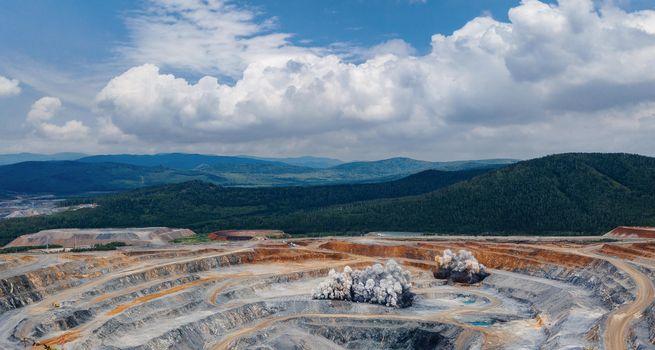
The 2022 European energy crisis, the AI-driven surge in electricity Demand and the 2024 US ban on Russian uranium imports have together made energy security a central priority for major economies. Nuclear power and uranium are core parts of that conversation. With long-term uranium contract prices at about US$90 per pound, the highest level since 2008, and around 33 countries now committed to the COP28 Declaration to Triple Nuclear Energy by 2050, governments are rethinking their nuclear strategies more actively than at any time since the 1970s.
Why Energy Security Has Returned to the Global Agenda
Energy security has reasserted itself as a top-tier policy issue. The post-2022 environment showed how quickly energy Supply assumptions could shift, and how vulnerable some economies were to single-supplier dependence. Natural Gas was the most visible example in Europe, but uranium and the broader nuclear fuel cycle were also affected by sanctions discussions and Russia's enrichment dominance.
Nuclear power offers a combination of attributes that fits the security-conscious moment: very low operating fuel cost relative to total electricity cost, high capacity Factor, low lifecycle emissions, and long-lived Capital infrastructure. Countries that maintained large nuclear fleets through the post-Fukushima decade have generally fared better in 2024-25 than those that retired theirs early.
For uranium markets, this translates into a more supportive backdrop. Utilities have been signing more long-term contracts. Governments have been reorienting fuel-cycle policy. Investors have been re-evaluating the structural picture. The combination has produced one of the most active periods in uranium markets in over a decade.
Global Nuclear Capacity and Uranium Market Snapshot
Nuclear power supplies roughly 9% of global electricity. Around 440 operable reactors in 31 countries provide about 400 GWe of capacity. The US operates the largest fleet (94 reactors), followed by France, China and Russia. Around 74 reactors are under construction globally, of which approximately 37 are in China and 6 in India.
Global uranium mine output was 60,213 tU in 2024 against 2025 reactor requirements estimated by the World Nuclear Association at about 68,920 tU. The COP28 Declaration to Triple Nuclear Energy by 2050 has expanded to around 33 signatories.
Key policy actions include the US Prohibiting Russian Uranium Imports Act (effective 11 August 2024); the US Inflation Reduction Act's nuclear production tax credits; the EU's recognition of nuclear in the sustainable-finance taxonomy; Japan's reactor restarts; South Korea's Reversal of phase-out plans; France's commitment to multiple new EPR2 reactors; and the UK's progression of Sizewell C and Rolls-Royce SMR.
Uranium Markets Tighten as Nuclear Demand Accelerates
Across most major nuclear nations, policy in 2026 is more supportive of nuclear than at any point since at least the early 2000s. Reactor extensions are being granted. Idle reactors are being restarted (Diablo Canyon and Palisades in the US). New build is progressing in China, India, the Middle East, Eastern Europe and Asia. SMR licensing is moving forward in multiple jurisdictions.
Uranium spot prices have traded around the mid-US$80s per pound through 2026 while long-term prices have moved to about US$90 per pound. Producer guidance has tightened: Kazatomprom cut 2025 production by 5,000 tU and Cameco reduced McArthur River/Key Lake output to 14-15 million pounds U3O8 from prior expectations of 18 million pounds. These shifts reinforce the message that supply must rise to meet structural demand growth.
Conversion and enrichment capacity is also expanding in the West. Urenco USA started production from a new centrifuge cascade in 2025, the first phase of a 700,000 SWU annual expansion. Orano has announced a 2.5 million SWU expansion at Georges Besse II in France.
What Is Driving the Global Nuclear Policy Reset
Russia exposure. The biggest single driver. Western utilities and governments are diversifying away from Russian enrichment, conversion and uranium supply. The Prohibiting Russian Uranium Imports Act unlocked roughly US$2.7 billion for domestic capacity.
Climate policy. The COP28 declaration and subsequent endorsements have integrated nuclear into the global climate strategy in ways that were politically difficult in earlier years.
Electricity demand growth. Electrification (transport, heat, industry) and the AI/data centre boom have lifted forecast electricity demand growth, with firm low-carbon power particularly valuable.
Cost competitiveness. While new nuclear remains capital-intensive, existing reactor lifetime extensions and high-capacity-factor operations are economically attractive, particularly with production tax credits and capacity-market premiums.
Industrial policy. Nuclear projects can act as anchor industrial investments, supporting supply chains and skilled employment in major economies.
Can Uranium Supply Keep Pace With Reactor Growth?
Demand growth is real but uneven. China and India dominate large new build. The US, France, UK, Japan and Korea emphasise lifetime extensions and selective new build, with SMRs taking growing emphasis. Eastern European nations are pursuing both new build and modernisation of legacy fleets.
Supply growth is concentrated in Kazakhstan (incremental ISR expansion), Canada (Athabasca Basin), Australia (Honeymoon, possible new mines), and Namibia. Uzbekistan, the US and parts of Africa contribute additional output. Achieving World Nuclear Association reference-case demand of around 150,000 tU by 2040 implies a near tripling of mine output relative to 2024.
Conversion and enrichment capacity additions in the West are essential complements. Without these, even adequate uranium supply does not solve the bottleneck. US DOE programmes, Urenco's expansion, and Orano's investments are central to this Rebalancing.
How Regulation Is Influencing Uranium Markets
Beyond the Russian uranium ban, key policy frameworks include the EU sustainable-finance taxonomy treatment of nuclear, the US Inflation Reduction Act, individual nation-level production tax credits and capacity-market designs, and bilateral nuclear cooperation agreements that govern uranium trade.
On the safeguards side, the IAEA continues to oversee non-proliferation safeguards through the NPT and Additional Protocol regimes. National regulators ensure plant safety and fuel supply assurance.
Investor implications include differential cost-of-capital for projects in different jurisdictions, sensitivity of valuations to specific policy events (Waiver decisions, ban implementation, reactor licensing), and broader macro effects of fuel-security spending.
How Energy Security Is Changing Uranium Investing
For investors, energy security policy is creating both winners and complications. Producers in 'aligned' jurisdictions (Canada, Australia, the US, parts of Africa with cooperation agreements) may benefit disproportionately from Utility procurement that explicitly seeks non-Russian, non-Chinese supply. Western enrichment and conversion firms benefit from policy and funding support.
Diversified miners (BHP through Olympic Dam) provide indirect uranium exposure with broader portfolio characteristics. Pure-play uranium producers (Cameco, Kazatomprom, Boss Energy (ASX: BOE), Paladin (ASX:PDN), Deep Yellow (ASX:DYL) offer more direct exposure with different risk-reward profiles. Physical-uranium vehicles (Sprott Physical Uranium Trust, Yellow Cake plc) track spot prices.
The takeaway is that energy security policy is now a meaningful input into uranium analysis alongside fundamentals, and investors should consider it explicitly when evaluating exposure.
What Could Slow the Nuclear Momentum
Policy reversals are possible. Domestic politics in the US, EU, Australia or other nations could change the trajectory of nuclear support. A major safety incident anywhere in the world would shift sentiment.
Implementation risk is real. Lifetime extensions, new reactor construction and fuel-cycle capacity additions all face cost, schedule and regulatory risks. Investors should not assume linear progress.
Alternative technologies may erode parts of the nuclear thesis. Renewables-plus-storage continues to improve cost competitiveness. Advanced geothermal and other firm low-carbon Options could become more relevant.
Inventory and secondary supply could surprise in either direction. If secondary supply persists longer than expected, term prices may moderate; if it declines faster, prices may rise further.
Key Nuclear and Uranium Catalysts to Watch
Investors should monitor reactor restart and lifetime extension decisions in major nuclear nations, SMR licensing milestones, DOE funding announcements, EU member-state procurement decisions, and major utility long-term contracts. Producer disclosures from Cameco and Kazatomprom remain key.
Specific 2026 catalysts include Russian uranium waiver decisions, Urenco USA cascade ramp-up, Orano Georges Besse II expansion milestones, additions to the COP28 declaration, and corporate power-purchase agreements involving nuclear.
Macro variables to watch include US dollar strength (affecting producer realised pricing), interest rates (affecting capital-intensive new builds), and broader geopolitical developments that could affect supply or sentiment.


 Nov 12, 2026





 Please wait processing your request...