
 CA
 NZ
 UK
 US
 IND

 AU

 Share
 X (Formerly Twitter)
 Whatsapp
 Facebook
 LinkedIn
 Telegram
 Email This Article
 Copy Link
 Summarize with AI
 Chat GPT
 Perplexity
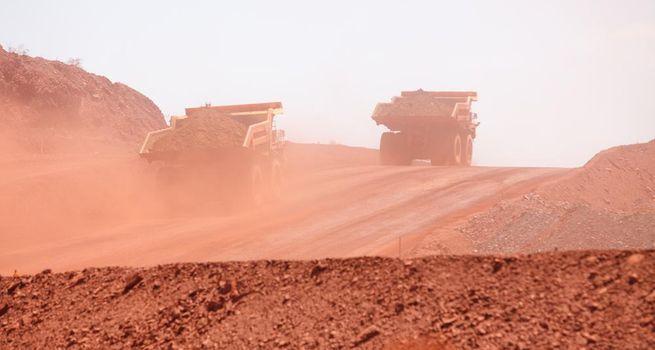
Chalice Mining (ASX:CHN) is an Australian critical minerals explorer and developer whose flagship asset, the Gonneville deposit within the Julimar project in Western Australia, has made it one of the more closely watched names in the country's emerging battery-metals and platinum-group element space. For investors searching what Chalice Mining does and why this ASX stock has been highlighted with a Buy Rating, the essence is this: Chalice is advancing a large, polymetallic discovery containing palladium, platinum, nickel, copper, cobalt and gold, and it is leveraged to both precious-metal and battery-metal demand. Because the company is still pre-production, the story is one of potential rather than current earnings. This feature explores what underpins the Buy Rating, the sector forces at play, and the risks that come with backing a developer at this stage.
Why this ASX stock is attracting investor attention
Chalice has held a place in the spotlight since the Julimar discovery first reshaped perceptions of what Western Australia's geology might hold. The combination of metals at Gonneville is unusual, and it speaks to several investment themes simultaneously.
- Precious-metals exposure through palladium and platinum, which are used in catalytic converters and a range of industrial applications.
- Battery and electrification metals through nickel, copper and cobalt, which are central to the energy-transition narrative.
- A polymetallic system that gives the project multiple potential revenue streams rather than reliance on a single commodity.
For many investors, the appeal lies in the scale and rarity of a discovery of this type within an established, low-jurisdictional-risk mining region. Australia is a well-regulated, infrastructure-rich place to develop a mine, and a sizeable polymetallic deposit close to existing services may be viewed as a strategically significant asset.
Market interest may also reflect the broader thematic backdrop. As governments and manufacturers position for electrification and energy transition, critical minerals have moved up the agenda, and assets that can supply several of them at once may attract particular attention. The Buy Rating has helped focus that interest, but the underlying draw is the nature of the deposit itself.
What the company does
Chalice Mining is a critical minerals explorer and developer. Unlike a producer, it does not yet generate revenue from selling metal. Instead, its work centres on defining, studying and advancing its resources toward a potential development decision.
The Julimar project and Gonneville
The Julimar project in Western Australia is Chalice's flagship, and the Gonneville deposit is its core. Gonneville is described as a polymetallic platinum-group element and base-metals system, meaning it contains a blend of palladium, platinum, nickel, copper, cobalt and gold. This combination is relatively rare and is part of what has made the discovery so notable.
From discovery to development
A project of this kind progresses through a series of stages: exploration and resource definition, technical and economic studies, environmental and permitting work, and ultimately a decision on whether and how to develop. Chalice has previously outlined its intention to advance these studies and approvals processes. Each milestone can materially influence how the market views the company, which is why investors tend to watch a developer's progress closely.
Pre-production status
It is important to be clear that Chalice is pre-production. The value of the company today rests on expectations about what Gonneville could become, not on current cash flows. That makes it a fundamentally different proposition to an operating miner, with both the upside potential and the risk profile that implies.
Sector outlook and market drivers
The investment backdrop for Chalice spans two of the most discussed themes in resources: precious metals and the energy transition.
Platinum-group elements such as palladium and platinum have long played a role in emissions-control technology and industrial processes. Their supply is geographically concentrated, which can make new, well-located sources strategically valuable. Demand dynamics for these metals can shift with changes in technology, vehicle markets and industrial activity.
On the battery-metals side, nickel, copper and cobalt are widely associated with electrification, from electric vehicles to grid infrastructure. Copper in particular is often cited as a metal where long-term demand growth could outpace new supply, given its central role in electrification. These themes are well established, though commodity prices remain volatile and sentiment can swing sharply.
Several drivers may be relevant to Chalice's outlook:
- Energy-transition demand for the base and battery metals in the deposit.
- Supply concentration in platinum-group elements, which can elevate the strategic value of new sources.
- Policy and security-of-supply concerns, as governments increasingly treat critical minerals as a strategic priority.
- Study and permitting progress, which is specific to Chalice and can move the stock independently of commodity prices.
The breadth of Gonneville's metal mix means Chalice is exposed to several of these forces at once, which can cut both ways depending on which prices and themes are in favour.
Why the Buy Rating matters
A Buy Rating on a developer like Chalice is a statement about potential rather than current performance. It suggests a view that the market may be undervaluing the opportunity embedded in the project, or that upcoming milestones could re-rate the shares. It is not a guarantee, and for a pre-production company the gap between potential and realisation can be wide.
In Chalice's case, the Buy Rating appears to rest on the scale and quality of the Gonneville discovery, its polymetallic exposure to in-demand metals, and the optionality that comes with advancing studies and permitting in a tier-one jurisdiction. The rating may reflect confidence that, if the company executes on its development pathway, the value of the asset could become more apparent over time.
For investors, the most useful function of the Buy Rating is to prompt deeper investigation. With a developer, that means scrutinising the project's technical characteristics, the realism of the timeline, the funding pathway and the commodity-price assumptions that underpin the thesis. A Buy Rating is a reason to look more closely, not a substitute for doing so.
Growth drivers investors may be watching
Because Chalice is still advancing toward potential development, its "growth drivers" are really value-creation milestones. Investors may be watching several.
- Resource and study progress. Updates that refine the size, grade or economics of the deposit can reshape the investment case.
- Permitting and approvals. Progress through environmental and regulatory processes is critical for any developer and can be a significant de-risking step.
- Metallurgy and processing. Demonstrating that the polymetallic ore can be processed effectively is important for a complex deposit.
- Funding pathway. How the company plans to finance development, whether through equity, debt, partnerships or other means, is a key consideration.
- Strategic interest. Polymetallic critical-minerals assets in stable jurisdictions can attract interest from larger players, though any such outcome would be speculative.
Each of these could move the company forward, but each also carries the possibility of delay or disappointment. The path from discovery to production is rarely linear.
Dividend appeal and shareholder returns
For income-focused investors, Chalice is unlikely to fit the brief in the foreseeable future. As a pre-production developer, the company does not generate the cash flows from which dividends are typically paid. Any capital it has is far more likely to be directed toward advancing the project than toward distributions.
For Chalice, shareholder returns would, realistically, depend on capital growth rather than income. The thesis is that successful exploration, study and development progress could increase the value of the asset and, in turn, the share price. That is a fundamentally different return profile to an established dividend payer.
Investors considering Chalice should therefore be clear-eyed about what they are buying: exposure to potential capital appreciation tied to a long-dated development story, not a source of regular income. The absence of dividends is entirely consistent with the company's stage and strategy, but it is an important distinction for anyone comparing Chalice with cash-generative producers.
Key risks investors should consider
Developer-stage investments carry a distinctive set of risks, and Chalice is no exception. Investors should weigh these carefully.
- Pre-production risk. With no current revenue, the company's value depends on future outcomes that are not assured.
- Funding risk. Developing a mine requires substantial capital. Raising it may involve dilution, debt or partnerships, each with implications for shareholders.
- Permitting and environmental risk. Approvals processes can be lengthy and uncertain, and outcomes are not guaranteed.
- Technical and metallurgical risk. Polymetallic deposits can be complex to process, and study results may differ from expectations.
- Commodity-price risk. The economics depend on the prices of multiple metals, all of which can be volatile.
- Timeline risk. Development can take years, and delays can affect both economics and sentiment.
- Market risk. As a higher-risk, development-stage stock, Chalice's shares can be volatile and sensitive to shifts in market appetite.
A Buy Rating does not remove these risks; it reflects a judgement that the potential reward may justify them. That judgement is one each investor must make independently.
What could move the stock next
A range of developments could act as catalysts for Chalice, in either direction.
- Study and resource updates that clarify the scale and economics of Gonneville.
- Permitting milestones, which can meaningfully de-risk a project.
- Funding announcements, including how the company intends to finance development.
- Commodity-price movements across palladium, platinum, nickel, copper, cobalt and gold.
- Broader sentiment toward critical minerals and energy-transition themes.
- Any strategic developments, though these are inherently unpredictable.
For a developer, milestone news tends to carry outsized influence on the share price, because each step changes the market's assessment of how likely and how valuable eventual production might be.
Final thoughts
Chalice Mining (ASX: CHN) is one of the more distinctive critical minerals stories on the ASX, built around the polymetallic Gonneville deposit within the Julimar project in Western Australia. Its blend of palladium, platinum, nickel, copper, cobalt and gold ties it to both precious-metals and energy-transition themes, and the Buy Rating reflects a view that this combination, in a stable jurisdiction, may hold significant long-term potential.
That potential comes with the elevated risk inherent in any pre-production developer. There is no current revenue, the path to production involves funding, permitting and technical hurdles, and returns would depend on capital growth rather than dividends. For investors willing to accept that profile, Chalice offers leverage to some of the most talked-about metals in the market. As with any development-stage ASX stock, the prudent approach is thorough independent research and, where appropriate, professional advice suited to your own situation. The Buy Rating is best read as a prompt to dig deeper, not a conclusion in itself.


 Nov 12, 2026





 Please wait processing your request...