
 AU
AU CA
CA NZ
NZ UK
UK US
US IND
IND

 Share
Share
 X (Formerly Twitter)
 Whatsapp
 Facebook
 LinkedIn
 Telegram
 Email This Article
 Copy Link
 Summarize with AI
 Chat GPT
 Perplexity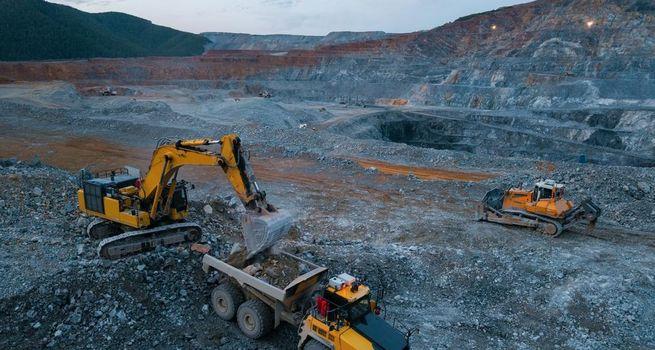
Key Highlights
- Record HY26 NPAT of A$323M (+267% YoY) driven by strong gold sales of A$1.09B and operating cash flow of A$639M
- Eliminated A$300M debt to achieve zero leverage; cash and bullion position of A$930M provides strategic flexibility
- Dividend increased to A$0.15/share (fully franked), tripled from prior year, under 25-50% payout policy aligned with investment grade targets
- Two new Duketon underground mines approved; first ore expected July-September 2026, targeting 350-380k oz FY26 production
- Share price down 0.21% today amid sector-wide gold pullback; 12-month gain of +96.78% reflects strong operational momentum despite current volatility
Regis Resources (ASX:RRL) has emerged as one of Australia's premier mid-tier gold producers, capitalizing on record operational performance and disciplined capital allocation to deliver substantial shareholder value. Despite a sector-wide pullback in gold prices today—which has pressured the stock 0.21%—the company's fundamentals remain compelling, underpinned by record half-year results, zero debt, and strategic growth investments.
With a market capitalization of approximately A$5.33 billion and a 12-month share price gain of +96.78%, Regis Resources has demonstrated resilience and operational excellence. The elimination of A$300 million in debt over the past 12 months, combined with tripled dividend payments and two newly approved underground mines at Duketon, positions the company for sustained growth. This analysis examines why Regis Resources deserves consideration as a core holding in a diversified portfolio, while candidly addressing the risks that warrant careful monitoring.
About the Company
Regis Resources is Australia's second-largest gold producer by volume, operating a portfolio of world-class assets strategically positioned across Western Australia and New South Wales. The company's flagship asset is the Duketon complex in Western Australia's Goldfields region, which Regis owns outright (100%). Duketon comprises multiple mining operations and approved expansions, including two newly sanctioned underground mines expected to commence ore production between July and September 2026.
Beyond Duketon, Regis holds a 30% joint venture stake in the Tropicana gold project, also located in Western Australia, operated by AngloGold Ashanti. This partnership diversifies revenue streams and provides exposure to one of Australia's premier gold mines without the capital burden of sole operation. Together, Duketon and Tropicana form the productive core of Regis's operations.
The McPhillamys gold project in New South Wales represents a material component of the company's asset base, though it currently faces headwinds. The project has been granted Section 10 protection—a critical regulatory milestone—but carries an impairment charge of A$192 million, reflecting current economic unviability given prevailing gold prices and operating cost assumptions. Regis management maintains a strategic view of McPhillamys as a potential value creator in a higher gold price environment, but the project remains shelved pending improved market conditions.
As of March 2026, Australia is the world's second-largest gold producer by volume, projected to produce approximately 340 tonnes in FY26 (up 16% from prior year). Regis's position as a major contributor to Australia's gold output underscores its significance to the nation's mining sector and economic resilience.
Why the Stock Is Moving Today
Regis Resources' shares fell 0.21% today, reflecting a sector-wide pullback in gold equities rather than company-specific negative developments. Gold prices have retreated to approximately A$7,200–7,400 per ounce—still elevated by historical standards but down from recent highs. This pullback has triggered profit-taking across gold mining equities, including large-cap producers and mid-tier operators like Regis.
It is crucial to distinguish between price-driven sector rotation and fundamental deterioration. Regis reported record results in HY26 (ended 31 December 2025), demonstrated zero debt, and expanded its dividend. Today's decline represents a valuation repricing rather than a loss of operational momentum. Indeed, the company's 12-month return of +96.78% reflects investor recognition of improving fundamentals; the current pullback offers a potential re-entry opportunity for strategic investors.
Historical context is instructive: Australian gold equities are inherently cyclical, and modest pullbacks are typical following extended rallies. Regis's strong balance sheet, positive free cash flow generation, and near-term growth catalysts—including first ore from new Duketon underground mines—suggest the current weakness is tactical rather than structural. Investors who maintain conviction in gold's long-term inflation-hedge properties and Regis's cost discipline may view today's decline as a buying opportunity.
Industry Trends and Market Context
The global gold market operates within a macro environment characterized by persistent geopolitical uncertainty, elevated inflation expectations, and central bank policy divergence. Gold, historically valued as a store of wealth and inflation hedge, benefits from these structural tailwinds. Central bank demand remains robust, particularly in emerging markets diversifying foreign reserves away from USD concentration.
Australia's gold sector is experiencing a production surge, with FY26 projected output of 340 tonnes representing a 16% increase from prior year. This expansion reflects both greenfield development and operational optimization at mature operations. Higher gold prices (A$7,200–7,400/oz) have improved project economics across the industry, enabling smaller and mid-tier producers like Regis to expand capacity profitably.
Cost inflation remains an industry headwind. Regis's All-In Sustaining Cost (AISC) guidance of A$2,610–2,990 per ounce for FY26 reflects pressure from labour, energy, and transport costs. However, Regis's operational efficiency and scale provide relative cost advantages compared to smaller peers. The company's capital discipline—exemplified by zero debt and positive free cash flow—positions it to weather cost cyclicality.
Regulatory trends are increasingly relevant. McPhillamys' Section 10 protection milestone demonstrates Regis's ability to navigate complex approval processes, though permitting timelines remain uncertain in Australia. ESG expectations are rising, and Regis's demonstration of debt discipline and dividend sustainability support investor confidence in responsible capital stewardship.
Financial Performance and Balance Sheet Strength
Regis Resources' HY26 (ended 31 December 2025) results represent a watershed moment for the company's financial trajectory. Net profit after tax reached a record A$323 million, an extraordinary +267% increase year-over-year. This surge reflects both higher gold prices and improved operational volumes, creating a powerful earnings inflection that has attracted institutional investor interest.
Gold sales reached A$1.09 billion in HY26, demonstrating substantial revenue generation. Operating cash flow of A$639 million underscores the company's ability to convert sales into tangible liquidity. This robust cash generation has funded three critical strategic initiatives: debt reduction, dividend growth, and capital investment in new mining capacity.
The balance sheet transformation is remarkable. Twelve months ago, Regis carried A$300 million in debt. Today, it operates with zero leverage—a strategic achievement that fundamentally improves financial flexibility and reduces refinancing risk. Cash and bullion holdings of A$930 million represent approximately 6.3 months of HY26 operating cash flow, providing substantial strategic optionality for M&A, accelerated development, or shareholder returns.
Dividend policy reflects management confidence in sustainable earnings. Regis increased the dividend to A$0.15 per share (fully franked), representing a threefold increase from prior distributions. The payout ratio target of 25–50% aligns with investment-grade discipline while signalling confidence in underlying cash generation. For Australian tax residents, franking credits enhance the effective dividend yield, making Regis attractive to both domestic and international investors.
Free cash flow generation is robust. With operating cash flow of A$639 million in HY26 and disciplined capital expenditure, Regis is generating meaningful free cash flow that funds both growth and shareholder returns. This capital allocation flexibility is a hallmark of a maturing, well-managed company.
Investment Risks and Challenges
Gold price volatility represents the primary external risk to Regis's valuation. The company's earnings are directly exposed to gold price fluctuations. While gold provides structural inflation protection, short-term volatility can create equity market dislocations—as evidenced by today's sector-wide pullback. Investors must maintain conviction that gold's long-term fundamentals justify holding through cyclical weakness.
McPhillamys represents an existential uncertainty. The A$192 million impairment reflects current economic unviability; the project may never generate returns if gold prices remain below project cost thresholds or if regulatory challenges emerge. While Section 10 protection is a positive step, investors should view McPhillamys as an option (with limited upside in near-term) rather than a core value driver.
Cost inflation pressures are real and ongoing. AISC guidance of A$2,610–2,990 per ounce reflects inflationary pressures on labour, fuel, and logistics. If inflation accelerates faster than gold prices rise, margin compression is possible. Regis's operational efficiency mitigates this risk relative to peers, but cost inflation remains material.
Execution risk on growth projects is non-trivial. Two new Duketon underground mines are approved for launch in July–September 2026, with production ramping thereafter. Underground mining is capital-intensive and technically complex; delays or cost overruns could impact guidance. Regis has demonstrated competent project management historically, but execution risk is inherent.
Regulatory and permitting risk persists. While McPhillamys' Section 10 protection is encouraging, future development approvals may face political or environmental challenges. Australia's mining regulatory environment is evolving, with increasing ESG requirements. Regis's track record of community engagement mitigates this risk, but it remains a material consideration.
Geopolitical and operational risk includes potential supply chain disruptions, labour disputes, or environmental incidents. Gold mining operations carry inherent safety and environmental responsibilities. While Regis has not experienced material incidents recently, operational disruptions could impact production and cash flow.
Future Growth Drivers
The two newly approved Duketon underground mines represent the company's most material near-term growth catalyst. First ore is expected July–September 2026, with production ramping in subsequent quarters. These operations are designed to extend Duketon's operational life, increase annual production towards the upper end of FY26 guidance (350–380k oz), and maintain cost efficiency through scale. Successful execution would sustain Regis's production profile and free cash flow generation through the next decade.
The Tropicana joint venture (30% stake, AngloGold Ashanti-operated) provides optionality for incremental growth. If AngloGold Ashanti approves expansions at Tropicana, Regis would benefit from proportionate production increases without proportionate capital expenditure. The operational partnership with a large-cap operator reduces execution risk.
McPhillamys represents a longer-dated option. If gold prices sustainably exceed A$8,000–8,500 per ounce and regulatory pathways clear, McPhillamys could become value-accretive. However, this should be viewed as upside optionality rather than core guidance. A sustained higher gold price environment would provide multiple expansion and permit strategic reactivation assessment.
Operational leverage to gold prices is asymmetric to the upside. Regis's zero debt structure and disciplined capital allocation mean incremental gold price appreciation flows directly to operating cash flow and shareholder value. At current A$7,200–7,400/oz, a 10% price increase generates material earnings upside without corresponding cost inflation. This operational gearing is a key bull-case driver.
Capital return optionality has expanded with zero debt and strong cash generation. Regis could accelerate buybacks, increase dividends, or fund special distributions without impairing balance sheet strength. As earnings stabilize, capital return options may expand further, providing upside for shareholder wealth creation.
Long-Term Investment Perspective
From a long-term wealth creation standpoint, Regis Resources offers a compelling combination of operational quality, financial discipline, and exposure to structural gold market tailwinds. The company has transformed from a modestly profitable mid-tier producer into a fortress-like operator with record earnings, zero debt, and strategic growth projects. This trajectory suggests management competence and capital discipline worthy of investor confidence.
Gold's role as a portfolio diversifier and inflation hedge remains structurally relevant. Central bank demand is rising, geopolitical uncertainty persists, and fiat currency debasement risks are non-negligible. Regis provides leveraged exposure to gold prices while offering dividend yield (enhanced by franking), production growth, and balance sheet strength. For Australian investors, Regis is a higher-conviction alternative to physical gold holdings or gold ETFs.
The 12-month return of +96.78% reflects investor recognition of improving fundamentals, but valuations have expanded accordingly. Near-term returns will be driven by (1) Duketon underground ramp-up execution, (2) FY26 earnings delivery versus guidance, (3) gold price trajectory, and (4) dividend sustainability. Patient investors with 3–5 year holding periods should be rewarded by production growth, dividend expansion, and potential multiple re-rating as Regis approaches large-cap status.
Dividend sustainability and growth offer a structural return driver independent of gold price appreciation. With a 25–50% payout ratio and strong free cash flow generation, Regis can grow dividends mid-single digits annually while maintaining balance sheet strength. For income-focused investors, the combination of yield and growth is compelling.
Downside protection is meaningful given zero debt, A$930 million cash and bullion reserves, and positive free cash flow generation. Even in a stressed gold price scenario (e.g., A$5,500/oz), Regis would likely remain profitable and maintain dividends, though at reduced levels. This downside resilience is atypical for commodity producers and reflects management's financial stewardship.
Key Financial Metrics and Valuation Considerations
Regis Resources trades on an estimated FY26 EV/EBITDA multiple in the 6.5–7.5x range, depending on gold price assumptions. This valuation is reasonable relative to large-cap peers (typically 7–9x) and reflects Regis's scale and profitability, but trades a modest discount reflecting execution and McPhillamys risk.
The dividend yield at current prices (~A$7.04) is approximately 2.1% on a fully-franked basis (A$0.15 annual dividend). With franking credits grossed up, the yield equivalent for Australian tax residents approaches 3.0%, competitive with fixed income and superior to dividend-growth indices.
Price-to-book is approximately 1.1–1.2x, reflecting reasonable valuation relative to net asset value. Importantly, this excludes the strategic value of approved development projects (Duketon underground) and McPhillamys optionality.
Return on equity (ROE) is strong, with HY26 profit of A$323 million annualizing to ~A$650 million, implying 15%+ ROE on a normalized equity base. This reflects efficient capital deployment and operational leverage.
The debt-to-equity ratio is 0%, a stark improvement from 0.25x twelve months prior. This fortress balance sheet is a key differentiator from leveraged peers and provides strategic flexibility.
Production guidance of 350–380k oz for FY26 implies ~A$2.5 billion in gross gold revenue at A$7,200/oz, underpinning earnings visibility and cash flow sustainability.
Conclusion and Investment Recommendation
Regis Resources stands at an inflection point in its corporate evolution. The transition from a modestly profitable regional operator to a fortress-like mid-tier gold producer with record earnings, zero debt, and strategic growth projects is genuine and material. Record HY26 results, tripled dividends, and two newly approved underground mines at Duketon represent proof points of management competence and strategic vision.
Today's 0.21% share price decline, while psychologically uncomfortable, reflects sector-wide cyclicality rather than fundamental deterioration. Gold prices have retreated to A$7,200–7,400/oz, a level that still supports robust earnings for Regis and remains elevated versus long-term historical averages. Investors who maintain conviction in gold's structural role as an inflation hedge and portfolio diversifier may view the current weakness as a tactical entry point.
The investment case rests on four pillars: (1) operational excellence and record earnings inflection; (2) fortress balance sheet with zero debt and A$930 million in cash and bullion; (3) near-term growth catalysts from Duketon underground ramp-up; (4) sustainable dividend growth aligned with investment-grade discipline. These fundamentals are robust and resilient to moderate downside scenarios.
Material risks warrant careful consideration: McPhillamys remains economically unviable at current assumptions; gold price volatility could impair earnings; cost inflation pressures persist; and execution risk on growth projects is non-negligible. Prudent investors should size positions accordingly and maintain diversification across sectors and asset classes.
For investors with a 3–5 year investment horizon, conviction in gold's long-term role as a portfolio diversifier, and comfort with mining sector cyclicality, Regis Resources merits consideration as a core holding. The combination of operational quality, financial discipline, production growth, and dividend expansion offers an asymmetric risk-reward profile. At current valuations (post-decline), the risk-reward balance is attractive, particularly for accumulation-oriented investors. Those seeking defensiveness should consider the McPhillamys risk and gold price cyclicality as material portfolio headwinds.
Conclusion
Regis Resources represents a quality mid-tier gold producer at an inflection point in its corporate development. The company has delivered record HY26 results, eliminated A$300 million in debt over 12 months, and positioned itself for sustained production growth through newly approved Duketon underground mines. The tripled dividend, backed by a conservative 25–50% payout ratio, demonstrates management's confidence in sustainable earnings.
Today's 0.21% share price decline is tactical sector rotation driven by gold price weakness rather than fundamental deterioration. At A$7,200–7,400/oz, gold prices remain elevated by historical standards and support robust earnings for Regis. Investors maintaining conviction in gold's long-term structural role and Regis's operational excellence may view current weakness as re-entry opportunity.
The investment case is supported by fortress balance sheet strength (zero debt, A$930 million cash), attractive dividend yield (3.0% grossed-up), near-term growth catalysts (Duketon underground), McPhillamys represents an impaired option with potential value in higher gold price scenarios, but current economics do not justify development.
Material risks—gold price volatility, McPhillamys uncertainty, cost inflation, execution risk—warrant careful position sizing and portfolio diversification. Conservative investors should view Regis as a satellite position; growth-oriented investors with commodity conviction may see core holding potential.
For investors with 3–5 year time horizons, conviction in gold's inflation-hedge properties, and comfort with mining cyclicality, Regis Resources offers compelling risk-adjusted returns through a combination of earnings growth, dividend expansion, and balance sheet-driven shareholder returns. Current valuations (post-decline) are attractive for patient, conviction-driven investors.
Questions Investors Are Asking About Regis Resources
Below are ten frequently asked questions addressing investor concerns and validating the investment thesis.
Questions Investors Are Asking About Regis Resources
Q1: Why did Regis Resources' share price fall 0.21% today if fundamentals are strong?
The decline reflects a sector-wide gold price pullback (gold down to A$7,200–7,400/oz) rather than company-specific negative news. This is typical cyclical behavior in commodities equities. Regis reported record HY26 results, zero debt, and increased dividends, supporting a constructive fundamental case. Investors viewing the decline as tactical weakness may see re-entry opportunity.
Q2: Is the McPhillamys impairment a major concern for long-term investors?
McPhillamys carries a A$192 million impairment, reflecting current economic unviability. However, the Section 10 protection milestone is strategically important and positions the project for potential reactivation if gold prices sustainably exceed A$8,000–8,500/oz. Until that scenario materializes, McPhillamys should be viewed as a call option rather than core value driver. It is priced into current valuations as impaired.
Q3: Can Regis sustain its A$0.15 dividend given gold price volatility?
Yes. Regis's 25–50% payout ratio provides substantial margin of safety. Even at a 20% lower gold price, free cash flow would support current dividends. With zero debt and A$930 million in cash reserves, Regis has financial flexibility to maintain dividends through commodity cycles. The dividend is structured conservatively relative to earnings.
Q4: When will the two new Duketon underground mines begin production?
First ore from the new underground operations is expected July–September 2026 (approximately 4–6 months from now). Production will ramp over subsequent quarters, contributing to FY26 guidance of 350–380k oz. Successful ramp-up would extend Duketon's operational life by a decade and sustain production and cash flow profiles.
Q5: What is the all-in sustaining cost (AISC) for Regis's gold production?
FY26 AISC guidance is A$2,610–2,990 per ounce. This reflects inflationary pressures on labour, energy, and logistics. At current gold prices (A$7,200–7,400/oz), this AISC level supports healthy margins. Importantly, Regis's operational efficiency and scale provide relative cost advantages versus smaller peers, mitigating cost inflation risk.
Q6: How does Regis Resources compare to larger gold peers like Newcrest?
Regis (market cap ~A$5.33B) is a mid-tier producer, while Newcrest (market cap ~A$12B) is a large-cap. Regis offers higher growth optionality (Duketon underground, potential McPhillamys upside) and superior leverage to gold prices due to zero debt. Newcrest offers greater scale and geographic diversification. Both are quality operators; selection depends on investor preference for growth versus stability.
Q7: Is Regis Resources suitable for conservative income investors?
Yes, with caveats. The A$0.15 fully-franked dividend (effective yield ~3.0% with franking) appeals to Australian income investors. However, mining equities are inherently volatile due to commodity price sensitivity. Conservative investors should size Regis as a satellite position (5–15% of portfolio) within a diversified asset mix rather than a core holding.
Q8: What macro factors could derail Regis's bull case?
Primary risks include: (1) sustained gold price derating below A$6,500/oz, which would impair earnings; (2) recession scenario reducing central bank demand for gold; (3) cost inflation exceeding gold price appreciation; (4) execution delays on Duketon underground; (5) adverse regulatory developments. While these risks are real, Regis's zero debt and cash reserves provide downside protection versus leveraged peers.
Q9: Should I buy Regis Resources today despite the share price decline?
This depends on your investment thesis and time horizon. If you believe gold remains a portfolio diversifier, respect Regis's operational quality, and have a 3–5 year holding period, today's weakness offers entry opportunity. If you are concerned about near-term gold price volatility or require defensive stability, consider waiting for greater clarity on macroeconomic conditions. Position sizing should reflect your risk tolerance; Regis is a quality company, but mining equities are inherently cyclical.
Disclaimer: This article is for informational purposes only and does not constitute financial advice. Investors should conduct their own research and consult with a licensed financial advisor before making investment decisions. Past performance is not indicative of future results.


 Mar 16, 2026




 Please wait processing your request...