
 AU
AU CA
CA NZ
NZ UK
UK US
US IND
IND

 Share
Share
 X (Formerly Twitter)
 Whatsapp
 Facebook
 LinkedIn
 Telegram
 Email This Article
 Copy Link
 Summarize with AI
 Chat GPT
 Perplexity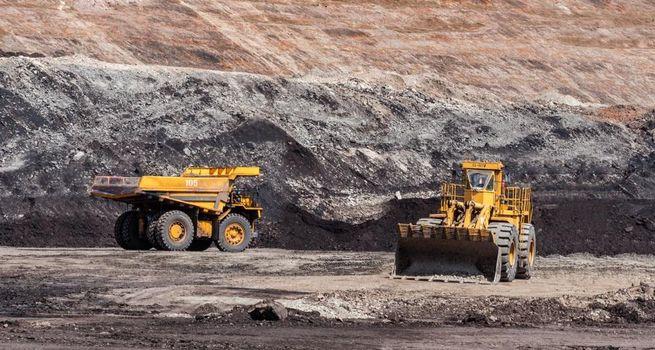
Key Highlights
- FENIX Resources (ASX: FEX) fell 9.33% to close at $0.34 on March 16, 2026, reflecting broader iron ore sector weakness
- Global iron ore market facing significant oversupply with prices forecast to decline from current levels to US$77/tonne in 2026
- Despite production doubling in H1 FY2025-26, FENIX faces headwinds from falling commodity prices and operational complexity
- Company targeting 4.2-4.8 million wmt iron ore sales for FY2025-26, up from 1.4Mtpa base production at Iron Ridge
- Analyst consensus remains cautiously optimistic with average 12-month price target of AUD$1.565, suggesting 360% upside if achieved
- Key risks include declining Chinese steel demand, market oversupply, grade quality compression, and rising operational costs
FENIX Resources Limited (ASX:FEX) shares declined 9.33% to close at AU$0.34 on March 16, 2026, continuing a concerning trend for investors tracking the iron ore sector. The pullback, while steep, reflects broader headwinds facing the mining industry as global iron ore supply expands while demand from key markets, particularly China, continues to weaken.
The company operates as an integrated iron ore mining, logistics, and port services business in Western Australia's Mid-West region, positioning itself for what management has framed as a transformational growth phase. However, market sentiment appears to be increasingly focused on the structural challenges facing commodity producers rather than the medium-term growth prospects FENIX has been promoting.
This analysis examines the factors driving today's decline, assesses FENIX Resources' operational fundamentals, evaluates the broader iron ore industry dynamics, and provides perspective on whether this pullback represents a buying opportunity or a warning signal for investors. Understanding the nuances of FENIX's situation requires examining both near-term headwinds and longer-term competitive positioning.
About FENIX Resources
FENIX Resources Limited is an Australian iron ore mining company with operations centered in Western Australia's Mid-West region. The company's flagship asset is the 100% owned Iron Ridge Iron Ore project, which serves as the foundation of its direct shipping ore (DSO) production.
The company operates an integrated business model combining mining, logistics, and port services. This vertical integration allows FENIX to control the supply chain from mine to export, with iron ore transported via the Newhaul Road Logistics business to Geraldton, where the company operates on-wharf storage and ship-loading facilities at Geraldton port.
As of the financial year ended June 30, 2025, FENIX Resources reported trailing 12-month revenue of AU$205 million. The company has three operational iron ore mines: Shine, which achieved its 1.2Mtpa nameplate capacity with 1,060k wmt shipped, and Beebyn-W11, which commenced production in June 2025 and achieved its nameplate capacity in its first half-year of operation.
Market capitalization stands at approximately AU$301-355 million with approximately 888-900 million shares on issue. The company trades on the Australian Securities Exchange and has also drawn interest from international investors, including potential strategic partnerships with firms like Sinosteel in exploring the Weld Range iron ore project.
Why FENIX Resources Stock Is Falling Today
The 9.33% decline in FENIX Resources shares on March 16, 2026 reflects a convergence of negative factors impacting the stock, though no specific catalyst announcement was identified in market news. Instead, the decline appears driven by sector-wide sentiment deterioration related to iron ore market fundamentals.
First, iron ore price weakness is a primary driver. The Australian government's Resources and Energy Quarterly forecasts iron ore prices at US$77/tonne for 2026, representing a significant decline from current trading levels around US$100-105 per tonne. Macquarie Bank has issued more dire projections, suggesting prices could decline to the US$60s range before decade's end.
Second, while FENIX's production is expanding rapidly, this expansion occurs against a backdrop of global oversupply. Macquarie Bank forecasts a 200 million tonne surplus over the 2026-2028 period, driven by ramp-ups at projects including Onslow, Western Range, and Iron Bridge, alongside declining demand from China.
Third, investor concerns about Chinese steel demand remain acute. China's crude steel production fell to 960.1 million metric tons in 2025, a 4.4% decline from the prior year and the first time annual output fell below 1 billion tons since 2019. This demand destruction is particularly concerning because China consumes the majority of global seaborne iron ore.
Finally, operational complexity is rising. As ore grades decline and mines operate at greater depths, variable output and higher costs are becoming executive-level risk concerns across the Australian mining sector. FENIX, despite its high-quality ore, is not immune to these industry-wide pressures.
Industry Trends and Market Dynamics
The iron ore mining industry is experiencing a critical inflection point in 2026. Australia's iron ore output is projected to grow 2.6% to reach 993.4 million tonnes, driven by ongoing ramp-ups at major projects. However, this supply growth occurs against weakening demand fundamentals.
Global supply dynamics are shifting unfavorably for Australian producers. From 2026 onward, the Simandou projects in Guinea represent significant new supply competition, potentially dampening prices further. Combined with production ramp-ups in Australia itself, the market is moving into structural oversupply.
Demand trends are equally concerning. Chinese crude steel production, the primary driver of iron ore demand, has entered contraction. The 4.4% year-over-year decline in 2025 represents a structural shift rather than a cyclical downturn, driven by China's weaker economic growth, reduced real estate investment, and policy efforts to consolidate steelmaking capacity.
Quality dynamics are also shifting. Australian ore grades are declining as mining operations go deeper and work lower-grade deposits. The global pricing benchmark for most traded iron ore is being adjusted in 2026 to reflect this declining quality. This trend disadvantages mid-grade ore producers and creates demand for higher-quality direct reduction-grade (DR-grade) ore suitable for low-emissions steelmaking via DRI processes.
Price forecasts vary but all point downward. The consensus view suggests iron ore averaging US$77/tonne in 2026, down substantially from current levels, with downside risk to US$60s. This translates to lower export revenues for Australia, forecast to decline from AU$116 billion in FY2024-25 to AU$97 billion in FY2026-27.
FENIX Resources Financial Performance
FENIX Resources is in the midst of a significant production ramp-up that masks underlying commodity price headwinds. In the first half of FY2025-26, the company produced approximately 2.16 million wmt of iron ore, representing 103.6% year-on-year growth. Total shipments reached 2.13 million wmt, up 126.4% year-on-year.
This production expansion is driven by the successful commissioning of the Beebyn-W11 mine and the achievement of nameplate capacity at Shine. Management maintains production guidance of 4.2-4.8 million wmt for the full FY2025-26, representing a trajectory toward the targeted 4 million tonnes per annum run rate.
Revenue performance through June 2025 showed AU$205 million in trailing 12-month revenue. However, investors should recognize that this revenue growth is partly offset by falling commodity prices. Each 10% decline in iron ore prices translates to roughly AU$20 million in annual revenue impact for FENIX, assuming maintained production volumes.
Margins and profitability remain under pressure despite production expansion. While FENIX's direct shipping ore (DSO) product commands a quality premium relative to lower-grade concentrates, the absolute margin profile deteriorates as prices fall. Operating leverage, normally a positive feature for mining companies, becomes a negative when commodity prices decline sharply.
The company's vertical integration in logistics and port operations provides some insulation from commodity volatility, but these operations are subsidiary to mining revenues. Capital expenditure requirements for the production expansion to 4 million tonnes per annum, while internally funded from operations, will constrain cash flow available for shareholder distributions or debt reduction in a lower price environment.
Key Risks for Investors
Commodity price risk represents the most significant threat to FENIX's investment case. Iron ore has historically been volatile, and current forecasts for price declines to US$77/tonne or lower would materially compress operating margins. A further descent to US$60/tonne, while perhaps unlikely, would severely stress profitability and potentially force production curtailment or project delays.
Demand destruction risk is acute given China's economic slowdown. If Chinese steel demand contracts further—beyond the already-announced 4.4% decline in 2025—iron ore prices could fall much faster than consensus forecasts. This risk is elevated by uncertainty around China's economic recovery trajectory and government stimulus effectiveness.
Operational complexity and execution risk are rising. The company's ramp-up to 4 million tonnes per annum involves bringing multiple mines to nameplate capacity simultaneously, managing integrated logistics operations, and coordinating port facilities. Any operational disruptions—whether equipment failures, logistics bottlenecks, or port constraints—could derail production guidance.
Grade quality compression represents a longer-term risk. FENIX's ore quality advantage provides current pricing premiums, but as global demand shifts toward higher-specification direct reduction-grade ore, mid-grade producers may face pricing pressure. Additionally, as mining goes deeper, ore quality can decline, potentially eroding the premium FENIX currently enjoys.
Competitive pressure is mounting. Larger, lower-cost producers like Rio Tinto and BHP Group have greater flexibility to maintain production through price downturns and can fund capital investments more easily. FENIX's smaller scale means less bargaining power with customers and less financial flexibility during commodity downturns.
Financial risk exists if the company pursues aggressive capital spending targets during a downturn. Debt levels could rise if operational cash flow declines faster than management adjusts spending, potentially triggering covenant issues or requiring dilutive equity raises.
Regulatory and environmental risks include changing mining regulations, royalty rate adjustments, and evolving environmental requirements in Western Australia. These could increase operating costs and constrain future production expansion.
Growth Drivers and Expansion Plans
Despite current headwinds, FENIX Resources maintains several growth drivers that support the medium-term investment narrative. The ramp-up to 4 million tonnes per annum production represents the primary organic growth opportunity. This expansion is being executed through the commissioning of Shine and Beebyn-W11 mines, with production doubling in just six months during H1 FY2025-26.
Strategic partnerships offer additional growth potential. The company has been exploring expansion opportunities in the Weld Range iron ore project in collaboration with Sinosteel. This partnership, if successful, could add material additional production capacity beyond the core 4 million tonne target, leveraging FENIX's existing logistics infrastructure and port facilities.
Vertical integration provides operational resilience and margin enhancement. Control over logistics and port operations allows FENIX to optimize transport costs and maintain production even during external logistics constraints. This competitive advantage is particularly valuable in a competitive, lower-price environment where cost control is critical.
Resource expansion remains possible. As FENIX continues mining activities at its iron ore projects, geological studies may identify additional mineable reserves that could extend the life of current operations and support production beyond current guidance.
Market consolidation could create opportunities. If commodity prices remain depressed, smaller competitors may struggle, potentially creating acquisition or partnership opportunities for a well-capitalized, operationally efficient company like FENIX.
Operational efficiencies and cost control are being prioritized. As production ramps, learning curve effects and process optimization typically drive cost reduction. If FENIX can achieve 10-15% cost reductions through operational improvements, this would materially enhance profitability across a wide price range.
Analyst Outlook and Valuation Perspectives
The analyst consensus view on FENIX Resources remains cautiously optimistic despite today's share price decline. According to equity research aggregated from multiple analysts, the average 12-month price target for FENIX Resources is AU$1.565, with estimates ranging from a low of AU$0.65 to a high of AU$2.77.
At today's closing price of AU$0.34, the average analyst target implies approximately 360% upside potential. This significant differential between current price and consensus target suggests analysts believe current weakness is overdone relative to medium-term fundamentals.
Valuation analysis from fundamental approaches supports this perspective. The Simply Wall St DCF model indicates FENIX is trading at a discount to fair value. Alpha Spread intrinsic valuation estimates the base case fair value at AU$0.847, suggesting the stock is undervalued by 62% at AU$0.325 price levels (the level near today's close).
It's important to note, however, that analyst valuations assume commodity price recovery from current forecast lows and successful execution of the production ramp-up. These assumptions may not hold if the iron ore market enters sustained oversupply or if Chinese demand continues deteriorating.
The relative valuation metrics show FENIX trading at significant discounts to both historical averages and peer company multiples. Price-to-book and EV/EBITDA ratios suggest the market is applying a distress discount despite the company's operationally improving fundamentals.
Key valuation sensitivities include iron ore prices (each AU$5/tonne change impacts value significantly), production volume achievements (hitting 4Mtpa guidance versus falling short), and capital intensity (how much additional capex is required for Weld Range development).
The analyst consensus rating is generally constructive, with most covering analysts maintaining either Buy or Hold recommendations. However, some have initiated Reduce ratings, citing commodity price risk as the primary concern overriding operational positives.
Long-Term Perspective
Viewing FENIX Resources through a long-term lens reveals a company positioned at a critical juncture between near-term headwinds and potential longer-term value creation. The current share price decline should be contextualized within both cyclical commodity dynamics and structural industry changes.
Cyclically, iron ore prices historically cycle between US$50-150 per tonne ranges. Current forecasts of US$77/tonne represent the middle of historical ranges, suggesting perhaps another 20-30% downside risk exists to cyclical lows, but also that mean reversion upward is eventually probable. For FENIX, this suggests that while near-term profitability may compress, the company is unlikely to face existential challenges at US$60-70/tonne prices if it executes cost control effectively.
Structurally, however, the iron ore market is changing. Demand growth from China—which drove the historic boom—is likely permanently lower. This reduces the probability of iron ore returning to the AU$150+ per tonne peaks seen during the 2020-2022 super-cycle. Instead, a new equilibrium at lower price levels is likely, requiring producers to operate profitably at lower prices.
For FENIX specifically, the 4 million tonne per annum production target is achievable and creates meaningful revenue scale. At AU$77/tonne iron ore and current production rates, annual revenue would approach AU$300+ million, supporting significant profitability even at compressed margins.
The Weld Range expansion could be transformational if pursued successfully. Adding several million additional tonnes of annual production capacity at comparable costs would create a AU$500 million+ annual revenue business—a meaningful contributor to Australian mining output and a genuinely significant mid-cap resources company.
Investor horizons matter significantly. Investors with 12-18 month horizons face risk that commodity prices remain depressed and sentiment deteriorates further, creating additional near-term pain. Conversely, investors with 3-5 year horizons may find current valuations attractive, assuming the company executes its production ramp-up and commodity prices recover from cyclical lows.
The key long-term question is whether FENIX Resources can establish itself as a low-cost, mid-tier iron ore producer capable of profitably operating across a wide range of commodity price cycles. If so, the company may compound significant value from current levels. If not, and the company struggles with execution or faces further price deterioration, it could become a troubled asset requiring restructuring.
Q&A: Frequently Asked Questions
Q1: Why did FENIX Resources stock fall 9.33% today?
A: The decline reflects broader iron ore sector weakness driven by forecasts of falling commodity prices (to US$77/tonne in 2026), declining Chinese steel demand (down 4.4% in 2025), and market expectations of global iron ore oversupply through 2028. No specific company announcement was identified, suggesting the decline is sector-driven sentiment rather than company-specific negative news.
Q2: Is FENIX Resources a good investment at current levels?
A: This depends on investment horizon and risk tolerance. Analyst consensus targets suggest 360% upside, but this assumes successful execution and commodity price recovery. Near-term investors face risk of further commodity weakness. Long-term investors may find current valuations attractive if they believe FENIX can achieve its 4 million tonne production target and compete effectively in a lower-price environment.
Q3: What is FENIX Resources' primary business?
A: FENIX operates an integrated iron ore mining, logistics, and port services business in Western Australia. It mines direct shipping ore (DSO) from the Iron Ridge project and related assets, transports ore via the Newhaul Road Logistics business, and operates port facilities at Geraldton for export.
Q4: How much iron ore is FENIX producing?
A: In H1 FY2025-26, FENIX produced 2.16 million wmt of iron ore and shipped 2.13 million wmt. The company targets 4.2-4.8 million wmt for full-year FY2025-26 and is working toward a 4 million tonne per annum run rate.
Q5: What are the main risks facing FENIX Resources?
A: Key risks include falling iron ore prices (each US$10/tonne decline impacts revenues significantly), declining Chinese steel demand, operational execution risks in ramping production, grade quality compression as mining goes deeper, and capital intensity of expansion plans.
Q6: What is the analyst consensus price target for FENIX Resources?
A: The average 12-month price target is AU$1.565, with estimates ranging from AU$0.65 to AU$2.77. This implies significant upside from current levels, assuming commodity price recovery and successful execution of production guidance.
Q7: How does FENIX compare to larger iron ore producers like Rio Tinto or BHP Group?
A: FENIX is significantly smaller but operates a more integrated, nimble business model. Larger producers have greater financial flexibility and lower per-unit costs, but FENIX has faster decision-making and lower capital requirements. FENIX's quality premium (direct shipping ore) partially offsets its cost disadvantage versus major producers' large-scale operations.
Q8: What is the Weld Range project and why does it matter?
A: Weld Range is an iron ore project where FENIX has secured development rights in partnership with Sinosteel. Success here could add significant additional production capacity, potentially enabling FENIX to exceed its current 4 million tonne target and create a larger resource company.
Q9: How dependent is FENIX Resources on Chinese demand?
A: FENIX, like all Australian iron ore producers, is heavily dependent on Chinese demand. China consumes roughly 70-75% of globally seaborne iron ore. Recent Chinese crude steel production declines (4.4% in 2025) directly threaten iron ore demand and prices.
Q10: Is the current share price a buying opportunity?
A: Current levels represent attractive valuations relative to long-term production potential and analyst consensus targets. However, near-term catalysts remain negative. Investors must be comfortable with potential further near-term weakness while waiting for commodity price recovery or successful execution announcements.
Conclusion
FENIX Resources Limited's 9.33% share price decline on March 16, 2026 reflects not company-specific deterioration but rather sector-wide concern about iron ore market fundamentals. Global iron ore oversupply, falling commodity price forecasts, and weakening Chinese steel demand create a challenging near-term backdrop for all iron ore producers, regardless of operational quality or expansion progress.
However, the sell-off appears to price in a pessimistic scenario that may overstate risks relative to FENIX's actual position. The company is operationally executing well, with production doubling in just six months and tracking toward its 4 million tonne per annum target. The integrated business model—combining mining, logistics, and port operations—provides cost control advantages that should allow profitable operations even at lower commodity prices.
Analyst consensus remains supportive, with average price targets suggesting 360% upside potential and valuation analysis indicating the stock trades at 62% discount to estimated fair value. These assessments assume commodity price recovery and successful production execution, both reasonable assumptions for medium-term investors despite near-term uncertainty.
The critical question for investors is investment horizon. Those seeking near-term gains face risk of further weakness if iron ore prices fall faster than forecast or Chinese demand deteriorates further. Those with 3-5 year horizons may find current valuations compelling, particularly if they believe FENIX can establish itself as a profitable, low-cost mid-tier iron ore producer.
The Weld Range expansion opportunity adds optionality, potentially transforming FENIX into a more significant resource company if successfully executed. Success here could validate management's growth strategy and drive substantial shareholder value creation.
For investors considering FENIX Resources at current levels, the fundamental narrative remains intact: a growing, operationally improving company with expansion plans, trading at a cyclical discount while the iron ore sector processes a structural shift in demand geography and volume dynamics. The risk of further near-term weakness is real, but the medium-term reward appears substantial for investors with adequate time horizon and risk tolerance.

 Mar 16, 2026

 Please wait processing your request...