
 AU
AU CA
CA NZ
NZ UK
UK US
US IND
IND

 Share
Share
 X (Formerly Twitter)
 Whatsapp
 Facebook
 LinkedIn
 Telegram
 Email This Article
 Copy Link
 Summarize with AI
 Chat GPT
 Perplexity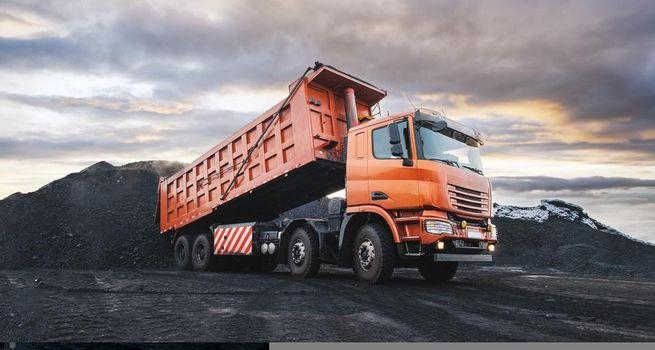
KEY HIGHLIGHTS
- LTR fell 5.93% to $1.58 amid cumulative headwinds from LGES stake exit and lithium oversupply
- H1 FY2026 revenue surged 107% to A$207.5M, but net loss widened to A$184M
- LG Energy Solution sold entire 8% stake (~A$419M) in February 2026; offtake agreement intact
- Kathleen Valley achieved 1 Mtpa run-rate; targeting 1.5 Mtpa by end March 2026
Liontown Limited fell 5.93% to $1.58 on March 16, 2026, extending a difficult period for the lithium developer. The company is caught between impressive operational execution at its Kathleen Valley mine and brutal lithium market conditions. LG Energy Solution's exit from its 8% equity stake in February added to selling pressure. This convergence of negative factors has created a compelling tension for investors: weighing the company's real operational progress against near-term commodity headwinds that threaten profitability.
ABOUT THE COMPANY
Liontown (renamed from Liontown Resources in November 2025) operates the Kathleen Valley lithium project, located 680 kilometers northeast of Perth in Western Australia. Commercial production commenced on July 31, 2024, marking a significant milestone for the company's transition from exploration and development to operating mine. The company targets 500,000 tonnes of spodumene concentrate annually at full capacity. The underlying resource base is substantial: a Mineral Resource of 150 million tonnes at 1.34% lithium oxide equivalent, with an Ore Reserve of 71.7 million tonnes at 1.32% lithium oxide equivalent. Liontown supplies lithium to globally recognized partners including Tesla, Ford Motor Company, and LG Energy Solution, all under long-term offtake agreements that provide revenue visibility and operational certainty.
WHY THE STOCK IS MOVING
The recent 5.93% decline reflects multiple converging headwinds. First, H1 FY2026 financial results revealed a net loss of A$184 million despite revenue surging 107% year-over-year to A$207.5 million. While operational metrics improved dramatically, the bottom line remained deeply negative. A significant portion—A$104.4 million—consisted of non-cash charges related to an LG Energy Solution convertible note derivative, but this does little to ease investor concerns about actual cash profitability. Second, LG Energy Solution executed a block trade in February 2026, selling its entire 239.5 million share holding (representing 8% of the company) at A$1.75-1.79 per share, representing an 8.6% single-day decline. While the offtake agreement remained intact, the stake sale raised questions about confidence from a major strategic customer. Third, the broader lithium market is experiencing significant oversupply, with spot prices insufficient for profitability at current production levels. This structural imbalance in the lithium market is weighing heavily on investor sentiment across the sector.
FINANCIAL PERFORMANCE AND OPERATIONAL METRICS
H1 FY2026 revenue reached A$207.5 million, up 107% year-over-year, demonstrating strong operational ramp-up. However, the net loss of A$184 million—including A$104.4 million in non-cash charges—reveals the disconnect between volume growth and profitability. EBITDA was negative at A$7.7 million, a critical metric indicating the company is not yet generating cash from operations despite higher volumes. Unit operating costs stand at A$985 per dry metric tonne FOB, while All-In Sustaining Costs (AISC) reached A$1,179 per dmt FOB. Production increased 70% year-over-year with plant availability improving to 92%, up 10 percentage points. Mining operations extracted 533 kilotonnes of underground ore across 31 stopes. The company achieved its 1 million tonne per annum run-rate target on schedule, with management targeting 1.5 Mtpa by end of March 2026. Pro forma gearing improved to 22% from 48%, reflecting debt reduction efforts. Current debt stands at approximately A$700 million, a substantial burden in the context of depressed lithium prices.
KEY RISKS AND HEADWINDS
The primary earnings driver—lithium prices—remains volatile and currently insufficient for profitability at the company's cost base. The A$700 million debt burden represents a significant financial risk in a depressed commodity market. Underground mining execution is transitioning to more complex operations, introducing potential scheduling and dilution risks. Global spodumene oversupply is creating fierce competitive pressure, particularly from low-cost Asian operations that can undercut on price. The LGES equity exit, while not terminating offtake commitments, potentially signals reduced confidence in near-term value creation. Profitability depends entirely on a lithium price recovery that remains uncertain in timing and magnitude.
GROWTH DRIVERS AND POSITIVE CATALYSTS
Kathleen Valley is transitioning to underground mining operations, which should unlock higher production rates. The company targets 1.5 Mtpa by end of March 2026, a milestone that would drive significant EBITDA improvement if lithium prices stabilize. Full capacity production should substantially improve unit economics and cash generation. Lithium price recovery forecasts range from US$1,800-2,000 per tonne, which would restore profitability at current cost structures. The Buldania lithium project is in development, offering potential future production growth. The mine has a multi-decade mineral reserve life, providing long-term operational visibility. Strategic offtake agreements with Tesla, Ford, and LG Energy Solution provide essential revenue visibility and reduce commodity price exposure risk. Unit costs are trending lower as production scales and operational efficiency improves.
LONG-TERM PERSPECTIVE
Lithium's long-term demand thesis remains structurally intact. EV adoption acceleration, energy storage proliferation, and supply chain localization efforts in North America and Europe are creating sustainable demand growth well beyond the next decade. Liontown's Kathleen Valley is a world-class asset with competitive cost structure once prices recover. The critical question is timing: can the company survive the lithium price trough with A$700 million in debt, or will it be forced to raise capital at depressed valuations? Strategic customer relationships with Tesla, Ford, and LG Energy Solution provide some protection through offtake agreements, but these agreements are not unconditional.
CONCLUSION
Liontown Limited presents a classic story of operational execution meeting commodity headwinds. The company has demonstrated impressive capability in ramping Kathleen Valley to 1 Mtpa with targeting of 1.5 Mtpa by March 2026, achieving cost improvements, and securing strategic offtake agreements with global customers. Revenue growth of 107% year-over-year and improving operational metrics confirm execution is strong. However, none of this operational excellence translates to profitability when lithium prices trade at levels insufficient to cover the company's A$1,179/dmt AISC. The A$184 million H1 FY2026 net loss and negative EBITDA underscore the reality that volume alone cannot overcome a severe commodity price downturn. The investment case depends fundamentally on lithium price recovery—specifically, prices settling above US$1,800-2,000 per tonne—at which levels the company's world-class asset would become highly profitable. Until then, the company faces pressure from its A$700 million debt burden and the risk of dilutive capital raises if prices remain depressed. For investors, Liontown represents a leveraged bet on lithium demand recovery and price stabilization, not an immediate earnings story. The stock's current weakness reflects appropriate skepticism about the timing and sustainability of profitability improvement.
FREQUENTLY ASKED QUESTIONS
- Why did Liontown stock fall 5.93% today?
The decline reflects cumulative headwinds: H1 FY2026 net loss of A$184M, LG Energy Solution's exit from its 8% stake in February, and broader lithium market oversupply pressuring spot prices.
- Did LGES stake sale terminate the offtake agreement?
No. LG Energy Solution sold its entire 8% equity stake but the long-term offtake agreement for lithium supplies remains intact, providing revenue certainty for contracted volumes.
- When will Liontown achieve profitability?
Profitability depends on lithium price recovery. Current AISC of A$1,179/dmt FOB requires lithium prices well above current levels to generate positive EBITDA, likely requiring prices above US$1,800-2,000/tonne.
- What is the company's debt situation?
Liontown carries approximately A$700 million in debt. While pro forma gearing has improved to 22%, this remains a significant burden given negative EBITDA and is dependent on future price recovery for refinancing.
- What is the timeline for reaching 1.5 Mtpa production?
Management is targeting 1.5 Mtpa by end of March 2026, just weeks away from the reporting date. This ramp would drive significant operational leverage if lithium prices stabilize.
- How competitive is Liontown's cost structure?
AISC of A$1,179/dmt FOB positions Liontown in the middle of the global cost curve, below some high-cost competitors but above the lowest-cost producers in Asia. Costs should improve further with continued production scaling.
- Are the offtake agreements with Tesla and Ford at favorable prices?
The offtake agreements provide volume certainty and protect against some price volatility, but detailed pricing terms are not fully disclosed. These agreements are valuable for securing demand but may not protect against severe commodity price declines.
- What is the risk of dilution from future capital raises?
If lithium prices remain depressed and the company cannot refinance debt at reasonable rates, significant dilution risk exists. An equity raise at current depressed valuations would materially impact existing shareholders.
- What would a 50% lithium price recovery mean for Liontown?
A significant lithium price recovery would drive substantial EBITDA improvement and cash generation. At 1.5 Mtpa production with stable prices above US$1,800/tonne, the company could generate positive cash flow and begin debt reduction, transforming the investment case.

 Mar 16, 2026
 Please wait processing your request...