
 AU
AU CA
CA NZ
NZ UK
UK US
US IND
IND

 Share
Share
 X (Formerly Twitter)
 Whatsapp
 Facebook
 LinkedIn
 Telegram
 Email This Article
 Copy Link
 Summarize with AI
 Chat GPT
 Perplexity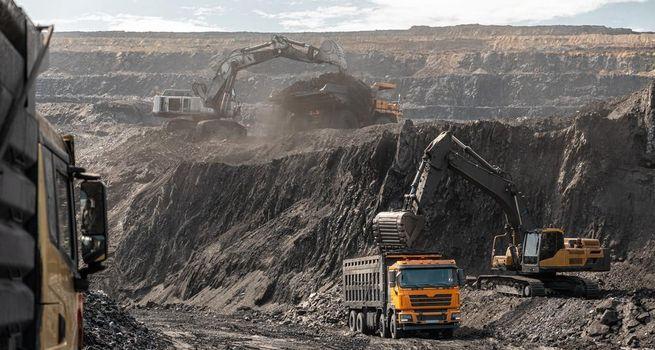
KEY HIGHLIGHTS
- NST dropped 5.38% to $20.58 following third production guidance downgrade in six months
- FY26 production cut from original 1.7-1.85 Moz to above 1.5 Moz—a 15-21% reduction
- 37-year-old Fimiston mill at Super Pit experiencing repeated breakdowns
- A$1.5B KCGM mill expansion commissioning targeted July 2026—a major catalyst
Northern Star Resources (ASX:NST) fell 5.38% to $20.58 on March 16, 2026. Australia's largest primary-listed gold producer has suffered its third production guidance cut in six months, sending shockwaves through the market. The March 13, 2026 announcement cut FY26 guidance to above 1.5 million ounces—down from the original 1.7-1.85 million ounce target. The stock has collapsed 35.6% from its March 2 high of $31.96.
The market's swift reaction—wiping out A$7 billion in market capitalization on the March 13 announcement alone—reflects the severity of investor disappointment. For those who purchased shares at higher levels, the cumulative loss now approaches 35%, making this one of the worst-performing stocks in the ASX 200 over the past month.
ABOUT THE COMPANY
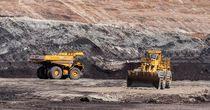
Northern Star is Australia's largest primary-listed gold producer, operating the flagship KCGM Super Pit in Kalgoorlie (one of the world's largest open-pit gold mines), the Jundee Mine, and multiple exploration and development assets across Western Australia. The company is executing a A$1.5 billion mill expansion to double processing capacity.
With market capitalization around A$31.11 billion (at current prices), Northern Star is a critical component of Australia's mining sector and a significant player in global gold production. The company's operational footprint spans the world-class Kalgoorlie region, home to some of Australia's richest gold deposits. Northern Star's success is closely watched as a barometer of sector health and as a bellwether for commodity markets.
The company's strategic importance extends beyond shareholder returns. As a major employer in Western Australia and a significant taxpayer, Northern Star's operational performance has implications for broader economic activity in Australia. Underperformance at the company level ripples through the entire value chain—from equipment suppliers to logistics providers to services contractors.
WHY THE STOCK IS MOVING: THE THIRD GUIDANCE CUT IN SIX MONTHS
The March 13, 2026 operational update revealed the third production guidance cut in six months—from 1.7-1.85 Moz (original) to 1.6-1.7 Moz (January) to above 1.5 Moz (March). This represents a 15-21% reduction from the initial FY26 guidance, a decline that has devastated investor confidence and eroded management credibility.
The primary culprit is the aging 37-year-old Fimiston mill at the Super Pit. The company disclosed that the mill has "buckled again" with highly variable performance, leading to production bottlenecks and unpredictable operational challenges. The repeated use of the word "again" in management commentary signals a pattern of recurring failures rather than one-off incidents.
Additionally, the Jundee operation experienced reduced mining productivity, further constraining output. This suggests the problems extend beyond just the aging mill infrastructure to broader operational challenges across the portfolio.
The replacement mill—the centerpiece of the A$1.5 billion KCGM expansion—is expected to commission in July 2026. However, the new mill will fall approximately 2 million tonnes short of its throughput target for FY26, compounding the production miss. All-in sustaining cost (AISC) guidance was simultaneously raised from A$2,300-2,700/oz to A$2,600-2,800/oz, eroding profitability even further. Higher costs with lower production create a double squeeze on earnings.
The market's reaction was swift and severe. On March 13, the stock collapsed 18.75% in a single session, wiping out approximately A$7 billion in market capitalization. When combined with the 35.6% decline from the March 2 high, the destruction in shareholder value has been substantial. This raises questions about whether current valuations adequately price in further execution risks.
INDUSTRY TRENDS: A SUPPORTIVE MACRO BACKDROP
Despite Northern Star's operational challenges, the broader gold mining sector is operating in a supportive macro environment. Gold prices have been robust, with the 2026 average trading in the $5,000-7,000/oz range—well above historical averages and reflecting ongoing geopolitical uncertainty and inflation concerns.
The Australian government forecasts record domestic gold production of 340 tonnes in 2025-26, representing a 16% year-on-year increase. Multiple new operations are commencing production, and strategic expansions by major producers are advancing across the country. For a well-positioned, large-scale producer like Northern Star, this tailwind should theoretically support strong profitability—if operational execution can be achieved.
This disconnect between favorable macro conditions and poor operational execution at Northern Star is particularly frustrating for investors. It highlights the company's execution challenges are idiosyncratic rather than sector-wide. Competitors operating in similar geographies with similar geology are not experiencing the same production shortfalls, suggesting the issues are management-specific rather than force majeure.
FINANCIAL PERFORMANCE: STRONG FUNDAMENTALS UNDERMINED BY OPERATIONAL ISSUES
Northern Star's financial metrics remain robust in absolute terms, though the production guidance cuts cloud the near-term outlook:
FY2024 sales totaled AUD 4,921.2 million. In the first half of FY26, underlying EBITDA reached AUD 1,876 million, up 34% from AUD 1,402 million in the prior-year period. Realized gold prices averaged A$4,670/oz in 1H FY26, significantly higher than prior-year levels, demonstrating the favorable commodity environment.
Operating cash flow over the trailing 12 months stood at AUD 2.95 billion, with capital expenditure of AUD 2.30 billion. Free cash flow reached AUD 657 million. The company maintains a cash and bullion position of AUD 1.5 billion, with net debt of AUD 1.71 billion. Growth capital is budgeted at AUD 2,315-2,425 million for FY26, with sustaining capital around A$750 million.
The concern is not immediate financial distress but rather the trajectory. As production guidance falls while costs rise, the free cash flow generation (AUD 657M) becomes increasingly critical to fund the ongoing expansion capex. If guidance cuts continue and costs accelerate, Northern Star may face constraints on its ability to self-fund the KCGM expansion and could potentially need to access equity or debt capital markets at unfavorable terms.
KEY RISKS TO MONITOR
Aging Infrastructure: The 37-year-old Fimiston mill with unpredictable breakdowns. Three sequential guidance cuts indicate systemic operational challenges that cannot be easily rectified without capital replacement. The mill replacement is critical.
Fixed Cost Absorption: Production declines increase per-ounce costs, reducing profitability even with stable gold prices. This creates a vicious cycle where operational failures compound cost inflation.
Multi-Asset Productivity Challenges: Issues at Jundee mining across multiple assets suggest systemic productivity challenges beyond just the mill bottleneck.
Mill Expansion Execution Risk: The A$1.5-1.6 billion KCGM mill expansion is complex and represents a pivotal moment for the company. Commissioning delays are possible, and cost overruns could impact shareholder returns.
Capital Intensity: The combined annual capital program of A$3.1-3.2 billion is substantial and limits financial flexibility.
Management Credibility: The repeated guidance misses have eroded management credibility and investor confidence in forecasting accuracy.
GROWTH DRIVERS: THE KCGM MILL EXPANSION OPPORTUNITY
Despite near-term challenges, Northern Star has significant long-term growth drivers that support the bullish analyst consensus:
KCGM Mill Expansion: The A$1.5 billion expansion will double processing capacity from 13 to 27 million tonnes per annum (Mtpa). Once fully operational post-July 2026, this positions the company for substantial production growth and operational efficiency improvements.
Production Trajectory: Expected progression is FY26 520-550koz, FY27 750-800koz, and FY29 850-900koz at KCGM alone. This recovery path supports analyst optimism about the stock's longer-term prospects. Each stage represents meaningful sequential improvement.
Underground Ore Production: Underground ore production is expected to double from 2 to 4 Mtpa in FY26, providing more stable, predictable ore supply less subject to weather and operational vagaries.
Ore Stockpiles: KCGM stockpiles have grown to approximately 100koz of high-grade ore, creating optionality for processing flexibility and providing a buffer against future production disruptions.
Fimiston South Project: The approved Fimiston South Project extends the Super Pit's operating life to 2034, providing decades of additional production potential and making this one of the world's longest-life open-pit gold mines.
LONG-TERM PERSPECTIVE: NEAR-TERM PAIN, LONG-TERM GAIN
The KCGM mill expansion fundamentally transforms Northern Star's production profile. The company's transition from an aging, unreliable mill to a modern, high-throughput facility should resolve the operational bottleneck that has plagued FY26. Near-term production pain and cost inflation should give way to significant production uplift and operational leverage in FY27-FY29.
The critical question for investors is whether they can tolerate further operational setbacks or guidance misses before the new mill delivers.
For value investors with patience and conviction in Northern Star's long-term assets and production trajectory, the current pullback may represent a compelling entry point. For momentum investors or those with lower risk tolerance, the elevated execution risk and recent credibility damage may warrant waiting for confirmation of operational improvements before adding exposure.
CONCLUSION: A CRITICAL INFLECTION POINT
Northern Star Resources stands at a critical inflection point. The company's operational challenges—exemplified by the aging Fimiston mill and the third guidance cut in six months—have rightfully tested investor patience and confidence. The stock's 35.6% decline from its March 2 high reflects the severity of these concerns.
However, the fundamentals supporting long-term value remain intact. The A$1.5 billion KCGM mill expansion will transform the company's production profile, unlocking significant growth in FY27-FY29.
The key variable is execution. If Northern Star can successfully commission the new mill and achieve the guided production ramp without further setbacks, the stock offers compelling upside from current levels. If additional operational challenges emerge, downside risks remain elevated. At A$20.58, the market is pricing in substantial execution risk—and for patient investors with conviction in the company's assets and strategy, this may represent a meaningful buying opportunity. The next 12 months will be critical in determining whether Northern Star can restore credibility through operational delivery.
INVESTOR Q&A
Q1: Why has Northern Star cut guidance three times in six months?
A: The primary driver is the aging 37-year-old Fimiston mill, which has experienced repeated breakdowns ("buckled again") with unpredictable performance. Jundee also faced productivity challenges. Together, these operational issues have constrained total production below expectations.
Q2: When will the new KCGM mill come online?
A: The A$1.5 billion mill expansion is targeted for commissioning in July 2026. However, it will fall short of its full throughput target in FY26, with full capacity expected in subsequent years as the mill ramps to full production.
Q4: How much will the KCGM mill expansion cost?
A: The capital investment is approximately A$1.5 billion. This represents a substantial commitment but is intended to double processing capacity from 13 to 27 Mtpa, setting up the company for significant production growth.
Q5: What is Northern Star's debt situation?
A: Net debt is AUD 1.71 billion, with cash and bullion of AUD 1.5 billion. Operating cash flow of AUD 2.95 billion (trailing 12-month) supports debt servicing comfortably. However, the substantial capex program limits near-term debt reduction capacity.
Q6: When should production start recovering?
A: FY27 should see meaningful recovery with KCGM production of 750-800koz. FY29 is expected to reach 850-900koz as the mill fully ramps. These levels represent significant improvement from FY26's above-1.5 Moz guidance.
Q7: Is Northern Star facing financial distress?
A: No. While operational challenges are serious, Northern Star maintains strong cash generation (AUD 657M free cash flow), manageable debt, and continues to fund the KCGM expansion. Financial distress is not the concern—operational execution is.
Q8: Should I buy Northern Star now?
A: This depends on your risk tolerance and investment horizon. Conservative investors may wait for operational improvements to be confirmed. Value investors may find current prices attractive given the long-term growth potential.
Q9: What is the gold price assumption in analyst models?
A: Most analyst models assume gold prices in the AUD 5,000-6,500/oz range, consistent with recent trading. At current levels of AUD 4,500+/oz, the sector benefits from supportive pricing that enhances profitability.
Q10: What would cause further downside for Northern Star stock?
A: Further guidance cuts, KCGM expansion delays, significant cost overruns, or a sharp decline in gold prices could pressure the stock further. Conversely, successful mill commissioning and production ramp would likely drive significant upside.
This analysis is provided for informational purposes only and should not be construed as investment advice. Readers should conduct their own due diligence and consult with professional advisors before making investment decisions.

 Mar 16, 2026


 Please wait processing your request...