
 AU
AU CA
CA NZ
NZ UK
UK US
US IND
IND

 Share
Share
 X (Formerly Twitter)
 Whatsapp
 Facebook
 LinkedIn
 Telegram
 Email This Article
 Copy Link
 Summarize with AI
 Chat GPT
 Perplexity
Highlights
- Fund closures are often driven by strategy capacity rather than poor performance
- Asset growth can dilute returns, especially in niche or illiquid strategies
- Closing to new money can protect execution quality for existing holders
- Reopenings may occur when market conditions or capacity constraints ease
In the world of managed funds, investors occasionally encounter a notice stating that a fund is “closed to new money.” While the phrase can sound alarming or exclusionary, it is often a deliberate and strategic decision by fund managers. Understanding why funds close to new capital—and how such closures affect existing and prospective participants—helps clarify what this signal really means within portfolio management and fund operations.
What Does “Closed to New Money” Mean?
When a fund closes to new money, it stops accepting additional investments from new participants and, in some cases, from existing holders. Importantly, this does not mean the fund is shutting down or liquidating. The fund continues to operate, manage its portfolio, and allow redemptions, but limits or halts inflows.
Closures can be temporary or indefinite. Some funds close fully, while others implement “soft closures,” allowing existing holders to add limited capital while blocking new entrants.
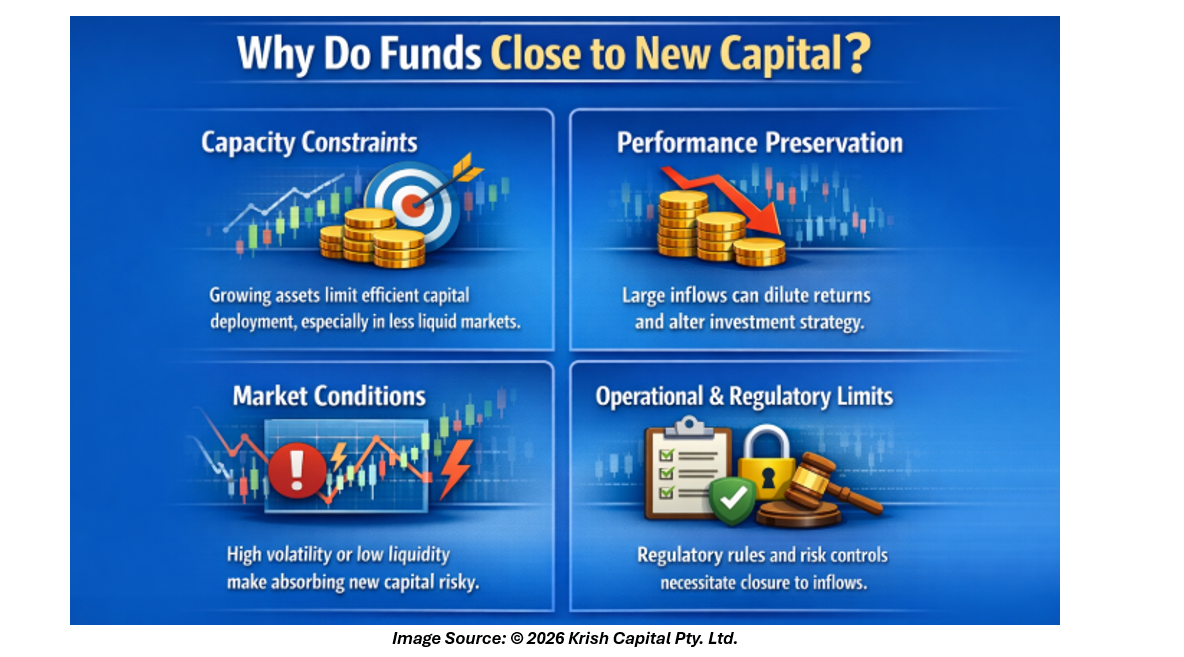
Capacity Constraints
Many investment strategies work best within a defined asset size. As funds grow larger, it can become harder to deploy capital efficiently without affecting prices or increasing transaction costs. This is particularly relevant for strategies focused on small-cap equities, credit markets, or less liquid assets.
When a fund approaches its practical capacity, managers may close it to preserve flexibility and avoid forced compromises in portfolio construction.
Performance Preservation
Excessive inflows can dilute returns. For example, a manager may be forced to hold higher cash balances or invest in less attractive opportunities simply to absorb incoming capital. Closing the fund can help maintain alignment with the original investment thesis and performance objectives.
Market Conditions
Periods of heightened volatility or reduced liquidity can prompt closures. In such environments, deploying large amounts of new capital without disrupting markets may be difficult. Temporarily closing the fund allows managers to focus on risk management rather than capital absorption.
Operational and Regulatory Considerations
In some cases, regulatory limits, internal risk controls, or operational constraints—such as limits on derivatives exposure or counterparty capacity—can necessitate a pause on inflows.
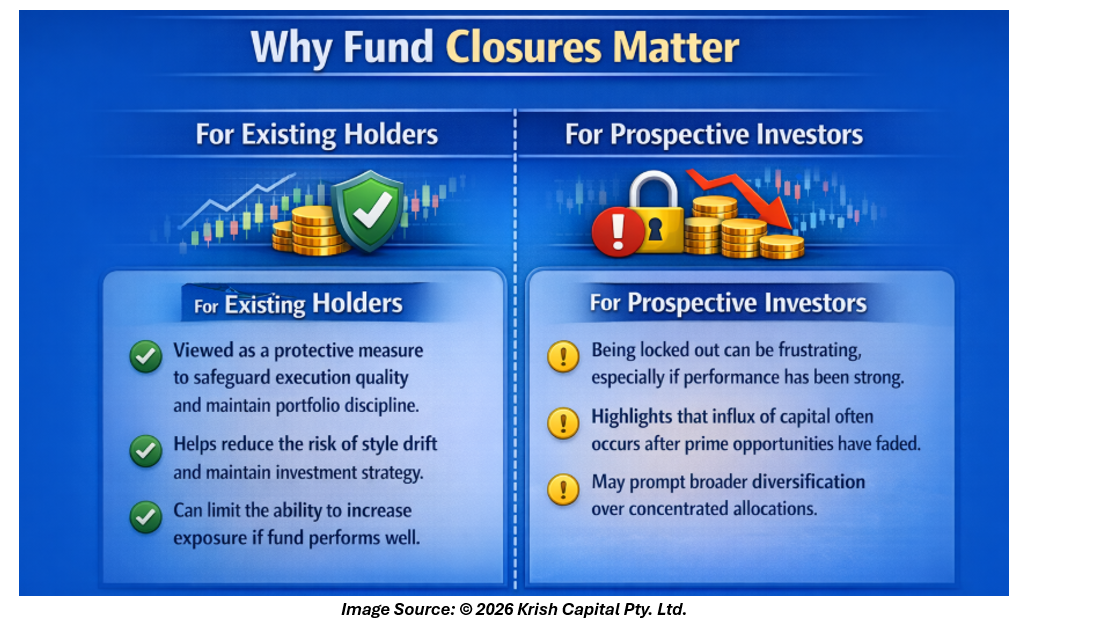
For Existing Holders
A closure is often viewed as a protective measure. By limiting inflows, managers aim to safeguard execution quality, maintain portfolio discipline, and reduce the risk of style drift. However, closures can also limit the ability of existing holders to increase exposure if the fund performs well.
For Prospective Investors
Being locked out of a closed fund can be frustrating, especially if performance has been strong. However, closures can also serve as a reminder that past returns often attract capital after opportunities have narrowed. Access restrictions may encourage broader diversification rather than concentrated allocations.
As a Market Signal
A fund closing to new money may signal that the strategy is capacity-sensitive or that the manager is prioritising long-term process over short-term asset growth. While not a guarantee of future performance, it can indicate discipline in fund management.
Can Closed Funds Reopen?
Yes. Funds may reopen when assets decline due to redemptions, market conditions improve, or new opportunities expand capacity. Reopenings may be gradual, with limits on subscription sizes, or fully open depending on circumstances.
Conclusion
Funds closing to new money is a common and often misunderstood practice. Rather than signalling trouble, closures frequently reflect capacity management, risk control, and a desire to preserve strategy integrity. For participants, understanding the reasons behind such decisions provides context for evaluating fund structure, scalability, and long-term alignment with stated objectives.


 Mar 06, 2026




 Please wait processing your request...