
 AU
AU CA
CA NZ
NZ UK
UK US
US IND
IND

 Share
Share
 X (Formerly Twitter)
 Whatsapp
 Facebook
 LinkedIn
 Telegram
 Email This Article
 Copy Link
 Summarize with AI
 Chat GPT
 Perplexity
Image source: © 2025 Krish Capital Pty.Ltd
Highlights
- Currency fluctuations can significantly affect the AUD value of international holdings, influencing overall portfolio returns.
- Diversification, currency-hedged funds, and stable currency allocation are key strategies to manage currency risk.
- Broad adoption of hedging by Australian businesses and superannuation funds helps stabilise both individual portfolios and the wider economy.
Currency risk, also called foreign exchange risk, is the potential for changes in the value of the Australian dollar relative to other currencies to impact the value of overseas investments. When assets are held in foreign currencies, fluctuations in exchange rates can increase or reduce the Australian dollar value of those assets regardless of how well the underlying investment performs. This introduces an added layer of uncertainty to international holdings, as returns can be influenced by both the asset’s performance and currency movements.
How Currency Risk Affects Australian Portfolios
Changes in exchange rates can affect the value of international holdings in several ways. For example, if the Australian dollar weakens against a foreign currency, the Australian dollar value of overseas assets may increase, boosting portfolio returns. Conversely, if the Australian dollar strengthens, it can reduce returns when foreign assets are converted back to Australian dollars. This volatility can add complexity to managing portfolios and create unpredictability in overall portfolio performance.
Strategies to Manage Currency Risk
There are several approaches to managing currency risk in portfolios with international exposure:
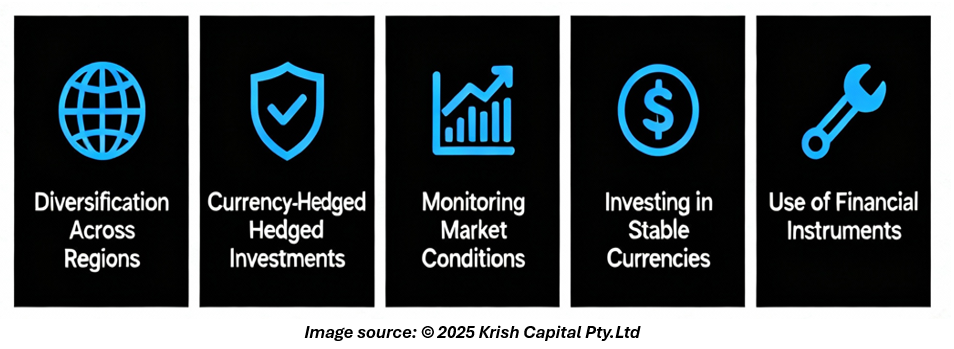
- Diversification Across Regions: Spreading investments across multiple countries and currencies can reduce dependence on any one currency’s performance. Losses in one currency may be offset by gains in another.
- Currency-Hedged Investments: These products aim to minimise the effect of exchange rate movements by converting foreign currency returns back to Australian dollars, stabilising portfolio value against currency swings.
- Monitoring Market Conditions: Keeping an eye on currency trends and economic indicators helps in making informed decisions about when to increase or reduce exposure to foreign currencies.
- Investing in Stable Currencies: Focusing on countries with relatively stable and strong currencies may lower risks associated with large fluctuations.
- Use of Financial Instruments: Advanced strategies like forward contracts or options can lock in exchange rates ahead of time, helping to reduce currency risk.
Hedging and Its Role
Hedging currency movements can protect against adverse exchange rate shifts that reduce portfolio returns. With the Australian dollar often below its long-term average against currencies like the US dollar, currency hedging becomes particularly relevant. Hedged international funds focus on minimising currency impact, although these strategies may come with additional costs and fees. Deciding whether to hedge depends on individual portfolio strategy and risk tolerance, as currency movements can sometimes work in favor of portfolio returns.
How Currency Volatility Influences Hedging Decisions
An important consideration in managing currency risk is the relative volatility of the Australian dollar compared to overseas equity markets.
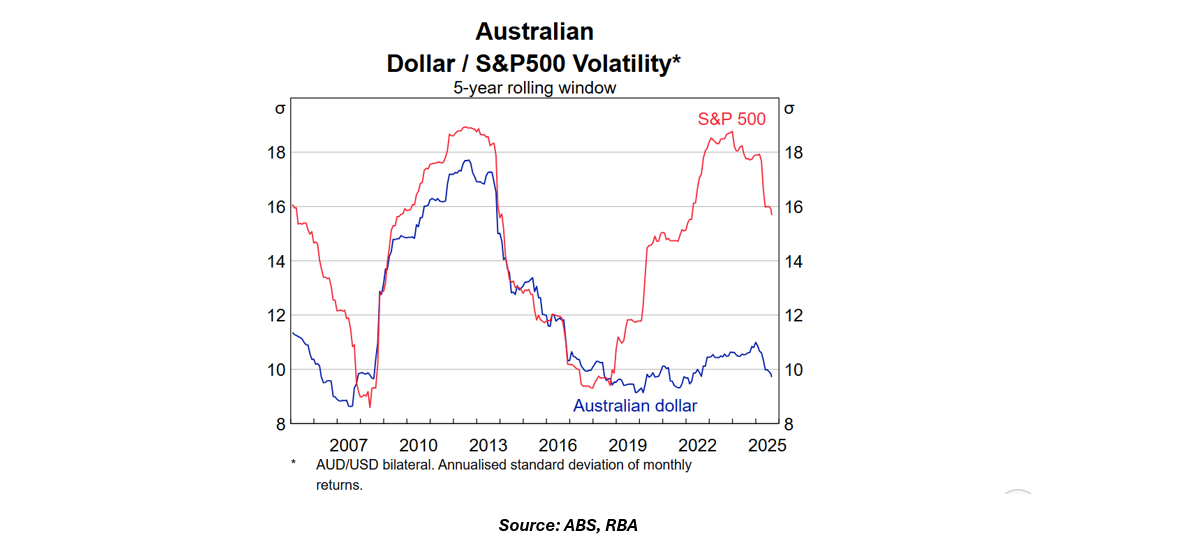 As illustrated in the above chart by the Reserve Bank of Australia, the volatility of the Australian dollar has been consistently lower than that of major equity indices like the S&P 500 over recent years. This lower currency volatility means that exchange rate movements contribute less to overall portfolio risk. Consequently, the need for explicit currency hedging strategies is reduced, since currency fluctuations form a smaller part of total portfolio volatility. This insight helps clarify why some portfolios with international exposure might not require active hedging all the time.
The Bigger Picture: Currency Risk in Australia’s Economy
Australia's exposure to foreign currency risk is not only relevant to individual portfolios but also significant at the broader economic level. Australian entities, including businesses and superannuation funds, hold substantial assets denominated in foreign currencies. Many use hedging methods to reduce adverse currency impacts, helping to stabilise financial positions. This broad-based management of currency risk contributes to the resilience of Australia’s economy against sharp exchange rate movements.
In summary, currency risk plays a crucial role in shaping the value and stability of international holdings within Australian portfolios. Awareness and management of this risk through diversification, hedging, and strategic decision-making can help navigate the complexities introduced by currency fluctuations, ensuring a more balanced approach to global investment exposure.


 Mar 06, 2026




 Please wait processing your request...