
 AU
AU CA
CA NZ
NZ UK
UK US
US IND
IND

 Share
Share
 X (Formerly Twitter)
 Whatsapp
 Facebook
 LinkedIn
 Telegram
 Email This Article
 Copy Link
 Summarize with AI
 Chat GPT
 Perplexity
Highlights
- Fund turnover measures how frequently portfolio holdings are bought and sold within a year.
- Higher turnover can raise transaction costs and reduce net returns over time.
- Turnover levels differ across active, passive, equity, and fixed-income strategies.
- The metric offers insight into trading discipline, cost efficiency, and tax outcomes.
In fund management, performance is often evaluated through returns relative to a benchmark. However, an important but less visible metric influencing outcomes is the fund turnover ratio. This figure indicates how actively a portfolio is traded over a given period, usually expressed as an annual percentage.
A turnover ratio of 100% implies that, on average, the fund has replaced its entire portfolio once during the year. Lower ratios reflect a buy-and-hold approach, while higher ratios suggest frequent buying and selling of securities. The metric is commonly disclosed in fund fact sheets, annual reports, and regulatory filings.
How Turnover Varies Across Fund Types
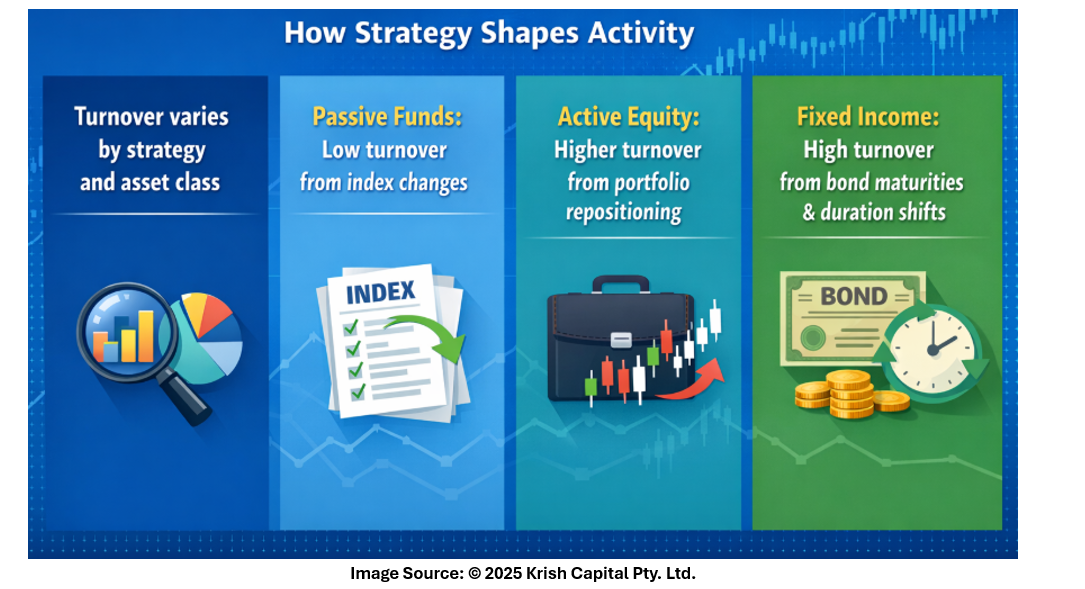
Turnover ratios can differ significantly depending on investment strategy and asset class. Passive index funds typically report low turnover, as trades are mainly driven by index rebalancing, constituent changes, or corporate actions. In contrast, actively managed equity funds often display higher turnover as portfolio managers reposition holdings based on valuation, earnings outlooks, or market conditions.
Fixed-income funds may also show relatively high turnover, even when managed conservatively. Bond maturities, credit events, and duration adjustments can lead to frequent trading that inflates turnover figures without necessarily implying aggressive risk-taking.
The Cost Implications of Frequent Trading
One of the most direct effects of higher turnover is increased transaction costs. Each trade incurs expenses such as brokerage fees, bid-ask spreads, and, in some markets, transaction taxes or levies. These costs are typically not included in a fund’s stated management fee, yet they are deducted from portfolio assets.
Over time, frequent trading can create a drag on performance, particularly in markets where liquidity is limited or trading costs are elevated. Even small incremental expenses can compound, making turnover a relevant consideration when comparing funds with similar strategies and headline returns.
Turnover and Tax Efficiency
Turnover ratios also have implications for tax outcomes. Frequent selling increases the likelihood of realised capital gains, which may then be distributed to unitholders. In taxable accounts, these distributions can reduce after-tax returns, even if the fund’s pre-tax performance appears competitive.
Funds with lower turnover tend to be more tax-efficient, as gains are deferred for longer periods. However, tax impact ultimately depends on jurisdiction, investor profile, and fund structure, making turnover one of several factors influencing tax efficiency.
When High Turnover May Be Justified
High turnover is not inherently negative. Certain strategies, such as momentum, quantitative, event-driven, or arbitrage-focused approaches, rely on frequent portfolio adjustments to function as intended. In these cases, turnover should be evaluated against consistency with the stated investment mandate and risk controls.
A sudden or sustained rise in turnover may also reflect changes in portfolio management, market volatility, or shifts in strategy. Monitoring trends over time can provide insight into whether trading activity is deliberate and disciplined or reactive and inconsistent.
Using Turnover as a Supporting Metric
Fund turnover should not be assessed in isolation. It does not directly indicate risk exposure, portfolio concentration, or expected volatility. Instead, it serves as a supporting metric that helps explain how returns are generated and what costs may accompany them.
In an environment of heightened fee awareness and tighter margins, understanding turnover ratios offers a more complete view of fund operations. While returns capture results, turnover reveals process—shedding light on the often unseen link between trading activity, costs, and long-term efficiency.


 Mar 06, 2026




 Please wait processing your request...