
 AU
AU CA
CA NZ
NZ UK
UK US
US IND
IND

 Share
Share
 X (Formerly Twitter)
 Whatsapp
 Facebook
 LinkedIn
 Telegram
 Email This Article
 Copy Link
 Summarize with AI
 Chat GPT
 Perplexity
Highlights
- Derivatives help funds hedge against market risk without selling underlying assets.
- Options, futures, and swaps are the most commonly used derivative instruments.
- Funds can use derivatives to protect portfolios during periods of high volatility.
- While derivatives offer flexibility, they also introduce leverage and complexity.
- Regulatory frameworks require funds to disclose derivative use to maintain transparency.
In today’s fluctuating markets, fund managers face the challenge of protecting capital while seeking returns. One of the key tools used is derivatives. Derivatives are financial contracts whose value is derived from an underlying asset, such as stocks, bonds, commodities, or market indices. By employing derivatives, funds can navigate volatility without the need to liquidate positions, allowing them to maintain their long-term investment strategies while mitigating short-term risk.
Common Types of Derivatives in Funds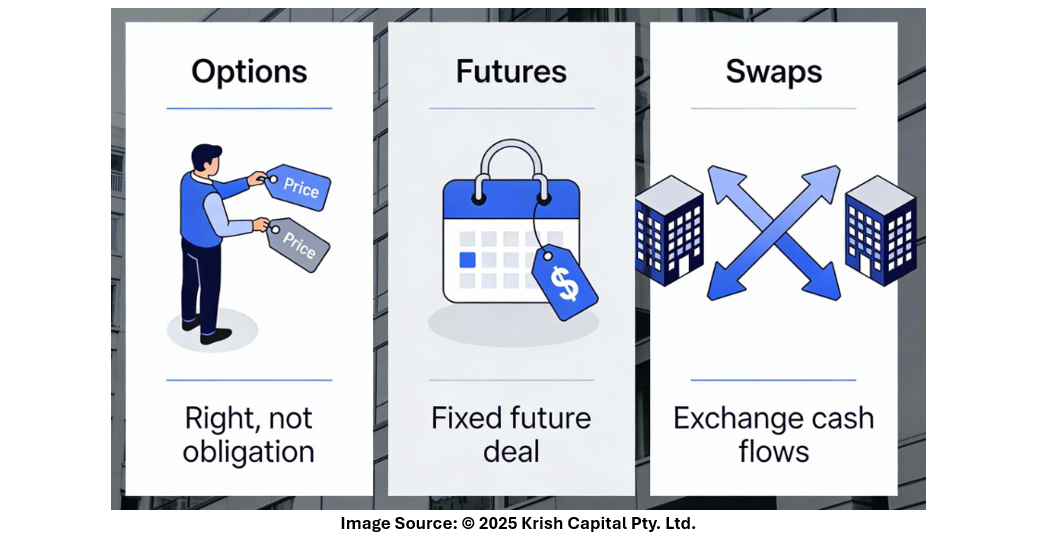 Funds typically use three main types of derivatives:
- Options – Contracts giving the right, but not the obligation, to buy or sell an asset at a predetermined price. Options can hedge against market declines or generate income through strategies such as covered calls.
- Futures – Agreements to buy or sell an asset at a set price on a future date. Futures are often used to hedge against changes in interest rates, commodity prices, or equity indices.
- Swaps – Contracts where two parties exchange cash flows or assets. For example, interest rate swaps can help funds manage exposure to rising borrowing costs or changes in fixed income returns.
Each of these instruments provides different levels of flexibility and risk control.
Hedging Against Volatility
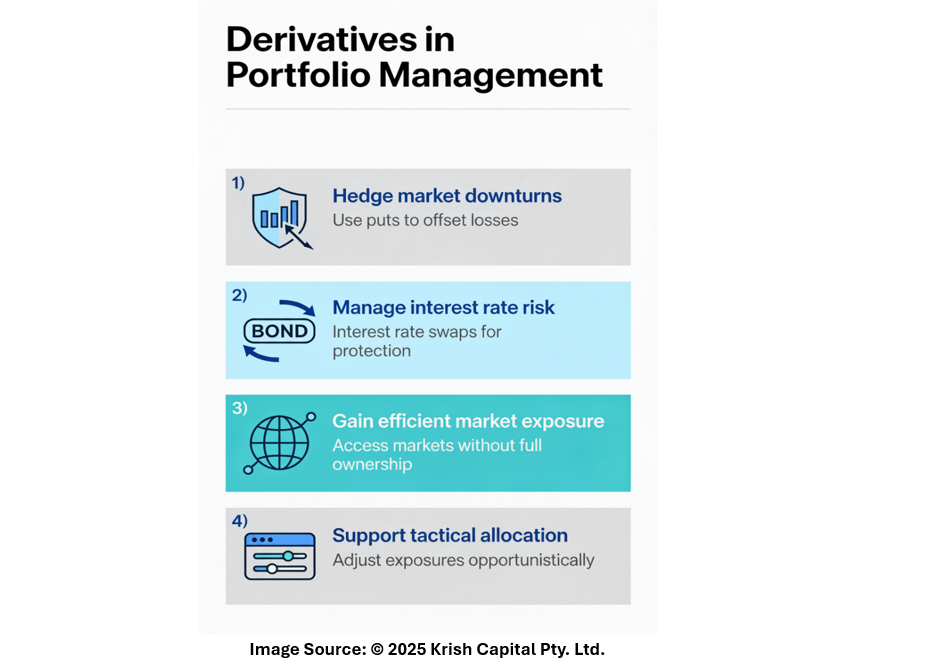
Derivatives are primarily used for hedging. For example, if a fund anticipates a market downturn, it may purchase put options to offset potential losses on equity holdings. Similarly, a bond fund may use interest rate swaps to protect against rising rates, which could reduce bond prices. This ability to “insure” against adverse price movements allows funds to maintain portfolio stability and continue meeting investment objectives even in turbulent markets.
Enhancing Portfolio Strategy
Beyond hedging, derivatives can also enhance returns and support portfolio strategies. Funds may use derivatives to gain exposure to markets or sectors without directly holding the underlying asset. This approach can reduce transaction costs and improve capital efficiency. Some funds employ derivative strategies to implement tactical asset allocation, seeking short-term opportunities while maintaining the core investment philosophy.
Risks and Regulatory Considerations
While derivatives offer advantages, they also carry risks. Leverage inherent in derivative contracts can magnify both gains and losses. Poorly managed derivative exposure can lead to unexpected portfolio volatility. To address these concerns, regulatory frameworks in many countries require funds to disclose derivative holdings and maintain risk management processes. Transparency and adherence to regulations help protect fund stakeholders and maintain market confidence.
Conclusion
Derivatives are a powerful tool for fund managers, enabling both risk management and strategic positioning in volatile markets. By understanding how options, futures, and swaps function, investors can gain insight into how funds navigate uncertainty. While derivatives introduce complexity, effective use supported by clear governance and disclosure can help funds achieve their objectives while maintaining portfolio stability.


 Mar 06, 2026




 Please wait processing your request...