
 AU
AU CA
CA NZ
NZ UK
UK US
US IND
IND

 Share
Share
 X (Formerly Twitter)
 Whatsapp
 Facebook
 LinkedIn
 Telegram
 Email This Article
 Copy Link
 Summarize with AI
 Chat GPT
 Perplexity
Highlights
- Core-satellite portfolios have combined low-cost passive investing with targeted active bets.
- This approach has balanced stability, diversification, and opportunities for outperformance.
- Market participants have used periodic rebalancing to maintain discipline and manage risk.
In a world where market players are bombarded with new products, market trends, and the temptation of chasing short-term gains, the core-satellite portfolio strategy has emerged as a disciplined way to achieve both stability and growth. This approach is popular among financial planners and professional asset managers because it blends the best of passive investing with targeted active bets.
What Is a Core-Satellite Portfolio?
A core-satellite portfolio is built around two main components:
- The Core: This represents the foundation of the portfolio, typically 60%–80% of total assets. It consists of broadly diversified, low-cost index funds or ETFs that aim to capture market returns. Examples include total market equity funds, global bond funds, or a balanced mix of both.
- The Satellites: These are smaller, more tactical allocations—20%–40% of the portfolio—aimed at generating excess returns (alpha) or gaining exposure to specific themes. These may include sector funds (technology, energy), active mutual funds, small-cap stocks, emerging markets, or alternatives like REITs and commodities.
Why Use This Strategy?
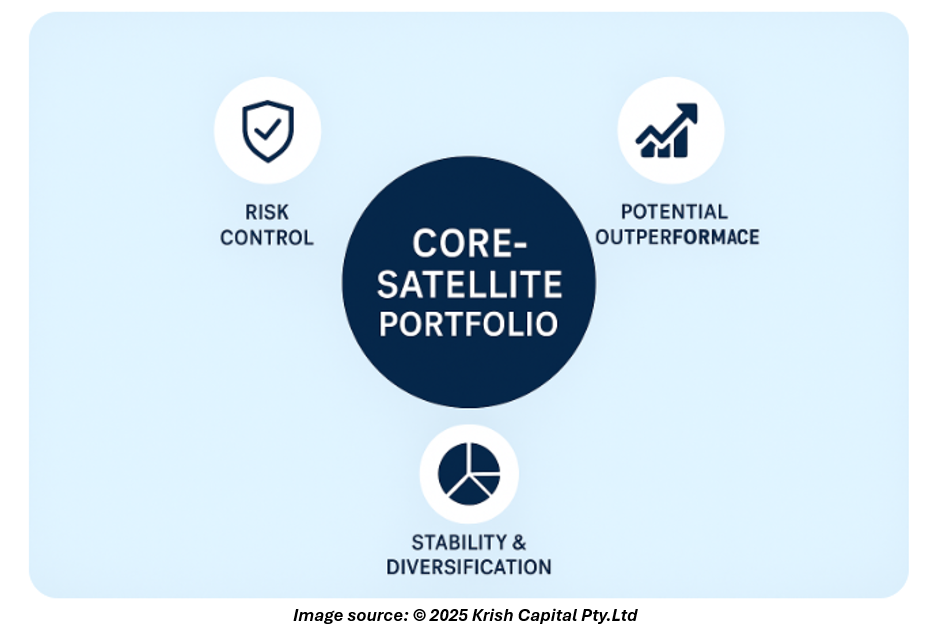
The main goal is to strike a balance:
- Stability & Diversification: The core provides market-level returns and keeps costs low.
- Potential Outperformance: The satellites allow investors to express views on sectors, geographies, or strategies they believe will outperform.
- Risk Control: By keeping satellites to a smaller portion, you limit the impact of incorrect calls.
This method works well for individuals who want some level of active management without turning their entire portfolio into a speculative bet.
Steps to Build a Core-Satellite Portfolio
- Define Your Core Allocation:
Choose index funds that match your risk profile (e.g., 60/40 stocks to bonds for moderation). - Select Satellite Investments:
Identify areas where you want to be overweight—such as clean energy ETFs, private credit funds, or small-cap growth stocks. - Set Weight Limits:
Cap satellites at 20–30% of the portfolio to prevent overexposure. - Monitor & Rebalance:
Revisit your allocations periodically—typically every 6–12 months—to bring them back to your target weights.
Key Benefits
- Cost-Effective: Most of the portfolio benefits from the low fees of passive funds.
- Flexibility: You can adjust satellites as market conditions or your views change.
- Risk-Adjusted Returns: Core holdings stabilize performance, while satellites provide upside potential.
Common Pitfalls to Avoid
- Overtrading Satellites: Frequent changes can erode returns through fees and taxes.
- Overconcentration: Avoid putting too much into one satellite theme, as it defeats diversification.
- Neglecting the Core: The core should remain the majority, ensuring stability and compounding over time.
The core-satellite approach offers a structured, disciplined way to invest, combining long-term stability with the flexibility to pursue market opportunities. It is suitable for both retail players seeking balanced growth and institutions aiming for cost efficiency with selective alpha generation.


 Mar 06, 2026




 Please wait processing your request...