
 AU
AU CA
CA NZ
NZ UK
UK US
US IND
IND

 Share
Share
 X (Formerly Twitter)
 Whatsapp
 Facebook
 LinkedIn
 Telegram
 Email This Article
 Copy Link
 Summarize with AI
 Chat GPT
 Perplexity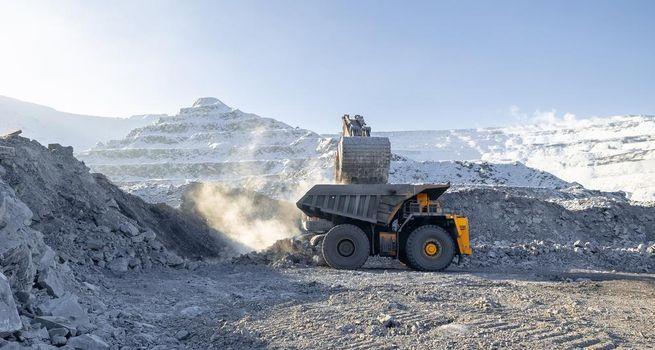
Sandfire Resources Limited (ASX:SFR), one of Australia's premier copper producers, suffered a significant 8.18 percent decline in its share price during the latest trading session, with shares falling to close at $15.69. This sharp correction comes after an extraordinary 40.84 percent rally in a yaer that saw Sandfire become one of the best-performing stocks on the ASX. The selloff has prompted investors to question whether the stock's remarkable run has run its course or whether this pullback represents an opportunity to enter one of the most compelling copper growth stories in the global mining sector.
Sandfire Resources is a mid-cap global copper producer headquartered in Perth, Western Australia. The company's principal operating assets are the MATSA Copper Operations in Spain and the Motheo Copper Operations in Botswana, with a growing pipeline of development projects including the transformational Kalkaroo copper-gold deposit in South Australia.
Analysing the 8% Price Decline
The 8.19 percent decline in Sandfire's share price represents one of the largest single-day losses for the stock in recent memory and warrants careful analysis to distinguish between fundamental concerns and technical market dynamics. Several interrelated factors appear to have contributed to the selloff.
The most significant factor is the stock's extended valuation following the over 40 percent rally in a year. At a trailing P/E ratio of 40.13 and a market capitalisation of approximately A$7.97 billion, Sandfire was priced for perfection, leaving limited room for disappointment. When stocks trade at such elevated multiples, even modest negative developments can trigger disproportionate price corrections as investors recalibrate their expectations.
Copper price volatility has also played a role. While the long-term outlook for copper remains overwhelmingly positive, short-term price fluctuations driven by global growth concerns, particularly slowing Chinese industrial activity, have created uncertainty about near-term earnings expectations. Any softening of copper prices from their recent highs could pressure Sandfire's margins and justify a lower valuation multiple.
Profit-taking by institutional investors following the extended rally is likely a significant contributor. After nearly doubling in value over twelve months, it is natural for fund managers to trim positions and redistribute capital. This technical selling pressure can create a cascading effect as stop-loss orders are triggered and momentum traders exit their positions.
The Copper Bull Case: Long-Term Fundamentals
Despite the near-term price correction, the long-term investment case for Sandfire remains firmly anchored in the structural copper supply deficit that is expected to develop over the coming decade. Copper is often described as the metal of the energy transition, with demand driven by electric vehicle manufacturing, renewable energy infrastructure, data centre expansion for AI applications, and grid modernisation programmes worldwide.
The International Energy Agency and multiple industry forecasters have projected that global copper demand could increase by 40 to 70 percent by 2040, driven primarily by electrification and decarbonisation trends. At the same time, new copper mine supply is constrained by a lack of major new discoveries, lengthy permitting timelines, and the declining grades of existing mines, creating the conditions for a persistent supply-demand imbalance.
For Sandfire, this structural copper market backdrop provides a powerful tailwind for long-term revenue and earnings growth. The company's producing assets in Spain and Botswana are well-positioned to benefit from rising copper prices, while the development pipeline provides additional production growth optionality that could transform the company's scale and market standing.
The AI data centre boom has emerged as a particularly significant demand driver for copper, with each hyperscale data centre requiring between 20,000 and 40,000 tonnes of copper for electrical infrastructure, cooling systems, and network cabling. As global technology companies invest hundreds of billions of dollars in AI infrastructure, the incremental demand for copper is expected to be substantial and sustained over many years.
Operational Assets: MATSA and Motheo
Sandfire's MATSA Copper Operations in Spain's Iberian Pyrite Belt is the company's largest producing asset, consisting of three underground mines and a central processing facility. The operation produces copper, zinc, and lead concentrates containing a silver by-product, providing diversified metal exposure and natural hedging against single-commodity price risk.
MATSA has been a consistent performer, benefiting from established infrastructure, experienced workforce, and well-understood geology. The operation's polymetallic nature means that revenue from zinc, lead, and silver production provides a meaningful offset to copper price volatility, enhancing the overall economic resilience of the asset.
The Motheo Copper Operations in Botswana represents Sandfire's entry into the highly prospective Kalahari Copper Belt, a geological province that is increasingly recognised as one of the world's most promising emerging copper districts. Motheo's production is ramping up according to plan, with the mine expected to reach nameplate capacity in the near term.
Botswana's mining-friendly regulatory environment, political stability, and established mining industry infrastructure make it an attractive jurisdiction for copper development. Sandfire's early-mover advantage in the Kalahari Copper Belt provides potential for future resource expansion and additional mine developments that could significantly increase the company's production profile over the coming decade.
Growth Pipeline: The Kalkaroo Opportunity
The potential acquisition of the Kalkaroo copper-gold deposit in South Australia represents one of the most significant growth opportunities in Sandfire's pipeline. Kalkaroo is one of Australia's largest undeveloped copper-gold deposits, with a defined ore reserve of 100 million tonnes, and the project has the potential to become Sandfire's next major production asset.
Sandfire and partner Havilah Resources recently extended the transaction timetable for the Kalkaroo deal, with a shareholder meeting scheduled for mid-February 2026. Management's decision to proceed with the acquisition signals confidence in the project's economic viability and the potential to replicate the successful development model employed at Motheo in the Kalahari Copper Belt.
If the pre-feasibility study, expected within 18 to 24 months, confirms the project's economics and potentially expands the resource base, Kalkaroo could become a transformational asset for Sandfire, materially increasing production volumes and extending the company's mine life. The proximity of the project to existing Australian infrastructure also suggests potentially lower development costs and faster time to production compared to greenfield projects in more remote locations.
The Kalkaroo acquisition exemplifies Sandfire's growth strategy of identifying and developing high-quality copper assets in stable jurisdictions, building a diversified portfolio of producing and development-stage mines that can deliver sustainable long-term value for shareholders.
Risk Factors and Investment Conclusion
Sandfire's investment case carries several important risks that investors should carefully evaluate. The most significant near-term risk is copper price volatility, which directly impacts the company's revenue, margins, and valuation multiple. While the long-term copper outlook is positive, short-term price fluctuations can be substantial and unpredictable.
Execution risk associated with the Motheo ramp-up and potential Kalkaroo development is another important consideration. Mining projects are inherently complex, and delays, cost overruns, or geological surprises can significantly impact project economics and investor returns.
The company's decision not to pay dividends since March 2022 may be a drawback for income-focused investors, although it reflects management's prioritisation of growth investment and balance sheet strength during a period of significant portfolio expansion.
On balance, the 8.19 percent selloff in Sandfire's share price appears to be primarily driven by profit-taking and valuation compression following an extraordinary rally, rather than any fundamental deterioration in the company's business or the copper market outlook. For investors with conviction in the long-term copper theme and the patience to ride out short-term volatility, Sandfire remains one of the most compelling pure-play copper investments on the ASX.


 Mar 10, 2026

 Please wait processing your request...