
 AU
AU CA
CA NZ
NZ UK
UK US
US IND
IND

 Share
Share
 X (Formerly Twitter)
 Whatsapp
 Facebook
 LinkedIn
 Telegram
 Email This Article
 Copy Link
 Summarize with AI
 Chat GPT
 Perplexity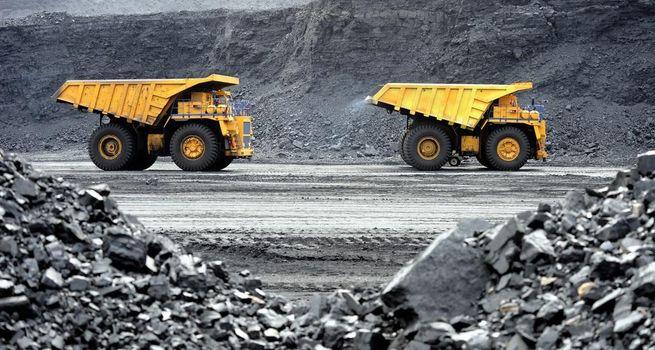
Highlights
- Yancoal Australia shares fell 6.7% to $6.69 in a correction following a 13.3% surge on March 9 driven by an 8.6% spike in thermal coal prices.
- FY2025 ROM coal production reached a record 67 million tonnes with attributable saleable coal hitting 38.6 million tonnes, both company records.
- The company holds A$2.1 billion in cash with zero interest-bearing debt, providing exceptional financial resilience and dividend capacity.
- Cash operating costs declined 1% to A$92 per saleable tonne, positioning Yancoal at the lower end of the global coal industry cost curve.
- A final dividend of A$0.122 per share will be paid on April 15, 2026, with an ex-dividend date of March 19, 2026.
Introduction
Yancoal Australia (ASX:YAL) declined 6.7% to $6.69 on March 10, 2026, giving back a portion of the dramatic 13.3% surge from the prior session. The sharp intraday volatility reflects the commodity-driven nature of coal equities and the sensitivity of mining stocks to rapid price movements in their underlying commodities.
The March 9 rally was triggered by an 8.6% spike in thermal coal prices on March 3, which flowed through to coal equity valuations with a short lag. Today's correction represents a natural consolidation following the outsized single-session gain and possible positioning ahead of the March 19 ex-dividend date.
Despite the pullback, Yancoal remains well-positioned as one of Australia's largest coal producers. The company delivered record production volumes in FY2025, maintains a fortress A$2.1 billion cash balance, and operates at the lower end of the industry cost curve with cash costs of just A$92 per saleable tonne.
About Yancoal Australia
Yancoal Australia Limited is one of Australia's largest coal mining companies and a major global thermal and metallurgical coal producer. The company operates large-scale, cost-competitive mining operations across multiple regions in Australia, with significant export markets spanning China, Japan, Singapore, South Korea, Taiwan, Thailand, and numerous other countries.
The business model centres on the exploration, development, production, and marketing of both thermal coal for power generation and metallurgical coal for steel production. This dual-commodity exposure provides revenue diversification within the coal sector.
With a market capitalisation of approximately A$9.5 billion, Yancoal is a cornerstone of the Australian coal sector. The company's competitive advantage is built on operational scale, a low-cost production profile, and a strong balance sheet that enables it to weather commodity price downturns while returning capital to shareholders during favourable periods.
Yancoal's workforce and operational footprint span multiple Australian states, with large-scale mines producing consistent, high-volume output that supports reliable supply to global customers.
Why YAL Stock Is Moving Today
The 6.7% decline on March 10 represents a natural correction following the extraordinary 13.3% surge the prior session. Coal stocks are inherently volatile, and the magnitude of the prior day's rally created conditions for profit-taking and short-term repositioning.
The upcoming ex-dividend date of March 19, 2026, with a final dividend of A$0.122 per share, may also be influencing trading patterns. Some investors accumulate shares ahead of the record date to capture the dividend, while others sell after the announcement to lock in gains, creating short-term price dynamics.
Broader coal market sentiment remains mixed. While the March 3 thermal coal price spike provided a powerful short-term catalyst, the fundamental outlook for coal faces structural headwinds from the global energy transition. Investors are weighing near-term commodity price strength against longer-term demand uncertainty.
The company's FY2025 results, showing record production of 67 million tonnes ROM coal and record attributable saleable coal of 38.6 million tonnes, demonstrated operational excellence. However, revenue of A$5,949 million reflected lower average coal prices compared to the commodity price peaks of 2022-2023.
Industry Trends and Market Dynamics
Global coal demand is expected to plateau at approximately 8.78 billion tonnes in 2026, with regional growth in China, India, and ASEAN nations offsetting structural declines in developed economies. China's coal power generation is forecast to recover with 0.9% growth in total coal demand, while India's consumption is expected to rise 2.5% and ASEAN demand is projected to increase 5%.
The long-term structural decline in thermal coal demand driven by the energy transition remains the defining trend for the sector. European Union, Japanese, Korean, and Taiwanese coal imports continue to decline as these economies shift toward renewable energy and natural gas. Global coal trade is forecast to decline for a second consecutive year in 2026.
Metallurgical coal demand presents a more constructive outlook, supported by India's growing steel industry and rising infrastructure investment. Companies with exposure to high-quality metallurgical coal may benefit from more resilient demand dynamics compared to pure thermal coal producers.
Australian coal production is forecast to increase 3.9% to 483.2 million tonnes in 2026, with export values expected to reach record levels in Australian dollar terms despite lower international prices. Thermal coal prices are expected to average around US$108 per tonne, down from recent peaks but still supportive of profitability for low-cost producers.
The industry faces ongoing environmental scrutiny and regulatory pressure, with increasing restrictions on thermal coal financing and growing social opposition to coal-fired power generation in developed economies.
Financial Performance Analysis
Yancoal's FY2025 results showcased strong operational performance despite a moderation in coal prices. Revenue reached A$5,949 million, while net income of A$440 million demonstrated continued profitability. The record production volumes of 67 million tonnes ROM coal and 38.6 million tonnes attributable saleable coal highlight operational excellence.
Cash operating costs declined 1% to A$92 per saleable tonne, placing Yancoal at the lower end of the global coal industry cost curve. This low-cost position enables profitability across a wide range of commodity price scenarios and provides significant margin protection during price downturns.
The balance sheet is exceptionally strong with A$2.1 billion in cash and zero interest-bearing debt. This fortress position provides strategic flexibility for capital returns, potential acquisitions, and investment in mine development, while also serving as a substantial buffer against commodity price volatility.
The board declared a final dividend of A$0.122 per share to be paid on April 15, 2026, providing a current dividend yield of approximately 2.3%. While modest compared to the special dividends during peak coal prices, the distribution reflects a sustainable approach to capital management.
With approximately 60% of costs being fixed in nature, Yancoal possesses significant operational leverage. Any recovery in coal prices generates outsized margin expansion, while the low variable cost structure provides downside protection during weaker price environments.
Investment Risks to Consider
Commodity price volatility is the dominant risk. Coal prices can move sharply in both directions, as demonstrated by the 13.3% single-session stock move on March 9. A sustained decline in coal prices would compress margins and potentially reduce dividend capacity despite the strong balance sheet.
The energy transition represents an existential long-term challenge for thermal coal producers. As renewable energy costs continue to decline and government policies increasingly favour decarbonisation, thermal coal demand faces structural decline in many of the world's largest economies.
Geopolitical exposure adds complexity. Major export markets including China and India are subject to trade tensions, policy shifts, and regulatory changes that could affect coal demand and import volumes. China's relationship with Australian coal producers has experienced periods of disruption in recent years.
Regulatory and environmental risk is increasing. Australian mining faces growing environmental scrutiny, and potential restrictions on thermal coal exports or increased environmental compliance costs could affect profitability.
Labour and operational costs could escalate if mining sector wages continue to rise, potentially eroding the company's low-cost advantage.
Future Growth Drivers and Catalysts
Continued production optimisation and volume growth provide near-term earnings leverage. The record FY2025 production demonstrates that operational improvements can drive value even in a challenging price environment.
Strategic emphasis on metallurgical coal exposure could provide more resilient demand dynamics. Metallurgical coal benefits from India's industrial expansion and global infrastructure investment, offering potentially more sustainable demand than thermal coal.
Capital returns through dividends and potential special distributions remain a key shareholder value driver. The A$2.1 billion cash position provides substantial capacity for enhanced returns during periods of commodity price strength.
Coal price recovery from current moderated levels would generate significant margin expansion given the company's low-cost operating position. Any return to pricing levels seen in 2022-2023 would dramatically improve earnings and cash generation.
The company's scale and financial strength position it as a potential industry consolidator if acquisition opportunities emerge in the Australian coal sector.
Long-Term Investment Perspective
Yancoal Australia presents a complex investment case that requires differentiation between the cyclical opportunity and the structural outlook. In the near to medium term, the company offers attractive valuations, strong cash generation, and a fortress balance sheet that support an appealing risk-reward profile.
Is Yancoal Australia a good investment? For value-oriented investors with a two to three year horizon, the sub-8x PE multiple, strong dividend capacity, and commodity leverage provide compelling characteristics. The A$2.1 billion cash position offers exceptional downside protection.
However, long-term investors must acknowledge the structural headwinds facing thermal coal. The energy transition is accelerating, government policies are increasingly hostile to coal, and the social licence for coal mining is under growing pressure. These factors create uncertainty about the industry's viability beyond the current decade.
Yancoal Australia share price outlook depends heavily on coal price dynamics and the pace of the energy transition. Sustained coal prices near current levels support attractive returns and dividend income. A significant price decline or accelerated policy action against coal would pressure the investment thesis.
For investors comfortable with commodity cyclicality and structural energy transition risks, Yancoal offers a way to capture value from coal's remaining economic life while benefiting from an exceptional balance sheet.
Questions Investors Are Asking About Yancoal Australia
Q1: Why is Yancoal Australia stock down today?
YAL fell 6.7% on March 10, 2026 in a correction following a 13.3% surge the prior session driven by coal price spikes. The decline reflects profit-taking and natural consolidation after an outsized gain, combined with positioning ahead of the March 19 ex-dividend date.
Q2: What does Yancoal Australia do?
Yancoal is one of Australia's largest coal mining companies, producing thermal and metallurgical coal from large-scale operations. The company exports to major markets including China, Japan, South Korea, and throughout Asia, with FY2025 record production of 38.6 million tonnes of saleable coal.
Q3: Is Yancoal Australia a good investment?
Yancoal offers attractive value metrics including a PE of 7.5x, A$2.1 billion cash, zero debt, and low operating costs of A$92/tonne. It appeals to value and income investors. Key risks include coal price volatility and the long-term structural decline in coal demand from the energy transition.
Q4: What is Yancoal Australia dividend yield?
The final dividend of A$0.122 per share provides a yield of approximately 2.3% at current prices. During periods of strong coal prices, the company has historically paid special dividends that significantly enhanced total yield. The A$2.1 billion cash position supports ongoing dividend capacity.
Q5: What is Yancoal Australia share price outlook?
The near-term outlook depends on coal price dynamics. Sustained prices near current levels support the valuation, while any recovery toward 2022-2023 peaks would drive significant upside. Long-term structural concerns about coal demand create uncertainty beyond a 3-5 year horizon.
Q6: What are Yancoal Australia growth prospects?
Growth catalysts include production optimisation, metallurgical coal emphasis, coal price recovery, and capital returns. The company targets continued operational efficiency improvements and volume growth. Long-term growth is constrained by the structural decline in global coal demand.
Q7: What is Yancoal Australia latest news?
Recent news includes FY2025 record production of 67 million tonnes ROM coal, revenue of A$5,949 million, net income of A$440 million, cash costs declining 1% to A$92/tonne, and a final dividend of A$0.122 per share payable April 15, 2026.
Q8: How much cash does Yancoal have?
Yancoal holds A$2.1 billion in cash with zero interest-bearing debt, one of the strongest balance sheets in the Australian mining sector. This cash position provides dividend capacity, strategic flexibility, and a substantial buffer against commodity price volatility.
Q9: What is the coal price outlook for 2026?
Thermal coal prices are expected to average around US$108 per tonne in 2026, down from recent peaks but supportive of profitability for low-cost producers. Regional demand from China, India, and ASEAN remains supportive while structural declines continue in developed economies.
Q10: Is coal a good long-term investment?
Coal faces structural demand decline from the energy transition, with thermal coal particularly affected. However, metallurgical coal demand is more resilient due to steel production needs. Low-cost producers with strong balance sheets can generate attractive returns during the transition period.
Yancoal Australia's volatile trading, with a 13.3% surge followed by a 6.7% decline, exemplifies the commodity-driven nature of coal equities. The company's record production, A$2.1 billion cash position, and low-cost operating profile provide a solid foundation, but coal's structural headwinds create long-term uncertainty.
For value and income investors, Yancoal offers an attractive cyclical opportunity with strong downside protection from the balance sheet. The sub-8x PE and meaningful dividend capacity provide near-term appeal. However, the structural decline in coal demand requires ongoing monitoring.


 Mar 10, 2026


 Please wait processing your request...