
 AU
AU CA
CA NZ
NZ UK
UK US
US IND
IND

 Share
Share
 X (Formerly Twitter)
 Whatsapp
 Facebook
 LinkedIn
 Telegram
 Email This Article
 Copy Link
 Summarize with AI
 Chat GPT
 Perplexity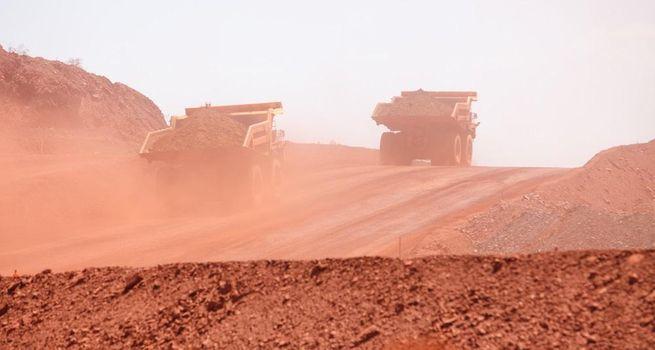
Deterra Royalties Limited (ASX:DRR) has experienced a decline of approximately 4% today, trading near $3.50 AUD per share. This pullback presents an important evaluation opportunity for investors seeking exposure to mining royalties, a unique investment category with distinct risk-return characteristics compared to traditional mining operations. Deterra Royalties is a specialized mining royalty company holding key royalty interests on significant mineral production assets, with the flagship asset being a substantial royalty on BHP Group's Mining Area C (MAC) iron ore operations in the Pilbara region of Western Australia.
As of March 2026, Deterra Royalties represents a compelling alternative investment for investors seeking exposure to mining asset cash flows with lower operational risk and capital requirements compared to direct mine ownership. The 4% decline today reflects broader mining sector weakness and iron ore price pressure, but the company's passive royalty model and dependable cash flow generation provide fundamental support for long-term equity value.
Deterra Royalties operates a business model fundamentally different from traditional mining companies. Rather than operating mines, the company holds contractual rights to receive royalty payments from mining operators based on production volumes and commodity prices. This passive ownership structure creates attractive risk-return dynamics relative to operational mining businesses.
Why Is Deterra Royalties Falling Today?
Several factors have contributed to the 4% decline in Deterra Royalties shares today:
Iron Ore Price Weakness
Deterra Royalties' primary cash flow source is royalty payments from BHP's Mining Area C iron ore operations. Iron ore price weakness, with spot prices declining approximately 2-3% in recent weeks, directly reduces the mining profitability from which royalties are calculated. Lower iron ore prices reduce royalty payments to Deterra, creating direct earnings impact.
BHP Operational Guidance
If BHP provides guidance suggesting reduced iron ore production or profitability from Mining Area C, Deterra's expected royalty cash flows would decline accordingly. Any announcements regarding BHP's Pilbara production plans impact Deterra's outlook.
Royalty Structure Economics
Investor concerns about the specific royalty structure economics with BHP could create near-term selling pressure. Any perception that royalty terms are unfavorable relative to alternative royalty arrangements creates valuation pressure.
Broader Mining Sector Repricing
The mining sector globally has experienced repricing as investors reduce cyclical exposure. This sector-wide headwind has affected mining royalty companies proportionally with other mining equities.
Dividend Sustainability Concerns
As a cash return-focused business, Deterra's dividend payments depend on royalty cash flow generation. Iron ore price weakness creates perception that dividends may decline in future periods, creating near-term selling pressure from income-focused investors.
Interest Rate Dynamics
Higher interest rates increase the discount rates applied to future cash flows in valuation models, reducing present values of future royalty payments.
Valuation Rerating
Investors may be reconsidering valuation multiples applied to mining royalty cash flows, creating technical pressure on the stock price.
Deterra Royalties Stock Performance
Historical Price Movement
Deterra Royalties shares have traded with relative stability since the company's initial public offering in 2021. The stock has traded in a $3.00-$5.00 range, with current pricing near $3.50 representing mid-range levels. The company has maintained strong dividend yields throughout its public history.
Recent Trading Characteristics
Daily trading volumes are solid, indicating reasonable liquidity for institutional investors. The stock is followed by specialized mining and dividend-focused analysts. Bid-ask spreads remain relatively tight.
Key Financial Metrics
- Market Capitalization: Approximately $1.5-2 billion AUD at current prices
- Enterprise Value: Approximately $1.4-1.9 billion AUD
- Price-to-Earnings Ratio: Trading at approximately 10-12x forward earnings
- Price-to-Book Ratio: Trading around 1.2-1.4x book value
- Free Cash Flow Yield: Attractive relative to broader market
- Dividend Yield: Currently offering 6-8% dividend yield based on cash distribution rates
Analyst Coverage
Professional analysts covering Deterra Royalties maintain predominantly "Buy" and "Hold" ratings, with price targets in the $3.80-4.50 range, suggesting 9-29% upside from current levels. Analysts appreciate the passive royalty model and dividend characteristics.
What Does Deterra Royalties Do?
Royalty Business Model
Deterra Royalties is not an operating mining company. Instead, the company holds contractual rights to receive royalty payments from mining operations conducted by other companies. This passive ownership structure creates unique characteristics relative to traditional mining companies.
Royalty Stream: Royalty payments are typically calculated as a percentage of gross revenue or net profit from mining operations, or fixed amounts per unit of production. The specific royalty structure varies by asset.
Cash Flow Characteristics: Royalty payments flow directly to Deterra with minimal operational costs or capital requirements, creating high cash conversion characteristics and enabling substantial dividend distributions.
Capital Efficiency: Unlike operational mining companies requiring substantial capital for mine development and maintenance, royalty companies require minimal capital expenditure. This efficiency enables higher dividend distributions relative to mining operators.
Flagship Asset: BHP Mining Area C Royalty
Deterra's primary revenue source is royalty payments from BHP's Mining Area C (MAC) iron ore operations in the Pilbara region of Western Australia. Key characteristics of this royalty include:
Production Base: BHP's MAC operations produce approximately 50+ million tonnes of iron ore annually from a large, world-class ore body.
Royalty Terms: Deterra receives royalty payments based on the specific contractual terms negotiated with BHP. The royalty provides substantial cash flows given MAC's production scale.
Long-Term Stability: MAC represents a long-life iron ore asset expected to operate for multiple decades, providing multi-decade royalty payment visibility.
Counterparty Credit: BHP Group represents a financially strong, investment-grade counterparty, providing security that royalty payments will be made as contractually obligated.
Secondary Assets
Deterra Royalties may hold interests in other royalty agreements or exploration assets, though the MAC royalty represents the primary revenue source.
Revenue Model
Deterra generates substantially all revenues from royalty payments received from BHP based on MAC production and iron ore prices. The company's cash costs are minimal, primarily comprising corporate overhead and administrative expenses.
Industry and Market Outlook 2026
Mining Royalty Sector Outlook
The mining royalty sector continues to attract investor interest as a unique investment category offering commodity exposure with reduced operational risk and capital requirements. As mining companies consolidate and rationalize assets, royalty structures become more common as corporate financing mechanisms and investor ownership vehicles.
Iron Ore Market Outlook
Global iron ore demand remains tied to steel production and construction activity. While Chinese construction cycles are moderating, long-term iron ore demand fundamentals remain supportive. Iron ore prices are expected to remain elevated relative to historical averages, supporting profitable BHP mining operations and healthy royalty payments.
BHP Strategic Direction
BHP continues to operate MAC as a strategic asset, with plans for ongoing production and potential optimization investments. Management commitment to Pilbara iron ore operations supports long-term royalty payment visibility.
Royalty Economics
The attractiveness of royalty investments relative to equity investments in mining companies depends on royalty terms, underlying asset quality, and commodity price assumptions. Current royalty valuations appear reasonable relative to cash generation potential.
Interest Rate Environment
Interest rates influence the discount rates applied to future royalty cash flows. Lower interest rate environments typically support higher valuations for royalty investments, while higher rates reduce valuations.
ESG and Sustainability Focus
As mining companies face ESG scrutiny, royalty investors benefit from lower operational exposure while still capturing economic benefits from mining operations. This ESG characteristic makes royalty investments attractive to some investor categories.
Key Market Catalysts
Iron Ore Price Movements
Deterra's cash flow is directly affected by iron ore prices. Any significant changes in spot iron ore pricing create material impacts on royalty payments.
BHP Production Updates
Quarterly or annual updates from BHP regarding MAC production volumes, operational efficiency, and future production plans impact Deterra's expected cash flow.
Dividend Announcements
Deterra's dividend policy is to distribute substantially all available cash flows. Changes in dividend payment levels directly impact equity valuations.
Royalty Agreement Modifications
While unlikely, any modifications to royalty agreement terms could represent significant catalysts for the stock price.
Strategic Asset Acquisitions
If Deterra acquires additional royalty interests or mining assets, expansion announcements could represent positive catalysts.
Interest Rate Changes
Movements in broader interest rates impact discount rates applied to future royalty cash flows, affecting equity valuations.
Mining Industry Consolidation
Broader mining industry consolidation could create opportunities for additional royalty acquisitions or modifications to existing arrangements.
Is Deterra Royalties a Good Investment?
Bull Case for Investors
Several compelling arguments support investment in Deterra Royalties:
Passive Income Generation: The royalty model generates cash flow with minimal operational risk or capital requirements, creating dependable passive income characteristics attractive to income-focused investors.
Commodity Exposure Without Operational Risk: Deterra provides exposure to iron ore commodity prices without operational, capital, or management risks associated with operating mines.
Dividend Sustainability: The company's commitment to returning substantially all available cash to shareholders creates dependable dividend income. High dividend yields provide attractive risk-adjusted returns.
High-Quality Counterparty: BHP Group represents an investment-grade counterparty providing security that contractual royalty payments will be made.
Long-Life Asset: BHP's MAC operations are expected to operate for multiple decades, providing multi-decade visibility to royalty payment streams.
Capital Efficiency: Unlike mining operators requiring substantial capex, the royalty model requires minimal capital, enabling high cash returns to shareholders.
Valuation Support: At current levels, Deterra offers attractive valuations relative to cash flow generation and dividend yields.
Bear Case and Risk Factors
However, material risks warrant consideration:
Commodity Price Dependency: Deterra's cash flow is ultimately dependent on iron ore prices. Sustained low prices reduce profitability and dividends, despite the passive royalty structure.
BHP Operational Risk: If BHP encounters operational challenges, equipment failures, or unexpected costs at MAC, mining profitability and royalty payments could decline.
Counterparty Risk: While BHP is financially strong currently, material deterioration in BHP's financial condition could theoretically impact BHP's ability to pay royalties.
Limited Asset Diversification: With MAC royalty representing the primary asset, Deterra lacks diversification to other commodities or operators. If BHP divests MAC or materially reduces production, Deterra's cash flow would be affected.
Regulatory Risk: Changes in mining regulations, environmental requirements, or royalty tax treatment could impact cash flow generation.
Interest Rate Sensitivity: Rising interest rates reduce present values of future cash flows, creating downward pressure on valuations despite stable underlying cash generation.
Limited Growth: The royalty model provides dependable income but limited growth potential. Investors seeking capital appreciation may find the business model constraining.
Verdict for Different Investor Types
Income Investors: Deterra Royalties represents an attractive holding for income-focused portfolios seeking dependable dividend income with commodity price upside.
Conservative Investors: The passive royalty model and dependable cash flow generation make Deterra suitable for conservative portfolios seeking stable returns.
Dividend Growth Investors: While the company provides attractive current dividend yields, dividend growth potential is limited. Investors should not expect substantial dividend increases over time.
Value Investors: Deterra offers attractive valuations relative to cash flow generation, making the stock suitable for value-focused strategies.
Growth Investors: The limited growth characteristics of the business model make Deterra less suitable for pure growth-focused portfolios.
Commodity Exposure Investors: Deterra provides a unique way to gain commodity exposure with reduced operational complexity relative to mining operators.
What Is the Outlook for Deterra Royalties?
Short-Term Outlook (Next 3-6 Months)
Near-term performance will be driven by iron ore prices and BHP's operational performance. If iron ore prices stabilize, dividend payments should remain stable, supporting equity prices. Quarterly dividend announcements will attract investor attention. The stock may consolidate in a $3.30-3.80 range pending commodity price developments.
Medium-Term Outlook (6-18 Months)
Over 12-18 months, Deterra should maintain stable dividend distributions based on iron ore production and pricing. BHP's operational updates will provide visibility into future cash flow stability. The company's dividend yield should attract continued interest from income-focused investors. Management may pursue additional royalty acquisition opportunities if available at attractive valuations.
Long-Term Outlook (18+ Months)
The long-term outlook for Deterra Royalties remains constructive. Long-life iron ore production from BHP's MAC operations should support multi-decade royalty payments. Dividend distributions should remain stable across commodity price cycles. The company's passive royalty model provides sustainable income generation without substantial operational or capital risk. Potential for shareholder capital appreciation is limited but dependable dividend income provides attractive risk-adjusted returns.
Reasonable Price Target Range: Professional analysts project 12-month price targets in the $3.80-4.50 range, suggesting 9-29% upside from current levels.
Key Takeaways for Investors
- Passive Income Focus: Deterra Royalties is fundamentally an income-generation vehicle, not a growth story. Investors should invest with income expectations rather than capital appreciation expectations.
- Commodity Price Exposure: Despite passive operations, the company remains exposed to iron ore commodity price volatility affecting underlying mining profitability and royalty payments.
- Today's Pullback Reflects Iron Ore Weakness: The 4% decline reflects iron ore price pressure rather than fundamental deterioration in the royalty arrangement or BHP's operational capabilities.
- Dividend Safety: BHP's financial strength and long-term commitment to MAC operations support dividend payment safety and sustainability.
- Capital Efficiency Advantage: Unlike mining operators, Deterra requires minimal capex, enabling high cash distribution rates and attractive dividend yields.
- Valuation Opportunity: At current prices, Deterra offers reasonable valuations for income-focused investors seeking dependable cash return.
- Operational Risk Reduction: The passive royalty model eliminates operational, capital, and management risks associated with operating mines while maintaining commodity exposure.
Frequently Asked Questions
Q1: Why invest in Deterra instead of BHP directly?
Deterra offers pure exposure to MAC iron ore production cash flows with minimal capital requirements and high cash distribution rates. BHP is diversified across multiple commodities and operations, making it a different investment. Deterra's high dividend yield provides more attractive income characteristics for yield-focused investors.
Q2: How stable are Deterra's dividend payments?
Dividend payments are stable based on iron ore production and pricing, but ultimately commodity price dependent. BHP's financial strength ensures contractual royalty payments are made as agreed. Dividends may decline if iron ore prices fall materially or BHP production declines, but should remain substantial across a wide range of price scenarios.
Q3: What is the risk that BHP might divest MAC operations?
MAC represents a strategically important asset for BHP, one of the company's largest iron ore operations. BHP is unlikely to divest the operation given its significance to the company's overall mining portfolio. However, changes in BHP strategy could theoretically affect the operation.
Q4: How much capital does Deterra require for operations?
Deterra requires minimal capital expenditure, primarily restricted to corporate overhead and administrative costs. The company distributes substantially all operating cash flows to shareholders as dividends. This capital efficiency enables high dividend distributions relative to mining operators.
Q5: Is Deterra suitable for growth portfolios?
No, Deterra is inappropriate for growth-focused portfolios. The company provides dependable income but limited capital appreciation potential. Investors seeking capital growth should consider growth-focused equities rather than royalty vehicles.
Investment Disclaimer
This article is provided for informational purposes only and does not constitute financial advice, investment recommendation, or an offer to buy or sell securities. The information contained herein is based on publicly available sources believed to be accurate as of the publication date (March 6, 2026) but is subject to change without notice. Past performance is not indicative of future results. Stock prices and market conditions are subject to significant volatility and may change materially.
Investors should conduct their own due diligence, consult with qualified financial advisors, and carefully evaluate their risk tolerance before making investment decisions. All equity investments carry risk of loss, including potential total loss of capital. Investors should not rely solely on this article when making investment decisions and should consider their complete financial situation, investment objectives, and risk tolerance.
The author and publisher assume no responsibility for errors, omissions, or inaccuracies in the information provided. Investment in ASX-listed securities carries regulatory, market, and company-specific risks that should be thoroughly understood before committing capital.
Article Date: March 6, 2026
Stock Price Referenced: $3.50 AUD
Price Change: Approximately -4%


 Mar 10, 2026


 Please wait processing your request...