
 CA
 NZ
 UK
 US
 IND

 AU

 Share
 X (Formerly Twitter)
 Whatsapp
 Facebook
 LinkedIn
 Telegram
 Email This Article
 Copy Link
 Summarize with AI
 Chat GPT
 Perplexity
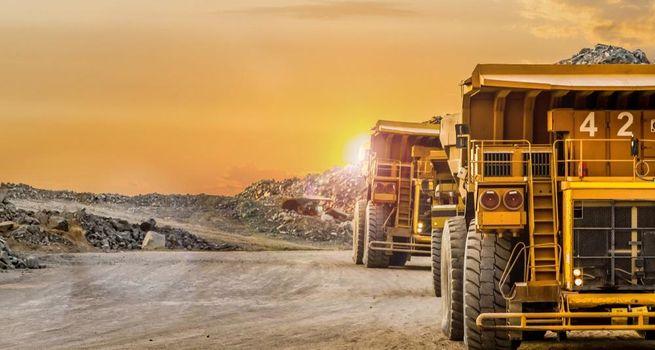
The ASX Mining sector today reflects a market split three ways: gold near record highs, copper holding above key levels, and lithium under sustained pressure. BHP, Rio Tinto and Fortescue continue to anchor iron-ore exposure for the S&Amp;P/ASX 200, while Pilbara Minerals navigates a softer lithium tape highlighted in Morgan Stanley's 2026 Commodity view. With Northern Star Resources and Newmont riding gold's geopolitical bid and copper miners benefiting from Supply discipline, the resources tape offers genuine dispersion for active Australian investors.
Iron Ore Majors: BHP, Rio Tinto and Fortescue
BHP Group (ASX: BHP), Rio Tinto (ASX: RIO) and Fortescue (ASX: FMG) remain the three largest constituents of the S&P/ASX 200 materials sector. The iron ore complex has weakened through the past quarter as Chinese steel mill restocking has slowed and the property-sector Demand impulse has not materialised, per Mining.com and Reuters summaries.
Morgan Stanley's 2026 commodity view identifies iron ore as 5.1% Overvalued at current spot prices, per Market Index. The combination of stable Pilbara output, ongoing Simandou ramp-up in Guinea and softer Chinese demand is keeping the supply-demand balance modestly loose into the second half of 2026.
BHP retains the most diversified Earnings profile of the three. The Escondida copper operation in Chile, combined with future-facing exposure through the Resolution and Vicuña copper-focused growth projects, gives BHP a structural offset to iron ore weakness, per company materials. The recent capex update reaffirmed the long-term copper trajectory.
Fortescue continues to balance its core iron ore Franchise with the Fortescue Energy build-out, particularly green hydrogen and renewable-power projects. The company's iron ore margins remain among the highest in the sector on a cost-per-tonne basis, supporting a continued Dividend stream that has historically driven retail investor interest in the stock.
Gold: Northern Star, Newmont and Evolution Mining
Gold is the standout sector inside the ASX materials complex today. Spot gold has continued to trade near record highs through May 2026 as investors hedge geopolitical risk from the Iran-US standoff and broader US fiscal concerns. The A$-denominated gold price has been further supported by a softer Australian dollar over recent weeks.
Northern Star Resources (ASX: NST) is the largest pure-play ASX gold producer following its Saracen and Newmont Australian asset acquisitions in earlier years. The company's three production hubs at Kalgoorlie, Yandal and Pogo collectively give it scale and operational diversity that smaller competitors cannot match. Recent quarterly production updates have shown stable or growing output and disciplined all-in sustaining costs.
Newmont (ASX: NEM) trades on the ASX as a secondary listing alongside its primary New York Stock Exchange line. The combination of Tier-1 Assets in Australia, North America and South America makes Newmont the most diversified gold producer on the local market. Its Capital return profile, anchored by dividends plus Buybacks, attracts a different Shareholder base than the pure Australian operators.
Evolution Mining (ASX: EVN) sits in the mid-tier on production Volume but offers a higher operational Beta to spot gold moves. The company's copper-gold exposure through the Ernest Henry mine adds a secondary Revenue stream that benefits from both gold and copper strength when those metals run together, as has happened sporadically through 2026.
Beyond the top three, the mid-cap gold space has been a fertile source of share-price outperformance. Genesis Minerals (ASX: GMD), Perseus Mining (ASX: PRU) and Bellevue Gold (ASX: BGL) have each delivered share-price gains exceeding the broader gold index over the past 12 months, driven by production growth, resource upgrades and the underlying spot-price tailwind. Investors with a higher Risk tolerance may find these names attractive as a leveraged play on continued spot strength, with the caveat that operational hiccups can move smaller-cap miners sharply on a single quarterly update.
Lithium: Pilbara Minerals Faces a Tough Tape
Pilbara Minerals (ASX: PLS) operates the Pilgangoora Lithium-Tantalum Project in Western Australia, one of the world's largest hard-rock lithium deposits, per company disclosures. The stock has been pressured by the broader lithium price tape, which Morgan Stanley flagged as 15% overvalued in its 2026 outlook, per Market Index.
The structural concern is supply. Greenfield African lithium projects and rapid Chinese conversion capacity additions have outpaced electric-vehicle demand growth in the near term, leaving the global market with excess inventory that suppresses spot pricing. Pilbara has responded with capital discipline, deferring some expansion stages while maintaining production at the operating mines.
Rio Tinto's lithium strategy now intersects with the Pilbara Minerals Investment case more directly. Per industry analysis from MarketIndex, Rio Tinto is projected to become the world's second-largest lithium producer by 2035 with roughly 6% of global output, potentially overtaking Pilbara Minerals' 5% projected share. That shifts the long-term competitive dynamics for the Australian lithium space.
Liontown Resources (ASX: LTR) and IGO (ASX: IGO) round out the ASX lithium complex. Liontown's Kathleen Valley project ramp-up has tested investor patience as commissioning challenges and softer offtake Economics have weighed on the share price. IGO's Greenbushes joint-venture exposure provides established production but suffers the same end-Market Price pressure.
Copper: The Quiet Bull Market
Copper remains the quiet bull-market story inside the ASX materials sector. While iron ore has weakened and lithium has compressed, copper has held above key technical levels through 2026 on the combined drivers of electrification, data-centre power infrastructure and disciplined major-mine supply growth.
BHP's Escondida operation in Chile is the single largest copper producer globally, and the company's expanding future-facing copper portfolio includes the Resolution project in Arizona and the Vicuña region holdings in South America. Recent Capital Expenditure commentary in BHP's quarterly updates reaffirmed the company's medium-term copper growth ambitions.
Sandfire Resources (ASX: SFR) is the most concentrated ASX-listed copper producer. The company's MATSA operation in Spain and Motheo project in Botswana provide diversified geographic exposure, with operating margins highly sensitive to the LME copper price. Sandfire's share price has tracked copper more closely than any other ASX 200 materials name through 2026.
Rio Tinto adds a third copper-exposed lever through its Oyu Tolgoi mine in Mongolia, where underground production continues to ramp following the long-running construction phase. The combination of stable cash generation from iron ore and growth from copper places Rio Tinto in a defensive-plus-growth position relative to pure-play competitors.
Uranium and rare earths complete the broader ASX critical-minerals tape. Paladin Energy (ASX: PDN) and Boss Energy (ASX: BOE) have benefited from sustained spot uranium pricing through 2026 as global utilities lock in long-term contracts ahead of new reactor construction in China, India and the United Arab Emirates. Lynas Rare Earths (ASX: LYC) remains the largest non-Chinese producer of separated rare earths and a strategic asset in the global supply chain. Each sits outside the headline iron-ore-and-lithium narrative but adds genuine Diversification for materials investors.
What the Sector Move Tells You About 2026
The dispersion across iron ore, gold, lithium and copper inside the ASX 200 materials sector reveals more about 2026 than any single commodity print. Defensive gold demand reflects ongoing geopolitical risk and fiscal concerns. Copper's quiet strength reflects structural electrification demand. Iron ore's drift reflects Chinese demand normalisation. Lithium's compression reflects oversupply from new mining capacity.
Investors using sector rotation strategies have been reducing iron ore exposure and adding to gold and copper through Q1 and Q2 2026, per institutional flow data summarised by Bloomberg. The S&P/ASX 200 Materials index has therefore underperformed the broader benchmark by approximately 3-5% year-to-date, even as the gold sub-component has outperformed.
For retail investors, the practical takeaway is that 'ASX mining' is no longer a single trade. The thesis for owning BHP is fundamentally different from the thesis for owning Northern Star, and both differ from the case for Pilbara Minerals or Sandfire Resources. Each requires its own commodity view, capital-allocation read and management assessment.
Looking ahead through the rest of 2026, the binary catalysts to watch are the Iran-US negotiation outcome (which affects oil and indirectly affects industrial metals through risk sentiment), the Chinese property sector trajectory (which affects iron ore directly), and any change in the global EV demand trajectory (which affects lithium pricing). Each will reshape the ASX materials sector in ways that are not yet priced in.
Risks and What to Watch This Week
Commodity-price Volatility remains the dominant risk across the ASX materials sector. Iron ore swings of 5-10% in a single week are now routine, lithium can move 15% on a single Chinese policy headline, and gold has shown the capacity to add or shed US$50 per ounce on Federal Reserve speeches. Position sizing matters more in this environment than at any point since 2022.
Currency is the second-order risk. The AUD/USD cross-rate affects every Australian miner reporting in USD. A 5% AUD appreciation against the USD compresses every miner's reported revenue by an equivalent amount before any commodity-price effect, so investors should track the cross-rate alongside the underlying commodity.
Carbon and Regulatory Risk is the third risk vector. Australia's Safeguard Mechanism baseline path requires emissions reductions over time at major industrial facilities, and the cost-of-compliance impact varies materially across the BHP-Rio-Fortescue-Pilbara-Northern-Star spectrum.
Three things to watch this week: the Chinese steel production data, the Pilbara Minerals quarterly production update if scheduled, and any Iran-US deal announcements that could shift industrial metal sentiment. Each will sharpen the sector picture for ASX-focused materials investors.
Beyond the weekly data calendar, longer-running structural questions deserve attention. Chinese steel demand has been a one-way bet for two decades; the post-2024 property-sector slowdown has forced miners to acknowledge that the next cycle will look different. Lithium pricing depends on whether global EV penetration rates accelerate as expected or pause at the marginal-buyer affordability ceiling. Gold has moved decisively into the geopolitical hedge category, which means a peaceful Iran resolution could cool the trade more than fundamentals alone would suggest.
For investors who prefer ETF exposure rather than single-stock picks, the BetaShares Australian Resources Sector ETF (ASX: QRE), the VanEck Australian Resources ETF (ASX: MVR) and the BetaShares Global Gold Miners ETF (ASX: MNRS) offer diversified exposure across the materials complex. Each has different weighting methodologies, with QRE tracking the S&P/ASX 200 Resources index and MVR using a more diversified weighting scheme. Investors should weigh fee structures and concentration risk before choosing between them.
Conclusion
The ASX mining sector today rewards stock-by-stock analysis more than broad-brush sector calls. Gold strength favours Northern Star, Newmont and Evolution; copper resilience supports BHP, Sandfire and Rio Tinto; iron ore softness and lithium compression argue for selectivity in those sub-segments. The combination of Morgan Stanley's bearish commodity calls, ongoing Iran-US uncertainty, and structural shifts in EV and steel demand keeps the materials sector volatile but full of dispersion opportunities. Investors looking to add or trim exposure should weigh both the commodity outlook and the company-specific capital-allocation profiles. This is analysis, not advice, and individual situations vary; readers should consider their own circumstances and risk tolerance before acting on the views described here.


 Nov 23, 2026





 Please wait processing your request...