
 AU
AU CA
CA NZ
NZ UK
UK US
US IND
IND

 Share
Share
 X (Formerly Twitter)
 Whatsapp
 Facebook
 LinkedIn
 Telegram
 Email This Article
 Copy Link
 Summarize with AI
 Chat GPT
 Perplexity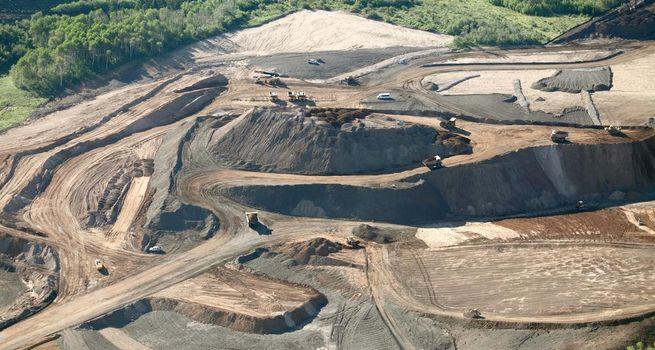
KEY HIGHLIGHTS
- PDN dropped 5.29% to A$11.09 amid uranium sector profit-taking and volatility
- Record Q3 FY2025 production of 1.07M lb U3O8 at Langer Heinrich mine in Namibia
- Fission Uranium acquisition completed December 2024—Patterson Lake South targets 9.1M lb/year by 2031
- FY2026 production guidance: 4.0-4.4M lb U3O8 at cost guidance of $44-48/lb
Paladin Energy (ASX:PDN) fell 5.29% to A$11.09 on March 16, 2026. The uranium producer is riding the nuclear energy renaissance but facing near-term sector volatility. After uranium spot prices surged to $101.50/lb in January before retreating to ~$85.90/lb, profit-taking has hit uranium equities. Paladin's elevated FY2026 cost guidance and continued operational ramp-up add to near-term uncertainty. The decline is part of a broader market dynamic where investors reassess valuations after rapid price appreciation in the uranium complex. Despite the pullback, the long-term fundamentals supporting uranium demand remain intact, as demonstrated by multiple policy initiatives and corporate commitments to nuclear power expansion.
ABOUT THE COMPANY
Paladin Energy is an Australian-listed independent uranium producer headquartered in Perth. The company owns 75.29% of the Langer Heinrich Mine in Namibia (CNNC holds 25.29%)—restarted in March 2024 after care and maintenance since 2018. Paladin acquired Fission Uranium Corp (completed December 2024), gaining the Patterson Lake South project in Saskatchewan's Athabasca Basin. PLS targets first production in 2031 with 9.1M lb annual capacity at full ramp. The company also maintains exploration assets in Canada and Australia. As a pure-play uranium exposure, Paladin operates without the commodity price hedging that constrains larger diversified nuclear companies. The company's strategic position benefits from both immediate cash generation at Langer Heinrich and long-term growth optionality at PLS. With an enterprise value of approximately $3.5B, Paladin is positioned as a mid-tier pure-play that provides leveraged exposure to uranium pricing.
WHY THE STOCK IS MOVING
Paladin Energy shares retreated on multiple fronts. Uranium sector profit-taking after January's $101.50/lb peak, with spot prices now at ~$85.90/lb, has weighed on equities across the space. FY2026 production guidance of 4.0-4.4M lb disappointed some investors expecting steeper ramp-up trajectories. Cost guidance of $44-48/lb is elevated versus FY2025's $40/lb, raising questions about full-year profitability. Historical water availability issues and ore grade variability at Langer Heinrich have created quarterly volatility. Additionally, the recent $300M equity raise for Patterson Lake South development has created shareholder dilution concerns. The market is digesting the reality that operational ramps require sustained capital investment and may take longer than initially optimistic assumptions. Investors are also processing Fission Uranium integration complexities and the execution risks inherent in bringing a greenfield project to production.
INDUSTRY TRENDS: THE NUCLEAR RENAISSANCE
The global nuclear energy landscape is undergoing a transformative shift. The International Atomic Energy Agency (IAEA) projects nuclear capacity will increase 2.6x from 377 GW to 992 GW by 2050. Uranium requirements are expected to more than double to 150,000+ metric tons by 2040. In March 2026, the Nuclear Energy Summit endorsed tripling nuclear capacity by 2050—a landmark commitment from nations responsible for 90% of global nuclear generation. The US Department of Energy awarded $2.7B for domestic enrichment capacity expansion, signaling long-term policy commitment. Tech giants including Google, Microsoft, Amazon, and Meta are forming nuclear power partnerships to fuel AI and data center operations. Over 85.29% of uranium investors expect higher prices in 2026. Small modular reactors (SMRs) are emerging as a game-changer for distributed generation and industrial heat applications. This structural shift reflects a convergence of climate imperatives, energy security concerns, and technological advancement in reactor design. The convergence of policy support and private sector commitment creates a multi-decade tailwind for uranium demand that transcends traditional commodity cycles.
FINANCIAL PERFORMANCE AND CAPITAL POSITION
Paladin Energy reported H1 FY2026 revenue of US$138.3M generated from 1.96M lb of U3O8 at an average realized price of US$70.5/lb. Cost of sales reached US$112.3M, resulting in gross profit of US$26.0M. The company reported a net loss after tax of US$6.6M, reflecting ramp-up costs and acquisition-related expenses. Cash and investments totaled US$278.4M with an undrawn US$70M revolving credit facility, providing substantial liquidity. The pro forma market capitalization stands at approximately $3.5B. Q3 FY2025 marked record production of 1.07M lb (+63% material mined quarter-over-quarter), demonstrating operational momentum at Langer Heinrich. The company's balance sheet strength provides headroom to fund PLS development without material shareholder dilution in coming years. However, investors should monitor cash burn rates and capital intensity requirements as the company simultaneously ramps two major projects. The net loss position is temporary and reflects the investment phase prior to full operational capacity.
KEY RISKS TO CONSIDER
Operational Risks: Water availability in Namibia, ore grade variability from stockpiled material, and ramp-up execution through FY2027 remain critical. Commodity Price Risk: A prolonged period below $60/lb would force operational curtailment and pressure profitability. Patterson Lake South Execution Risk: The project requires over $300M development, First Nations negotiations, and provincial approvals—any delays would push production timelines. Fission Integration Complexity: Absorbing Fission Uranium's team and systems presents integration challenges. Shareholder Dilution: Recent capital raises have diluted existing shareholders. Namibia Single-Country Concentration: Geopolitical shifts in Namibia could disrupt operations. CNNC Partnership: The 25.29% stake held by China's CNNC introduces foreign policy considerations. Competitive Positioning: Mid-tier producer status limits competitive leverage versus giants like Kazatomprom and Cameco. Regulatory and Permitting: Delays in environmental approvals or changes in nuclear policies could impact timelines.
LONG-TERM GROWTH DRIVERS
Langer Heinrich Ramp-up: The company targets 4.0-4.4M lb production in FY2026, scaling to full capacity in FY2027, from current levels of approximately 1.1M lb per quarter. Patterson Lake South Development: With a net present value (NPV) of US$1,325M at US$90/lb uranium assumptions, first production targeted for 2031, and 9.1M lb annual capacity at full ramp. Environmental impact assessment has been approved. Structural Demand Support: The nuclear renaissance provides multi-decade tailwinds. Long-term Contracts: Supply agreements provide revenue visibility and price floors. AI and Data Center Nuclear Partnerships: Tech giants' pivot to nuclear creates multi-decade demand scenarios. US Uranium Policy Support: The Section 232 framework provides domestic uranium policy support. Geographic Diversification: Assets across two countries reduce single-jurisdiction concentration risk.
LONG-TERM INVESTMENT PERSPECTIVE
Paladin Energy represents a leveraged play on the nuclear energy renaissance. The combination of the Langer Heinrich restart plus Patterson Lake South development creates a multi-asset uranium company with geographic diversification across Namibia and Canada. The structural uranium supply deficit—driven by increased nuclear generation and limited mine supply expansion—supports long-term pricing assumptions. For patient, long-term uranium investors, the key questions are: Can Langer Heinrich achieve full capacity without operational setbacks? Will Patterson Lake South meet its 2031 production timeline and cost targets? A successful execution on both fronts would establish Paladin as a top-five global uranium producer. The company has a clear pathway to establishing a meaningful market position in a sector poised for decades of growth. Historical precedent suggests that uranium equities that successfully execute on production ramps during multi-year bull markets deliver exceptional returns to shareholders with conviction and patience.
LANGER HEINRICH AND PATTERSON LAKE SOUTH: PRODUCTION TIMELINE OUTLOOK
Langer Heinrich represents the near-term catalyst for Paladin. The mine restarted operations in March 2024 after six years of care and maintenance. Current production rates of approximately 1.1M lb per quarter demonstrate successful restart execution. Management targets 4.0-4.4M lb for FY2026 and full capacity of approximately 4.5M lb by FY2027. The ramp profile depends on water availability (a historical constraint), ore grade optimization, and processing efficiency improvements. Patterson Lake South (PLS) is a longer-duration catalyst. The world-class deposit contains approximately 111M lb of U3O8 (measured and indicated resources). Development capex is estimated at US$300-350M, with first production expected in 2031. At full capacity of 9.1M lb annually, PLS would rank among the top three uranium producers globally. The project benefits from located in the Athabasca Basin with exceptional ore grades and proximity to existing infrastructure. Environmental and regulatory approvals are advancing, though First Nations consultation remains an active process.
CONCLUSION
Paladin Energy is well-positioned for the long-term nuclear energy renaissance with significant growth catalysts from Langer Heinrich ramp-up and Patterson Lake South development. The structural supply deficit and geopolitical tailwinds support uranium pricing. However, the company faces near-term execution challenges including elevated cost guidance, operational variability at Langer Heinrich, and the inherent risks of bringing a major new project online. Today's 5.29% decline reflects normal volatility in uranium equities amid profit-taking and sector consolidation. For investors with a 5-10 year horizon and conviction in the nuclear narrative, the long-term asymmetry appears favorable. Conversely, those seeking near-term earnings acceleration may prefer to wait for cost guidance reductions and Langer Heinrich stabilization metrics. The investment thesis hinges on execution: if Paladin delivers on production targets and cost reductions through FY2027, shareholder returns could be substantial. Uranium remains one of the few commodities with both macro support (energy transition, climate goals) and structural supply dynamics (limited mine supply relative to rising demand) favoring meaningful price appreciation over the coming decade.
FREQUENTLY ASKED QUESTIONS
Q1: Why did Paladin Energy stock drop 5.29% today?
A: The decline reflects sector-wide profit-taking following uranium's January peak of $101.50/lb, combined with investor concerns about elevated FY2026 cost guidance ($44-48/lb).
Q2: What is Langer Heinrich and why is it important?
A: Langer Heinrich is Paladin's flagship mine in Namibia, restarted in March 2024. It's critical because it provides immediate cash flow and production growth—the company produced 1.07M lb in Q3 FY2025 alone.
Q3: What is Patterson Lake South (PLS) and when will it produce uranium?
A: PLS is Paladin's Canadian project acquired via Fission Uranium (December 2024). Located in Saskatchewan's Athabasca Basin, it's one of the world's largest undeveloped uranium deposits. First production is targeted for 2031 with 9.1M lb annual capacity.
Q4: What is the uranium spot price currently and how does it affect PDN?
A: Uranium trades around $85.90/lb as of March 2026. Paladin's profitability is sensitive to spot prices; a sustained decline below $60/lb would force curtailment decisions.
Q5: What is the nuclear renaissance and how does it support uranium demand?
A: The nuclear renaissance refers to the global resurgence in nuclear power development, driven by climate goals, energy security, and AI/data center power needs. The IAEA projects 2.6x capacity growth by 2050, requiring 150,000+ MT uranium annually.
Q6: How much did Paladin pay for Fission Uranium?
A: Paladin acquired Fission Uranium for approximately C$2.0 billion, funded via equity raise and debt, completed in December 2024.
Q7: What are the main risks to a Paladin investment?
A: Key risks include uranium price volatility, operational execution at Langer Heinrich, Patterson Lake South development delays, water availability in Namibia, and geopolitical considerations around CNNC's 25.29% stake.
Q8: How much cash does Paladin have and what is the capital structure?
A: Paladin holds US$278.4M in cash and investments plus an undrawn US$70M credit facility. The pro forma market cap is ~$3.5B with a strong balance sheet to fund PLS development.
Q9: Is PDN a good long-term hold for uranium exposure?
A: For patient, long-term investors with high risk tolerance, Paladin offers leveraged uranium exposure backed by major production assets and a structural supply deficit. Success depends on flawless execution of the Langer Heinrich ramp and PLS timeline.

 Mar 16, 2026

 Please wait processing your request...