
 CA
 NZ
 UK
 US
 IND

 AU

 Share
 X (Formerly Twitter)
 Whatsapp
 Facebook
 LinkedIn
 Telegram
 Email This Article
 Copy Link
 Summarize with AI
 Chat GPT
 Perplexity

Key Highlights
- Australia's resource penny stocks remain the most actively traded speculative segment on the ASX in 2026, driven by sustained thematic tailwinds in lithium, uranium, and gold.
- The latest reporting season signals a growing divide between companies advancing toward development and those still locked in early-stage exploration.
- Capital rotation into resource small caps has accelerated, but investors are increasingly rewarding tangible project milestones over narrative alone.
- Most companies in the sector remain pre-revenue, with valuations entirely dependent on commodity sentiment, drilling outcomes, and equity funding conditions.
Sector Overview
Australia has long been a global hub for resource exploration, and in 2026, that tradition continues with renewed vigour. Penny stocks in the resources space — broadly defined as ASX-listed companies trading below A$1.00 — are attracting a fresh wave of speculative capital, underpinned by the global energy transition, the revival of nuclear power, and sustained demand for gold as a safe-haven asset.
The post-reporting season landscape, however, tells a nuanced story. While sentiment remains broadly positive, the market is becoming more discerning. Investors are beginning to differentiate between companies with credible development pathways and those relying on exploration momentum alone. For penny stock investors, understanding this distinction is critical.
This article profiles four of the most closely watched ASX resource penny stocks as of April 2026 — examining their financial positions, management direction, and price performance — to help investors navigate one of the market's most dynamic and high-risk segments.
Company Profiles
Patagonia Lithium (ASX: PL3)
Price: ~A$0.17 | Market Cap: ~A$34 million
Company Overview
Patagonia Lithium is an early-stage lithium explorer with assets concentrated in Argentina's Lithium Triangle — one of the world's most prolific lithium-bearing regions, alongside Chile and Bolivia. The company is pursuing exploration programs across its tenure, seeking to define resource estimates that could eventually attract development capital or corporate interest from larger producers.
The Lithium Triangle remains strategically significant as global battery manufacturers and electric vehicle producers seek to secure long-term supply chains. Patagonia's positioning in this geography gives it speculative appeal, even though commercial production remains a distant prospect.
Financial Insights
As reflected in recent ASX filings, Patagonia Lithium generates no operating revenue. The company's financial profile is characterised by:
- Exploration expenditure as the primary use of funds
- Ongoing reliance on equity capital raises to sustain operations
- No earnings per share (EPS) — the company operates at a net loss consistent with its pre-revenue stage
With a market capitalisation of approximately A$34 million, the stock is priced entirely on resource optionality. Any rerating will depend on drilling results, resource upgrades, or a shift in lithium market sentiment. Investors should note that lithium prices have been volatile, and junior explorers are acutely sensitive to commodity price swings that affect the perceived viability of new projects.
Management Outlook
Management has indicated ongoing commitment to advancing exploration at its flagship Argentine tenure. The focus for 2026 is expected to centre on completing geophysical surveys and moving toward resource definition drilling — the milestone that typically unlocks the most significant share price re-ratings for explorers at this stage.
Leadership has also flagged its intention to maintain a lean operational structure to preserve cash, a prudent approach given the current equity funding environment for junior miners.
Price Performance
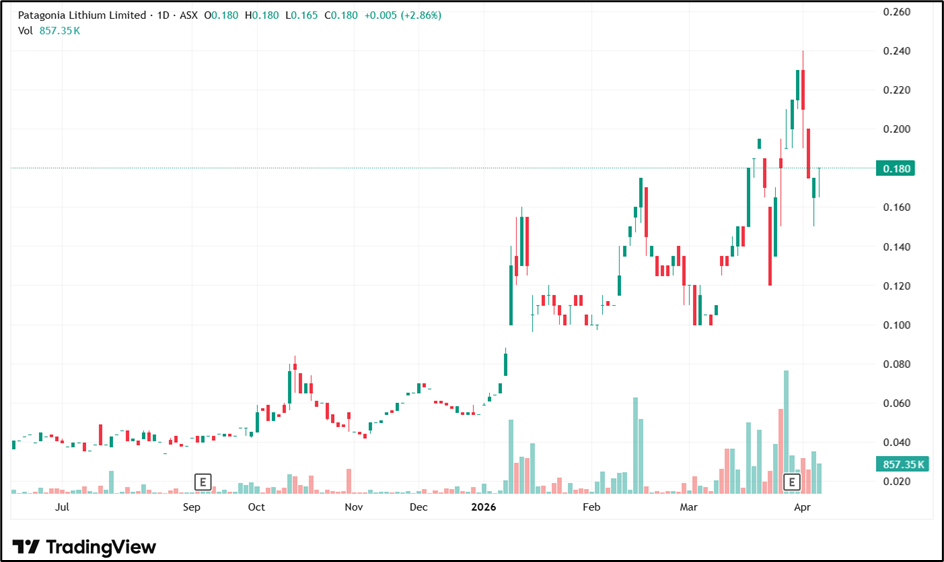
PL3 has experienced the high-volatility price action typical of lithium explorers. The stock currently trades at approximately A$0.17, reflecting a period of consolidation following earlier speculative highs during the lithium boom. The current valuation implies the market is pricing in significant uncertainty about drilling outcomes and lithium's medium-term price trajectory.
For momentum traders, PL3 remains a high-beta play on lithium sentiment. For value-focused investors, the absence of any revenue or defined resource makes the risk-reward calculus highly speculative.
Atlantic Lithium (ASX: A11)
Price: ~A$0.29 | Market Cap (ASX equivalent): ~A$217 million
Company Overview
Atlantic Lithium is developing the Ewoyaa Lithium Project in Ghana, West Africa — a project that has progressed well beyond the typical early-stage exploration phase that characterises most of its ASX-listed peers. The Ewoyaa project holds a JORC-compliant resource estimate and has attracted the strategic attention of Piedmont Lithium, a key partner and cornerstone investor. This partnership lends the project considerable credibility.
Ghana's regulatory environment and Atlantic's established in-country relationships represent both an advantage and an ongoing consideration, as political and permitting dynamics in West Africa require active management.
Financial Insights
Atlantic Lithium carries a materially larger market capitalisation than pure explorers — approximately A$217 million on an ASX equivalent basis — reflecting the project's advancement toward feasibility and development stages. The company remains pre-revenue but is deploying capital into project studies, environmental assessments, and community engagement programs.
Key financial considerations include:
- No production revenue at this stage
- Capital intensity increasing as the project moves toward a definitive feasibility study (DFS)
- Partnership with Piedmont Lithium providing a degree of funding visibility
The company's burn rate is higher than early-stage explorers, but this is commensurate with a more advanced project profile.
Management Outlook
Atlantic Lithium's management team has maintained a clear development roadmap, with the Definitive Feasibility Study (DFS) identified as the critical near-term catalyst. Completion of the DFS will underpin any future financing discussions with debt providers or strategic partners, and is expected to be a major share price catalyst.
Management has also been proactive in stakeholder engagement, recognising that community relations and government permitting are as critical as geological outcomes at this stage of development.
Price Performance
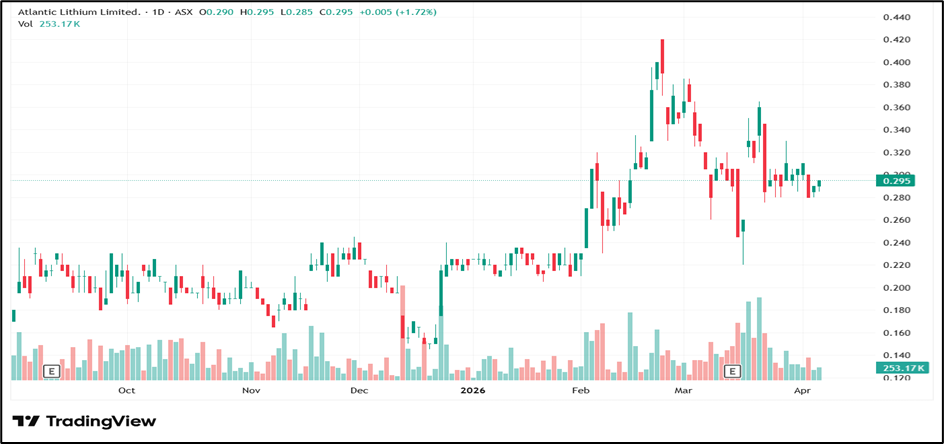
A11 trades at approximately A$0.29, reflecting both the project's development progress and broader lithium market sentiment. The stock has outperformed pure explorers in terms of risk-adjusted stability, but remains sensitive to lithium price movements and any updates to the DFS timeline. The Piedmont Lithium relationship continues to provide a pricing floor of sorts, given its strategic nature.
Peninsula Energy (ASX: PEN)
Price: ~A$0.52 | Market Cap: ~A$226 million
Company Overview
Peninsula Energy is one of the few ASX-listed uranium companies with actual US-based operations, giving it direct leverage to the North American uranium market. The company holds the Lance Projects in Wyoming — an in-situ recovery (ISR) uranium operation — which positions it closer to production than most ASX uranium peers.
The global nuclear energy renaissance, driven by decarbonisation targets and energy security concerns, has materially improved the operating environment for uranium producers. Several major economies have recommitted to nuclear energy expansion, creating a structural tailwind for companies like Peninsula.
Financial Insights
Peninsula Energy's financials are more developed than pure explorers, but earnings remain highly leveraged to uranium spot pricing. Key metrics include:
- Advancing toward production restart at Lance Projects
- Revenue generation dependent on uranium contract pricing and production commencement
- Capital requirements for operational restart and ramp-up remain significant
With a market cap of A$226 million, the market is pricing in meaningful probability of successful production recommencement. However, any delays or cost blowouts would weigh significantly on the stock.
Management Outlook
Management has expressed confidence in the uranium market's structural shift toward higher long-term contract pricing. The focus in 2026 is on finalising production restart preparations at Lance, securing offtake agreements, and managing the capital requirements of operational ramp-up. Uranium's improved market fundamentals give management a more constructive backdrop than was available in prior years.
Price Performance
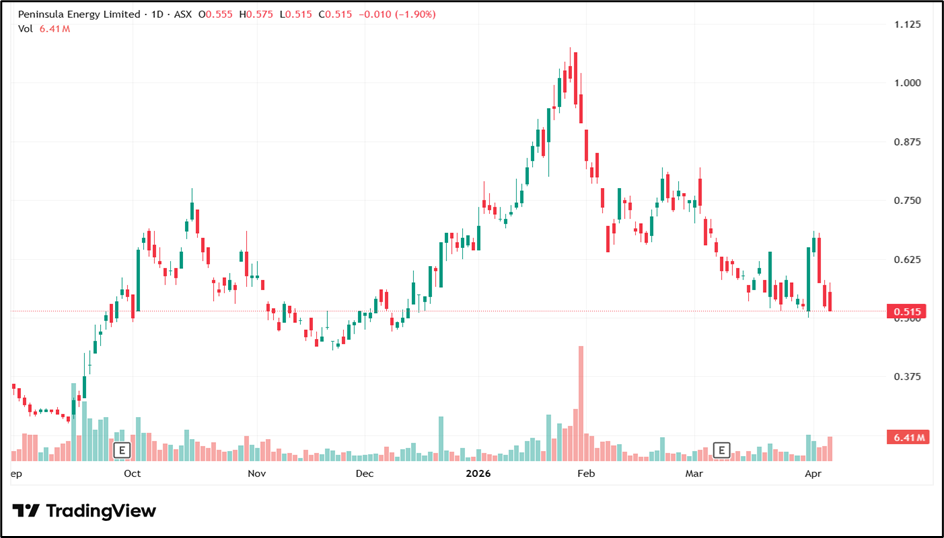
PEN trades at approximately A$0.52, making it one of the higher-priced names in this peer group. The stock has benefited materially from uranium's renewed investor appeal, and has outperformed the broader ASX small resources index over recent periods. Its performance will remain closely tied to uranium spot price movements and production milestones.
Dateline Resources (ASX: DTR)
Price: ~A$0.46 | Market Cap: ~A$1.65 billion
Company Overview
Dateline Resources holds exposure to gold and rare earth assets, and has attracted significant speculative interest. However, its A$1.65 billion market capitalisation places it well outside traditional penny stock or micro-cap territory, despite trading below A$1.00 per share.
Financial Insights & Price Performance
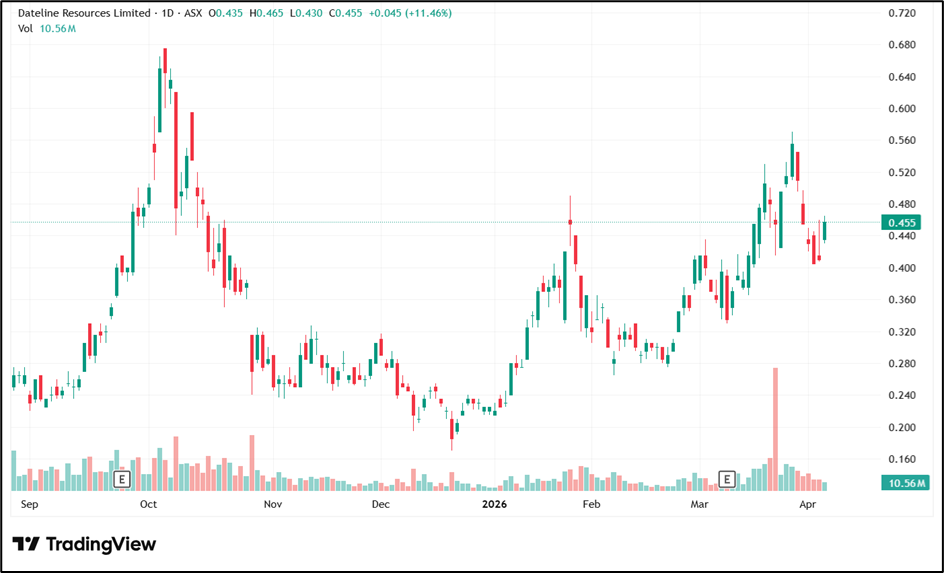
Dateline's elevated valuation relative to its asset base and development stage implies the market is pricing in a premium for optionality and momentum. This creates significant downside risk if expectations are not met. Investors should approach DTR with awareness that its valuation metrics are more stretched than peers, and that momentum-driven stocks can unwind sharply.


 Nov 11, 2026





 Please wait processing your request...