
 CA
 NZ
 UK
 US
 IND

 AU

 Share
 X (Formerly Twitter)
 Whatsapp
 Facebook
 LinkedIn
 Telegram
 Email This Article
 Copy Link
 Summarize with AI
 Chat GPT
 Perplexity
HIGHLIGHTS
- WIN Metals shares traded at A$0.024 on May 1, 2026, up 20.00% over the prior year.
- The company reported underground sampling grades of 334 g/t Au and 314 g/t Au at the Radio Gold Project, 38km north of Southern Cross in Western Australia
- Drill results confirmed high-grade gold mineralisation within planned underground and open pit Mining areas, including 3m @ 19.51 g/t Au at the Repeater deposit and 2m @ 16.01 g/t Au at Radio, with mineralisation also identified outside the current mine design
- A final Investment decision to commence Mining operations is targeted for the current financial year, subject to completion of studies, financing, and regulatory approvals, with processing Options including a fit-for-purpose on-site Facility under evaluation
WIN Metals Ltd (ASX:WIN) shares were trading at A$0.024 per share on May 1, 2026, representing a 20.00% gain over the preceding 12 months. The May 4, 2026 announcement of initial assay results from the company's 2026 drilling and underground sampling programs provided the market with the most detailed picture yet of the grade and geometry of mineralisation at both the Radio and Repeater deposits.
The Radio Gold Project is a 100%-owned asset located approximately 8 kilometres north of Bullfinch and 38 kilometres north of Southern Cross in the Eastern Goldfields region of Western Australia. With a development decision targeted for the current financial year, WIN Metals is approaching a potentially transformative inflection point for a company of its size and market position.
DRILLING AND UNDERGROUND SAMPLING RESULTS
Underground Sampling: Exceptional High Grades
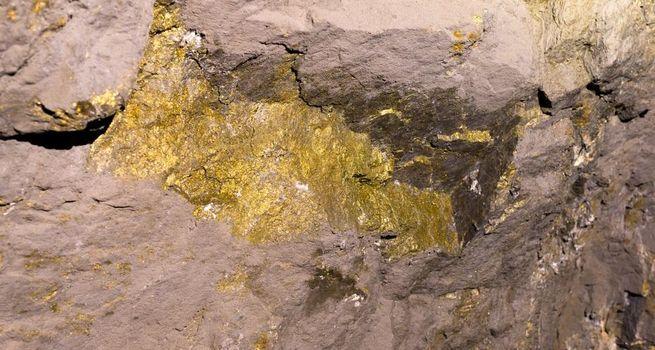
The most striking data points from the 2026 program are the underground face and point samples collected from the 1315 level at Radio, which returned grades of up to 334 g/t gold and 314 g/t gold from laminated quartz veins. These samples were taken from the current ore drive development face — meaning they represent material directly within the active Mining area, not from speculative or peripheral locations. A total of 46 underground samples were collected, providing a statistically meaningful dataset that confirms both the exceptional high-grade nature of the mineralisation and its nuggety character.
Management emphasised the geological rationale for the "drill for structure, develop for grade" approach that characterises high-grade nuggety gold deposits of this type. At Radio, a drill hole intersecting a quartz vein with a modest gold grade of greater than 0.2 g/t may sit only one metre from material capable of returning grades exceeding 300 g/t. Drilling reliably defines the structural framework of the vein system, but individual assay grades can vary significantly due to the coarse, free-gold nature of the mineralisation. The underground sampling from developed faces provides the fine-scale, high-confidence grade data that complements the structural framework established by drilling.
Radio and Repeater Drill Results
Drilling at Radio confirmed high-grade mineralisation within planned stoping areas, with results including 1 metre at 23.40 g/t Au (hole 26RDRC026) and 3 metres at 6.66 g/t Au (hole 26RDRC028). Additional drilling identified mineralisation outside the current mine design, with 2 metres at 16.01 g/t Au (hole 26RDRC029) and 1 metre at 11.09 g/t Au (hole 26RDRC027) representing potential upside to the existing mine plan that will be assessed in future planning iterations.
At the Repeater deposit, targeted and infill drilling immediately north of the proposed open pit — an area previously inaccessible — returned strong results along the pit's northern Margin, including 3 metres at 19.51 g/t Au from hole 26RDRC002. Additional mineralisation north of the proposed pit was also identified, with 2 metres at 5.25 g/t Au from hole 26RDRC015 and a shallow intercept of 3 metres at 1.73 g/t from 14 metres (26RDRC006). These zones present potential upside beyond the current open pit design and will be incorporated into ongoing mine planning work.
MINE DESIGN, PROCESSING AND DEVELOPMENT PATHWAY
Underground and open pit mine designs have been completed for Radio and Repeater respectively and incorporated into a detailed Mining schedule to support the evaluation of milling Options. WIN Metals is currently evaluating three processing configurations at a nominal throughput rate of 100,000 tonnes per annum: batch processing (gravity and leaching), continuous processing (gravity only), and continuous processing (gravity and leaching). A preferred processing option has been identified, with detailed engineering design and cost estimation nearing completion.
Following completion of the engineering and cost review, WIN Metals will undertake a comprehensive financial comparison of third-party toll treatment versus a standalone owner-operated processing Facility at Radio, leveraging previously sunk Capital associated with historical on-site mill infrastructure. The company expects to advise the market of its preferred processing option within weeks. Permitting activities required under updated legislative frameworks are described as well advanced for the proposed Mining operations, while baseline studies and data collection to support potential on-site processing and tailings storage are progressing in parallel.
Remaining assay results from Radio Central and from drilling beneath the Repeater open pit are expected in coming weeks, followed by an updated Mineral Resource Estimate. The next steps also include the finalisation of financial modelling for processing Options, progression of permitting and approvals, and ultimately a final Investment decision to commence operations.
PROJECT HISTORY AND GEOLOGICAL SETTING
Gold Mining at the Radio Gold Project dates back to 1918, with approximately 71,000 ounces produced at an average head grade of 38 g/t Au between 1918 and 1974. Underground operations were re-established in 2018 using the existing shaft and a new surface portal, with 330 metres of decline developed to the historic second level to enable mechanised Mining. The mine site remains intact and dewatered, with underground infrastructure already in place — a significant advantage for a potential rapid restart.
The Radio Gold Project sits on the eastern Margin of the Archean Southern Cross Greenstone Belt within the central Yilgarn Craton of Western Australia, at a key geological interface between sheared greenstones and the Ghooli granitoid — a setting recognised as highly prospective for high-grade, vein-hosted orogenic gold deposits. Gold mineralisation is hosted in two narrow high-grade quartz lodes (the Main and East lodes) within sheared granite along the greenstone belt Margin, with the gold occurring predominantly as coarse, free gold consistent with an orogenic quartz vein style.
CONCLUSION
WIN Metals' 2026 drilling and underground sampling campaign at the Radio Gold Project has delivered results that materially increase confidence in the current mine plan while also identifying potential upside beyond the existing resource envelope. Underground sampling grades of up to 334 g/t Au from active development faces, combined with drill intercepts of 3 metres at 19.51 g/t Au at Repeater and 2 metres at 16.01 g/t Au at Radio, reinforce the high-grade character of the asset. With mine designs complete, processing Options under evaluation, permitting advanced, and a development decision targeted for the current financial year, WIN Metals is moving deliberately toward a potentially significant operational milestone.


 Nov 13, 2026





 Please wait processing your request...