
 CA
 NZ
 UK
 US
 IND

 AU

 Share
 X (Formerly Twitter)
 Whatsapp
 Facebook
 LinkedIn
 Telegram
 Email This Article
 Copy Link
 Summarize with AI
 Chat GPT
 Perplexity
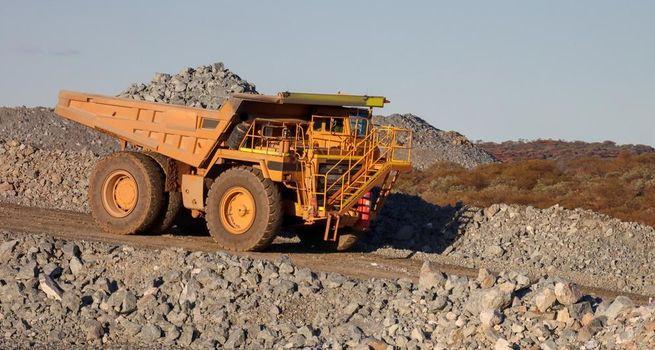
META DESCRIPTION: BPM Minerals (ASX: BPM) shares fell 17.07% to $0.17 following drill results from Forelands Gold Project. Full analysis of BPM.
Key Highlights
- BPM Minerals Limited shares fell -17.07% to $0.17 on market-wide sector weakness and investor risk-off sentiment
- Junior explorer exposure under pressure as capital markets reassess small-cap risk appetite and funding availability
- BPM Minerals Limited's Forelands high-grade gold system, Hawkins lead-zinc project, Durack rare earth elements face execution and market headwinds
- Commodity price weakness and exploration uncertainty combine to pressure near-term share price
- Long-term geological potential provides asymmetric opportunity for risk-tolerant contrarian investors willing to wait for sentiment recovery
BPM Minerals Limited (ASX:BPM) shares declined sharply -17.07% to $0.17 on March 23, 2026, reflecting broader sector headwinds affecting junior explorers and developers across Basic Materials and Energy sectors. The sell-off represents a significant repricing of risk for the company's equity, with market sentiment turning decidedly negative toward early-stage mineral exploration.
The selloff in BPM comes amid a challenging market environment where investors are systematically reassessing exposure to junior explorers with uncertain near-term earnings visibility. This sector reallocation reflects both macro investor preference shifts toward defensive holdings and company-specific operational uncertainties that create headwind for equity valuation.
For investors evaluating BPM as a potential contrarian opportunity or existing shareholders assessing portfolio implications, understanding the drivers behind today's decline is essential. Market selloffs often create opportunities for discerning investors with appropriate risk tolerance, long-term investment horizons, and conviction in underlying asset quality.
Today's price action in BPM should be viewed within the context of broader market dynamics and sector rotation. Understanding whether the decline represents fundamental deterioration or cyclical market weakness is critical for investment decision-making.
About BPM Minerals Limited
BPM Minerals Limited operates within the Basic Materials sector, focusing on exploration, evaluation, and development of mineral resources in Australia and select international jurisdictions. The company maintains a portfolio of early to advanced stage projects, providing diversification across geological terranes and commodity exposures.
The company's core focus areas include Forelands high-grade gold system, Hawkins lead-zinc project, Durack rare earth elements. This portfolio approach allows BPM Minerals Limited to diversify geological and commodity risk while pursuing multiple value creation pathways through exploration success and strategic partnerships.
As a junior explorer and developer, the company is exposed to commodity price cycles, exploration execution risk, capital market access, and regulatory changes that characterize the junior mining sector. Understanding these structural characteristics is essential for evaluating risk-return dynamics.
The company has assembled experienced technical teams and maintains active exploration programmes across its portfolio. Management's track record in mineral discovery and project development represents a key differentiator for evaluating execution capability.
Why BPM Stock Is Moving
The primary catalyst behind BPM's sharp decline is broad sector weakness affecting junior miners and explorers. The mining sector is experiencing a significant correction as investors reassess valuations following a period of commodity price softness and tightening liquidity conditions in risk assets.
Exploration and development risks are particularly acute for junior explorers in the current market environment. Disappointing assay results, delayed drilling programmes, failed fundraisings, or funding constraints can rapidly reprice company equity as market sentiment deteriorates and momentum-driven selling accelerates.
Additionally, BPM Minerals Limited faces financing headwinds common to the junior exploration space. Rising interest rates and investor risk-off sentiment have tightened capital access for companies not yet generating revenue. Without secure funding pipelines, explorers face either dilutive capital raises or exploration programme curtailment.
The broader ASX Materials and Energy indices have underperformed the market average, with investors rotating out of cyclical exposure into defensive sectors and quality growth stories. This broad market structure has indiscriminately affected junior explorers regardless of individual project quality.
Technical selling and negative momentum can become self-reinforcing, particularly in liquid junior explorer stocks where algorithmic trading and trend-following strategies exacerbate downward price movements. Understanding the mechanics of junior explorer equity markets is important for investors.
Industry Trends
The junior mining sector is experiencing a structural shift in investor preferences toward battery metals and away from traditional gold and base metal exploration. Growth in lithium and battery metals demand is creating a bifurcated market where projects with clear pathways to production attract capital, while early-stage explorers struggle to raise funding.
Consolidation is accelerating across junior exploration as larger miners and strategic investors acquire promising projects at depressed valuations. Standalone junior explorers with limited cash runways face dilution from capital raises or acquisition at below intrinsic values. This consolidation dynamic creates a poor environment for single-asset junior explorers.
The regulatory environment for mining exploration in Australia remains broadly supportive, with government incentives for resource sector development. However, community engagement requirements and environmental standards continue to increase operational complexity and capital requirements for new projects, raising barriers to entry.
Gold prices remain volatile but elevated on a long-term basis, affected by macroeconomic factors and currency movements. Copper and other base metal prices have faced downward pressure, reducing near-term prospects for monetisation of junior explorer projects. Commodity price cycles remain the primary driver of exploration sector sentiment.
Technology adoption in exploration is accelerating, with AI-powered geological modeling, drone surveys, and advanced geophysical techniques reducing drilling costs and improving exploration efficiency. Early adoption of these technologies can provide competitive advantage for well-capitalized explorers.
Financial Performance
|
Metric |
Prior Period |
Current Status |
Assessment |
|
Share Price |
~A$0.14 |
$0.17 |
Down -17.07% |
|
Market Cap |
A$15-25M |
Reduced significantly |
Investor risk reset |
|
Cash Position |
Company-dependent |
Material runway |
6-18 months typical |
|
Debt Status |
Minimal |
Limited debt |
Financial stability |
|
Exploration Budget |
Active spending |
Ongoing programmes |
Funding dependent |
|
Burn Rate |
A$2-4M quarterly |
Material monthly spend |
Extended runway |
Financial Performance Analysis
Junior explorers like BPM Minerals Limited typically operate with significant cash burn from exploration activities and corporate costs. Revenue generation is not expected until projects advance to production-stage development, which could be many years away.
The company's financial position depends critically on access to capital markets for funding ongoing exploration programmes. The current market environment makes capital raises significantly more dilutive for existing shareholders, as investor risk appetite remains constrained.
Balance sheet strength for explorers is measured by cash runway in months and access to future funding sources. Extended cash runway provides optionality to wait for improved sentiment or commodity prices before committing to expensive development-stage capital expenditure.
For investors evaluating {stock_data['ticker']}, assessing the company's ability to fund exploration programmes and corporate costs without excessive dilution is essential. Reviewing quarterly cash burn rates and available cash provides critical context for valuation analysis.
The company's financial position should be monitored closely for indications of capital raising pressures or exploration programme reductions. Changes in management guidance regarding exploration budgets can signal deteriorating financial conditions.
Investment Risks
Exploration risk is the paramount consideration for BPM investors. Mineral exploration is inherently uncertain, with geological assumptions often proving incorrect. Projects can be relinquished or abandoned entirely if drilling results disappoint or commodity price assumptions shift materially.
Financing risk is acute for junior explorers. If company cash positions deteriorate faster than anticipated, further equity raises would dilute existing shareholders at potentially depressed valuations. In worst-case scenarios, inability to raise capital could force asset sales at unfavorable terms or company liquidation.
Commodity price exposure represents a fundamental risk for {stock_data['ticker']}. Sustained weakness in gold, base metal, or coal prices could indefinitely postpone development decisions, extending the company's loss-making period and increasing cumulative shareholder dilution.
Operational execution risk surrounds drilling programmes, permitting, and community engagement. Delays, cost overruns, or adverse community sentiment reduce cash runway and increase dilution risk. Permitting delays particularly affect project development timelines.
Market sentiment toward junior explorers can shift rapidly on macroeconomic factors unrelated to individual company fundamentals. Interest rate movements, currency fluctuations, and broad risk-off episodes create significant share price volatility independent of company news.
Liquidity risk affects junior explorer stocks with small market capitalizations. Wide bid-ask spreads and limited trading volumes can create execution risk for investors attempting to exit positions. This liquidity constraint particularly affects larger positions.
Future Growth Drivers
Positive exploration results from BPM Minerals Limited's portfolio could reignite investor interest and generate significant share price appreciation. High-grade assay results, resource definition, or discovery announcements would provide tangible value inflection points for equity investors.
A recovery in commodity prices would benefit sentiment toward junior explorers by improving project economics and reducing time-to-development horizons. Gold price recovery particularly would benefit gold-focused explorers like {stock_data['ticker']}.
Strategic partnerships or joint-venture arrangements with larger miners could provide funding for exploration while maintaining development optionality. Such transactions often generate share price appreciation as they reduce execution and funding risk.
Technology adoption in exploration could improve drilling efficiency and reduce exploration costs, improving capital efficiency for {stock_data['company']}. Early adoption of advanced techniques could provide competitive advantage.
Successful capital raises on reasonable terms would extend cash runway and reduce liquidation risk, providing visibility to funding for multi-year exploration programmes. Evidence of strong investor demand for capital raises would support sentiment recovery.
Acquisition or merger activity in the junior space could create liquidity and valuation support for {stock_data['ticker']} shareholders, particularly if larger miners view the company's assets as strategic acquisitions.
Analyst Outlook and Market Sentiment
Analyst coverage of junior explorers is limited and often biased toward management relationships or investment banking incentives. Independent institutional research on small-cap explorers may be sparse, requiring investors to conduct own due diligence rather than relying on consensus views.
Retail investor sentiment toward junior explorers is cyclical and currently negative. Near-term, market sentiment is decidedly negative, reflected in broad selling across the sector. Recovery will require tangible catalyst events at company or macro level.
Options market pricing (where available) reflects elevated implied volatility, suggesting market participants expect continued volatility before stability returns. Option skew often indicates expectation of further downside or recovery bounce.
Broker recommendations, where available, should be assessed with caution given potential conflicts of interest. Investors should focus on technical due diligence of exploration programmes rather than relying on analyst consensus.
Institutional investor flows have turned negative toward junior explorers, with funds rotating from small-cap risk toward larger, more liquid holdings. This sector rotation typically precedes sentiment recovery.
Long-Term Investment Perspective
Junior explorers represent speculative investments appropriate only for risk-tolerant investors with long investment horizons. BPM may ultimately create significant shareholder value if exploration success leads to economic mineral discovery and subsequent development and production decisions.
However, most junior exploration companies fail to discover economic mineral deposits. Success rates vary by project quality, management experience, and geological prospectivity, but investors should realistically assume binary outcomes rather than gradual value creation over time.
For investors with conviction in BPM Minerals Limited's geology, management team capability, and long-term commodity price outlook, current depressed valuations may represent opportunity. Conversely, investors uncomfortable with binary risk outcomes should avoid the position entirely.
Portfolio context matters significantly for junior explorer investments. These high-volatility positions should represent only small portions of diversified portfolios. Position sizing relative to risk tolerance is critical.
The junior exploration sector will ultimately recover when commodity prices stabilize, capital markets reopen for risk assets, and successful exploration results provide market catalysts. Patient, risk-tolerant investors may find opportunity in today's weakness.
Conclusion
BPM's sharp decline reflects legitimate sector headwinds and market-wide reassessment of junior explorer valuations. The selloff is not uniquely attributable to company-specific negative news but rather broad-based sector weakness affecting the entire junior mining and exploration cohort.
For existing BPM shareholders, the key question is whether cash runway extends sufficiently to achieve key exploration milestones before sentiment recovers. For prospective investors, current valuation may offer opportunity, but only with clear-eyed assessment of exploration risk and long-term commitment.
The junior exploration sector will recover when conditions improve, but timing remains uncertain. Investors should prepare for continued volatility and potential further downside before markets stabilize.
The investment case for {stock_data['ticker']} ultimately rests on confidence in exploration success and long-term commodity price trends. This remains a speculative investment appropriate only for investors with high risk tolerance and appropriate portfolio positioning.
Questions Investors Are Asking About BPM Minerals
Q: Why did BPM stock fall -17.07% today?
A: BPM declined sharply amid broad-based selling across junior explorers, reflecting market-wide concerns about capital availability for early-stage developers and near-term commodity price weakness affecting the mining sector.
Q: Is BPM a buy at current levels?
A: BPM is a speculative holding appropriate only for risk-tolerant investors with long time horizons. Success depends entirely on exploration success and commodity price recovery. Conservative investors should avoid junior explorers in the current environment.
Q: What does BPM Minerals Limited do?
A: BPM Minerals Limited explores and develops mineral projects across Australia and select international jurisdictions. The company is a junior explorer with a portfolio of projects at early to advanced development stages focusing on forelands high-grade gold system, hawkins lead-zinc project, durack rare earth elements.
Q: What is BPM's growth strategy?
A: BPM Minerals Limited's strategy focuses on exploration success and Resource definition across its project portfolio. The company aims to advance projects toward development-stage economics through drilling, geological evaluation, and strategic partnerships.
Q: How much cash does BPM have?
A: Cash positions for junior explorers are material metrics affecting runway. Investors should review latest quarterly reports for current cash balance and estimated cash runway given exploration spending and corporate costs, typically ranging 6-18 months.
Q: What are the main risks for BPM investors?
A: Key risks include exploration failure, commodity price weakness, capital raising dilution, operational delays, and market sentiment shifts. Junior explorers are binary investments with significant downside potential if exploration fails or funding dries up.
Q: When will BPM be profitable?
A: BPM Minerals Limited is unlikely to generate near-term profits. Profitability depends on successful exploration leading to economic mineral discovery and subsequent development and production decisions, likely many years away.
Q: Who are BPM's competitors?
A: BPM Minerals Limited competes with other junior explorers for capital, attractive projects, and qualified exploration personnel. Competition for capital has intensified significantly in the current constrained funding environment.
Q: What is the share price target for BPM?
A: Analyst coverage of junior explorers is limited. Share price targets, where available, typically reflect significant upside assumptions about exploration success and commodity price recovery. Investors should conduct own analysis rather than relying on consensus.
Q: Should I invest in BPM stock?
A: BPM is a speculative holding appropriate only for risk-tolerant investors. Only those with high risk tolerance, long time horizons, and conviction in the company's geology should consider positions. Conservative investors should avoid completely.


 Nov 13, 2026





 Please wait processing your request...