
 AU
AU CA
CA NZ
NZ UK
UK US
US IND
IND

 Share
Share
 X (Formerly Twitter)
 Whatsapp
 Facebook
 LinkedIn
 Telegram
 Email This Article
 Copy Link
 Summarize with AI
 Chat GPT
 Perplexity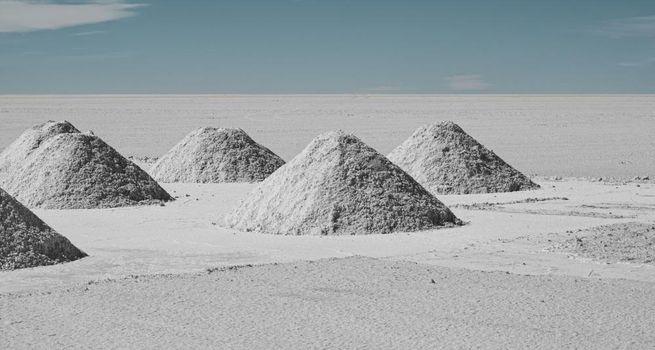
Views Expressed Disclaimer:
You are reading a free article with opinions that may differ from the recommendations given by Kalkine in its paid research reports. Become a Kalkine member today to get access to our research reports, in-depth technical and fundamental research.
Highlights
- Australia dominates global lithium supply with the ASX hosting the sector’s deepest stock pipeline.
- Lithium prices rebound on accelerating EV adoption and battery energy storage demand.
- Tier-one assets and low-cost operations position major producers for operating leverage.
- Diversified miners offer lithium exposure with balance-sheet resilience and dividend support.
- Developers provide high-risk, high-reward upside as structural deficits emerge post-2026.
Lithium is the metal that makes the modern world move. Every electric vehicle rolling off the production line, every grid-scale battery storing renewable energy, and every smartphone slipped into a pocket depends on lithium-ion chemistry. Australia sits at the heart of this supply chain. The nation remains the world's largest lithium miner, supplying roughly 30% of global output, and the ASX is home to the deepest bench of lithium producers, developers, and explorers anywhere on earth.
Yet the past two years have tested even the most committed lithium bulls. After peaking at extraordinary levels in late 2022, spodumene prices collapsed by more than 80%, forcing producers to cut output, delay expansion projects, and hunker down for what became a prolonged downturn. Dozens of junior miners ran out of cash. Sentiment turned toxic.
Now the tide is turning. Lithium prices have staged a sharp recovery from their mid-2024 lows, supported by surging electric vehicle sales — up 35% globally in 2024 — and growing demand from battery energy storage systems. Canaccord expects the lithium market to reach balance by 2026 and tip into structural deficit from 2027 onwards, with demand climbing roughly 15% annually to around 1.5 million tonnes of lithium carbonate equivalent. China's new royalty framework is lifting the global cost floor by US$20–30 per tonne for domestic lepidolite producers, providing a further tailwind for Australian spodumene miners who operate at the lower end of the cost curve.
Against that backdrop, here are six ASX lithium stocks that offer the most compelling exposure to the recovery ahead.
- Pilbara Minerals (ASX:PLS)
If Australian lithium has a flagship, it is Pilbara Minerals. The company operates the Pilgangoora lithium-tantalum project in Western Australia's Pilbara region — one of the largest hard-rock lithium deposits in the world — and has built a reputation for operational discipline, cost control, and strategic ambition.
The numbers tell the story of a business that navigated the downturn with remarkable composure. In the first quarter of financial year 2026, Pilbara delivered rising average realised sales prices alongside falling unit operating costs, which dropped to A$540 per tonne. That combination of improving revenues and declining costs is the hallmark of operational leverage, and it means Pilbara is highly profitable even in a moderately recovered price environment.
The share price reflects the turnaround. Pilbara has surged more than 200% from its June 2024 low of $1.15, and the company's market capitalisation now sits around $14 billion, making it one of the twenty largest companies on the ASX. A cash position exceeding $1 billion provides an enviable buffer and the firepower to pursue growth opportunities — including the P2000 feasibility study, expected in financial year 2027, which could push annual production capacity beyond two million tonnes of spodumene concentrate.
Macquarie currently holds a neutral rating on Pilbara, noting that the stock may be trading slightly ahead of the implied lithium price recovery. That is a fair observation, and investors should be aware that Pilbara is no longer the deep-value play it was twelve months ago. But as the sector's most liquid, most operationally proven name, it remains the natural first port of call for anyone building lithium exposure on the ASX.
- Mineral Resources (ASX:MIN)
Mineral Resources is not a pure lithium play, and that is part of its appeal. The company operates across four segments — lithium, iron ore, mining services, and energy — giving it a diversified revenue base that provides resilience when any single commodity stumbles.
Within lithium, Mineral Resources owns the Mount Marion mine in partnership with Jiangxi Ganfeng Lithium and operates the Wodgina mine in a joint venture with Albemarle. Both are world-class hard-rock assets located in Western Australia's prolific lithium belt. The mining services division, which provides crushing, screening, and logistics to third-party miners, generates steady cash flow regardless of commodity prices — a structural advantage that few peers can match.
With a market capitalisation above $10 billion, Mineral Resources is a major force on the ASX. The company's founder and managing director, Chris Ellison, is known for aggressive capital allocation and a willingness to invest through downturns — a strategy that has historically rewarded patient shareholders when cycles turn. As lithium prices recover, the operating leverage embedded in Mineral Resources' lithium assets could drive earnings sharply higher, while the diversified business model limits downside risk if the recovery stalls.
- IGO Limited (ASX:IGO)
For investors who want tier-one lithium asset exposure with a differentiated risk profile, IGO Limited stands out. The company's crown jewel is its stake in the Greenbushes lithium mine — the largest and highest-grade hard-rock lithium deposit on the planet, supplying over 20% of the world's high-grade lithium concentrate.
Macquarie has named IGO as one of its outperform picks in the sector, forecasting that the company will return to profitability in financial year 2026, with earnings tripling in financial year 2027 as operating leverage kicks in against a backdrop of modest price improvements. The broker's thesis rests on the view that the lithium market will rebalance by 2026, with potential deficits emerging thereafter — a scenario that would disproportionately benefit low-cost producers with strong balance sheets, which is precisely what IGO is.
Beyond lithium, IGO also holds nickel assets, including a stake in the Nova nickel-copper-cobalt operation. Nickel has faced its own pricing challenges, and the dual commodity exposure adds complexity. But Greenbushes alone would justify serious investor attention. Its scale, grade, cost position, and long mine life make it arguably the single most valuable lithium asset in the world. Owning a piece of it through IGO is one of the most direct ways to bet on rising lithium prices from the ASX.
- Liontown Resources (ASX:LTR)
Liontown Resources is the ASX lithium stock with the most dramatic recent narrative. Two years ago, the company was the target of a $6.6 billion takeover bid from Albemarle that was ultimately withdrawn. Today, Liontown is focused on proving that it can stand on its own as a major lithium producer.
The vehicle for that ambition is the Kathleen Valley project in Western Australia — a tier-one lithium asset that is now ramping up towards its initial production target of 1.5 million tonnes per annum of ore by March 2026, with potential expansion to four million tonnes. The project runs on 79% renewable power, giving it strong environmental credentials at a time when ESG considerations increasingly influence offtake decisions.
Liontown has secured long-term offtake agreements with Tesla, Ford, and LG Energy Solution — a customer roster that provides revenue visibility and strategic validation. The share price has reflected the progress, surging 100% over the past six months from its 2024 lows to trade around A$2.20.
The risks are not trivial. Macquarie has assigned an underperform rating, flagging concerns about cost competitiveness during the ramp-up phase and noting that newly commissioned operations typically face teething problems. The average twelve-month analyst price target of A$1.22 implies the market may have run ahead of fundamentals in the short term. But for investors with a multi-year horizon who believe Kathleen Valley will become a long-life, low-cost producer, Liontown offers asymmetric upside if execution continues on track.
- Rio Tinto Lithium — via Rio Tinto (ASX:RIO)
The biggest lithium story on the ASX in 2025 was not a junior explorer hitting a bonanza — it was Rio Tinto's US$6.7 billion all-cash acquisition of Arcadium Lithium, the company formed from the mega-merger of Allkem and Livent. That deal cemented Rio Tinto as one of the largest lithium producers in the world and created a new division, Rio Tinto Lithium, that consolidates brine operations in Argentina alongside hard-rock assets in Australia.
The acquisition added Arcadium's Salar del Hombre Muerto and Olaroz brine operations in Argentina, the Mount Cattlin hard-rock mine in Western Australia, and downstream processing capabilities in multiple countries. Rio Tinto has stated that the deal will increase its lithium carbonate equivalent production capacity to over 200,000 metric tonnes annually by 2028 — a figure that would place it among the top three lithium producers globally.
For ASX investors, Rio Tinto offers a way to gain substantial lithium exposure within the safety of a $170 billion diversified mining giant. The company's iron ore cash flows bankroll lithium growth without the balance sheet risk that haunts smaller peers. The dividend yield provides income while investors wait for the lithium division to scale. And if lithium prices recover as analysts expect, the new division could become a meaningful earnings contributor far sooner than the market currently appreciates. Rio Tinto is not a pure-play lithium bet — but for many investors, that diversification is a feature, not a bug.
- Patriot Battery Metals (ASX:PMT)
Patriot Battery Metals occupies a different position on the risk spectrum. The company is a developer, not yet a producer, but it controls one of the most exciting lithium discoveries made anywhere in the world in the past decade.
The Shaakichiuwaanaan project — formerly known as Corvette — sits in Quebec, Canada, and hosts one of the largest lithium pegmatite resources in the Americas. From discovery in 2017 to an initial resource estimate in 2023, the pace of progress has been exceptional. A preliminary economic assessment has been completed, and the company is now working towards a feasibility study with the ambition of building a mine that feeds directly into North America's rapidly expanding electric vehicle supply chain.
The strategic value of a large, high-grade lithium deposit located in a stable, mining-friendly jurisdiction outside of China and Australia cannot be overstated. Western governments are scrambling to secure domestic battery metal supply chains, and projects like Shaakichiuwaanaan are exactly what they need. Patriot's dual listing on the ASX and TSX gives it access to both Australian and Canadian capital markets — a structural advantage when it comes to financing a mine build of this scale.
The trade-off is timing and execution risk. Patriot's CEO, Ken Brinsden — a well-known figure in lithium circles from his years leading Pilbara Minerals — has cautioned that current lithium prices are too low to incentivise the new mine construction that the world will eventually need. That is both a risk and an opportunity: if prices recover as forecast, Patriot could find itself fast-tracking a project that becomes one of the most valuable lithium assets in the Western Hemisphere.
What Could Derail the Recovery?
The bull case for lithium is compelling, but investors should keep several risks in clear view. First, supply discipline is not guaranteed. If prices rise too quickly, mothballed mines and delayed projects could return to the market faster than expected, capping the recovery. Second, EV adoption rates, while strong, are sensitive to government policy — any rollback of subsidies or emissions targets could slow demand growth. Third, alternative battery chemistries, particularly sodium-ion, are advancing rapidly and could eventually reduce lithium intensity in certain applications.
Finally, China remains the dominant force in lithium processing and battery manufacturing. Geopolitical tensions, trade restrictions, or changes to Chinese industrial policy could disrupt supply chains in ways that are difficult to predict.
The Bottom Line
The ASX lithium sector has weathered one of its deepest downturns and is now emerging leaner, more disciplined, and better positioned for the structural demand growth that lies ahead. Pilbara Minerals and Mineral Resources offer proven, large-scale production. IGO provides access to the world's best lithium mine. Liontown is transitioning from developer to producer with blue-chip customers. Rio Tinto brings lithium exposure inside a diversified mining powerhouse. And Patriot Battery Metals offers frontier exploration upside in a strategically critical jurisdiction.
The recovery will not be linear. Lithium remains one of the most volatile commodities on earth, and investors should size their positions accordingly. But for those who believe that electrification is the defining industrial trend of this decade — and that the world will need far more lithium than it currently produces — the ASX remains the best address in the world to invest in that conviction.
FAQs
- Why are ASX lithium stocks important for global supply?
Australia is the world’s largest lithium producer, and the ASX hosts many of the leading miners, developers, and explorers supplying the battery value chain. - What is driving the lithium price recovery?
Rising electric vehicle sales, growth in battery energy storage systems, and tightening future supply expectations are supporting prices. - Are pure-play lithium companies better than diversified miners?
Pure-plays offer direct price leverage, while diversified miners provide lithium exposure with additional revenue streams and lower single-commodity risk. - What risks could impact lithium stocks?
Faster-than-expected supply returns, policy changes affecting EV adoption, alternative battery chemistries, and geopolitical disruptions in processing markets.
Disclaimer: This article is for informational purposes only and does not constitute financial advice. The value of investments can fall as well as rise, and you may receive back less than you invest. Commodity prices are inherently volatile and mining stocks carry additional risks including operational, regulatory, and geological uncertainty. Past performance is not a reliable indicator of future results. Always conduct your own research or consult a qualified financial adviser before making investment decisions.

 Mar 12, 2026
 Please wait processing your request...