
 CA
 NZ
 UK
 US
 IND

 AU

 Share
 X (Formerly Twitter)
 Whatsapp
 Facebook
 LinkedIn
 Telegram
 Email This Article
 Copy Link
 Summarize with AI
 Chat GPT
 Perplexity
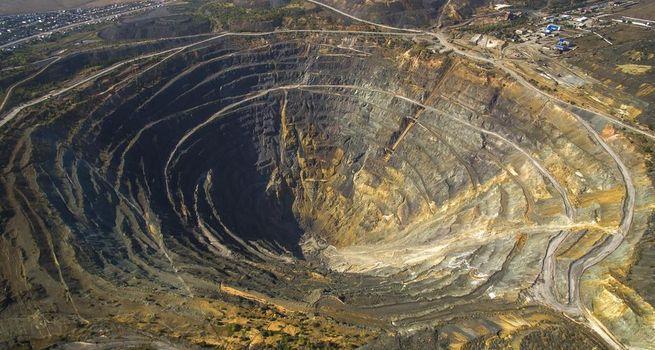
Pursuit Minerals Limited (ASX: PUR) has announced the commencement of fieldwork at its Sascha Marcelina Gold–Silver Project in Santa Cruz Province, Argentina. Initial geological mapping has confirmed what the company describes as a significant mineralised system, with multiple structurally controlled vein corridors and extensive alteration identified across priority target areas. Approximately 55% of the priority mapping area has been completed to date. Work has been initiated at the Sascha Main zone and expanded into the Valdivia Brechón target area, with mapping defining extensive quartz-chalcedony veining and silicified breccias. In parallel, an Induced Polarisation (IP) survey has commenced across the project area to refine drill targets at depth and beneath cover.
The announcement also re-states the historical drilling database for the project, including high-grade intercepts at Sascha Main (DDS02: 0.61 m at 19.78 g/t AuEq from 114.13 m; DDS13: 0.27 m at 5.18 g/t AuEq at 137.27 m and 0.21 m at 5.18 g/t AuEq at 137.27 m; PEL-DDH-005: 0.9 m at 5.48 g/t AuEq from 251.7 m), and discusses the broader pipeline of activity across Pursuit's Argentine portfolio, including drilling preparations at the Rio Grande Sur Lithium Project. A maiden drilling program at Sascha Marcelina is planned in the near term, targeting priority zones defined by mapping and IP geophysics.
What was announced
Pursuit has confirmed that geological mapping and IP surveying have commenced at Sascha Marcelina. Mapping has been initiated at the Sascha Main zone and expanded into the Valdivia Brechón target, with approximately 55% of the priority mapping area completed. The company has identified extensive outcropping quartz-chalcedony vein systems and float trains at Sascha Main, defining multiple sub-parallel structures. The veins display well-developed epithermal textures including colloform and crustiform banding, lattice-bladed calcite pseudomorphs and late-stage coarse comb quartz development — features the company associates with dynamic hydrothermal systems and precious-metal deposition.
At Valdivia Brechón, mapping has identified fault-controlled silicified breccias and chalcedony vein systems within strongly altered ignimbrites, with oxidation, cataclastic textures and veinlet development consistent with structurally controlled mineralisation along fault zones. The IP survey has begun across the project area, targeting NW–SE structural corridors interpreted to control fluid flow and mineralisation, with chargeability responses being used to detect sulphide-bearing zones beneath cover.
The announcement also outlines forward plans across Pursuit's Argentine portfolio, including drilling preparations at the Rio Grande Sur Lithium Project (camp construction and drill-rig mobilisation underway at Mito, a 30-day pumping test planned at Isabel Segunda, and PFS addendums evaluating larger output scenarios and a lithium chloride production option). The release closes with reference to the JORC 2012 Table 1 disclosures relating to the historical drilling and assay database compiled for the Sascha Marcelina Project.
Key facts and figures
The historical drilling database referenced in the JORC tables comprises 4,344 drill core samples from diamond holes ranging from 61 m to 452 m in depth, supplemented by 475 trench samples, 1,217 rock samples and 78 stream sediment samples across the Sascha-Marcelina project. Drillhole spacing in the Sascha Main target is 20 m to 250 m along a NW–SE trend.
Reported high-grade intercepts using a 1 g/t AuEq88 cut-off (AuEq88 = Au (g/t) + Ag (g/t)/88) include: DDS01 0.32 m @ 2.67 g/t AuEq (2.67 g/t Au, 0.3 g/t Ag) from 58.53 m; DDS02 0.61 m @ 19.78 g/t AuEq (19.4 g/t Au, 33 g/t Ag) from 114.13 m; DDS13 0.27 m @ 5.18 g/t AuEq (1.54 g/t Au, 320 g/t Ag) from 137.27 m and 0.27 m @ 10.85 g/t AuEq (10.74 g/t Au, 10 g/t Ag) from 166.56 m; PEL-DDH-005 0.9 m @ 5.48 g/t AuEq (1.35 g/t Au, 363.17 g/t Ag) from 251.7 m and 0.9 m @ 4.17 g/t AuEq (1.40 g/t Au, 243.45 g/t Ag) from 253.5 m; EST-DDH-001 0.4 m @ 1.60 g/t AuEq (1.49 g/t Au, 9.42 g/t Ag) from 108.4 m.
Sascha Main is described as a ~2 km epithermal Au-Ag trend with three defined shoots and historical intercepts up to 20.54 g/t Au and 320 g/t Ag; Marcelina hosts a 11 km² silica cap; Igloo is a 2.5 km trend with best assays of 1.63 g/t Au and 49.5 g/t Ag; Valdivia Brechón is described as a poorly explored breccia with untested potential.
Why the announcement matters
Maiden drilling programs are pivotal events for exploration-stage companies. For Pursuit, this announcement matters because it confirms that the company has moved from desktop study and historical review into on-ground execution at Sascha Marcelina. Geological mapping is the foundational step that converts a regional geological model into a drill plan, and IP geophysics is a recognised technique for delineating sulphide-bearing zones at depth in epithermal systems.
The release also reinforces the geological case for the project. Epithermal textures such as colloform/crustiform banding, lattice-bladed calcite pseudomorphs and coarse comb quartz are widely accepted in industry literature as indicative of dynamic hydrothermal systems and boiling environments associated with precious-metal deposition. The presence of these textures across multiple sub-parallel corridors at Sascha Main, and the identification of fault-controlled silicified breccias at Valdivia Brechón, provides Pursuit with multiple drill targets within a single project. The IP survey, by mapping chargeability beneath cover, is intended to refine the depth and geometry of those targets before drilling commences.
For shareholders, the announcement signals that the next discrete catalyst — the maiden drilling program — is approaching. The release indicates that drilling is planned in the near term, that the mapping is expected to be completed within weeks, and that the IP survey is underway.
Strategic context
Sascha Marcelina is described as a low-sulphidation epithermal gold-silver system hosted within the Jurassic Chon Aike volcanic sequence in the Deseado Massif of Santa Cruz Province, a region with a recognised endowment of analogous epithermal deposits. The Deseado Massif has produced several significant gold-silver mines, and exploration in the region typically follows similar workflows: surface mapping and sampling, geophysics to define drill targets, and diamond drilling to test the system at depth.
The project is positioned alongside Pursuit's Rio Grande Sur Lithium Project, which is described as moving towards commencement of its next phase of drilling. Camp construction and rig mobilisation are underway at the Mito tenement, with drilling focused on conductive zones defined through CSAMT reprocessing. A production well at Isabel Segunda is to support a 30-day pumping test, generating both engineering data and brine feedstock for a planned pilot plant. The company is also progressing PFS addendums evaluating larger output scenarios and a lithium chloride production option.
The dual focus on near-term gold exploration and lithium development is a balance-sheet Diversification strategy that exposes Pursuit to two Commodity cycles. It also requires careful Capital allocation, since both workstreams are funding-intensive.
Investor takeaway
The 11 May 2026 announcement is operationally constructive for Pursuit. It marks the transition from a desktop review of historical data to on-ground execution at Sascha Marcelina, with mapping advancing, an IP survey underway and a maiden drill program scheduled in the near term. The historical drilling intercepts support a geological case for a sizeable epithermal system, and the company has consolidated multiple drill targets — Sascha Main, Valdivia Brechón, Marcelina, Estancia and Igloo — within a single project area.
Investors should monitor the rate of progress on mapping, the release of IP survey results, and the announcement of the rig mobilisation and first drill assays. The Rio Grande Sur Lithium Project provides an independent stream of catalysts. The investor takeaway is that the project pipeline is active and well-articulated, but maiden drill results — not yet reported — will be the most consequential data point for the gold-silver thesis.


 Nov 13, 2026





 Please wait processing your request...