
 CA
 NZ
 UK
 US
 IND

 AU

 Share
 X (Formerly Twitter)
 Whatsapp
 Facebook
 LinkedIn
 Telegram
 Email This Article
 Copy Link
 Summarize with AI
 Chat GPT
 Perplexity
Highlights
- Adjusted EBITDA from operations surged 264% quarter-on-quarter
- Record ore production and strong cost efficiency improvements across Mining operations
- Rising nickel prices and policy-driven Supply constraints support Earnings expansion
Nickel Industries Limited (ASX:NIC) recorded strong upward momentum in its latest Trading session, with the share price rising 4.43% to $1.06. Trading volumes exceeded 10.5 million shares, reflecting heightened investor interest following the company’s March 2026 quarterly update.
The stock’s Market Capitalisation stands at approximately $4.40 billion, positioning it as one of the more significant nickel-focused producers on the ASX. The bid-offer range of $1.055 to $1.065 indicates tight intraday pricing, suggesting strong Liquidity and active market participation.
The recent share price strength appears to be closely aligned with the company’s operational performance and improving nickel market fundamentals rather than speculative trading activity.
Operational Performance and EBITDA Surge
Nickel Industries delivered a standout operational quarter, with Adjusted EBITDA from operations rising to US$135.6 million, representing a 264% increase compared to the previous quarter.
This performance was driven by strong contributions across all segments, particularly the rotary kiln electric furnace (RKEF) and Mining divisions. The Mining operations alone shifted from a loss in the prior quarter to a positive EBITDA contribution of US$29.0 million, reflecting a 294% improvement.
The sharp Earnings recovery highlights both improved pricing conditions and enhanced operational efficiency across the group’s integrated production chain.
Production Growth and Cost Efficiency
Production performance remained solid across the portfolio. Nickel output from RKEF operations totalled 30,264 tonnes, while HPAL attributable production remained stable at 2,153 tonnes.
Although RKEF production declined slightly by 4% quarter-on-quarter, this was offset by significantly improved pricing and margins. Cash costs increased marginally by 4%, but were more than offset by a 19% increase in realised selling prices.
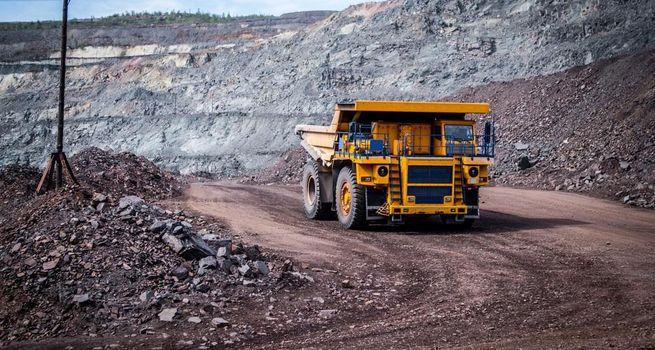
Mining operations delivered a particularly strong result, with ore production increasing 138% and ore sales rising 222%. This was supported by the recovery from prior regulatory disruptions and increased RKAB licence allocations.
Unit operating costs in Mining fell sharply by 61%, reflecting Economies of Scale and improved operational throughput.
Nickel Market Dynamics and Pricing Environment
A key driver of Nickel Industries’ performance has been the strengthening nickel price environment. The London Metal Exchange (LME) nickel price increased by 16% during the quarter, rising from US$14,892 per tonne to US$17,338 per tonne.
This price increase has had a direct impact on Downstream products, with nickel pig iron (NPI) and mixed hydroxide precipitate (MHP) prices rising by 19% and 15% respectively.
The company has also benefited from Indonesian government interventions in the nickel ore market, including tighter RKAB licence controls. These restrictions have reduced Supply across the sector, contributing to higher global pricing.
At the same time, new benchmark pricing reforms for nickel ore (HPM) have introduced further structural changes to the market, particularly affecting limonite pricing dynamics.
Mining Segment Expansion and Regulatory Developments
The Hengjaya Mine was a major contributor to the quarter’s performance, with ore production increasing 138% and sales rising 222% quarter-on-quarter.
A key development was the approval of a 14.3 million wmt RKAB licence for 2026, representing a 60% increase compared to the prior year. This was particularly notable given that many other Indonesian miners faced reductions in allocation volumes.
This regulatory approval provides a strong foundation for future production stability and reinforces the strategic importance of the asset within the company’s integrated Supply chain.
Despite operational disruptions during the quarter, including a brief suspension following a safety incident, Mining operations demonstrated strong recovery and cost efficiency improvements.
HPAL Operations and Expansion Projects
HPAL operations continued to deliver stable output, with attributable production remaining consistent at 2,153 tonnes of nickel and 237 tonnes of cobalt.
However, cash costs increased by 22%, largely due to higher sulfur and ore input costs. Despite this, Adjusted EBITDA improved by 21%, supported by stronger selling prices and improved cobalt byproduct contributions.
The Excelsior Nickel Cobalt (ENC) project remains a key growth asset. Pre-commissioning activities progressed across multiple systems, with full commissioning expected to commence in May 2026 and ramp-up targeted by October 2026.
The project is expected to significantly expand the company’s HPAL production capacity once fully operational.
Financial Position and Liquidity
Nickel Industries maintained a solid financial position during the quarter, with total cash and equivalents of approximately US$211.8 million. Trade receivables increased due to higher pricing and shipment timing, while payables decreased materially.
Subsequent to the quarter, the company executed US$450 million in syndicated Loan facilities to refinance existing Debt. This refinancing improves interest costs and increases financial flexibility through higher covenant limits.
Post-refinancing, the company’s net Debt position is approximately US$994 million, reflecting its Capital-intensive growth strategy.
Capital Management and Shareholder Returns
The company continues to balance growth Investment with Capital discipline. During the quarter, distributions were made from operating entities, and significant investments were directed toward Mining expansion and HPAL development.
Nickel Industries also reported ongoing support from major shareholders, including Shanghai Decent and PT Danusa Tambang Nusantara, reinforcing strategic alignment within its ownership structure.
The company’s ability to generate strong EBITDA while simultaneously funding expansion projects highlights its integrated operational model.
Strategic Growth Projects
Beyond existing operations, Nickel Industries is advancing several key development projects. The Sampala and Siduarsi projects continue to progress, with drilling and feasibility studies underway.
These Assets are expected to contribute to long-term resource expansion and support future production growth.
The ENC project remains the most significant near-term catalyst, with commissioning expected to materially increase HPAL output and Downstream processing capacity.
Market Interpretation and Outlook
The sharp rise in Earnings and improved operational efficiency has strengthened investor sentiment toward Nickel Industries. The combination of rising nickel prices, improved production volumes, and regulatory tailwinds in Indonesia has created a favourable operating environment.
However, the Business remains exposed to Commodity price Volatility, energy input costs, and execution risks associated with large-scale project commissioning.
The near-term focus will likely remain on successful ramp-up of the ENC project and sustaining cost discipline across Mining and processing operations.
Conclusion
Nickel Industries Limited delivered a standout quarterly performance, underpinned by record Adjusted EBITDA growth, strong Mining recovery, and supportive nickel market conditions. The company benefited significantly from rising global nickel prices and favourable Indonesian Supply-side policies, which together drove substantial Margin expansion. While operational costs remain sensitive to external inputs such as energy and raw materials, the group’s integrated structure and expansion pipeline position it for continued growth. The upcoming commissioning of the ENC project represents a key inflection point, with the potential to materially enhance production capacity and Earnings visibility. Overall, the company’s latest results reflect a strong operational cycle supported by both macroeconomic tailwinds and strategic execution.


 Nov 13, 2026





 Please wait processing your request...