
 CA
 NZ
 UK
 US
 IND

 AU

 Share
 X (Formerly Twitter)
 Whatsapp
 Facebook
 LinkedIn
 Telegram
 Email This Article
 Copy Link
 Summarize with AI
 Chat GPT
 Perplexity
Key Highlights
- Nickel Industries fell 8.47% amid commodity market weakness and electric vehicle demand uncertainty
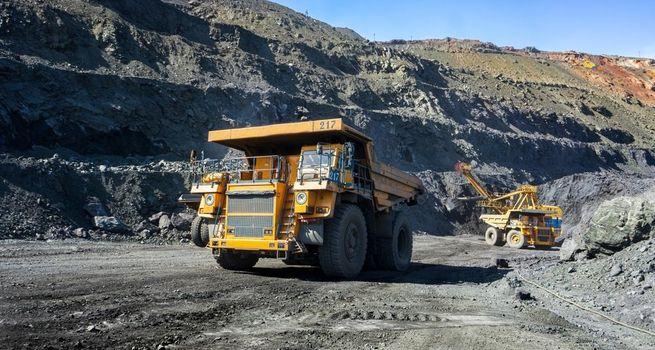
- Company operates Hengjaya Mine and four RKEF nickel pig iron projects in Indonesia
- Transitioning production toward electric vehicle battery supply chain with MHP and HPAL projects
- Strategic expansion into Excelsior Nickel Cobalt HPAL project for next-generation MHP production
- Nickel price volatility and EV market uncertainty create near-term valuation headwinds
Nickel Industries Limited (ASX:NIC) shares fell 8.47% on 26 March 2026, amid commodity market weakness and uncertainty about electric vehicle demand trajectories. The company is an ASX-listed owner of mining and low-cost downstream nickel processing assets in Indonesia, with backing from Chinese partner Tsingshan subsidiary Shanghai Decent.
Nickel Industries has established itself as a globally significant nickel producer in nickel pig iron (NPI) for stainless steel applications. However, the company is now transitioning production focus toward the electric vehicle battery supply chain through mixed hydroxide precipitate (MHP) and high-pressure acid leach (HPAL) projects.
This analysis examines Nickel Industries' operations, strategic transition toward EV battery supply chains, and what investors should understand.
About Nickel Industries Limited
Nickel Industries Limited is an ASX-listed company that owns controlling interests in mining and downstream nickel processing assets in Indonesia. The company has a global workforce focused on nickel production.
The company's portfolio includes the world-class Hengjaya Mine in Central Sulawesi, Indonesia, and four rotary kiln electric furnace (RKEF) projects producing nickel pig iron. NIC went public in 2018 with a AU$200 million IPO.
The company is backed by Chinese partner Tsingshan subsidiary Shanghai Decent and is pursuing strategic expansion into next-generation HPAL projects.
Why NIC Stock Is Moving Today
Nickel Industries shares are declining as the company faces headwinds from commodity market weakness and uncertainty about electric vehicle demand growth rates. Nickel prices are sensitive to economic cycle expectations.
Additionally, uncertainty about the company's strategic transition from traditional NPI production toward EV battery supply chains is creating valuation pressure. Investors are reassessing whether transition investments will deliver adequate returns.
Nickel market also faces supply-demand uncertainty.
Industry Trends and Market Context
The nickel industry is bifurcating into traditional stainless steel applications and emerging EV battery supply chains. Long-term demand growth is strong from EV battery expansion.
Indonesia's nickel supply dominance is increasing as new projects come online. Battery-grade nickel demand is accelerating.
Geopolitical factors are increasingly impacting nickel supply chains.
Financial Performance Analysis
Nickel Industries demonstrated resilience through commodity volatility by maintaining profitability. The company is investing substantially in HPAL projects for EV battery supply chains.
Capital deployment for new projects creates near-term cash flow headwinds. Investor focus is on capital efficiency for new projects.
Balance sheet strength and cash generation are critical.
Investment Risks to Consider
Nickel price volatility represents primary risk. Economic slowdown or stainless steel demand weakness could impact NPI production economics.
Strategic transition risk is significant. EV adoption rates and battery demand are uncertain. Failed execution could impair returns.
Geopolitical and regulatory risks in Indonesia are elevated.
Future Growth Drivers
Nickel Industries' future growth depends on successful execution of HPAL projects and maintaining competitive NPI production. If EV adoption accelerates, battery-grade nickel demand should support strong long-term prices.
The company's strategic investments position it for participation in EV battery growth. However, execution must deliver adequate returns.
Longer-term, nickel demand fundamentals are strong.
Analyst Outlook and Market Sentiment
Analyst coverage reflects mixed views on traditional operations versus strategic transition. Buy recommendations focus on EV battery demand growth, while cautionary views cite execution risk.
Market sentiment has shifted focus to EV battery supply chain positioning. Analyst earnings revisions reflect nickel price scenarios and HPAL assumptions.
Consensus views suggest Nickel Industries is well-positioned for EV battery growth.
Long-Term Investment Perspective
Over a multi-year investment horizon, Nickel Industries offers exposure to nickel demand growth driven by EV battery expansion. The company's geographic positioning and strategic HPAL investments position it well.
However, long-term investors should recognize that nickel is a commodity sensitive to economic cycles. Near-term volatility should be expected.
Valuation reflects execution uncertainty. Investors with 3-5 year horizons and conviction about EV battery growth may find attractive opportunity.
Conclusion
Nickel Industries (ASX:NIC) shares fell 8.47% today amid commodity market weakness and uncertainty about EV demand trajectories. The company is a globally significant nickel producer transitioning from traditional NPI production toward emerging EV battery supply chains.
Investors should recognize that nickel is a commodity sensitive to economic cycles. The company's strategic transition toward EV battery production offers long-term potential, but near-term execution uncertainty and commodity price volatility should be expected.


 Nov 13, 2026





 Please wait processing your request...