
 CA
 NZ
 UK
 US
 IND

 AU

 Share
 X (Formerly Twitter)
 Whatsapp
 Facebook
 LinkedIn
 Telegram
 Email This Article
 Copy Link
 Summarize with AI
 Chat GPT
 Perplexity
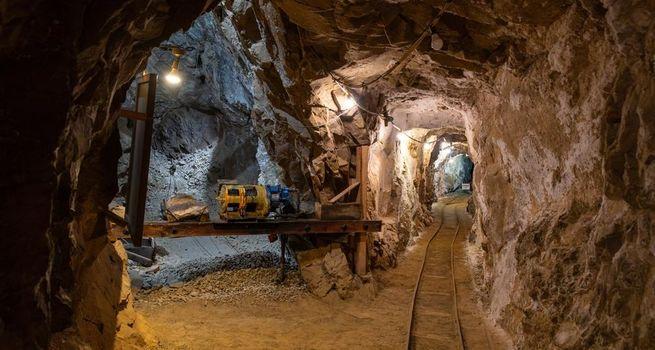
Metals X (ASX:MLX) is the most significant ASX tin company by revenue, production volume, and market capitalisation. The company holds a 50 percent equity interest in the Bluestone Mines Tasmania Joint Venture (BMTJV), which owns and operates the Renison Bell tin mine on the west coast of Tasmania. Renison is the largest operating tin mine in Australia and one of the largest in the Western world.
Metals X trades at approximately A$1.24 per share (as of late March 2026) with daily trading volumes regularly exceeding one million shares. This makes it the most liquid ASX tin stock and the primary vehicle for institutional and retail investors seeking exposure to Australian tin production.
The company’s investment proposition centres on three pillars: its share of cash flows from the operating Renison mine, the potential for production expansion through the Rentails tailings retreatment project, and leverage to a rising tin price environment. With tin prices above US$44,000 per tonne and all-in sustaining costs (AISC) at Renison reported at approximately A$30,319 per tonne in Q4 2025, Metals X’s operating margin is substantial.
For Metals X, revenue is generated through its 50 percent share of the Bluestone Mines Tasmania Joint Venture. The joint venture sells tin concentrate from Renison Bell, and Metals X records its proportional share of revenue and costs. This joint venture structure means that investors in Metals X receive indirect exposure to Renison’s cash flows rather than direct ownership of the mine.
Metals X: Tin Concentrate Sales
Metals X derives the vast majority of its revenue from its 50 percent share of tin concentrate sales from Renison Bell. The concentrate is sold to international smelters, with pricing linked to the LME tin price. In a year where Renison produces approximately 10,000 to 11,000 tonnes of tin-in-concentrate (Metals X’s 50 percent share representing roughly 5,000 to 5,500 tonnes), revenue is directly leveraged to the tin price.
At a tin price of US$44,000 per tonne, the gross revenue attributable to Metals X from its Renison stake would be in the range of US$220 million to US$240 million annually (for the full joint venture), with Metals X receiving its proportional share. However, exact revenue figures depend on concentrate quality, TC/RC terms, and realised prices, which can differ from the spot LME price.
Metals X: Cost Curve Position and Jurisdictional Premium
Metals X’s competitive advantages stem from the Renison Bell mine itself. Renison is a long-life, underground tin mine with over eight years of ore reserves and ongoing exploration that has consistently replaced depleted reserves. Its position on the global cost curve, with AISC of approximately A$30,319 per tonne in Q4 2025, places it in the lower half of global tin producers, meaning it remains profitable through most price cycles.
Renison’s location in Tasmania, Australia, provides a significant jurisdictional premium. Australia is a Tier 1 mining jurisdiction characterised by political stability, transparent rule of law, well-established mining regulations, reliable infrastructure, and a skilled workforce. This contrasts sharply with many other tin-producing regions where political instability (Myanmar, DRC), regulatory unpredictability (Indonesia), or state interference (China) creates operational risk.
The Rentails expansion option provides a built-in growth pathway that does not require new mine discovery or greenfield development, which represents a lower-risk form of production growth.
Metals X: Revenue and Earnings Trajectory
Metals X’s financial performance is driven by three key variables: Renison’s tin production volume, the realised tin price, and operating costs. The company’s half-year financial report for the period ending 30 June 2025 provides the most recent audited financial data. Investors should consult the latest filings on the ASX announcements platform for updated figures.
In Q4 2025, Metals X reported its share of 3,319 tonnes of tin-in-concentrate production from Renison, a near-record quarter. Cash costs fell 28.3 percent quarter-on-quarter to A$16,598 per tonne, while AISC fell 22.6 percent to A$30,319 per tonne. This combination of higher production and lower costs resulted in significantly improved operating margins.
The full-year 2025 production of 10,747 tonnes of tin-in-concentrate (on a 100 percent basis, with Metals X entitled to 50 percent) represents a strong operating performance that positions the company well for 2026.
Balance Sheet Strength
Balance sheet strength determines a mining company’s ability to survive commodity price downturns, fund growth projects, and return capital to shareholders.
Metals X
Metals X has historically maintained a conservative balance sheet. The company’s net cash or debt position should be verified from the latest half-yearly or annual report. A producing miner with net cash is in a strong financial position because it can fund operations and growth from internal cash flows without relying on external capital markets. A producer with net debt is more vulnerable to tin price downturns because debt service obligations are fixed regardless of revenue.
Investors should also examine the balance sheet of the Bluestone Mines Tasmania Joint Venture, as this is where the Renison assets and related liabilities sit. Metals X’s consolidated balance sheet reflects its 50 percent share of the JV’s assets and liabilities.
Company-Level Growth Drivers
For Metals X, the Rentails tailings retreatment project is the most significant company-specific growth driver. If the final investment decision (expected by end of 2026) is positive, Rentails could meaningfully increase Metals X’s annual tin production and extend the life of the Renison asset base. Additionally, the ore-sorting technology commissioned in late 2025 is expected to expand processing capacity by up to 20 percent through more efficient waste rejection.


 Nov 13, 2026





 Please wait processing your request...