
 CA
 NZ
 UK
 US
 IND

 AU

 Share
 X (Formerly Twitter)
 Whatsapp
 Facebook
 LinkedIn
 Telegram
 Email This Article
 Copy Link
 Summarize with AI
 Chat GPT
 Perplexity
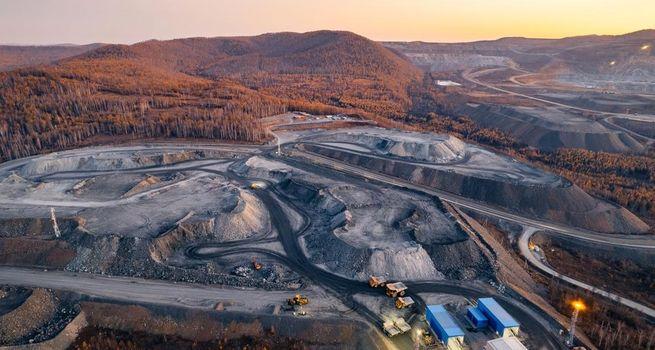
ASX tin companies do not operate in isolation. Their share prices and operational performance are influenced by a range of macroeconomic factors that retail investors should monitor.
Global Economic Growth
Tin demand is closely correlated with global manufacturing activity, particularly electronics production. A global recession that reduces consumer spending on electronics, slows EV adoption, and delays renewable energy investment would negatively affect tin demand and prices. Conversely, strong global growth supports tin demand and prices.
The Purchasing Managers’ Index (PMI) for manufacturing is a useful leading indicator for tin demand. A PMI above 50 indicates expansion, which is generally positive for tin. A PMI below 50 indicates contraction, which is negative.
Interest Rates and Monetary Policy
Higher interest rates tend to suppress commodity prices through several channels. They strengthen the US dollar (making USD-priced commodities more expensive for non-US buyers), increase the opportunity cost of holding non-yielding assets like commodities, and slow economic growth, which reduces demand. Conversely, lower interest rates tend to support commodity prices.
The monetary policy trajectory of major central banks, particularly the US Federal Reserve, the European Central Bank, and the Reserve Bank of Australia, influences both the tin price and ASX equity market conditions.
US Dollar Strength
Tin is priced in US dollars, so the strength of the greenback directly affects the purchasing power of non-US buyers. A strong US dollar tends to suppress commodity prices, while a weak dollar supports them. For ASX tin companies, the AUD/USD exchange rate is particularly important because it determines the Australian dollar value of US-dollar-denominated tin revenue.
China’s Economy
China is both the largest tin producer and the largest tin consumer. Economic conditions in China, including manufacturing activity, construction spending, consumer electronics demand, and government stimulus measures, have an outsized influence on the global tin market. A Chinese economic slowdown would weigh on tin demand, while stimulus-driven growth would support it.
Technology Investment Cycles
Capital expenditure by technology companies on semiconductors, data centres, and communications infrastructure is a key driver of tin demand. The current AI-driven investment cycle is particularly tin-intensive. Investors should monitor the capital spending plans of major technology companies and semiconductor manufacturers as indicators of future tin demand.
Trade Policy and Tariffs
Trade tensions between major economies can disrupt supply chains for tin and tin-containing products. Tariffs on electronic goods, restrictions on technology exports, or sanctions on countries involved in tin production can create both opportunities and risks for ASX tin companies.
Sector Trends
Several structural trends are reshaping the tin sector and creating new opportunities for ASX tin companies.
The Critical Minerals Movement
Governments worldwide are reclassifying tin as a critical mineral due to its essential role in electronics, defence, and clean energy technologies, combined with the concentration of supply in geopolitically risky jurisdictions. Australia, the United States, the European Union, Japan, and others have included tin on their critical minerals lists.
This classification matters because it opens the door to government funding, tax incentives, streamlined permitting, and strategic partnerships that can accelerate project development. ASX tin companies operating in Australia are well-positioned to benefit from policies aimed at diversifying critical mineral supply chains away from China, Myanmar, and the DRC.
ESG and Responsible Sourcing
Environmental, social, and governance (ESG) considerations are increasingly important in the tin supply chain. Major electronics manufacturers, including Apple, Samsung, and Intel, require their suppliers to source conflict-free and responsibly produced tin. The Responsible Minerals Initiative (RMI) and the International Tin Association’s ITSCI (International Tin Supply Chain Initiative) program provide frameworks for tracing tin from mine to market.
ASX tin companies operating in Australia benefit from inherently high ESG standards. Australian mining regulations require environmental impact assessments, progressive rehabilitation, water management, and community engagement. Tin produced in Australia can be marketed as responsibly sourced, commanding potential price premiums and preferential access to ESG-conscious customers.
Technological Innovation in Tin Recovery
Advances in mining and processing technology are making previously uneconomic tin deposits viable. Ore-sorting technology, as recently deployed at Renison Bell, uses sensors to identify and reject waste rock before it enters the processing plant, reducing energy consumption and increasing effective plant capacity. Improved flotation chemistry and gravity separation techniques are enhancing tin recovery rates from complex ores.
For the ASX tin sector, these innovations mean that marginal projects with lower grades or more complex metallurgy may become economically viable, expanding the universe of potential tin developments in Australia.
Consolidation Potential
The small size of the ASX tin sector and the growing strategic importance of tin supply diversification create conditions favourable for corporate consolidation. Larger mining companies or end-users seeking secure tin supply could acquire ASX-listed tin companies at premiums to their trading prices. Metals X (ASX:MLX), with its producing asset and expansion options, and Stellar Resources, with its development-stage project in a Tier 1 jurisdiction, are the most logical acquisition targets.
The Tin Supply Chain: From Mine to Market
Understanding the complete tin supply chain helps investors appreciate where ASX tin companies sit in the value chain and how their revenues are determined.
Mining and Concentration
The supply chain begins at the mine, where tin ore is extracted from the earth. For underground operations like Renison Bell, this involves drilling and blasting ore from underground stopes (excavated chambers), loading the broken ore onto trucks or conveyor systems, and hauling it to the surface. The run-of-mine ore typically contains between 0.5 and 2 percent tin, meaning that 98 to 99.5 percent of the rock mined is waste that must be separated from the valuable tin minerals.
At the processing plant, the ore undergoes crushing (reducing large rocks to gravel-sized fragments), grinding (reducing gravel to a fine powder), gravity separation (using the high density of cassiterite to separate it from lighter waste minerals), and flotation (using chemical reagents and air bubbles to selectively float tin-bearing minerals). The resulting tin concentrate typically contains 40 to 65 percent tin and is dewatered, stored, and prepared for shipment.
The new ore-sorting technology installed at Renison in late 2025 adds an additional step before the traditional processing circuit. Sensor-based ore sorting uses X-ray, near-infrared, or other sensors to identify individual rocks with low tin content and eject them from the feed stream before they enter the processing plant. This reduces the volume of rock that needs to be ground and processed, saving energy and increasing the effective capacity of the plant.
Smelting and Refining
Tin concentrate is sold to smelters, which convert it into refined tin metal. The smelting process involves heating the concentrate in a furnace with carbon (usually charcoal or anthracite coal) to chemically reduce the tin oxide to metallic tin. The molten tin is then refined to remove impurities, typically through a combination of thermal refining, electro-refining, or chemical treatment.
The world’s largest tin smelters are located in China, Indonesia, Malaysia, and Thailand. Yunnan Tin in China, Metals X’s joint venture partner at Renison, operates one of the largest tin smelting complexes in the world. PT Timah in Indonesia and Malaysia Smelting Corporation are also major smelters.
ASX tin companies generally do not smelt their own concentrate. They sell concentrate to third-party smelters under contracts that specify treatment charges (TC, the fee charged by the smelter to process the concentrate), refining charges (RC, the fee for refining the crude tin to market-grade metal), and payable metal percentages (the proportion of the tin in the concentrate that the miner is paid for). These TC/RC charges reduce the effective revenue per tonne of tin that the miner receives, so lower TC/RCs are better for the mining company.
Trading and Distribution
Refined tin is traded on the London Metal Exchange (LME) and sold to end-users through a network of traders, distributors, and direct contracts. The LME operates a system of registered warehouses around the world where tin can be delivered against futures contracts. LME warehouse inventory levels are closely watched by market participants as an indicator of physical supply-demand tightness. Low warehouse stocks suggest a tight market, which supports higher prices.
Tin is also traded through physical contracts negotiated directly between producers or traders and end-users. Major tin consumers, such as solder paste manufacturers and tinplate producers, often enter into long-term supply agreements to secure reliable metal supply.
Downstream Manufacturing
At the end of the supply chain, refined tin is converted into products used by billions of people daily. Solder paste manufacturers blend tin with small amounts of silver and copper (for lead-free solder) or lead (for traditional solder) to produce the paste that is printed onto circuit boards before electronic components are placed and heated to form solder joints. Tinplate manufacturers coat thin steel sheets with a microscopically thin layer of tin to produce the corrosion-resistant material used in food cans and other packaging. Chemical companies produce organotin and inorganic tin compounds for a wide range of industrial applications.
Implications for ASX Tin Companies
The supply chain structure has several implications for ASX tin investors. First, tin miners are price-takers who cannot control the price they receive for their product. Their profitability depends on their ability to produce concentrate at a cost below the prevailing market price minus TC/RC charges. Second, the downstream processing industry is concentrated in Asia, which means that any disruption to smelting capacity (e.g., environmental shutdowns in China) can affect the market for concentrate and create bottlenecks. Third, the length and complexity of the supply chain create opportunities for value capture by intermediaries (traders, smelters), which means that the miner’s share of the final tin price is less than 100 percent.


 Nov 13, 2026





 Please wait processing your request...