
 CA
 NZ
 UK
 US
 IND

 AU

 Share
 X (Formerly Twitter)
 Whatsapp
 Facebook
 LinkedIn
 Telegram
 Email This Article
 Copy Link
 Summarize with AI
 Chat GPT
 Perplexity
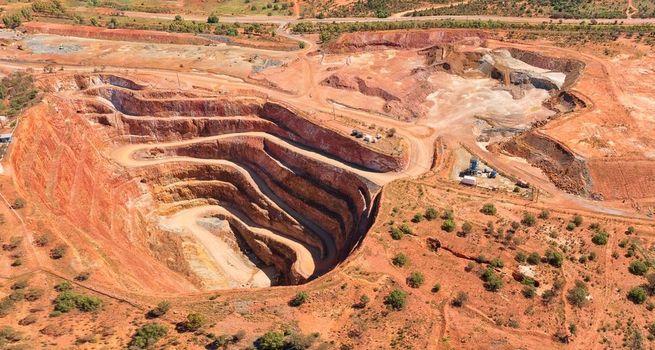
American Rare Earths Limited (ASX:ARR) shares are declining as investors grapple with persistent challenges facing the company flagship Halleck Creek rare earth mining project and long-term value creation thesis. The share price decline reflects deteriorating rare earth commodity pricing projections, extended project development timelines, and mounting execution risks that challenge the project fundamental economics. Industry analysts have characterized the company as "floundering," highlighting growing investor concerns about the company ability to develop a competitive domestic rare earth supply source that can achieve commercial viability. This comprehensive analysis examines the factors driving ARR share price weakness and the challenges facing the company.
Share Price Movement and Market Sentiment
American Rare Earths shares have declined significantly as investors reassess the company development timeline and competitive positioning in an increasingly challenging commodity price environment. Market commentators have characterized the company as "floundering," reflecting frustration among shareholders with the pace of project development relative to initial company projections and the increasingly challenging commodity price environment that affects all rare earth developers. The stock has faced sustained selling pressure over an extended period as the market recalibrates expectations for project profitability, return on capital, and ultimate commercial viability.
The broader rare earth materials market has experienced significant pricing pressure in recent months due to oversupply concerns, moderating demand growth, and technological developments reducing rare earth intensity in certain applications. A major bank recently trimmed its 2026 base-case price forecast for rare earths to 12,650 dollars per ton, down materially from previous expectations published 12-24 months ago. This price reduction has profound implications for rare earth development projects, which depend critically on commodity price assumptions to justify the large capital investments required for mining, processing, and separation operations.
Lower commodity price forecasts significantly reduce projected returns on capital and extend payback periods, threatening the fundamental economics that justify development investment. For American Rare Earths, this pricing pressure raises questions about whether the Halleck Creek project can generate acceptable returns at commodity prices that the market now views as more realistic than previous optimistic projections. The disconnect between commodity price assumptions underlying project economics and current market price forecasts represents a major threat to the investment thesis.
Main Drivers of Share Price Decline
Rare Earth Pricing Pressure and Deteriorating Project Economics
Rare earth elements have experienced significant price pressure in 2026 as global supply chains have stabilized following pandemic-related disruptions and demand growth has moderated relative to prior expectations. Rare earth prices fluctuate based on supply-demand dynamics in global markets, and recent market developments suggest that supply has become more adequate relative to demand across major applications. Additionally, technological developments in energy storage and electric vehicle production have reduced the rare earth intensity of some applications, moderating overall demand growth and creating oversupply conditions.
The major bank price forecast reduction to 12,650 dollars per ton represents a significant downward revision from prior expectations and reflects updated fundamental assumptions about supply-demand balance in coming years. This price level has profound implications for rare earth mining projects, which typically require commodity prices in the 15,000-20,000+ dollar range to generate acceptable returns on invested capital given the substantial capital requirements and operational complexity. At lower price points, project economics deteriorate substantially, extending payback periods from 10-15 years to 20+ years and increasing risk-adjusted returns that may not meet company or investor hurdle rates.
For American Rare Earths, this pricing pressure raises fundamental questions about the viability of the Halleck Creek project at commercially acceptable returns on the capital required for development. Mining projects require decade-long development timelines and substantial capital commitment, so even small changes in commodity price assumptions can transform projects from acceptable to unviable. The company must now reassess whether proceeding with Halleck Creek makes financial sense given updated market price expectations, or whether the company should redirect resources to alternative strategies.
Extended Project Timeline and Multi-Jurisdictional Permitting Challenges
American Rare Earths has defined a multi-stage development pathway for the Halleck Creek project that involves establishing pilot operations in Wyoming initially, followed by separation capabilities in Canada at a subsequent stage. This phased approach extends the project timeline significantly compared to initial expectations and investor presentations regarding rapid development. Rather than moving directly to commercial production, the company is now planning intermediate pilot stage operations, which suggests that technological, economic, or regulatory challenges require validation before full-scale development can be justified to management and the board.
The extended timeline increases both financial risk and competitive risk for the company and shareholders. Longer development periods increase total capital requirements and allow competitors to potentially develop alternative supply sources or breakthrough technologies that could disrupt market dynamics. Additionally, pilot operations in Wyoming and subsequent separation facilities in Canada require separate environmental permitting processes and regulatory approvals in both jurisdictions. Each regulatory hurdle introduces delay risk and uncertainty about project feasibility, with historical precedent showing that mining and processing projects frequently encounter permitting delays.
The multi-jurisdictional approach also creates operational complexity and potential coordination challenges between different locations and regulatory regimes. Mines in Wyoming must comply with federal environmental standards and state regulations, while processing and separation in Canada requires different environmental and labor compliance. This geographic separation may introduce transportation costs, coordination challenges, and additional regulatory complexity that could further extend timelines or increase capital requirements.
Halleck Creek Resource Challenges and Development Execution Risk
The Halleck Creek project is based on a rare earth resource estimate of 2.63 billion tonnes, which represents one of the largest identified rare earth resources outside China. However, resource estimates do not automatically translate into economically minable reserves, and significant additional drilling, analysis, and engineering work is required to convert geological resources into economically mineable reserves. The company faces the challenge of demonstrating that the Halleck Creek resource can be developed profitably at the commodity prices that now appear most likely going forward.
Mining development requires complex metallurgical testing to optimize extraction methods, environmental impact assessment, and mine design that balances resource recovery with economic efficiency. The rare earth industry is characterized by complex processing requirements, environmental challenges related to radioactive elements and tailings management, and high capital requirements. American Rare Earths must successfully complete all of these development steps while maintaining investor support and managing significant capital expenditure over many years.
The company has committed to submitting mining permits in 2026, representing a key milestone that will provide visibility on the project timeline and regulatory receptiveness to the development approach. However, even submission of permits does not guarantee approval, and permitting timelines for major mining projects frequently extend beyond initial projections. The company will need to demonstrate strong community support, detailed environmental mitigation plans, and financial capability to address potential risks.
Company Background and Strategic Context
American Rare Earths Limited was founded in 1986 with the strategic mission of developing rare earth resources in North America and reducing United States dependency on China for critical rare earth elements essential to defense, energy, and technology industries. The company operates within a context of significant geopolitical concerns about Chinese dominance of rare earth supply chains and the strategic importance of developing alternative supply sources for Western economies. This strategic context has provided some investor support and potential government interest in the Halleck Creek project as a domestically sourced alternative to Chinese supplies.
The geopolitical importance of rare earth supply security has been recognized by multiple governments and defense organizations, creating potential policy support for domestic development in the United States. However, policy support alone is insufficient to justify uneconomic mining projects, and the company must ultimately develop a commercially viable operation regardless of strategic considerations. The intersection of geopolitical importance and commercial viability creates both opportunities and challenges for the company strategy.
American Rare Earths operates in a highly competitive global rare earth market dominated by Chinese producers with established supply chains, lower cost structures, and integrated supply networks. Developing a competitive U.S.-based producer requires not just successful mining but also development of integrated processing and separation capabilities to create an end-to-end supply chain. This integrated approach increases capital requirements and project complexity compared to simple mining operations that sell raw materials to Asian processors.
Market Context and Industry Dynamics
The rare earth materials market is fundamentally important to multiple strategic industries including defense, renewable energy generation, advanced electronics, and emerging technologies like electric vehicles and semiconductor manufacturing. Rare earth elements are essential inputs for permanent magnets used in military applications, wind turbine generators, and electric vehicle motors. This strategic importance has driven government interest in establishing domestic supply sources and reducing dependency on Chinese suppliers who have historically dominated global production.
China controls approximately 80-85% of global rare earth mining and processing capacity, giving Chinese producers and the Chinese government significant pricing power and supply chain leverage over Western economies. This dominance has created strategic vulnerabilities that governments and defense organizations have recognized, leading to increased support for alternative supply development projects. However, Chinese cost advantages are difficult to overcome without either subsidization or protection from price competition, and developing truly competitive alternatives is significantly more challenging than often portrayed.
Rare earth demand has grown significantly driven by renewable energy deployment (wind turbines), electric vehicle adoption, and defense modernization across developed economies. The International Energy Agency and other organizations project continued strong demand growth for rare earth elements over the coming decade as clean energy transition accelerates. This demand growth supports the long-term value proposition for rare earth developers, assuming viable projects can be developed at acceptable returns on invested capital.
The technological landscape for rare earth processing and separation has evolved, with new approaches potentially offering improved environmental outcomes and lower processing costs compared to traditional methods. American Rare Earths and other developers have investigated advanced processing technologies that could improve project economics and reduce environmental impact. However, implementing new processing technologies at commercial scale introduces technical risk and may require significant additional capital investment and pilot testing.
Government policy toward rare earth development has shifted increasingly supportive, with the U.S. Department of Defense and Department of Energy providing funding and technical support for rare earth development projects meeting strategic criteria. This policy support could provide financial assistance for Halleck Creek development, potentially improving project economics. However, government support is typically conditional on meeting regulatory and environmental standards and may involve government involvement in decision-making that could affect project management efficiency.
Key Risks and Challenges
Commodity price risk represents the most significant fundamental challenge to American Rare Earths and the Halleck Creek project. Rare earth prices are determined by global supply-demand dynamics and are highly cyclical, subject to significant price fluctuations based on economic cycles, technological developments, and competitive dynamics. If commodity prices remain depressed for extended periods or decline further from current levels, the Halleck Creek project may become uneconomic regardless of other factors. Investors face the risk that commodity prices may remain below project break-even levels for many years, destroying the investment thesis.
Development execution risk is substantial and relates to the company ability to successfully complete mining development, obtain environmental permits, and deliver the project on time and within budget. Mining projects historically suffer from cost overruns, timeline delays, and environmental complications that can materially increase capital requirements. American Rare Earths must successfully navigate Wyoming state and federal permitting processes, complete detailed engineering studies, and demonstrate project viability to obtain financing and maintain investor support.
Geopolitical and policy risk could affect the project in both positive and negative directions. Changes in U.S. government support for domestic rare earth development could occur if political priorities shift or if Chinese government responds with retaliatory trade actions. Additionally, if China increases rare earth production to maintain market share, commodity prices could be driven lower, further undermining project economics. International trade dynamics and government policy could evolve in ways that significantly affect the strategic rationale and economic viability of the project.
Financing risk exists regarding the company ability to secure capital for the substantial investment required to develop Halleck Creek. Mining companies typically require major capital commitments from strategic partners, equity investors, or financing providers to fund development. The deteriorating commodity price outlook and extended development timeline make it more difficult for American Rare Earths to secure financing at acceptable terms. The company may need to dilute existing shareholders significantly through equity offerings or accept unfavorable terms from financing providers.
Competitive risk derives from the potential for competing rare earth projects to be developed by larger competitors with greater financial resources, or from continued Chinese dominance of the market despite Western efforts to develop alternatives. If other North American rare earth projects achieve development ahead of Halleck Creek, they could capture first-mover advantages in supply relationships and customer contracts. Additionally, if technological developments enable lower-cost processing or if new rare earth resources are discovered, competitive dynamics could shift unfavorably for American Rare Earths.
What Investors Are Watching Next
Investors will closely monitor 2026 mining permit submissions for Halleck Creek, which represent a key milestone indicating the company commitment and permitting timeline. The content and reception of permit applications will provide important information about regulatory receptiveness to the project and whether permitting authorities anticipate significant challenges. Delays in permit submission or negative feedback from regulators could trigger further share price weakness.
Commodity price trends will continue to drive investor sentiment and share price performance. If rare earth prices stabilize or strengthen from current levels, project economics may improve sufficiently to restore investor confidence. Conversely, further price declines would further undermine the project fundamental value proposition. Investors should monitor rare earth price indices and analyst forecasts for signals about likely commodity price trends.
Partnership or financing announcements would provide significant evidence of project viability and could trigger positive share price movement. If American Rare Earths successfully secures a major strategic partner, government funding support, or project financing, this would demonstrate that independent third parties view the project as viable and worth investment. Conversely, inability to secure financing or partnership would raise questions about project viability and market confidence.
Metallurgical testing results and engineering studies will provide technical data about project feasibility and likely operating costs. Successful pilot operations demonstrating efficient extraction and processing would support project development. Poor results or unexpected technical challenges could force project redesign or timeline extension.
Conclusion and Investment Perspective
American Rare Earths shares are declining due to a combination of deteriorating rare earth commodity prices, extended project development timelines, and rising execution risks that challenge the fundamental project economics. The major bank price forecast reduction to 12,650 dollars per ton represents a significant headwind that undermines the value proposition that justified investor interest in the company. At lower commodity prices, the Halleck Creek project may not generate acceptable returns on invested capital, even if successfully developed.
The extended development timeline with pilot operations in Wyoming followed by processing in Canada increases project complexity and capital requirements while providing additional time for competitive dynamics and technological developments to potentially disrupt the company strategy. American Rare Earths faces significant challenges in demonstrating project viability at current commodity price forecasts and in securing the capital and partnerships required to advance development.
For investors, the company represents a high-risk turnaround situation dependent on commodity price improvement, successful permitting outcomes, and the company ability to secure financing on acceptable terms. Patient investors with conviction regarding long-term rare earth demand and the geopolitical importance of supply chain diversification may see value at depressed prices. However, more conservative investors should wait for evidence of project viability and permitting progress before committing capital to what remains a speculative opportunity.


 Nov 13, 2026





 Please wait processing your request...