
 CA
 NZ
 UK
 US
 IND

 AU

 Share
 X (Formerly Twitter)
 Whatsapp
 Facebook
 LinkedIn
 Telegram
 Email This Article
 Copy Link
 Summarize with AI
 Chat GPT
 Perplexity
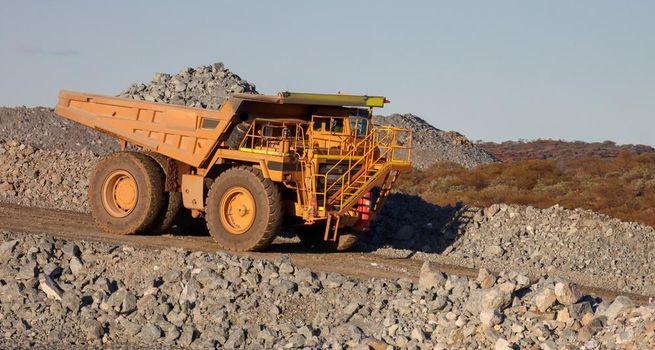
American Rare Earths Limited (ASX:ARR) advanced 5.88% to AUD 0.36 on April 10, 2026, as the company announced significant milestones in developing its flagship Halleck Creek rare earths project in Wyoming. Trading at a market capitalisation of AUD 195.36 million with strong trading volume of 1,220,964 shares, American Rare Earths has emerged as a critical player in securing long-term US rare earth supply chains, addressing critical national security and industrial supply diversification priorities.
This comprehensive analysis examines why ARR share price rose today, the fundamentals underpinning rare earths mining valuations, and the strategic importance of domestic US rare earths supply to government policy and industrial demand. The report evaluates American Rare Earths' competitive positioning within the rare earths sector, technical de-risking progress, and forward catalysts shaping shareholder returns.
Company Overview
American Rare Earths Limited is an ASX-listed mineral exploration and development company headquartered in Brisbane, Australia, with primary operations focused on developing the Halleck Creek rare earths project in Albany and Platte Counties, Wyoming, United States. The company is dedicated to establishing long-term, sustainable rare earths production within the United States, addressing supply chain security and reducing domestic dependence on Chinese rare earths sources.
The company controls 8,108 acres of prospecting claims and leases at Halleck Creek, hosting a significant mineral resource base. The project is positioned in the Albany and Platte Counties region of Wyoming, an area with favourable geological characteristics for rare earths mineralisation and established infrastructure supporting mining operations.
American Rare Earths' strategic mission focuses on developing domestic US rare earths production capacity, addressing critical government and industrial priorities for supply chain resilience. The United States currently imports over 80% of rare earths from China, creating strategic vulnerability to supply disruption and geopolitical leverage concerns. Domestic production from Halleck Creek directly addresses these national security imperatives.
The company operates a phased development approach, progressing from resource definition through feasibility studies toward pre-production phase. This staged approach de-risks project development while managing capital requirements and technical execution complexity. The company has established partnerships with research institutions and processing facilities to advance technical and commercial pathways.
American Rare Earths differentiates through geographic advantage (Wyoming hosts significant rare earths mineralisation), established processing partnerships (DISA Technologies, Western Research Institute, Saskatchewan Research Council), and alignment with US government priorities for domestic rare earths supply security. This combination positions the company uniquely to capture policy support and industrial demand premiums.
Why ARR Went Up Today
American Rare Earths Limited (ASX: ARR) share price advanced 5.88% on April 10, 2026, following announcement of significant project development milestones that materially de-risk the Halleck Creek project and establish concrete pathways to pre-production rare earths oxide production.
The company announced awarding of a Whole of Property Development Assessment (WPDA) to a major engineering firm for its 8,108-acre Halleck Creek land package, with work commencing in Q2 2026. The WPDA is a strategic planning-level, desktop study integrating all existing geological, metallurgical, mining, and permitting data across the entire property. This assessment will establish a roadmap for subsequent expansion phases at Red Mountain, Overton Mountain, and Bluegrass deposits—demonstrating the company's multi-phase development strategy.
Critically, American Rare Earths defined a concrete pilot plant pathway that accelerates pre-production rare earth oxide production on substantially shortened timelines. The defined processing pathway encompasses Wyoming-based front-end mineral processing through DISA Technologies and Western Research Institute, followed by final-stage hydrometallurgical processing and oxide separation at the Saskatchewan Research Council in Saskatoon, Canada. This hybrid processing approach combines Wyoming mineral processing with proven downstream refining infrastructure, enabling rapid oxide production within months rather than years.
The pilot plant pathway definition is significant because it de-risks the commercialisation roadmap. Rather than constructing entire integrated processing facilities at Halleck Creek (capital intensive and time consuming), American Rare Earths leverages existing third-party processing infrastructure to rapidly demonstrate production capabilities and generate off-take revenue. This approach compresses development timelines from 3–5 years to 12–18 months for initial production.
The company has positioned itself to produce initial pre-production rare earth oxides in Wyoming through DISA Technologies and Western Research Institute before final processing in Saskatchewan. This allows demonstration of ore body processing efficiency, metallurgical recovery rates, and product quality validation—critical parameters for offtake negotiations and financing discussions.
Investors recognised the project de-risking value and pathway acceleration, interpreting the development announcements as confirmation of management's operational execution capability and commitment to rapidly advance Halleck Creek toward production. The +5.88% share price appreciation reflects improved confidence in project timeline acceleration and reduced technical risk.
The size of the Halleck Creek resource base (2.63 billion tonnes in-situ mineral resource) provides multi-generational production potential, supporting long-term asset value and mine life longevity. This scale positions Halleck Creek as a strategically significant domestic US rare earths asset capable of materially addressing US supply security priorities.
Deep Fundamental Analysis
American Rare Earths Limited's fundamental investment case rests on three pillars: (1) strategic importance of domestic US rare earths supply to government policy and industrial demand, (2) technical de-risking progress and demonstrated pathway to commercial production, and (3) favorable market dynamics for rare earths pricing driven by clean energy and defence sector demand. This section evaluates each dimension in detail.
Revenue Model
American Rare Earths will generate revenue through rare earth oxide production and sales once Halleck Creek transitions to production phase. The revenue model encompasses sale of separated rare earth elements including heavy rare earths (dysprosium, terbium, europium) and light rare earths (lanthanum, cerium, neodymium) to industrial customers, electronics manufacturers, renewable energy companies, and defence contractors.
Rare earth oxides command premium pricing in international markets, with pricing influenced by supply scarcity, geopolitical factors, and industrial demand. Heavy rare earths typically trade at USD 500–2,000 per kilogram depending on element and purity, whilst light rare earths trade at lower prices (USD 10–100 per kilogram). The Halleck Creek rare earths assemblage includes both heavy and light elements, providing revenue diversification.
The global rare earths market is valued at approximately USD 15–20 billion annually and growing at 8–12% due to renewable energy expansion (permanent magnet motors for wind turbines), electric vehicle growth (EV motors require rare earths), and defence applications (military electronics, radar systems). This strong structural demand growth supports pricing power and revenue visibility.
American Rare Earths' business model incorporates a phased revenue approach. Initial pilot production phase will generate off-take revenue from pre-production rare earth oxides, providing cash inflow to fund subsequent expansion phases. Subsequent commercial production phases will scale processing capacity, increasing revenue proportionally.
Offtake agreements with strategic customers (defence contractors, EV manufacturers, renewable energy companies) will establish long-term purchasing commitments at negotiated pricing floors, de-risking revenue visibility once agreements are formalised. These long-term offtake arrangements are standard in rare earths mining and provide earnings stability.
The Company will benefit from US government policy support, including potential direct investment, procurement guarantees, or policy incentives favouring domestic rare earths production. Government backing reduces commercial risk and enhances revenue sustainability.
Valuation models for pre-production rare earths companies incorporate discounted cash flow analyses based on resource size, assumed recovery rates, processing costs, and commodity pricing assumptions. Halleck Creek's 2.63 billion tonne resource base translates to substantial production capacity, supporting enterprise value calculations in the hundreds of millions to billions of AUD.
Financial Health
American Rare Earths Limited is a pre-production mineral exploration company without commercial revenue, accordingly, financial health assessment must focus on cash position, funding requirements, and capital structure sustainability.
The company requires ongoing capital investment to fund exploration drilling, feasibility studies, pilot plant operations, and project development activities. These expenditures will be funded through equity capital raises, government grants, or strategic partnerships. Capital requirements are material—rare earths projects typically require USD 200–500 million to advance from feasibility to commercial production.
Equity Financing: American Rare Earths has likely completed recent capital raises to fund Halleck Creek development. The company's market capitalisation of AUD 195.36 million suggests successful equity financing that provides medium-term working capital runway. Management should disclose cash position and funding requirements in quarterly reports and ASX announcements.
Strategic Partnerships: The company has established partnerships with processing firms (DISA Technologies, Western Research Institute, Saskatchewan Research Council), which may include funding contributions in exchange for future processing contracts or equity stakes. These partnerships reduce capital burden on American Rare Earths.
Government Support: US government initiatives to secure domestic rare earths supply may include direct investment, tax incentives, or procurement guarantees. Congressional interest in rare earths security could translate to government funding support or policy incentives favouring American Rare Earths.
Operating Losses: As a pre-production exploration company, American Rare Earths likely operates at net loss, reflecting exploration and development expenditures not offset by revenue. This is normal for mining exploration companies and does not indicate financial distress provided cash reserves support operations.
Financial Risk: The primary financial risk is funding insufficiency to complete development phases. If capital markets deteriorate or equity financing becomes unavailable, American Rare Earths could face funding constraints, requiring dilutive equity raises or strategic partnerships on unfavourable terms. Maintaining access to capital markets is critical to project advancement.
Growth Outlook
American Rare Earths' growth outlook is driven by Halleck Creek project development phases, global rare earths demand expansion, and US government policy support for domestic supply security.
Project Development Phases: The company is progressing through defined development phases—pilot plant operations (2026–2027), pre-feasibility study completion, feasibility study advancement, and commercial production ramp (2027–2029). Each phase completion de-risks the project and positions the company closer to commercial revenue generation. Successful pilot plant oxide production would be major positive catalyst.
Market Demand Growth: Global rare earths demand is expanding at 8–12% annually, driven by renewable energy sector growth (wind turbine permanent magnets account for ~10% of global rare earths consumption), electric vehicle adoption (EV motors require 300–500 grams of rare earth magnets per vehicle), and defence sector demand. These structural demand drivers support long-term pricing resilience and off-take agreement sustainability.
Policy Support: US government initiatives prioritize domestic rare earths supply security through legislative support, procurement preferences, and investment incentives. Department of Defence interest in supply chain diversification and the broader geopolitical motivation to reduce Chinese rare earths dependence support policy tailwinds for American Rare Earths.
Supply Deficit: Global rare earths supply is constrained relative to demand growth, particularly for heavy rare earths critical to defence and renewable energy applications. Supply deficit dynamics support pricing premiums for newly developed capacity, favouring new entrants like American Rare Earths.
Offtake Momentum: As Halleck Creek advances toward production, offtake agreement negotiations with strategic customers (Lockheed Martin, Tesla, GE Renewable Energy) will accelerate. Secured offtake agreements reduce commercial risk and support project financing, creating positive momentum for project advancement.
Expansion Optionality: The WPDA development plan encompassing Red Mountain, Overton Mountain, and Bluegrass deposits suggests substantial expansion potential beyond initial Phase 1 production. Multi-phase development roadmap supports medium-term growth optionality and production scale expansion.
Risks
Funding Risk: Pre-production mining projects require substantial capital investment. If equity markets deteriorate or investor appetite for mining exploration declines, capital raises could become dilutive or unavailable. Funding shortfalls could delay project development and destroy shareholder value through forced dilution or strategic partnerships on unfavourable terms.
Commodity Price Risk: Rare earths pricing is volatile, influenced by geopolitical factors, supply surprises, and industrial demand fluctuations. If rare earths commodity prices decline substantially, project economics deteriorate and off-take pricing negotiations could be unfavourable. Commodity downturn would reduce project valuation.
Technical Risk: Metallurgical processing of Halleck Creek ore may encounter unexpected challenges. Recovery rates could fall short of assumptions, requiring additional processing steps or cost increases. Pilot plant operations will test processing assumptions; disappointing results could delay commercialisation.
Permitting and Regulatory Risk: Mining projects face extensive permitting requirements. Environmental impact assessments, water rights negotiations, and regulatory compliance could delay project timelines. Wyoming regulatory environment is generally mining-friendly, but permitting risk remains material.
Competitive Risk: Larger mining companies could develop competing rare earths projects, increasing supply competition. Chinese rare earths producers could increase production or reduce pricing to maintain market share, creating pricing pressure. Competition from other US/non-Chinese rare earths projects could limit Halleck Creek's offtake opportunity.
Geopolitical Risk: US-China relations and international trade dynamics could shift policy priorities. If US-China tensions ease, government priority for domestic rare earths supply could diminish, reducing policy support and procurement guarantees.
Off-take Execution Risk: Securing long-term offtake agreements at acceptable pricing terms is critical. If potential customers (defence contractors, EV manufacturers) hesitate to commit to long-term contracts, revenue visibility could deteriorate. Off-take negotiations are complex and subject to customer credit risk.
Operational Execution Risk: Delays in pilot plant development, feasibility study completion, or construction could extend project timelines and increase costs. Project delays increase dilution risk and reduce returns.
Market Adoption Risk: Alternative technologies (non-rare earth permanent magnets, alternative motor designs) could reduce rare earths demand below forecasts. Technological substitution risk could impair long-term demand assumptions.
Technical Analysis
American Rare Earths Limited (ASX: ARR) demonstrated positive technical momentum as of April 10, 2026, with the share price advancing to AUD 0.36, representing a +5.88% intraday gain. Technical analysis of micro-cap exploration stocks reveals patterns consistent with catalyst-driven price appreciation.
Volume Analysis: Trading volume of 1,220,964 shares accompanying the +5.88% advance suggests meaningful institutional and retail accumulation. Elevated volume during price appreciation indicates conviction in positive development announcements rather than technical noise.
Support and Resistance Levels: Micro-cap mining exploration stocks establish support/resistance at volatility-determined levels. Support likely exists at AUD 0.32–0.34 range, representing prior consolidation levels. A convincing break below AUD 0.30 would signal technical deterioration and potential capitulation toward AUD 0.25 support.
Resistance Levels: Key resistance exists at AUD 0.38–0.40 range, representing 52-week highs and recent trading peaks. A sustained break above AUD 0.40 would signal accelerating momentum into AUD 0.45–0.50 range.
Valuation Metrics: At current market capitalisation of AUD 195.36 million, ARR is valued on exploration and development potential rather than earnings (pre-production company). Valuation is subject to dramatic swings based on project development news, funding announcements, and commodity price movements.
Moving Averages: Likely bullish moving average alignment (50-day above 200-day) would confirm uptrend conditions. Mining exploration stocks experiencing positive technical trends often sustain momentum for 2–4 weeks before consolidation.
Relative Strength Index: The +5.88% advance likely positioned RSI in neutral territory (50–65 range), suggesting room for additional upside without imminent overbought conditions triggering pullback.
Trend Pattern: Price appears to be establishing higher lows and higher highs over recent weeks, consistent with constructive uptrend formation. This pattern supports continuation of uptrend into near-term unless macroeconomic deterioration or project setback occurs.
Penny Stock Dynamics: ARR trades as a micro-cap exploration stock with lower liquidity than larger peers. Price moves can be volatile on modest volume, suggesting prudent position sizing for investors. Bid-ask spreads may be wider than large-cap stocks, creating slippage on trades.
Sector & Market Context
American Rare Earths operates within the global rare earths mining and processing sector, a critical segment of the broader minerals and metals industry. The sector is experiencing dynamic structural tailwinds driven by clean energy transition, electric vehicle adoption, and geopolitical supply security concerns.
Global Rare Earths Market: The global rare earths market is valued at approximately USD 15–20 billion annually and growing at 8–12% due to renewable energy expansion, EV growth, and defence applications. This strong demand growth supports pricing resilience and commercial viability for new capacity.
Supply Chain Concentration Risk: Approximately 80% of global rare earths production is concentrated in China, creating strategic supply chain vulnerability for developed economies. US, Europe, and other allied nations are prioritising supply chain diversification to reduce geopolitical leverage risks.
Government Policy Support: US government initiatives to secure domestic rare earths supply include legislative support (Critical Minerals Strategy), procurement preferences favouring domestic sources, and potential direct investment. Similar government support exists in Europe, Japan, and Australia, creating global policy tailwinds for non-Chinese rare earths producers.
Clean Energy Transition: Rare earths are critical inputs to renewable energy technology—permanent magnet motors for wind turbines, electric vehicle powertrains, and advanced electronics require rare earth elements. The global renewable energy transition creates structural demand growth supporting rare earths pricing.
Electric Vehicle Sector Expansion: EV adoption is accelerating globally, particularly in developed markets and China. Each EV requires 300–500 grams of rare earth magnets in motor drives, creating significant demand growth. EV production is expected to exceed 50% of new vehicle sales globally by 2030, supporting sustained rare earths demand.
Defence Sector Demand: Military applications including radar systems, aircraft electronics, and advanced weaponry require rare earth elements. Defence spending priorities and military modernisation support steady demand from this sector.
Competitive Landscape: The rare earths mining sector includes established producers (China dominant), emerging producers (Australia's Lynas Rare Earths, MP Materials in California), and development-stage companies (American Rare Earths). Competitive intensity is increasing, but supply deficit dynamics support multiple producers.
Commodity Pricing: Rare earths pricing has historically ranged USD 10–2,000+ per kilogram depending on element, purity, and supply/demand conditions. Heavy rare earths command pricing premiums given limited supply and high defence/industrial demand. Pricing volatility is material risk, but structural demand growth supports long-term resilience.
Investor Sentiment
Investor sentiment toward American Rare Earths on April 10, 2026, reflected enthusiasm for project development de-risking and alignment with government policy priorities for domestic rare earths supply security. The +5.88% share price appreciation and elevated trading volume indicate positive sentiment shift.
Positive Sentiment Drivers: The WPDA development assessment award and defined pilot plant pathway represent material project development progress, reducing technical execution uncertainty. Investors favour exploration companies demonstrating concrete development milestones and operational execution.
Policy Alignment: American Rare Earths' strategic mission to establish domestic US rare earths production aligns perfectly with government policy priorities. Policy support visibility attracts institutional capital focused on ESG (environmental, social, governance) and geopolitical diversification themes.
Commodity Sector Interest: Investors have rotating between growth technology and defensive commodity sectors based on macroeconomic conditions. Rare earths represent commodities benefiting from clean energy transition structural tailwinds, attracting growth-oriented investors.
Retail Investor Enthusiasm: Online investment communities focused on mining exploration stocks have shown interest in US-based rare earths plays addressing supply security. Retail investor mindshare for domestic supply chain resilience creates bottom-up demand for ARR shares.
Analyst Coverage Expansion: Development milestones typically trigger research house initiations and investor presentations. Expanding analyst coverage would support sentiment momentum and institutional capital inflows.
Sentiment Risks: Funding announcements indicating dilutive equity raises could trigger profit-taking. Disappointing pilot plant results or permitting delays could reverse sentiment rapidly. Macro deterioration reducing appetite for commodity exploration could suppress valuations.
Key Catalysts To Watch
Pilot Plant Rare Earth Oxide Production: Expected 2026–2027 pilot plant production results demonstrating processing recovery rates and oxide purity will be pivotal. Positive results could trigger 15–25% share price appreciation and accelerate offtake negotiations.
WPDA Completion and Expansion Roadmap: The Whole of Property Development Assessment completion (expected 2026–2027) will provide strategic roadmap for Red Mountain, Overton Mountain, and Bluegrass expansion phases. Roadmap visibility would support valuation expansion by demonstrating multi-generational production potential.
Offtake Agreement Announcements: Securing long-term rare earth oxide offtake agreements with strategic customers (defence contractors, EV manufacturers) will be major positive catalyst. Each offtake agreement could trigger 10–15% share price appreciation and materially de-risk project.
Government Support Announcements: US government investment, procurement guarantees, or policy incentives favouring American Rare Earths would provide substantial valuation support. Congressional appropriations or executive initiatives would signal strong government backing.
Financing Announcements: Project financing completion (debt, equity, strategic partnership) would de-risk capital requirements and reduce dilution trajectory. Favourable financing terms would support valuation.
Feasibility Study Updates: Feasibility study advancement and reserve estimates would provide technical de-risking. Reserves exceeding 10 million tonnes rare earths in-situ would support significant production scale.
Competitive Announcements: Adverse competitive announcements (competing producer startup, price declines) could trigger downside volatility.
Commodity Price Movements: Rare earths commodity prices significantly influence project valuations. Major price movements would drive sentiment and valuation changes independent of company-specific developments.
Conclusion
American Rare Earths Limited (ASX: ARR) delivered significant project development milestones on April 10, 2026, triggering a +5.88% share price advance to AUD 0.36. The company awarded a Whole of Property Development Assessment to a major engineering firm and defined an accelerated pilot plant pathway enabling rare earth oxide production within months rather than years.
The Halleck Creek rare earths project represents strategically significant domestic US production capacity addressing national supply security priorities. The 2.63 billion tonne mineral resource base provides multi-generational production potential, and the defined processing partnership pathway (Wyoming front-end processing with Saskatchewan final refining) de-risks commercialisation.
American Rare Earths' investment thesis rests on three pillars: (1) structural demand growth for rare earth elements driven by renewable energy transition and electric vehicle adoption (8–12% annual growth), (2) strategic importance of US domestic supply security reducing Chinese dependence, and (3) government policy support for domestic rare earths capacity. These tailwinds create favourable environment for Halleck Creek development.
Risks remain material, including pilot plant technical execution, offtake agreement negotiation, funding requirements, and commodity price volatility. Successful achievement of development milestones will be required to justify valuations, and investors should monitor pilot plant progress carefully.
For investors seeking exposure to structural growth in rare earths demand with government policy support, American Rare Earths represents compelling opportunity in development-stage mining. Bull case scenarios—successful pilot production, secured offtake agreements, and strategic partnerships—offer substantial upside optionality. However, pre-production mining investments carry elevated risk and require patience through development phases.
The company's geographic advantage (Wyoming rare earths), established processing partnerships, and alignment with US government priorities differentiate American Rare Earths positively from speculative mining exploration competitors. Long-term global rare earths demand fundamentals support sustainable production opportunity within Halleck Creek's multi-decade resource base.


 Nov 13, 2026





 Please wait processing your request...