
 AU
AU CA
CA NZ
NZ UK
UK US
US IND
IND

 Share
Share
 X (Formerly Twitter)
 Whatsapp
 Facebook
 LinkedIn
 Telegram
 Email This Article
 Copy Link
 Summarize with AI
 Chat GPT
 Perplexity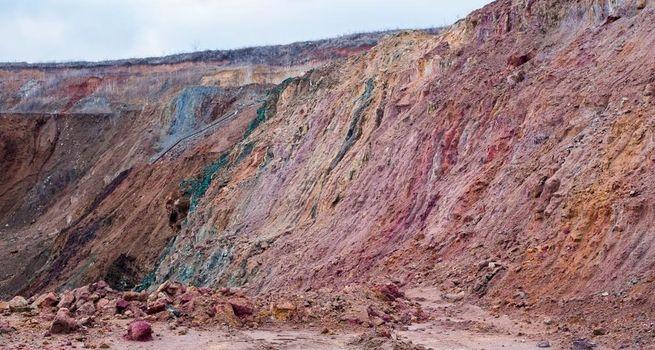
Key Highlights
- Syrah Resources shares rose 2.9% after extending the Tesla supply agreement deadline to June 1, 2026
- The company operates the world's largest natural graphite mine outside China at Balama, Mozambique
- Vidalia facility in Louisiana is the only large-scale Western active anode material producer
- US anti-dumping duties of approximately 220% on Chinese anode materials boost Syrah's competitive position
Syrah Resources Limited (ASX:SYR) captured investor attention after its shares rallied 2.9 per cent on news that the company had extended its deadline with Tesla to address an alleged default under their graphite supply agreement. The extension, which pushes the cure deadline to June 1, 2026, signals that both parties remain committed to resolving technical specification issues at Syrah's Vidalia active anode material facility in Louisiana.
The move comes at a critical juncture for the global battery materials supply chain, where Western nations are scrambling to reduce dependence on Chinese-controlled graphite processing. For investors tracking the electric vehicle revolution and its upstream supply chain, Syrah's position as the only vertically integrated natural graphite and active anode material producer outside China makes it a uniquely compelling, if volatile, investment proposition.
Market sentiment around Syrah has been cautious in recent months, with shares trading near AUD $0.17, well below their 52-week high of AUD $0.53. However, the Tesla deadline extension and broader geopolitical tailwinds have reignited interest in the stock.
About the Company
Syrah Resources is an Australian-listed company headquartered in Melbourne that operates across two primary business segments: raw graphite mining and battery-grade active anode material production.
The company's Balama Graphite Mine in Mozambique's Cabo Delgado Province is one of the world's largest natural graphite deposits. After an eight-month suspension due to local protests, operations restarted in June 2025 and have been running in campaign mode, with Q3 2025 production reaching 26,000 tonnes at an average price of $625 per tonne.
Syrah's Vidalia Active Anode Material Facility in Louisiana represents the company's downstream value-add proposition. Having started commercial production in February 2024 at 11.25 kilotonnes per annum capacity, Vidalia converts Balama's natural graphite into battery-grade active anode material. It is the only vertically integrated, large-scale anode material production facility outside China.
The company has secured offtake agreements with major partners including Tesla, Mitsubishi Chemical, Lucid Motors, POSCO, and NextSource, establishing a diversified customer base for both raw graphite and finished anode material.
Why the Stock Is Moving
The primary catalyst driving Syrah's 2.9 per cent rally was the announcement that both Syrah and Tesla had agreed to extend the deadline to address an alleged default under their graphite supply agreement. Tesla had issued a notice alleging that Syrah failed to deliver conforming active anode material samples meeting product specifications from the Vidalia facility.
Importantly, Syrah maintains it does not accept that it is in default and states that both parties are actively collaborating to resolve the technical issues. The deadline has now been extended from the original March 16, 2026 date to June 1, 2026, pending US Department of Energy approval.
The extension is being interpreted positively by the market for several reasons. It demonstrates that Tesla has not walked away from the relationship, that technical resolution appears achievable, and that the partnership remains strategically important to both parties in the context of Western supply chain independence.
Additionally, the broader macroeconomic environment is turning increasingly favourable for Syrah. The United States imposed anti-dumping duties of approximately 220 per cent on Chinese active anode materials in February 2026, dramatically improving the competitive position of domestic producers like Syrah.
Industry Trends
The global graphite market is valued at approximately USD $6.30 billion in 2026 and is projected to reach USD $10.10 billion by 2031, growing at a compound annual growth rate of 9.91 per cent. Battery-grade graphite demand is expected to triple from 900,000 tonnes in 2024 to 2.7 million tonnes by 2030, driven by electric vehicle production targets of 30 million units annually.
China currently controls approximately 80 per cent of battery-grade graphite production and more than 90 per cent of battery-grade anode material. This concentration has prompted Western governments to pursue aggressive supply chain diversification strategies, creating a structural tailwind for non-Chinese producers.
The US government has been particularly active. Section 45X tax credits, Section 48C investment tax credits worth USD $165 million to Syrah, and anti-dumping duties collectively create a policy environment designed to nurture domestic battery material production. For Syrah, which holds the distinction of being the only commercial-scale Western anode material producer, these policies represent a significant competitive moat.
However, the market remains oversupplied in the near term, with graphite prices at multi-year lows. Synthetic graphite overcapacity from Chinese producers continues to exert downward pressure on pricing, though the tariff regime is expected to create a more favourable environment for Western producers through 2026 and beyond.
Financial Performance
Syrah's financial position reflects a company in transition from development to commercial production. For fiscal year 2025, the company reported revenue of AUD $58.8 million with a net loss of approximately USD $63.9 million. While the company remains unprofitable, the loss narrowed by nearly 49 per cent compared to the prior year.
Cash management has been a key focus. The company ended 2025 with AUD $77 million in total cash, bolstered by a $70 million follow-on equity raise in August 2025 and $12 million in Section 45X tax credits received in Q3. However, approximately $59 million of the cash balance is restricted, primarily tied to government loan collateral.
On the debt side, Syrah carries a USD $150 million Development Finance Corporation loan facility, with interest payments deferred to May 2026, and a Department of Energy loan with service obligations deferred to 2027. The quarterly operating burn rate has fluctuated between USD $3 million and $18 million in recent quarters.
Investment Risks
Investors considering Syrah Resources must weigh several material risks. The most immediate is the Tesla default deadline. If Syrah cannot meet Tesla's product specifications by June 1, 2026, the 8,000-tonne offtake agreement could be terminated, eliminating a major anchor customer for Vidalia.
Operational risks at Balama remain significant. The mine's location in Mozambique's Cabo Delgado Province exposes operations to geopolitical instability, as demonstrated by the eight-month suspension in 2024-2025. Recovery rates currently sit at 68 per cent, below the 75 per cent target, indicating ongoing technical challenges.
Market risks include persistent graphite price weakness from Chinese oversupply, potential reversal of favourable trade policies, and the longer-term threat of technology disruption from silicon anode or solid-state battery development.
Future Growth Drivers
Several catalysts could drive significant value creation for Syrah shareholders. The resolution of the Tesla specification issue by June 2026 would remove the most pressing near-term overhang and validate Vidalia's commercial capabilities.
The planned Phase 3 expansion at Vidalia, which would increase capacity from 11.25 kilotonnes per annum to 45,000 kilotonnes per annum, represents a transformational growth opportunity. Supported by USD $165 million in Section 48C tax credits, this expansion would position Syrah as the dominant non-Chinese active anode material producer globally.
New customer agreements continue to diversify revenue sources. The binding seven-year agreement with NextSource for 34,000 to 68,000 tonnes of natural graphite fines for an Abu Dhabi anode facility demonstrates growing international demand for non-Chinese graphite supply.
The company's environmental credentials also provide a competitive edge. Independent lifecycle assessments show Syrah's active anode material carries a carbon footprint 50 per cent lower than the Chinese benchmark and 70 per cent below synthetic graphite from China, an increasingly important consideration for battery manufacturers tracking Scope 3 emissions.
Long-Term Investment Perspective
Syrah Resources represents a high-risk, high-reward investment in the critical minerals supply chain transformation. The company's unique position as the only fully integrated Western natural graphite to active anode material producer creates a competitive moat that is difficult and time-consuming for competitors to replicate.
The long-term investment thesis hinges on three pillars: sustained Western government support for supply chain diversification, successful execution of the Vidalia expansion, and the structural shift in battery material sourcing away from China.
For investors with a multi-year horizon and tolerance for volatility, Syrah offers exposure to one of the most strategically important supply chains of the energy transition. However, the near-term path remains uncertain, and investors should size positions accordingly given the company's pre-profitability status and operational risks.
Questions Investors Are Asking About Syrah Resources
Q: Why is Syrah Resources stock rising today?
A: Syrah Resources shares rallied 2.9 per cent after the company announced it had extended the deadline with Tesla to resolve an alleged default under their graphite supply agreement. The new deadline is June 1, 2026, and both parties continue working collaboratively on the technical specification issues.
Q: What does Syrah Resources do?
A: Syrah Resources is a vertically integrated natural graphite and active anode material company. It mines graphite at the Balama mine in Mozambique and converts it into battery-grade anode material at its Vidalia facility in Louisiana for use in electric vehicle batteries.
Q: What are the Syrah Resources growth prospects?
A: Key growth drivers include the planned Vidalia Phase 3 expansion to 45,000 tonnes per annum capacity, supported by USD $165 million in government tax credits. New offtake agreements with Mitsubishi Chemical, Lucid Motors, and NextSource also provide revenue diversification.
Q: What is the Tesla supply agreement issue?
A: Tesla alleged that Syrah failed to deliver conforming active anode material samples from Vidalia. Syrah disputes the default claim and both parties have extended the cure deadline to June 1, 2026. The constructive extensions suggest both sides are working toward resolution.
Q: How does Syrah benefit from US tariffs on Chinese graphite?
A: The US imposed approximately 220 per cent anti-dumping duties on Chinese active anode materials in February 2026. This dramatically improves Syrah's competitive position as the only domestic producer, effectively creating a price floor for its Vidalia output.
Q: What is the Syrah Resources latest news?
A: The latest news is the extension of the Tesla supply agreement deadline to June 1, 2026. Additionally, the company has been scaling Vidalia commercial production and secured new offtake agreements with international partners.
Q: Is Syrah Resources profitable?
A: No, Syrah Resources is not yet profitable. The company reported a net loss of approximately USD $63.9 million in 2025, though this was a 49 per cent improvement on the prior year. Profitability is expected around 2027-2028 as Vidalia and Balama reach fuller utilisation.
Q: What risks should investors consider with Syrah Resources?
A: Key risks include the Tesla specification deadline (June 2026), Balama operational instability in Mozambique, limited unrestricted cash reserves, graphite price weakness from Chinese oversupply, and the need for additional capital raises that could dilute shareholders.
Conclusion
Syrah Resources sits at the intersection of two powerful forces: the accelerating global transition to electric vehicles and the urgent Western push to diversify critical mineral supply chains away from China. The Tesla deadline extension demonstrates that strategic partnerships remain intact, while government support through tariffs and tax credits continues to strengthen the company's competitive position.
However, investors must carefully weigh the compelling strategic narrative against near-term execution risks. The Tesla specification resolution, Balama production stability, and Vidalia commercial scaling represent critical milestones that will determine whether Syrah can convert its unique positioning into sustainable shareholder value.


 Mar 16, 2026



 Please wait processing your request...