
 CA
 NZ
 UK
 US
 IND

 AU

 Share
 X (Formerly Twitter)
 Whatsapp
 Facebook
 LinkedIn
 Telegram
 Email This Article
 Copy Link
 Summarize with AI
 Chat GPT
 Perplexity
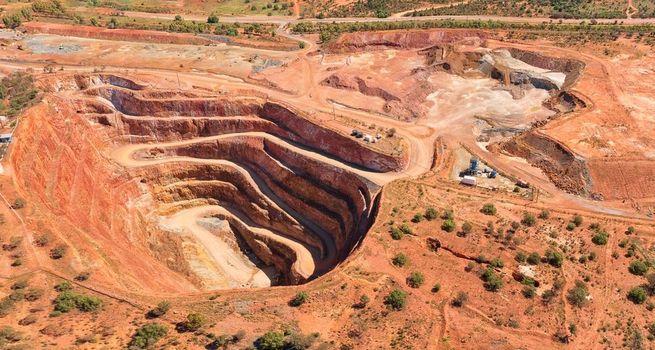
Peninsula Energy Limited (ASX:PEN) is reshaping the uranium production landscape in North America through its flagship Lance Project in Wyoming, USA. On 10 April 2026, PEN share price surged 5.77% to AUD 0.550, reflecting renewed investor confidence in the company's operational progress and long-term uranium fundamentals. With global demand for clean energy accelerating, Peninsula Energy's restart of yellowcake production positions it as a critical player in the energy transition narrative.
This comprehensive analysis examines why PEN went up today, explores the company's financial health, evaluates its growth potential, and assesses the risks facing uranium producers in an evolving regulatory and geopolitical environment. Understanding Peninsula Energy's strategic position, production timelines, and market catalysts is essential for investors evaluating exposure to the nuclear energy renaissance.
The company's market capitalisation of AUD 230.34 million reflects modest valuation relative to its production assets and exploration upside. This report synthesises fundamental analysis, technical indicators, and sector-wide trends to provide investors with actionable insights into Peninsula Energy's trajectory and investment merit.
Company Overview
Peninsula Energy Limited is an Australian-listed uranium producer established in 1993 and headquartered in Subiaco, Western Australia. The company owns and operates the Lance Project, a 100% held uranium deposit in Wyoming, USA, which represents one of the largest undeveloped uranium projects in the United States. The Lance Project utilises low-pH in-situ recovery (ISR) technology, a cost-effective and environmentally sensitive extraction method that has positioned Peninsula as a next-generation uranium producer.
The company's strategic focus is singularly aligned with uranium production for the global nuclear energy sector. Unlike diversified mining companies, Peninsula Energy operates as a pure-play uranium exposure, providing investors with direct leverage to uranium price movements and nuclear energy demand drivers. This concentrated business model offers both opportunity and risk in a commodity-driven sector.
Business Model
Peninsula Energy's revenue model centres on the extraction and sale of uranium oxide (yellowcake) from the Lance Project to nuclear utilities and conversion facilities. The company employs in-situ recovery (ISR) technology, which involves injecting alkaline or acidic solutions into subsurface uranium-bearing formations to mobilise uranium minerals, then pumping the pregnant solution to surface for processing into yellowcake product.
Following the December 2024 restart of production operations, Peninsula commenced dried yellowcake production from its central processing plant facility. The business model benefits from operating leverage as production volumes scale from commissioning levels toward nameplate capacity of 2.0 million pounds per annum (Mlbs U3O8/year). For calendar year 2026, management has maintained production guidance of 0.4 to 0.5 Mlbs U3O8, reflecting continued ramp-up operations.
Revenue is denominated in USD and directly tied to uranium spot prices and contract sales. As a junior producer, Peninsula faces commodity price risk and must negotiate contract terms with utilities and conversion companies. The company's cost structure—particularly for labour, water, and processing chemicals—creates a per-unit production cost baseline that must remain profitable relative to prevailing uranium prices.
Why PEN Went Up Today
The 5.77% share price increase on 10 April 2026 likely reflects positive sentiment around uranium market fundamentals, though no specific company news announcement was identified in search results for this precise date. The broader uranium sector has benefitted from accelerated global nuclear energy expansion, particularly in the United States under the ADVANCE Act and internationally as countries pivot toward decarbonisation.
Peninsula Energy's recent operational achievements—namely the December 2024 production restart and the successful commissioning of the central processing plant—have provided positive momentum for investor sentiment. The company's achievement of dried yellowcake production represents a critical milestone that demonstrates technical capability and de-risks the ramp-up pathway to 2.0 Mlbs U3O8 nameplate capacity.
Additionally, uranium spot prices have remained resilient, with the energy commodity benefitting from structural demand drivers including reactor life-extension decisions, small modular reactor (SMR) development programmes, and increased nuclear power deployment in Asia and Europe. PEN's exposure to these trends provides leverage to uranium spot price movements. Without a specific announcement, the daily gain likely reflects positive sector rotation and technical momentum as investors rotate capital toward uranium-linked opportunities.
Deep Fundamental Analysis
Peninsula Energy's fundamental investment case rests on three pillars: production asset quality, commodity market timing, and operational execution. The Lance Project represents one of the largest undeveloped uranium deposits in the United States, with a JORC (2012) Resource of 58.0 million pounds U3O8 (Mlbs U3O8). This substantial mineral resource base provides a multi-decade production pipeline.
The company's transition to commercial production in late 2024 marks a pivotal moment in its corporate lifecycle. The successful restart and ramp-up of operations will determine Peninsula's ability to capitalize on elevated uranium prices and capture market share from established competitors. Fundamental analysis must assess whether management can execute production targets, maintain cost discipline, and navigate regulatory obligations.
Revenue Model
Peninsula Energy's revenue generation is binary: it depends on uranium production volumes multiplied by realised uranium prices. For 2026, management guidance of 0.4 to 0.5 Mlbs U3O8 represents the production parameter. The realised uranium price is dictated by commodity market dynamics, contract negotiation, and the company's sales strategy.
Uranium spot prices fluctuate daily based on supply-demand dynamics, geopolitical events, reactor announcements, and speculative trading. As of early 2026, uranium prices have traded in a range that supports profitable production at major low-cost producers, though junior producers with higher costs face margin compression at lower price levels.
Peninsula's financial model likely assumes average realised prices in the USD 65–90 per pound range for 2026-2027 planning purposes, though actual realisations will vary. Revenue scaling is operationally constrained: the company cannot exceed nameplate capacity of 2.0 Mlbs U3O8/year, even if prices spike dramatically. This creates a growth ceiling unless Peninsula expands the processing facility or develops additional deposits within the Lance project area.
The company's cash generation depends critically on working capital management, unit production costs (including labour, chemicals, water, energy, and processing), and administrative overhead. As production scales, operational leverage should improve gross margins, though fixed costs must be covered by revenues first.
Financial Health
Peninsula Energy, as a pre-revenue to early-revenue stage producer, remains capital-intensive and likely dependent on equity financing or strategic investment to fund operations and development. The company's balance sheet reflects the capital expenditure required to develop the Lance Project and fund the transition to production.
The restart of production in December 2024 and ramp-up phase represents a transition from a pre-revenue exploration/development company to an operating producer. This transition typically involves improved cash flow profile, though early-stage operations are often loss-making as fixed costs are amortised across ramping production volumes.
Key financial health indicators to monitor include: cash burn rate during ramp-up, working capital requirements, debt-to-equity ratio, and EBITDA trajectory. As production volumes increase and operational efficiency improves, the company should move toward positive operating cash flow by 2027–2028, depending on uranium prices.
Market capitalisation of AUD 230.34 million (approximately USD 155 million at mid-2026 exchange rates) implies a relatively modest enterprise value for a major uranium resource. This valuation appears to discount the company's mineral resource base, operational progress, and uranium market fundamentals, suggesting potential upside if the company executes production targets and uranium prices remain supported.
Growth Outlook
Peninsula Energy's growth trajectory is shaped by three factors: production volume expansion, uranium price appreciation, and potential expansion of the resource base through exploration or acquisition.
On the production front, management's 2026 guidance of 0.4–0.5 Mlbs U3O8 is modest relative to nameplate capacity of 2.0 Mlbs U3O8/year. The pathway to full-scale production involves operational learning, debottlenecking, and resolution of any technical issues during ramp-up. If successful, Peninsula could reach 1.5–2.0 Mlbs U3O8 annual production by 2028–2029, representing 3–4x volume growth from 2026 levels.
The Lance Project resource of 58.0 Mlbs U3O8 implies a production runway of 25–30 years at full nameplate capacity, assuming no additional exploration success. However, the Barber Resource Area has been identified as an area of exploration upside, suggesting that the total resource base could expand materially with additional drilling and delineation work.
Uranium price outlook is constructively biased, driven by structural supply-demand imbalances, reactor life extensions, and new-build announcements globally. Price appreciation from USD 70/lb to USD 100+/lb would materially expand Peninsula's financial returns and free cash flow generation, supporting faster deleveraging and dividend potential.
Strategic growth optionality includes acquisition of adjacent uranium properties, development of the Barber Resource Area as a second processing centre, and potential merger or partnership with larger uranium majors. The company's pure-play uranium exposure makes it a potential acquisition target for larger peers or strategic investors seeking domestic uranium production assets.
Risks
Operational risk represents the most immediate threat to Peninsula Energy's investment thesis. The company is ramping a new production facility following a production hiatus. Technical issues, equipment failures, or process inefficiencies could delay the path to nameplate capacity, reduce product quality, or increase per-unit production costs. Any production shortfalls relative to guidance would immediately pressure cash flow and valuation multiples.
Commodity price risk is inherent to the uranium sector. A collapse in uranium prices below USD 50/lb would render many junior producers uneconomic, potentially forcing operational slowdowns or asset sales. Peninsula's high fixed-cost base and limited economies of scale make it vulnerable to price shocks. The company lacks diversified revenue sources to cushion against uranium price declines.
Regulatory and geopolitical risk: uranium production operates in a heavily regulated environment involving environmental compliance, nuclear non-proliferation rules, and cross-border trade restrictions. Changes in US nuclear policy, environmental rules in Wyoming, or international uranium trade restrictions could impair the Lance Project's viability or increase compliance costs. Political opposition to nuclear energy in the United States or abroad could dampen long-term uranium demand.
Financing risk: if the company encounters larger-than-anticipated cash burn during ramp-up or faces adverse uranium prices, additional equity or debt financing may be required. Dilutive equity raises would harm shareholder returns, while increased debt would reduce financial flexibility.
Competition from established producers and potential new entrants: larger uranium producers with lower costs, diversified portfolios, and stronger balance sheets may outcompete Peninsula for contract sales and market share. Potential new production sources (Kazakhstan, Russia, or other jurisdictions) could add supply pressure.
Environmental and social licence risk: uranium mining faces social opposition in some regions. Any environmental incidents or community opposition at the Lance Project could increase costs, delay operations, or threaten the licence to operate.
Technical Analysis
Peninsula Energy's share price action reflects the confluence of fundamental drivers (uranium market fundamentals, production progress) and technical/sentiment factors. The April 2026 price of AUD 0.550 represents a consolidation point following the December 2024 production restart announcement.
From a technical perspective, PEN has traded in a range, with resistance around AUD 0.60 and support emerging around AUD 0.45–0.50. The 5.77% daily gain on 10 April 2026 broke above near-term resistance, signalling positive momentum and potential continuation if buyers maintain interest.
Volume characteristics are important: daily volumes of 1.94 million shares suggest reasonable liquidity for a sub-AUD 300 million market-cap company. However, liquidity could tighten during volatile periods or if major shareholders liquidate positions.
The share price appears to trade on a discounted basis to peers and to the underlying asset value represented by the Lance Project resource. This discount may reflect execution risk, size discount, or lack of analyst coverage. As the company proves production capability and grows revenue, the market may re-rate the stock upward.
Technical traders monitor moving averages, relative strength indices (RSI), and support/resistance levels. The 5.77% daily gain suggests bullish momentum, potentially supported by broader uranium sector strength. Breakout above AUD 0.60 could signal further upside toward AUD 0.70–0.80, while breakdown below AUD 0.45 would suggest bearish reversal.
Sector & Market Context
Peninsula Energy operates within the uranium/nuclear energy sector, which has experienced dramatic sentiment shifts over the past 24 months. The global energy transition, driven by climate commitments and decarbonisation mandates, has revived interest in nuclear power as a reliable low-carbon baseload energy source.
In the United States, the ADVANCE Act (signed 2023–2024) provided regulatory clarity and incentives for nuclear power expansion, including support for new reactor builds and life-extension decisions for existing reactors. These policy tailwinds have translated to increased demand for uranium supply, supporting price stability and producer profitability.
Global uranium demand is primarily driven by civilian nuclear power reactors. As of early 2026, approximately 440 operational reactors globally consume roughly 180 million pounds U3O8 annually. Primary uranium supply (mining and conversion) has struggled to keep pace with demand, creating a structural supply deficit that supports prices.
Major uranium-producing countries include Kazakhstan (leading producer), Canada, Uzbekistan, Russia, and the United States. Peninsula's entry into US production adds domestic supply capacity, which is strategically valuable for US energy security and may qualify for premium pricing or contract terms with US utilities.
Uranium prices have recovered from multi-year lows and are currently supported by demand from advanced economies (USA, EU, Japan, South Korea) and emerging nuclear programmes (India, China). However, regulatory risks, cost inflation, and potential oversupply from new projects remain concerns.
Peers and competitors include established uranium majors (Kazatomprom, Cameco, Sprott Physical Uranium Trust) and junior producers (EnCore, Energy Fuels, etc.). Peninsula competes for contract sales, regulatory approvals, and capital. Its pure-play uranium business model differentiates it from diversified miners but also concentrates risk.
Investor Sentiment
Investor sentiment toward uranium and nuclear-exposed equities has turned decisively positive since late 2023, driven by policy support, energy security concerns, and climate priorities. The sector has attracted thematic investors seeking exposure to nuclear energy, commodities, and energy transition themes.
Peninsula Energy, as a smaller pure-play uranium producer, attracts specialist uranium investors, commodity hedge funds, and retail investors seeking leveraged uranium exposure. The company's small market cap and early-stage production profile create both opportunity (upside leverage) and risk (volatility, limited analyst coverage).
Social media and retail investor forums (HotCopper, StockTwits) show mixed sentiment regarding PEN, with bulls highlighting production restart, uranium supply deficit, and price upside, while bears worry about execution risk, financing needs, and uranium price volatility.
Institutional investor participation appears limited, likely due to the company's small size and early revenue stage. As the company scales production and demonstrates operational competence, institutional interest and analyst coverage should increase, potentially supporting re-rating.
The April 2026 5.77% daily gain suggests positive near-term sentiment, possibly reflecting sector rotation or positive uranium market dynamics. Sentiment can shift rapidly in commodity stocks in response to price moves, geopolitical events, or company news.
Future Outlook
Peninsula Energy's future outlook depends critically on three interconnected variables: (1) successful production ramp-up to nameplate capacity, (2) sustained uranium price strength, and (3) capital availability to fund growth and shareholder returns.
Bull Case
The bull case for Peninsula Energy rests on the conviction that the company will successfully execute its production pathway, uranium prices will remain elevated or increase further, and the company will capture significant free cash flow and shareholder value creation.
Scenario assumptions: (1) Production ramps to 1.5 Mlbs U3O8 by 2028 and 2.0 Mlbs U3O8 by 2029, (2) Uranium prices remain in the USD 80–100/lb range, (3) Unit cash costs decline to USD 30–40/lb as production scales, (4) The company reaches positive free cash flow by 2027 and generates cumulative free cash flow of USD 500 million+ through 2035.
Under this scenario, Peninsula's enterprise value could expand to USD 1+ billion by 2028–2029, implying a share price of AUD 1.50–3.00+. This would represent 2.7–5.5x upside from April 2026 levels. The bull case is supported by uranium supply deficits, policy tailwinds, and operational execution.
Additional upside catalysts include exploration success in the Barber Resource Area, acquisition of adjacent uranium properties, strategic partnership with major utilities, or potential takeover by larger uranium majors or financial buyers seeking pure-play uranium exposure.
Bear Case
The bear case emphasises execution risk, commodity price volatility, and the company's inability to compete with larger, lower-cost producers.
Scenario assumptions: (1) Production ramps more slowly than expected, reaching only 1.0 Mlbs U3O8 by 2028 due to technical issues or cost overruns, (2) Uranium prices decline to USD 50–60/lb due to supply overhang or demand weakness, (3) Unit cash costs remain elevated at USD 40–50/lb, making operations marginally profitable, (4) The company requires additional equity financing, causing shareholder dilution.
Under this scenario, Peninsula faces margin compression, cash flow deficits, and potential covenant breaches if debt is issued. The share price could fall to AUD 0.20–0.30, representing 45–55% downside from April 2026 levels. Worst-case scenarios include operational shutdown, asset sales, or restructuring.
Bear case catalysts include production delays or cost overruns, uranium price collapse, regulatory changes, environmental incidents, or inability to raise additional capital on acceptable terms.
Key Catalysts To Watch
Near-term catalysts (6–12 months): Quarterly production results demonstrating ramp-up trajectory, uranium spot price movements, updates on Barber Resource Area exploration, and management commentary on production costs and capital requirements.
Medium-term catalysts (12–24 months): Arrival at production milestones (0.5–1.0 Mlbs U3O8/quarter), achievement of positive operating cash flow, strategic partnerships or offtake agreements with major utilities, and potential analyst initiation of coverage.
Long-term catalysts (2+ years): Full production capacity achievement, exploration success expanding the resource base, potential dividend initiation, strategic acquisitions or partnerships, and company valuation re-rating as it transitions to a stable, mature producer.
Conclusion
Peninsula Energy Limited represents a speculative investment opportunity aligned with the global nuclear energy renaissance and uranium supply deficit narratives. The company's 5.77% share price gain on 10 April 2026 reflects positive uranium sector sentiment and recognition of the company's operational progress since the December 2024 production restart.
The investment thesis pivots on Peninsula's ability to ramp production toward nameplate capacity while maintaining cost discipline, and on the assumption that uranium prices remain supported by structural supply-demand imbalances and policy tailwinds. If successful, the company could generate material shareholder returns as it scales toward profitability and positive free cash flow.
However, investors must weigh the upside potential against material downside risks, including operational execution challenges, uranium price volatility, commodity cost inflation, financing needs, and regulatory/geopolitical uncertainties. The company's small size, limited analyst coverage, and early-stage production phase create information asymmetry and volatility.
For risk-tolerant investors with a multi-year investment horizon and conviction on nuclear energy fundamentals, PEN offers leveraged exposure to uranium themes. Conservative investors should size positions carefully or avoid the stock entirely in favour of larger, more established uranium producers or diversified mining peers.
The path forward requires close monitoring of quarterly production results, uranium pricing trends, capital raise announcements, and management commentary on cost performance and ramp-up progress. Successful execution over the next 24–36 months could validate the bull case and drive significant share price appreciation.
Disclaimer
This article is for informational purposes only and does not constitute financial advice, investment recommendation, or solicitation to buy or sell securities. The information presented is based on publicly available sources and research as of April 2026 and may not be current or complete. Market conditions, company circumstances, and regulatory environments change rapidly, and past performance is not indicative of future results.


 Nov 12, 2026





 Please wait processing your request...