
 CA
 NZ
 UK
 US
 IND

 AU

 Share
 X (Formerly Twitter)
 Whatsapp
 Facebook
 LinkedIn
 Telegram
 Email This Article
 Copy Link
 Summarize with AI
 Chat GPT
 Perplexity
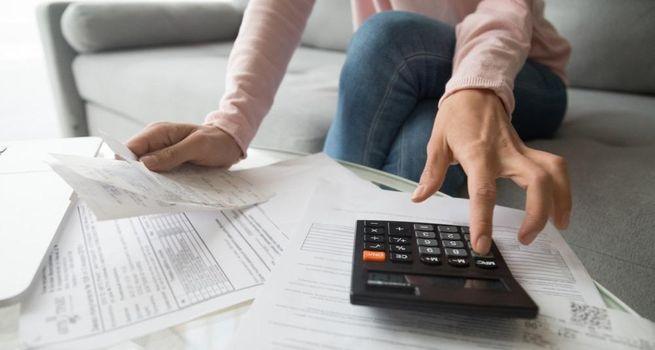
With inflation already above target, the Reserve Bank has judged that any rounding up of prices after the end of card surcharges should barely register in the numbers.
When a shop loses the ability to add a card surcharge at the till, one obvious question follows: will it simply raise its prices instead? At a time when inflation is the Reserve Bank of Australia's (RBA) central concern, that question carries more weight than usual.
The RBA has addressed it directly. In the impact and implementation chapter of its conclusions paper on merchant card payment costs and surcharging, it says it does not expect a material change in the total price paid at merchants that used to surcharge, and that the inflation impact from rounding up is "negligible".
Why the total bill is the right yardstick
The RBA's reasoning starts with what customers were already paying. A surcharge is part of the total cost of a purchase, even if it appears as a separate line. If a business that once added a surcharge now builds that cost into its sticker price instead, the customer paying by card ends up paying a similar total.
That is why the RBA frames its expectation in terms of the total price at merchants that surcharged, rather than the shelf price alone. A shelf price may rise while the amount a card-paying customer hands over stays broadly the same.
Rounding is where a small difference could creep in. A business converting a percentage surcharge into a new shelf price might round to a neater figure, which could leave the total slightly higher or slightly lower than before. The RBA's assessment is that the aggregate effect of this on inflation is negligible.
The scale of the change
Several of the RBA's own figures help explain why the effect is expected to be so small.
- Only around 16% of Australian businesses surcharged.
- Among merchants, 85% of small businesses and 89% of large businesses did not surcharge.
- Consumers paid an estimated $1.6 billion of the $1.8 billion in annual card surcharges.
The first two points matter most for inflation. If the large majority of businesses never surcharged, the ban gives most of them no reason to change their prices at all. Any rounding up is confined to the minority that did surcharge.
The third point shows the amount at stake. The $1.6 billion that consumers paid was already part of what households spent. Shifting some of that from a surcharge line into the shelf price changes how the cost is presented, not necessarily how large it is.
The reforms also lower interchange caps. From 1 October 2026, the consumer credit card cap fell to 0.3%, while debit and prepaid cards moved to 8 cents plus 0.16% per transaction. The commercial credit card cap stayed at 0.8%. The RBA estimates that the changes will reduce card issuers' revenue by around $660 million a year, assuming no behaviour change, and expects small merchants, mostly without strategic rates, to gain the most.
Where inflation stands now
The RBA's "negligible" assessment lands at a sensitive moment. The monthly CPI indicator showed headline inflation of 4.0% over the year to August 2026. In the June quarter, headline CPI was 3.9% over the year, while the trimmed mean, an underlying measure, was 3.6%.
Those two readings measure different things. Headline CPI captures the full basket, including volatile items such as fuel. Underlying measures strip out the largest price movements to show the broader trend. Governor Michele Bullock summarised the underlying picture at her 29 September media conference: "Inflation is about 3.5 per cent."
The target is a range of 2–3%, with a midpoint of 2.5%. Bullock has said quarterly inflation needs to be "more around .6 rather than .8 and 1" to be consistent with the target over time.
On 29 September the Monetary Policy Board raised the cash rate target by 25 basis points to 4.60%, the fourth increase of 2026. Bullock's message was blunt: "Higher interest rates are needed to ensure inflation returns to target."
The Board's statement listed the forces behind its concern: higher global energy prices linked to a broader Middle East conflict, AI-related demand pushing up technology goods prices, capacity pressures in the economy and firms raising or planning to raise prices. Bullock added that "Inflation is too high and has been driven by domestic capacity pressures."
Against that backdrop, the surcharge change is a small item. The forces the Board is focused on are broad; the RBA's assessment is that the effect of the ban on inflation is negligible.
The next CPI release is scheduled for 28 October 2026. It will be closely watched for what it says about inflation broadly, and some readers may look for any sign of the surcharge change.
A few points are worth bearing in mind. First, headline and underlying measures can diverge, so it matters which one is being discussed. Second, the RBA's August Statement on Monetary Policy forecasts were made before the September hike, using a cash rate assumption of around 4.3–4.5%. Those forecasts had headline CPI at 3.6% by December 2026 and returning to the 2–3% range by early 2027, with trimmed mean inflation at 3.3% by December 2026.
Third, surcharges are only one of many prices in the economy. Given the RBA's view that the rounding effect is negligible, the broader pressures the Board has identified are the ones to watch.
What businesses can still do
The ban does not stop businesses recovering payment costs in other ways, and that is part of why the RBA expects total prices to be broadly unchanged. Under the RBA's surcharging FAQs, payment costs can be built into sticker prices, and businesses can offer discounts, including for cash. Weekend and public holiday surcharges, booking fees and service fees are not card surcharges, and terminal rental or processing fees are not surcharges either.
Surcharges on eftpos, Mastercard and Visa debit and credit cards ended on 1 October, and American Express credit card surcharging also ended that day. The RBA concluded that "surcharging no longer works as intended" after a review that began in October 2024 and drew more than 260 written submissions and around 150 meetings.
For regulated prices, the RBA has informed governments and price regulators. Taxi surcharges are governed by state and territory law.
The bottom line
The RBA does not expect the surcharge ban to add meaningfully to inflation. Most businesses never surcharged, the total price at those that did is not expected to change materially, and the RBA describes the inflation impact of any rounding up as "negligible". That leaves the inflation debate where it was before 1 October: focused on headline CPI of 4.0% in August, underlying inflation the Governor puts at about 3.5%, and the Board's next decision on 3 November, which it has left open.


 Nov 12, 2026





 Please wait processing your request...