
 CA
 NZ
 UK
 US
 IND

 AU

 Share
 X (Formerly Twitter)
 Whatsapp
 Facebook
 LinkedIn
 Telegram
 Email This Article
 Copy Link
 Summarize with AI
 Chat GPT
 Perplexity

Highlights
- Platinum was quoted at USD 1,481.002, changing −2.41% on the displayed daily candle.
- The chart shows an open of USD 1,517.216 and a high of USD 1,519.062.
- The displayed low was USD 1,480.656.
- The longer chart depicts a retreat from the early-2026 spike towards USD 2,800, followed by a sequence of lower peaks and a decline towards USD 1,480.
- The first downside area to monitor is around USD 1,480.
- Initial upside attention falls around USD 1,520.
Platinum was quoted at USD 1,481.002 on the supplied TradingView screenshot, with a displayed change of −2.41%. The market picture is shaped by a retreat from the early-2026 spike towards USD 2,800, followed by a sequence of lower peaks and a decline towards USD 1,480. Technical levels provide a way to describe the current price structure, while production, consumption and financing conditions form the broader context. The screenshot supplies chart observations, not an independently verified explanation for the latest move. The distinction between the current Quotation and the wider trend remains important.
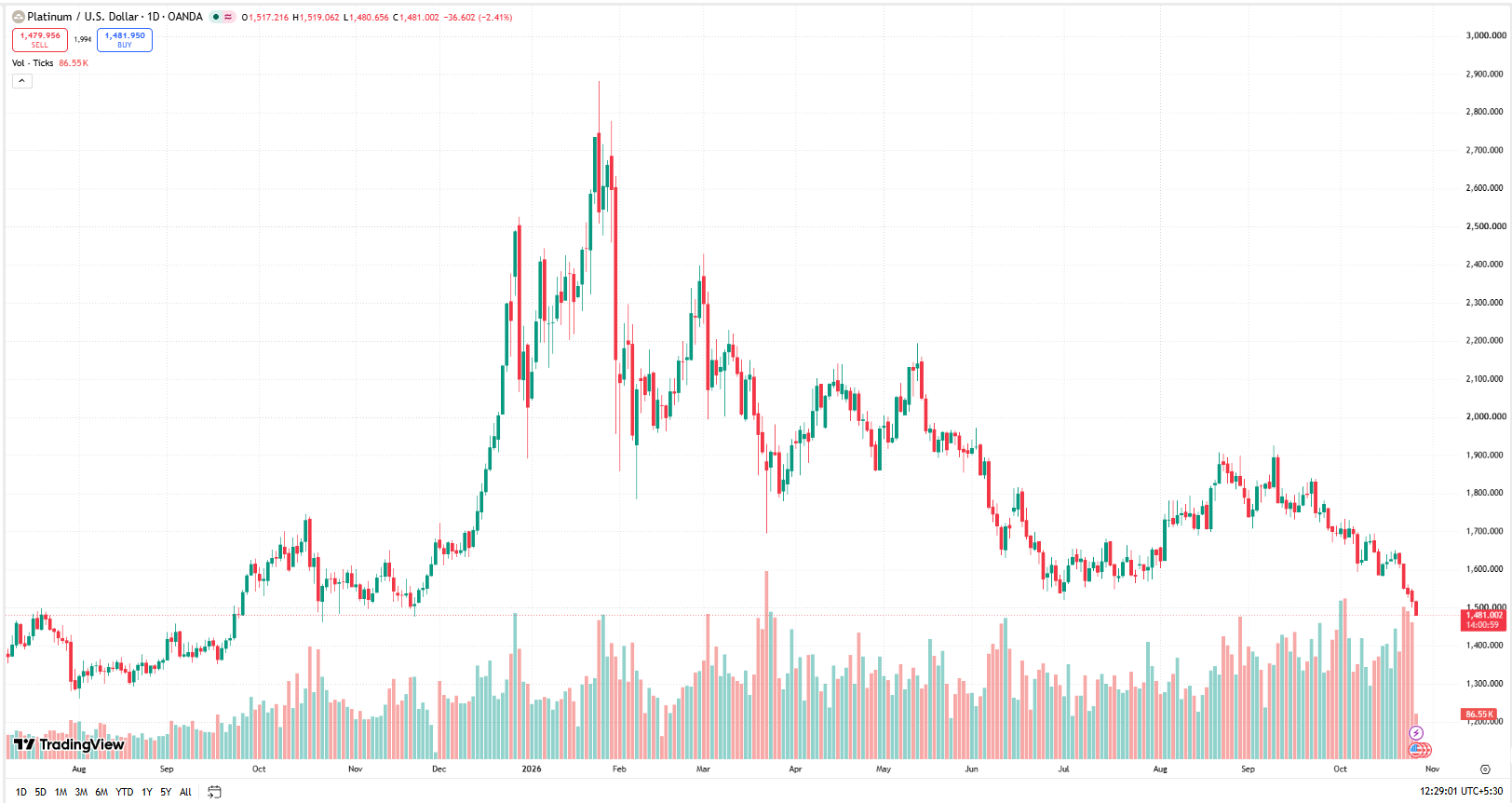
Source:TradingView chart, 27 October 2026
Automotive Catalyst Demand Meets Changing Vehicle Mix
Platinum is widely used in catalytic converters, and demand depends on vehicle production, emissions requirements and the mix of internal-combustion, hybrid and battery-electric vehicles. Substitution between platinum and palladium can also change the amount of metal required by manufacturers. These relationships matter over time, but the chart alone cannot establish which demand Factor caused the latest price movement.
South African Supply and Power Costs Remain Relevant
South Africa is a major source of mined platinum. Electricity reliability, operating costs and mine Investment can affect the amount of metal reaching the market. Recycling of automotive catalysts provides another supply channel. Investors assessing the balance between primary production and recycled supply should distinguish actual disruptions from potential risks rather than assuming that either has changed during this session.
Dollar and Interest-Rate Expectations Shape Precious Metals
Platinum also responds to broader precious-metal conditions. Changes in the US dollar and expected interest rates can alter investment demand, while industrial growth expectations affect the metal’s Manufacturing uses. A firm dollar can make US-dollar-priced platinum more expensive for buyers in other currencies. These macroeconomic channels provide context, although no fresh policy release or demand statistic is included in the supplied chart.
Technical Outlook
The Daily Chart displays an open at USD 1,517.216, a high of USD 1,519.062, a low of USD 1,480.656, and a latest reading of USD 1,481.002. The displayed change is −2.41%. In the broader view, the chart shows a retreat from the early-2026 spike towards USD 2,800, followed by a sequence of lower peaks and a decline towards USD 1,480. That pattern provides context for the nearby trading zones but does not guarantee that an apparent support or resistance level will hold. Neither a 21-day simple Moving Average nor a 14-day relative strength index is plotted, so exact values for those indicators cannot be verified. Recent candles should be interpreted alongside the wider structure rather than treated as a confirmed reversal.
Key Levels to Watch
Approximate downside chart zones are USD 1,480, USD 1,450, USD 1,400. On the upside, USD 1,520, USD 1,600, USD 1,700 are areas to monitor. These are visually estimated chart zones, not calculated pivot points or guaranteed trading levels.
Platinum remains sensitive to shifts in its market backdrop, while the supplied chart highlights the importance of nearby price levels. At USD 1,481.002, the current reading should be assessed against the wider daily pattern and the distinction between observed prices and unverified catalysts. Further direction will depend on whether the price sustains a move beyond nearby chart zones.


 Nov 12, 2026





 Please wait processing your request...