China - Economy background
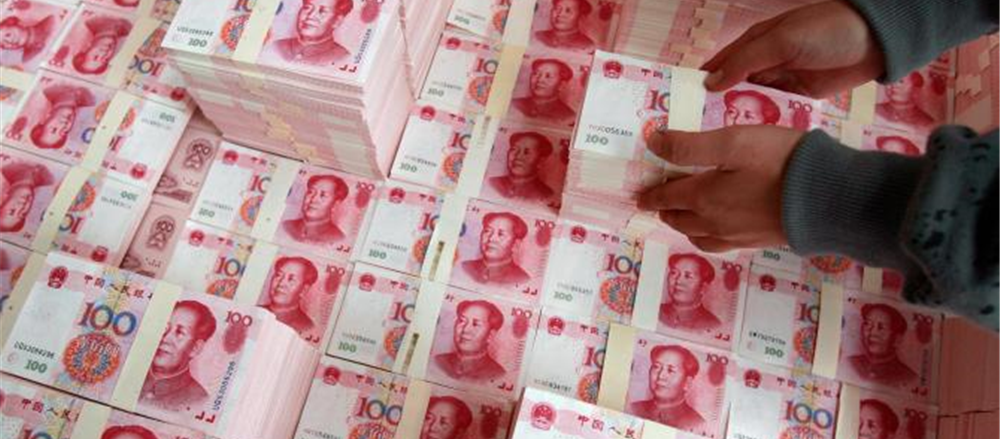
For quite some time, China has been known to play a significant role in the global financial rebalancing towards emerging markets. With world markets churning, China is considered to be a life preserver with vast holdings of other countries' money. The People’s Bank of China, the nation’s central bank, has accumulated the world’s largest stock of foreign-currency reserves. In mid-2014, China was holding foreign exchange reserves of as much as $4 trillion. Majority of this money was invested in low-risk sovereign debt—for instance, US treasuries. However, with passing time these reserves dwindled with China loosening restrictions on other types of financial outflows and moving to diversify its foreign holdings.
Historic facts driving high Forex reserves
China’s currency could have risen in value as huge sums in dollars, euros and yen flowed into the country. However, Beijing chose to tightly control the value of the renminbi, buying up much of the inflows and putting them into its reserves. That brought accusations from the U.S. and Europe alleging that China was manipulating its currency to maintain its Chinese exports at lower rates and remain competitive in foreign countries. Currently, as the renminbi faces pressure to fall, China is spending its reserves in an effort to prop up the currency.

China Foreign Exchange Reserves (Source: Thomson Reuters)
The state of the foreign exchange reserves
From the past few years, China’s foreign exchange reserves have been shrinking steadily as money flows are out of the country, while Beijing is making efforts to shore up its currency. The central bank dumped dollars to defend the yuan after a devaluation in August 2015, and prevent an increase in capital outflows. Beijing has reduced its reliance on debt-fuelled investment in construction and heavy industry and boosting consumption, the services sector and high technology industries, in order to reshape the economy. At the same time, we also see that the central bank sold off $207 billion in foreign reserves in December 2015 and January 2016. This has led to reserves reaching at almost $3.23 trillion at the end of January 2016. Foreign exchange reserves in China have thus dried by $762 billion since mid-2014. Though China's reserves remain the world’s largest even after losing about $420 billion in the last six months, however, the depletion can affect China's efforts to raise its global profile with the economy's financial resources being used for investing in major projects in developing countries. Moreover, this is reported to be hitting the global investor confidence. It is now being said that the composition of China’s reserves is a state secret and experts believe that the falling dollar value of other currencies held by China is a cause of the fall.
China's reaction
Zhou Xiaochuan, the governor of China’s central bank, commented that "China has the largest volume of foreign exchange reserves in the world, and we will not let speculative forces dominate market sentiment". Also, despite the fall, the reserves are still considerable and more than double Japan's which has the world's second largest reserves. Mr. Zhou led a move over the last two years to make it easier for Chinese companies and families to invest their own money overseas, only to find in recent months that the outflows have been alarmingly high. However, few steps already taken to halt the further outflows include arresting leaders of underground banks that were converting billions of renminbi into dollars and euros; preventing Chinese citizens to use their renminbi to buy insurance policies in dollars; stopping sales of investment funds that are denominated in dollars within China; and limiting the lending of renminbi to avoid betting against the Chinese currency in financial markets.
Broad-level view
French bank Societe Generale has recently commented that International Monetary Fund guidelines highlight a value of $2.8 trillion as the minimum prudent level for China and considering the current scenario China is not far from reaching the same. On the other hand, analysts at HSBC reported that value of $2 trillion would be sufficient in theory while fall of the reserves to that level would not be seen as an option by Beijing. Economists in China however do believe that with net claims on foreign assets of $1.5 trillion and a trade surplus of about $600 billion, China’s state is not panic-stricken. However, speculations are doing the rounds with China's central bank removing a closely watched foreign exchange data series from its website amounting to some level of suspicion about an attempt to conceal the extent of capital outflow. People’s Bank of China has primarily redacted the data category “Position for forex purchase” from the website.
Conclusion
It is to be seen whether such burning of the currency reserve would cause any sharp fall in yuan or bring in some capital controls. At the same time, it has been reported that China's economic growth rate is likely to slump to 6.7% in 2016. As a response, the central bank has already cut interest rates since November 2014, and lowered the amount of cash that banks hold as reserves. Given this entire framework, we need to wait and watch about China’s next steps to handle the situa

 AU
AU
 CA
CA NZ
NZ UK
UK US
US IND
IND
 Please wait processing your request...