
 CA
 NZ
 UK
 US
 IND

 AU

 Share
 X (Formerly Twitter)
 Whatsapp
 Facebook
 LinkedIn
 Telegram
 Email This Article
 Copy Link
 Summarize with AI
 Chat GPT
 Perplexity
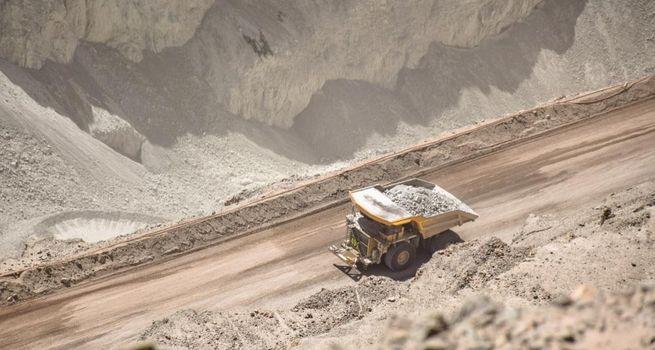
Golden Deeps Limited (ASX:GED) is an Australia-based mineral exploration and investment company focused on the exploration and development of copper and vanadium projects in the Otavi Mountain Land copper district of Namibia, alongside exploration of copper and gold projects in the Lachlan Fold Belt of New South Wales, Australia. The company's strategic emphasis on the Otavi Mountain Land places it within one of the most historically productive base metals districts in southern Africa, with a rich legacy of mineralisation across copper, lead, zinc, vanadium and related by-product metals.
Entering 2026, Golden Deeps traded at approximately A$0.06 as of early February, with a 52-week range spanning from a low of A$0.016 to a high of A$0.087. That relatively wide range illustrates the volatility typical of junior exploration stocks and reflects the sensitivity of the share price to both company-specific news and broader sector sentiment. Golden Deeps has outperformed both the Australian Metals and Mining sector, which returned approximately 45.1 per cent over the past year, and the broader Australian market, which returned about 7.6 per cent, placing the company among the more resilient junior explorers in the cohort.
The company has established base and critical-metals mineral resources in the Otavi Mountain Land, including the Abenab high-grade vanadium-lead-zinc project, the Nosib vanadium-copper-lead-zinc-gallium deposit and the Khusib Springs copper-silver (zinc, lead, germanium) deposit. This article reviews GED's year-to-date trading performance, the key drivers of its investment case, the industry context for Namibian critical metals exploration, and the risks and outlook through the remainder of 2026.
Year-to-Date Stock Performance Analysis
Golden Deeps' year-to-date trading in 2026 has been characterised by the mid-point positioning within its twelve-month range. At approximately six Australian cents in early February, with a 52-week range extending from approximately 1.6 cents to 8.7 cents, the stock has shown the kind of variation that is common for junior explorers working to advance multi-commodity projects. The positioning within the range suggests that the company has neither been pushed to extreme lows nor reached new highs in recent months, reflecting a period of consolidation following earlier sentiment shifts.
Compared with the broader Australian metals and mining sector, Golden Deeps has outperformed over the past year, exceeding the approximately 45.1 per cent return delivered by the sector overall. That outperformance is notable given the challenging environment for junior explorers more broadly and reflects the specific appeal of the company's Namibian critical metals positioning. The exposure to vanadium, gallium and germanium in particular aligns with broader policy narratives around critical minerals supply chains, which has attracted incremental investor attention to the segment.
Trading volumes in GED have been modest but consistent with the typical profile of junior exploration companies operating in established mining jurisdictions. Activity has tended to cluster around specific announcements relating to drilling results, resource updates or broader commentary on the Otavi Mountain Land district. The day-to-day trading pattern reflects the typical mix of quieter consolidation phases and occasional activity spikes around news events.
Key Drivers: Otavi Mountain Land, Multi-Metal Resources and Lachlan Fold Belt
The central driver of Golden Deeps' investment narrative is its portfolio of deposits in the Otavi Mountain Land copper district of Namibia. The Abenab high-grade vanadium-lead-zinc project represents one of the cornerstone assets, with mineralisation that has attracted specific attention due to its high vanadium grades and the critical minerals classification of vanadium in various jurisdictions. Vanadium has applications in both traditional steel alloy markets and emerging vanadium redox flow battery technology, providing multiple demand pathways.
The Nosib vanadium-copper-lead-zinc-gallium deposit and the Khusib Springs copper-silver deposit add further dimensions to the portfolio. Gallium, in particular, has been identified as a critical mineral with applications in semiconductors and other advanced technology products, and its concentration alongside vanadium at Nosib gives the deposit a distinctive critical-metals profile. Khusib Springs, with its focus on copper, silver and by-product metals including germanium, provides additional optionality across commodities that are subject to their own distinct demand narratives.
A third driver is the Lachlan Fold Belt exposure in New South Wales. The Lachlan Fold Belt is one of the most prospective geological provinces in Australia for copper and gold mineralisation, and holding exploration interests there provides Golden Deeps with diversified jurisdictional exposure. While the Namibian projects represent the core of the current narrative, the Australian ground provides additional growth optionality and exposure to discovery outcomes in a supportive operating environment.
Industry Context: Namibian Mining, Critical Metals and Junior Explorers
Namibia has a long history as a mining jurisdiction, with established legal frameworks, supportive government policies and significant operational experience. The Otavi Mountain Land in particular has been the subject of mining activity dating back decades, with copper, lead, zinc and vanadium production contributing to the country's mineral sector. Within that historical context, junior explorers continue to identify opportunities to build new resource bases, particularly around deposits that benefit from critical metals classification or by-product credits.
The critical metals theme has become an important driver of investment interest in junior exploration companies globally. Governments in the United States, European Union and other major economies have developed critical minerals lists that include vanadium, gallium, germanium and other specialty metals that Golden Deeps has in its resource base. These classifications can support investor interest by signalling long-term policy support for diversified supply chains, although translating that thematic support into specific project-level value requires substantial operational progress.
The broader environment for junior mineral explorers has been selective, with capital flowing preferentially toward companies that can demonstrate clear exploration results, disciplined capital management and credible pathways to development. Golden Deeps' relative outperformance compared with the broader metals and mining sector suggests that investors have responded positively to the company's combination of critical metals exposure, multi-project portfolio and established resource base.
Market Sentiment and Trading Patterns
Market sentiment around GED has been cautiously constructive through the early part of 2026. Supporters of the stock reference the multi-commodity nature of the Namibian portfolio, the relative outperformance compared with broader metals and mining peers, and the appeal of critical metals classifications for commodities such as vanadium, gallium and germanium. More cautious observers note the micro-cap scale of the company and the persistent funding requirements associated with advancing exploration and development work.
Trading patterns have shown the profile typical of a junior explorer with active project interests. Volumes have been modest on quieter days but elevated around specific announcements, and intraday moves have at times been pronounced in percentage terms given the absolute price level. The cumulative trajectory has been broadly positive over the past year, aligning with the outperformance relative to the broader sector.
Technically, the stock has been trading near the middle of its twelve-month range, with support emerging at lower levels established during earlier quieter phases and resistance defined by the highs reached during more recent periods of stronger sentiment. Any decisive move higher would likely require substantive new exploration results, resource expansion announcements or a broader shift in sentiment toward junior critical metals explorers.
Risks and Challenges
Golden Deeps faces a concentrated set of risks typical of junior exploration and development companies. Exploration risk is the most immediate concern: drilling and resource definition work at the Abenab, Nosib, Khusib Springs and Lachlan Fold Belt projects can each produce outcomes that can materially affect the share price. Each round of exploration carries the potential for upside if results support the geological thesis, and downside if they disappoint.
Jurisdictional risk is relevant given the Namibian focus of the core portfolio. While Namibia has a stable mining sector with established regulatory frameworks, changes in fiscal terms, permitting requirements or community engagement expectations can affect project economics. Junior explorers typically depend on continued supportive regulatory environments to advance their work, and any shifts in these environments can influence investor sentiment.
Funding risk is a persistent consideration for junior explorers. Advancing multiple projects across Namibia and Australia requires ongoing capital, and the terms of any future capital raise directly affect existing shareholders. At micro-cap scale, dilution risk is a familiar overhang, and the timing and conditions of fundraising activities can shape the stock's trajectory in the short term.
Commodity market and demand risks apply across the company's exposures. Vanadium, copper, lead, zinc, gallium, germanium and gold each have their own demand and supply dynamics, influenced by industrial cycles, technology adoption rates and policy decisions. While the critical metals classification provides thematic support for several commodities in the portfolio, translating that into project economics depends on underlying market conditions.
Outlook
The outlook for Golden Deeps through the remainder of 2026 depends on continued delivery of exploration and resource work across its Namibian and Australian project portfolio. Any substantive updates from Abenab, Nosib or Khusib Springs would be material to the share price, as would progress at the Lachlan Fold Belt assets. Consistent newsflow and credible evidence of resource expansion or improved economics would likely support continued positive sentiment.
The broader critical metals theme is expected to remain supportive through the rest of the year, with ongoing policy attention to diversified supply chains for specialty metals. Golden Deeps' multi-commodity exposure gives it several potential pathways to benefit from this theme, particularly if vanadium, gallium or germanium markets experience supportive dynamics. Capitalising on this environment requires continued operational execution and effective communication with investors.
For market participants tracking GED, the critical indicators to watch in the coming quarters include drilling results, resource estimate updates, metallurgical test work, any strategic partnership announcements and broader commodity market developments. The trajectory of the stock through the second half of 2026 will depend on how effectively the company can convert its resource base into tangible operational and potentially commercial progress.


 Nov 12, 2026





 Please wait processing your request...