
 CA
 NZ
 UK
 US
 IND

 AU

 Share
 X (Formerly Twitter)
 Whatsapp
 Facebook
 LinkedIn
 Telegram
 Email This Article
 Copy Link
 Summarize with AI
 Chat GPT
 Perplexity
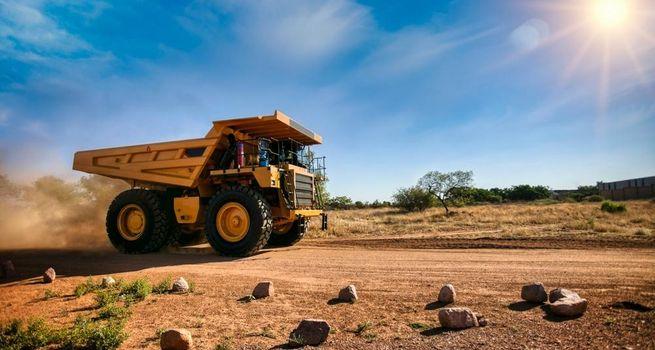
Freehill Mining Ltd (ASX:FHS) is unusual among sub-cent ASX explorers because it has an operating, revenue-generating business — magnetite iron ore production in Chile — rather than purely pre-revenue exploration ground. Trading at A$0.001, it sits at the floor of ASX pricing, yet it is attempting an operational ramp-up that could change its financial profile. That makes the central question of this article concrete: what are the future prospects of this ASX penny stock, and what should investors watch next?
Below we review Freehill's market position, its Chilean operations, recent performance, the sector backdrop and the substantial risks that come with a sub-cent miner. None of this is advice; it is a factual, balanced overview.
Today's Share Price and Market Snapshot
Freehill Mining last traded at A$0.001 with no change on the day. Daily volume was modest at around 100,000 shares, with relative volume of roughly 0.04, indicating turnover well below its recent average. The company's market capitalisation is approximately A$6.1 million. Reported earnings-per-share growth has been negative year-on-year, consistent with a company whose recent results have weakened.
There is no meaningful price-to-earnings ratio at this stage, as the company has been operating at a loss. Trailing earnings per share are effectively nil at this price. The snapshot is that of an illiquid micro-cap with an operating business that has yet to translate into sustained profitability, where the minimum tick equals a 100% percentage move.
Company Overview
Freehill Mining is a mining and exploration company headquartered in Melbourne, with its operating focus on iron ore (magnetite), copper and gold in Chile. Its principal asset is described as the Yerbas Buenas and Arenas concession blocks, covering approximately 1,250 hectares north of the Coquimbo–La Serena area in Chile. The company has been working to grow magnetite sales and improve profitability by building out its processing and delivery capacity.
This operating profile distinguishes Freehill from typical exploration micro-caps: it generates revenue from product sales and is pursuing an operational turnaround rather than a discovery. The challenge is that operating a mining and processing business at small scale, in an offshore jurisdiction, requires consistent execution on production, costs and customer demand to move from revenue to sustainable profit.
Latest News and Recent Updates
Recent updates have centred on operational progress and mixed financial results. The company reported that a second processing site near the La Serena/Coquimbo area had been commissioned, with customer deliveries underway — described as a pivotal step in its strategy to lift sales and profitability after a period of declining performance. On the product side, magnetite testing reported in mid-2026 on a 400-kilogram bulk sample crushed to 6mm achieved a 65.75% iron (Fe) grade, a figure the company highlighted as encouraging for product quality.
At the same time, first-half 2026 results pointed to revenue of around A$846,700, down about 32% from the prior corresponding period, with the net loss widening. This combination — operational expansion alongside weaker recent revenue — captures the company's transitional position. Investors seeking the latest position should rely on Freehill's ASX announcements and investor materials, where production, sales, grade and financial details are formally disclosed.
Future Prospects
The future prospects of Freehill Mining appear linked to whether its expanded processing capacity can lift magnetite sales volumes and margins enough to reverse recent revenue declines and move the business toward sustainable profitability. The commissioning of a second processing site and the reported high iron grade on test material are operational positives that could support that goal. If sales ramp up and costs are controlled, the company's financial profile could improve from a low base.
The cautious counterpoint is that recent revenue has fallen and losses have widened, that small-scale offshore mining operations carry execution and market risk, and that magnetite product demand and pricing are outside the company's control. The company's prospects appear linked to a successful operational ramp-up that has not yet been demonstrated in the financial results, which keeps the stock speculative. Future performance will depend on converting capacity into consistent, profitable sales.
Key Growth Catalysts
The clearest catalysts are operational and financial. Watch for growth in magnetite sales volumes and revenue as the second processing site ramps up, and for any improvement in margins and a narrowing of losses. Confirmation of consistent product quality — such as the reported high iron grades being reflected in saleable product — could support pricing and demand. Securing or expanding customer offtake would also be significant.
Commodity exposure matters: iron ore and magnetite pricing influence the economics of the operation, while copper and gold provide longer-term optionality across the company's interests. For Freehill, however, the dominant near-term driver is operational execution rather than commodity prices alone. Investors may watch for revenue and margin trends that demonstrate the turnaround is taking hold.
Financial Position and Funding Risk
Freehill's financial position is a central consideration. Declining revenue and a widening loss, combined with the costs of expanding processing capacity, point to a business that may require funding to support its operations and growth. At a A$0.001 share price, any equity raising would be highly dilutive. The interaction between sales growth, operating costs and any external funding will determine the company's runway.
The key financial signals are the trajectory of revenue and losses, the cash position, and whether the company needs to raise capital to fund its operational ramp-up. Investors should verify the latest figures from Freehill's most recent half-year and quarterly reports, as the financial picture during an operational turnaround can change quickly and is decisive for a company of this size.
Sector Outlook
The iron ore sector is large and globally significant, but it is dominated by major producers, and magnetite — which typically requires more processing than direct-shipping hematite ore — depends on producing a high-quality concentrate to be competitive. Pricing for iron products is cyclical and influenced by global steel demand, particularly from major economies. Copper and gold, the company's other commodity interests, are tied to industrial, energy-transition and safe-haven demand respectively.
For a small magnetite producer like Freehill, the sector backdrop can support or pressure the economics of its operation, but the dominant driver is its own ability to produce and sell quality product at acceptable cost. The broader commodity narrative is mixed and cyclical, and a small operator is more exposed than diversified majors to swings in demand and price.
Share Price Performance and Trading Context
At A$0.001, Freehill trades at the ASX floor, where a single tick equals a 100% move. Below-average relative volume points to thin liquidity, which can make it hard to enter or exit a position without affecting the price, and spreads can be wide. The stock is prone to sharp moves on limited volume.
For traders, this volatility can be appealing; for investors, it is a meaningful risk. Thin liquidity makes it difficult to sell into weakness, and the quoted price may reflect only a handful of trades. Sentiment toward the name will likely track the progress of the operational ramp-up and the revenue and margin trends in coming reports.
Why This Penny Stock Is High Risk
Freehill Mining carries the full set of penny-stock risks, even as an operating business.
- Extreme price volatility: At A$0.001, single-tick moves are 100% swings, producing erratic price action.
- Liquidity risk: Below-average relative volume means it can be hard to trade without moving the price, with wide spreads.
- Operational and execution risk: Small-scale offshore mining and processing requires consistent execution.
- Revenue and earnings risk: Recent revenue has fallen and losses have widened.
- Funding and capital-raising risk: Funding the ramp-up may require further equity, likely at a discount.
- Dilution risk: Raising capital at a sub-cent price can require issuing very large share volumes.
- Commodity exposure: Iron, copper and gold prices are outside the company's control.
- Jurisdictional considerations: Operating in Chile introduces offshore regulatory and logistical factors.
- Milestone risk: The operational turnaround may not deliver sustained profitability.
What Investors Should Watch Next
The most useful signposts are operational and financial. Watch for growth in magnetite sales volumes and revenue as the second processing site ramps up, and for any narrowing of losses and improvement in margins. Watch for confirmation that product quality (iron grade) translates into saleable, competitively priced concentrate, and for any customer offtake arrangements. Watch the cash position and any capital raising and its terms. And watch the half-year and quarterly reports for the overall financial trajectory.
What is absent matters too. Continued revenue decline or widening losses, or a need to raise capital on poor terms, would reinforce the speculative nature of the stock.
Balanced Outlook
On balance, Freehill Mining offers something many sub-cent peers lack — an operating, revenue-generating business — but it is in the midst of a turnaround that the financial results have not yet confirmed. The opportunity is that expanded processing capacity and quality magnetite could lift sales and move the company toward profitability from a low base. The risk is that recent revenue declines and widening losses continue, forcing dilution without a clear path to profit. The current evidence does not justify a confident view either way; the outcome rests on operational execution.
Conclusion
Freehill Mining (ASX:FHS) is a sub-cent ASX penny stock with magnetite iron ore operations in Chile and an operational turnaround in progress, including a newly commissioned second processing site. Its future performance will depend on lifting sales and margins toward sustainable profitability while funding the ramp-up without excessive dilution. Investors may watch revenue and margin trends, sales volumes, product quality, the cash position and any raisings as the key indicators. Until the financial results confirm the turnaround, the stock remains speculative, and any exposure should be sized accordingly.


 Nov 11, 2026





 Please wait processing your request...