
 CA
 NZ
 UK
 US
 IND

 AU

 Share
 X (Formerly Twitter)
 Whatsapp
 Facebook
 LinkedIn
 Telegram
 Email This Article
 Copy Link
 Summarize with AI
 Chat GPT
 Perplexity
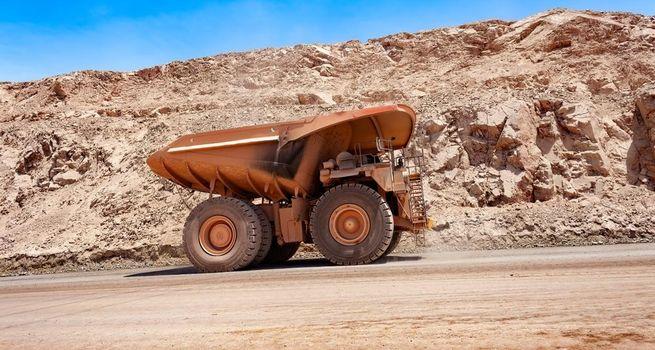
Rare earth elements (REEs) have moved from the fringes of commodity markets to the centre of global strategic competition. These seventeen metallic elements — comprising the fifteen lanthanides plus scandium and yttrium — are indispensable to the technologies shaping the modern world. From the permanent magnets in electric vehicle drivetrains and offshore wind turbines to the guidance systems in advanced military hardware, rare earths underpin industries worth trillions of dollars.
In 2026, the investment case for rare earth mining stocks in Australia has strengthened considerably. Three converging forces are reshaping the landscape: accelerating demand from the electric vehicle revolution, intensifying geopolitical tensions over supply chain sovereignty, and deliberate government policy to diversify away from Chinese dominance. For investors seeking exposure to critical minerals on the Australian Securities Exchange (ASX), understanding these dynamics is essential.
The Electric Vehicle Catalyst
The global electric vehicle market continues its rapid expansion, with annual production forecast to exceed 25 million units in 2026 and projections pointing to 60 million units by 2030. Each EV requires between one and three kilograms of rare earth permanent magnets, primarily composed of neodymium-iron-boron (NdFeB) alloys. The element neodymium, often paired with praseodymium (together known as NdPr), is the critical ingredient.
The EV transition is not limited to passenger vehicles. Commercial trucks, buses, motorcycles, e-bikes, and marine vessels are all increasingly adopting electric powertrains that rely on permanent magnet motors. The cumulative effect across all transport categories is a demand curve for NdPr that is steeper than many analysts initially projected. Autonomous driving technologies and advanced driver-assistance systems also incorporate rare earth components in sensors and actuators, adding another layer of demand growth.
Offshore and onshore wind energy is equally dependent on rare earths. A single direct-drive offshore wind turbine can contain over 600 kilograms of rare earth permanent magnets. As nations accelerate their renewable energy targets, the demand for magnetic rare earths is on a structural uptrend that shows no sign of abating. The shift toward larger-capacity turbines in deeper offshore environments further increases per-unit rare earth consumption, as these systems favour direct-drive generators over geared alternatives.
Geopolitics and the China Factor
China currently accounts for roughly 65 per cent of global rare earth mining, 85 per cent of processing and separation capacity, and an estimated 90 per cent of permanent magnet manufacturing. For heavy rare earths such as dysprosium and terbium, Chinese control of separation capacity approaches 99 per cent. This concentration of supply creates significant vulnerabilities for Western economies.
In recent years, China has demonstrated a willingness to weaponise its rare earth dominance. Export restrictions imposed on gallium, germanium, and rare earth processing technologies have sent a clear signal to the rest of the world: dependence on Chinese supply chains carries real strategic risk. Trade tensions between the United States and China in 2025 and 2026 have further underscored the urgency of developing alternative supply sources. The imposition of export licencing requirements on rare earth separation and magnet manufacturing technologies in late 2024 marked a significant escalation, effectively restricting the transfer of know-how that non-Chinese countries need to build their own processing capabilities.
The implications for Western industrial policy are profound. Without access to Chinese processing expertise, nations attempting to build domestic rare earth supply chains must develop proprietary technologies or license them from the small number of non-Chinese firms with the relevant capabilities. This technological gap adds years and billions of dollars to the cost of achieving genuine supply chain independence, and it explains why projects like Iluka’s Eneabba refinery and Lynas’s Kalgoorlie plant are viewed as strategically critical assets that merit extraordinary government support.
Western governments have responded with a wave of policy initiatives. The United States, European Union, Japan, South Korea, and Australia have all launched critical minerals strategies with significant funding commitments. Supply chain diversification is no longer aspirational — it is an active priority with billions of dollars in public capital deployed. The US Department of Defense alone has allocated hundreds of millions in procurement contracts for non-Chinese rare earth oxides and magnets, while the European Union’s Critical Raw Materials Act mandates that at least 10 per cent of strategic mineral consumption be sourced from within Europe or allied nations by 2030.
Australia’s Strategic Position
Australia holds the world’s sixth-largest rare earth reserves and is home to the largest integrated rare earth producer outside China: Lynas Rare Earths. With established mining expertise, a stable regulatory environment, robust capital markets, and strong diplomatic ties to both the United States and Japan, Australia is uniquely positioned to become a cornerstone of the non-Chinese rare earth supply chain. The ASX itself is a key enabler, providing listed rare earth companies with access to a deep pool of institutional and retail capital.
The Australian Government has backed this ambition with substantial funding. The Critical Minerals Strategic Reserve, announced with a $1.2 billion allocation in the 2025–26 federal budget, prioritises gallium, antimony, and rare earth elements. A $1.65 billion non-recourse loan to Iluka Resources for its Eneabba refinery and significant commitments to Arafura’s Nolans project through the National Reconstruction Fund demonstrate a whole-of-government commitment to building domestic processing capability.
For investors evaluating ASX rare earth stocks in 2026, this confluence of demand growth, geopolitical urgency, and government support creates a compelling thematic backdrop. However, the sector also carries meaningful risks — long development timelines, capital intensity, commodity price volatility, and the ever-present shadow of Chinese market influence.
This article provides a detailed analysis of five ASX-listed rare earth companies at different stages of development. We examine their projects, financial positions, growth catalysts, and risk profiles to help investors make informed decisions in this rapidly evolving sector.
Key Terms for Investors
Before diving into the individual stock analyses, it is helpful to define several key terms that appear frequently in rare earth investment discussions.
- NdPr (Neodymium-Praseodymium): A combined oxide of neodymium and praseodymium, which together form the primary magnetic rare earth commodity. NdPr is the critical input for NdFeB permanent magnets and is typically the highest-value product for rare earth producers.
- REO (Rare Earth Oxide): The separated oxide form of individual rare earth elements. REO is the standard unit of measurement for rare earth production, typically expressed in tonnes per annum.
- TREO (Total Rare Earth Oxide): The aggregate concentration of all rare earth oxides within a mineral deposit, expressed as a percentage of the host rock. Higher TREO grades generally indicate more economic deposits.
- NdFeB Magnet: A neodymium-iron-boron permanent magnet, the strongest type of commercial magnet available. These magnets are essential for EV motors, wind turbine generators, and countless industrial applications.
- Ionic Clay Deposit: A type of rare earth deposit where rare earth elements are adsorbed onto clay minerals. These deposits are significant because they typically host higher proportions of valuable magnetic rare earths and are amenable to simpler extraction processes.
- Monazite: A phosphate mineral that is a primary source of light rare earth elements. Monazite is commonly found as a by-product of mineral sands (heavy mineral) operations and is the feedstock for several Australian rare earth projects.
- FID (Final Investment Decision): The formal decision by a company’s board to commit capital to a major project, typically following completion of a definitive feasibility study and securing of project financing.
- DFS (Definitive Feasibility Study): A comprehensive engineering and economic study that determines whether a mining project is technically feasible and financially viable at a bankable level of confidence.
Global Rare Earth Demand and Supply Chain
Understanding Rare Earth Elements
Rare earth elements are a group of seventeen metallic elements: the fifteen lanthanides (lanthanum through lutetium), plus scandium and yttrium. Despite the name, most rare earths are not geologically rare. Rather, they are rarely found in economically exploitable concentrations, and the processing required to separate them is technically complex and environmentally challenging.
Key rare earth elements and their primary applications include:
- Neodymium (Nd) and Praseodymium (Pr): Used together as NdPr oxide in permanent magnets for EVs, wind turbines, and consumer electronics. NdPr represents the highest-value rare earth commodity.
- Dysprosium (Dy) and Terbium (Tb): Heavy rare earths added to NdFeB magnets to maintain performance at high temperatures. Critical for EV motors and military applications.
- Lanthanum (La) and Cerium (Ce): The most abundant rare earths, used in catalytic converters, petroleum refining, glass polishing, and metallurgy. Lower value per unit.
- Samarium (Sm): Used in samarium-cobalt magnets for high-temperature and military applications.
Demand Drivers
The global rare earth elements market is projected to grow from approximately 208,000 tonnes in 2026 to 273,000 tonnes by 2031, representing a compound annual growth rate of roughly 5.6 per cent. The primary demand drivers are:
- Electric Vehicles: EV production is the single largest growth driver for NdPr demand. As automakers transition to electric drivetrains, the requirement for permanent magnet motors is creating structural demand growth.
- Wind Energy: Offshore wind turbines, in particular direct-drive models, consume large quantities of NdPr and heavy rare earths. Global offshore wind capacity is expected to expand rapidly through 2030.
- Defence and Aerospace: Precision-guided munitions, jet engines, satellite systems, and communications equipment all rely on rare earth components. Defence demand is relatively price-inelastic.
- Consumer Electronics: Smartphones, laptops, headphones, and other devices use small quantities of rare earths, but the aggregate volume is significant.
Supply Chain Concentration
The rare earth supply chain is among the most concentrated in the global commodity complex. China’s dominance extends across every stage:
- Mining: China accounts for approximately 65 per cent of global mine production.
- Processing: Approximately 85 per cent of rare earth oxide separation occurs in China.
- Magnet Manufacturing: China produces an estimated 90 per cent of NdFeB permanent magnets.
- Heavy Rare Earth Separation: Chinese control approaches 98–99 per cent for dysprosium and terbium.
This concentration creates a structural bottleneck. Even if new mines are developed in Australia, Canada, or elsewhere, the lack of non-Chinese processing capacity means mined concentrates often still flow through China for separation and value-adding. This dynamic has been described as the “midstream gap” — the critical shortage of non-Chinese processing infrastructure that represents the most significant vulnerability in the Western rare earth supply chain.
The economics of rare earth separation are challenging. Each deposit has a unique blend of the seventeen rare earth elements, requiring customised processing circuits. Separation involves hundreds of stages of solvent extraction, generating significant volumes of chemical waste and radioactive by-products (thorium and uranium contained in monazite and other feedstocks). The capital costs of building a separation facility are measured in the hundreds of millions to billions of dollars, and the technical expertise required is concentrated in a small number of specialised engineering firms globally.
Supply Diversification Efforts
Governments and industry participants are investing heavily in building alternative supply chains. Key initiatives include the US Department of Defense’s rare earth stockpiling and procurement programmes, the European Critical Raw Materials Act, Japan’s long-running rare earth diversification strategy (including partnerships with Lynas), and Australia’s Critical Minerals Strategic Reserve. However, building processing capacity to rival China’s will take years and billions of dollars in investment. McKinsey projections suggest potential shortfalls of up to 30 per cent in magnetic rare earth supply by 2035 without substantial new capacity additions.
The diversification challenge is compounded by the economics of scale. Chinese rare earth processors benefit from decades of accumulated expertise, established infrastructure, lower labour costs, and less stringent environmental regulations. New entrants in Australia, Canada, or the United States must compete against this entrenched cost advantage while simultaneously meeting higher environmental and social standards. This creates a natural floor price below which non-Chinese projects become uneconomic, and it explains why government subsidies and strategic premiums are likely to remain a permanent feature of the Western rare earth supply chain.
Recycling and Substitution
Rare earth recycling is an emerging area of interest, though it currently contributes less than two per cent of global supply. End-of-life magnets from EVs, wind turbines, and electronics contain recoverable NdPr and heavy rare earths, but the technical and logistical challenges of collection, disassembly, and reprocessing remain significant. Over the 2026 to 2030 period, recycling is unlikely to materially alter the supply-demand balance, but it represents a longer-term opportunity that could complement primary production.
Substitution research is also advancing, with some EV manufacturers exploring ferrite-based or wound-rotor motors that reduce or eliminate rare earth requirements. However, these alternatives generally sacrifice performance, weight, or efficiency relative to NdFeB magnet motors. For high-performance applications — premium EVs, direct-drive wind turbines, military systems — rare earth magnets remain the technology of choice, and this is unlikely to change within the current investment horizon.
It is also worth noting that even if recycling and substitution technologies mature significantly, they are additive to, rather than replacements for, primary production. The total addressable market for rare earths is growing fast enough that recycled supply and reduced intensity per unit are unlikely to offset the absolute growth in demand. The net effect is that primary rare earth production from mines in Australia, Brazil, Canada, and elsewhere will remain essential for the foreseeable future.


 Nov 13, 2026





 Please wait processing your request...