
 CA
 NZ
 UK
 US
 IND

 AU

 Share
 X (Formerly Twitter)
 Whatsapp
 Facebook
 LinkedIn
 Telegram
 Email This Article
 Copy Link
 Summarize with AI
 Chat GPT
 Perplexity
Highlights
- Lynas Rare Earths shares declined 4.07% during the afternoon session on 19 May 2026.
- The stock became one of the top ASX losers amid weakness across the materials sector and ongoing profit-taking activity.
- The S&Amp;P/ASX 200 Materials index fell 1.08% on 19 May 2026.
- Lynas shares remain up 139.58% over the past year despite recent pullbacks.
- Q3 FY26 gross sales Revenue increased 115% year-on-year to AUD 265 million.
- NdPr production rose to 1,996 tonnes during Q3 FY26.
- Lynas ended the March quarter with AUD 1.07 billion in cash and short-term deposits.
Lynas Rare Earths Ltd (ASX:LYC) shares fell 4.07% to AUD 18.16 during the afternoon session on 19 May 2026, placing the stock among the day’s notable ASX losers. The decline extended the company’s recent weakness, with the stock down 8.19% over the past five trading sessions and 10.94% over the last month.
During the session, Lynas traded between an intraday high of AUD 18.42 and a low of AUD 17.89. The stock remains below its 52-week high of AUD 22.37, although it continues to hold substantial gains of 139.58% over the past year.
The recent pullback appears linked to broader weakness across the materials sector, alongside profit-taking activity after the stock’s substantial rally over the past 12 months. On 19 May 2026, the S&P/ASX 200 Materials Index declined 1.08%, reflecting softer sentiment across Commodity-linked names.
While no company-specific announcement was released today, investors continue assessing Lynas Rare Earths’ March quarter operational update announced on 21 April 2026, which highlighted higher production volumes, increased revenue and ongoing expansion across the company’s rare earth Supply chain operations.
Broader Rare Earth Sector Remains in Focus
Rare earth companies have remained closely watched over the past year due to increasing global Demand for magnet materials used in electric vehicles, defence applications, renewable energy systems and advanced electronics.
At the same time, supply chain Diversification efforts outside China have continued shaping investor sentiment across the sector. Lynas remains one of the few commercial producers of separated rare earth materials outside China, positioning the company within broader strategic supply chain discussions involving governments and industrial customers.
However, after the sharp gains recorded across several rare earth stocks over the past year, recent trading activity suggests investors may be locking in profits amid broader market Volatility and softer commodity sentiment in the materials sector.
Despite the recent decline, market attention has continued to centre on Lynas’ production growth initiatives, international supply agreements and ongoing ramp-up activities across its processing operations.
About Lynas Rare Earths
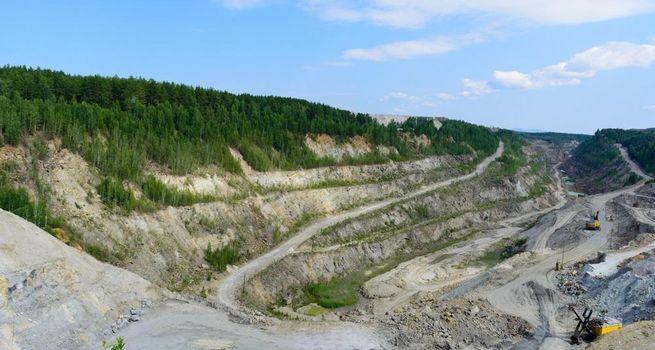
Lynas Rare Earths is an Australian rare earth producer with operations spanning Mining, processing and refining activities. The company’s Mt Weld rare earth mine in Western Australia is considered one of the higher-grade rare earth deposits globally.
Lynas also operates Downstream processing facilities in Malaysia and continues expanding its heavy rare earth and magnet material capabilities through projects in Malaysia, the United States and other international partnerships.
The company has increasingly focused on building an integrated supply chain outside China, supported by partnerships with governments and industrial groups seeking alternative rare earth supply sources.
Quarterly Revenue Climbs to Highest Level Since FY22
In its Quarterly Report for the period ended 31 March 2026, Lynas reported gross sales revenue of AUD 265 million, representing a 115% increase compared with Q3 FY25.
The result marked the company’s highest quarterly revenue outcome since Q4 FY22 and reflected higher sales volumes alongside improved pricing for key rare earth products.
Sales receipts for the March quarter totalled AUD 234 million, while average selling prices across all rare earth products were AUD 84.60 per kilogram.
The company noted that the average NdPr selling price increased 25% compared with the previous quarter. According to Lynas, the pricing improvement reflected both Market Index pricing movements and a growing proportion of sales priced independently from broader market benchmarks.
Management also highlighted product mix optimisation initiatives, including bundling higher-value materials such as Dysprosium, Terbium and newly introduced Samarium oxide products.
Production Expansion Continues Across Operations
Total rare earth oxide production during Q3 FY26 reached 3,233 tonnes, compared with 2,382 tonnes in Q2 FY26 and 1,911 tonnes in Q3 FY25.
NdPr production increased to 1,996 tonnes during the quarter, up from 1,404 tonnes in the previous quarter.
The company also produced eight tonnes of Dysprosium and Terbium during the period.
One of the operational milestones during the quarter was the first production of Samarium oxide in March 2026, ahead of the company’s earlier target timeline.
Lynas stated that Samarium oxide is used in high-performance magnets for electronics, aerospace, catalyst and medical applications, further broadening the company’s rare earth product offering.
At the Mt Weld operation, the company continued ramping up expansion activities and focused on improving recovery rates. Lynas also confirmed that its new water recycling Facility commenced production during the quarter.
Meanwhile, Kalgoorlie operations continued ramping up process improvements associated with precipitation and impurity removal systems.
Long-Term Supply Agreements Support Strategy
A significant focus during the quarter remained on Lynas’ strategic supply partnerships and long-term market positioning.
In March 2026, Lynas and Japan Australia Rare Earths B.V. (JARE) announced an updated 12-year supply agreement.
The agreement includes firm offtake arrangements for 5,000 tonnes per annum of NdPr with a floor price of US$110/kg. Lynas may also make available up to 7,200 tonnes per annum of NdPr to Japanese industry through 2038, subject to commercial conditions.
The arrangement also covers heavy rare earth oxides, including commitments linked to Dysprosium and Terbium supply.
Lynas additionally signed a letter of intent with the U.S. Government involving approximately US$96 million allocated toward purchasing light and heavy rare earth products from the company over a four-year period.
The framework aims to support the U.S. industrial and defence supply chain while further reinforcing Lynas’ role in diversified rare earth supply networks.
Alongside these agreements, Lynas signed a framework agreement with LS Eco Energy in Vietnam linked to future rare earth metal processing activities.
Management stated that these initiatives align with the company’s broader “Towards 2030” growth strategy focused on expanding supply chain capabilities outside China.
Licence Renewal Adds Longer-Term Visibility
During the quarter, Lynas also secured renewal of its Lynas Malaysia operating licence for a 10-year period commencing 3 March 2026.
The longer-term licence duration represented an extension from previous three-year licence terms and may provide greater operational certainty for the company and its customers.
The licence includes conditions relating to residue management, recycling activities and research associated with Thorium extraction and waste handling initiatives.
Cash Position Remains Elevated
Lynas ended the March quarter with AUD 1.07 billion in cash and short-term deposits, compared with AUD 1.03 billion at the end of Q2 FY26.
The company generated AUD 234 million in customer receipts during the quarter while continuing to invest in growth projects, exploration and development activities.
Cash payments associated with Capital Expenditure, exploration and development totalled AUD 32.6 million during Q3 FY26, lower than the AUD 45.2 million reported in the prior quarter.
Management noted that Investment activity remains focused on expansion projects and downstream processing initiatives.
Operational Efficiency and Renewable Energy Initiatives Continue
Lynas also highlighted progress associated with renewable energy infrastructure at Mt Weld.
Following commissioning of the 65MW hybrid renewable power station during the first half of FY26, the company reported renewable electricity penetration averaging 95.7% during the March quarter.
Compared with Q3 FY25, Lynas stated the new system reduced diesel fuel usage by more than 870,000 litres.
The company noted that it continues monitoring global supply chain conditions and fuel market volatility, particularly given ongoing geopolitical developments.
What Investors May Be Watching
The recent share price decline suggests investors are balancing Lynas’ favourable operational growth and strategic positioning against broader market weakness and recent gains in the stock.
Although quarterly revenue, NdPr production and cash balances improved, market sentiment toward commodity-linked equities has softened in recent sessions, particularly within the ASX materials sector.
At the same time, profit-taking activity following Lynas’ substantial one-year rally may also be contributing to recent volatility.
Investors are likely continuing to monitor rare earth pricing trends, production ramp-up progress, downstream expansion initiatives and the company’s evolving role in non-China rare earth supply chains.


 Nov 13, 2026





 Please wait processing your request...