
 CA
 NZ
 UK
 US
 IND

 AU

 Share
 X (Formerly Twitter)
 Whatsapp
 Facebook
 LinkedIn
 Telegram
 Email This Article
 Copy Link
 Summarize with AI
 Chat GPT
 Perplexity
Highlights
- GGP surged 7.98% to A$12.245 on April 1, 2026, reaching a market capitalisation of A$7.63 billion, as investors responded to a half-year report showing revenue from ordinary activities rising an extraordinary 5,797% to A$977.3 million for the period ended December 31, 2025.
- Net profit attributable to members for H1 FY2026 reached A$342.9 million — up 876% from A$35.1 million in the prior corresponding period — while net tangible assets per share grew 24% to A$2.47, reflecting the rapid accumulation of intrinsic asset value.
- Greatland Resources processed 9.19 million tonnes of ore through its Telfer operation during the period, achieving gold production of 167,163 ounces, while simultaneously progressing a A$177.0 million growth capital programme encompassing Telfer expansion, the Havieron Feasibility Study, and broader resource development.
When a company reports revenue growth of 5,797% in a single half-year reporting period, it demands explanation. Greatland Resources Limited, a company listed on the ASX under the ticker GGP with a market capitalisation that reached A$7.63 billion on April 1, 2026, delivered precisely this kind of extraordinary headline number in its half-year report for the period ended December 31, 2025. Shares in GGP climbed 7.98% to A$12.245 on the day — making it one of the top three performers across the entire ASX 200, in a session that was already strong for the broader market and exceptionally so for the metals and mining sector.
The dramatic revenue growth figure — from A$16.6 million in the prior corresponding period to A$977.3 million — reflects the nature of Greatland's operational evolution. The company, which holds the Telfer gold-copper mine in Western Australia following its acquisition from Newcrest, was in an earlier stage of ramping up production and establishing its revenue base in the comparable period of FY2025. By H1 FY2026, Telfer was producing and selling gold and copper at industrial scale, with the processing plant operating at a level that makes these comparative figures look extraordinary even though the underlying business has been operational for decades in its prior ownership structure.
For investors watching the ASX mining sector, Greatland Resources represents an unusual case study: a company that inherited a significant, established producing asset and is now demonstrating what that asset can generate when it is backed by a management team focused on operational efficiency, grade control improvement, fleet renewal, and systematic exploration. The H1 FY2026 results, and the share market's reaction to them on April 1, 2026, suggest the market is beginning to fully price in this operational capability.
Telfer: The Engine Room of a Rapid Ascent
The Telfer gold-copper operation in Western Australia's Pilbara region is the primary producing asset driving Greatland's financial results. During the six months ended December 31, 2025, Telfer processed 9.19 million tonnes of ore at an average head grade of 0.61 grams per tonne gold and 0.09% copper. Gold recovery rates of approximately 88.5% and copper recovery rates of approximately 80.0% are described as maintaining good performance, contributing to gold production of 167,163 ounces for the half.
Open-pit ore for the period was sourced from multiple areas simultaneously: Stage 2, Stage 7, and Stage 8, totalling 4.15 million tonnes at 0.60 grams per tonne gold and 0.07% copper. Dump leach ore of 0.69 million tonnes provided an additional contribution. Total material mined was 12.49 million tonnes, including approximately 7.65 million tonnes of waste — a 34% increase relative to the previous six-month period. This increase was driven by deliberate improvements to open-pit productivity in Stage 2 and Stage 8, and the opening of larger working areas in Stage 7.
The Stage 7 cutback is a particularly important development for understanding Telfer's future production trajectory. Stage 7 is expected to provide baseload feed from FY2027, and significant stripping work is currently underway to expose the ore. During the half, 7.35 million tonnes of waste were mined in Stage 7, bringing cumulative waste mined in that stage to 10.7 million tonnes. The overall Stage 7 design strip ratio is approximately 1.1 — meaning that once development stripping is complete, the operation will transition to a predominantly ore-mining regime, materially improving the economics of open-pit production at this stage.
Underground ore production at the Telfer Main Dome Underground (MDU) also contributed meaningfully during the period. Production was predominantly from the A-reef, Rey, and Eastern Stockwork Corridor (ESC) areas, totalling 0.53 million tonnes at 1.75 grams per tonne gold and 0.60% copper — grades that are substantially higher than the open-pit average and that reflect the typically richer grade profile of underground operations at Telfer. The second development drive from the MDU to the West Dome Underground (WDU) project progressed 740 metres during the period and was 68% complete at December 31, 2025.
Grade Control Improvements: A Foundation for Future Performance
One of the more technically significant operational developments at Telfer during H1 FY2026 was the substantial improvement in grade control systems within the West Dome open pit. Reverse circulation (RC) grade control drilling has been fully incorporated into the sampling programme, replacing the previous approach of relying predominantly on blast hole sampling. In the Stage 7 area specifically, this represents a transition from minimal RC coverage to majority RC data across mined blocks.
This may appear to be a technical detail, but its implications for future operational performance are meaningful. Grade control is the discipline that determines how accurately ore and waste are classified during mining — an activity that directly affects both the quantity of ore that reaches the processing plant and the grade of that ore. More precise grade control reduces ore loss and dilution, supporting better processing plant feed grades and, in turn, better recovery and production outcomes. The improvement in grade control methodology at Telfer is expected to deliver tangible benefits to the consistency and quality of production data in coming periods.
The company also progressed improvements to stockpile management to reduce short-term grade variability. A site reconciliation review initiated during the period identified multiple opportunities to improve management practices, with implementation underway. At December 31, 2025, run-of-mine ore stockpiles were estimated at 2.7 million tonnes at an average grade of 0.66 grams per tonne gold and 0.11% copper. Low-grade stockpiles of 20.8 million tonnes at 0.33 grams per tonne gold are earmarked for incorporation into the mine plan from FY2027, with a targeted trial campaign in the second half of FY2026 to assess grade and metallurgical performance.
The Havieron Project: Feasibility in Progress
While Telfer commands attention as the current production engine, the Havieron copper-gold project represents what many in the mining industry regard as one of the most significant undeveloped gold-copper deposits in Australia. Located approximately 45 kilometres east of Telfer and connected to Telfer's existing infrastructure network, Havieron has the potential to become a substantial future contributor to Greatland's production profile once developed.
During H1 FY2026, Greatland spent A$29.8 million on Havieron — allocated across Feasibility Study costs and early works. The Feasibility Study process is the critical pathway to making a final investment decision on Havieron's development, and the allocation of nearly A$30 million in a single half reflects the pace at which this process is being advanced. The proximity of Havieron to Telfer's existing infrastructure creates potential synergies that could reduce development capital requirements and accelerate the timeline from sanction to first production.
For investors, Havieron represents an optionality element within the Greatland investment case — a project that is not yet in production but that adds significant potential upside to the company's long-term resource and production base. The commitment to active Feasibility Study work, evidenced by the capital spending, signals management's intention to advance this option toward a decision point in a timeframe that could see Havieron development commence while Telfer continues to operate.
Fleet Renewal and Infrastructure Investment
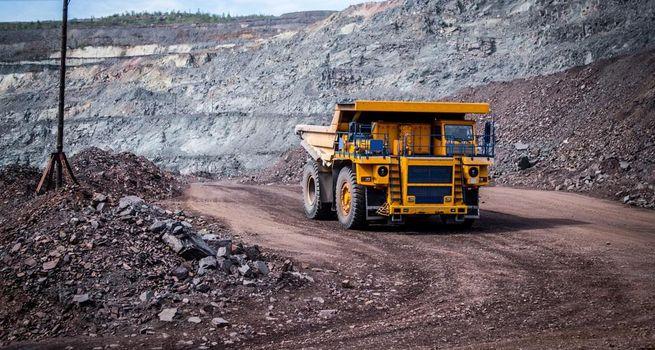
A key theme running through Greatland's operational commentary for H1 FY2026 is the company's commitment to capital reinvestment to support sustained productivity improvement. Equipment orders placed during the period include a Caterpillar 6060 Hydraulic Mining Shovel, two Komatsu WA1200 wheel loaders, and two Caterpillar 793 dump trucks — equipment that represents significant additions to the open-pit mining fleet. The first two of a planned twelve Caterpillar 793 truck rebuilds were also completed during the period.
This fleet renewal programme reflects the operational demands of a 34% increase in total material mined and a management philosophy of maintaining equipment in a condition that supports reliable, high-productivity operations. Mining equipment maintenance and replacement is a capital-intensive requirement in open-pit operations, and companies that defer fleet investment often find that equipment reliability issues constrain production in subsequent periods. Greatland's proactive approach to fleet renewal suggests management is managing the asset for long-term throughput optimisation rather than short-term cost minimisation.
On the processing side, the TSF8 Stage 3 lift was substantially completed during H1 FY2026, providing tailings capacity through the March 2027 quarter. TSF8 Stage 4 lift construction is planned to commence in the June 2026 quarter, ensuring that tailings capacity remains available through an extended production horizon. This infrastructure investment is a prerequisite for maintaining processing throughput and ensuring regulatory compliance with tailings storage requirements.
Growth Capital: A$177 Million Invested in the Future
In total, Greatland Resources spent A$177.0 million on growth capital during H1 FY2026 — a substantial investment programme for a company of its size and operational age. The allocation was divided across three areas: A$131.1 million at Telfer (spanning TSF8 Stage 3 construction, Stage 7 growth stripping, underground growth development at A-Reef, ESC and WDU, and new open-pit mining fleet equipment); A$29.8 million at Havieron for Feasibility Study costs and early works; and A$16.1 million on resource development activities.
This investment profile reflects a company that is simultaneously maintaining and expanding its current production base, advancing its most significant near-term development project, and investing in the resource base that will underpin future mine plans. The balance between these three priorities — operational sustenance, project development, and resource growth — is a characteristic of well-managed mining companies that are building for a production profile significantly larger than their current footprint.
Profitability and Asset Quality
The financial results that accompanied these operational developments were, by any measure, exceptional. Revenue from ordinary activities for H1 FY2026 was A$977.3 million, compared to A$16.6 million in the prior corresponding period. Net profit attributable to members was A$342.9 million — a 876% increase from A$35.1 million in H1 FY2025. Net tangible assets per share increased 24% to A$2.47, reflecting the growing intrinsic asset value of the business as production and profitability compound.
While the scale of these percentage improvements reflects the early-stage revenue base of the prior period, the absolute numbers are meaningful. A$342.9 million in net profit across a single six-month period represents a run-rate annual profit approaching A$700 million, at a market capitalisation of A$7.63 billion. The quality of this profitability, driven by a major operating asset generating strong gold and copper revenues, provides a financial foundation that supports both the ongoing growth capital programme and future distributions to shareholders.
Conclusion
Greatland Resources Limited's 7.98% share price gain on April 1, 2026, to a market capitalisation of A$7.63 billion, was a statement about the scale and credibility of the company's operational transformation. The H1 FY2026 financial results — anchored by A$977.3 million in revenue, A$342.9 million in net profit, and A$177.0 million in growth capital investment — demonstrated that Telfer under Greatland's stewardship is operating as a major, profitable Australian gold-copper producer. With Stage 7 advancing toward what management expects will be a baseload production role from FY2027, the Havieron Feasibility Study progressing at pace, meaningful improvements in grade control and stockpile management embedded, and a fleet renewal programme building the operational foundation for sustained high throughput, Greatland enters the second half of FY2026 with significant momentum. The market's response on April 1 reflected a growing consensus that the Greatland Resources story is one of the more compelling in the Australian mining sector.


 Nov 13, 2026





 Please wait processing your request...