
 CA
 NZ
 UK
 US
 IND

 AU

 Share
 X (Formerly Twitter)
 Whatsapp
 Facebook
 LinkedIn
 Telegram
 Email This Article
 Copy Link
 Summarize with AI
 Chat GPT
 Perplexity
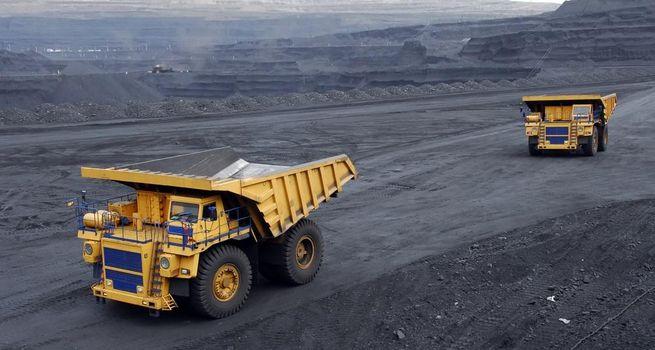
Vanadium is a hard, silvery-grey transition metal with the chemical symbol V and atomic number 23. It is not mined as a standalone ore in most operations worldwide; instead, it is typically recovered as a by-product or co-product from iron ore processing, steel slag, spent catalysts, or from dedicated vanadium-titanium-magnetite deposits. Vanadium is sold commercially in two primary forms: vanadium pentoxide (V2O5) flake and ferrovanadium (FeV), each serving different end markets within the steel, aerospace, chemical, and emerging energy-storage industries.
Vanadium's most important industrial property is its ability to dramatically strengthen steel. When added in small quantities to steel alloys, vanadium increases tensile strength, hardness, wear resistance, and heat tolerance. This makes it indispensable in the production of high-strength low-alloy (HSLA) steels used in construction rebar, automotive components, pipelines, bridges, and structural applications. Approximately 85 to 90 per cent of all vanadium produced globally is consumed by the steel industry, making it one of the most steel-dependent minor metals in the world.
Beyond steel, vanadium is increasingly recognised for its role in energy storage. Vanadium redox flow batteries (VRFBs) use vanadium electrolyte solutions to store and release electricity at grid scale, offering advantages over lithium-ion batteries for long-duration stationary storage. This dual demand profile, anchored in traditional steelmaking but expanding into clean-energy applications, is a central reason why investors, analysts, and commodity-market participants follow vanadium closely.
Why Vanadium Matters Industrially
Vanadium sits at the intersection of two powerful global themes: infrastructure development and the energy transition. On the infrastructure side, mandatory rebar standards in China (the world's largest steel producer and consumer) require minimum vanadium content in construction-grade steel. China's updated rebar standard (GB/T 1499.2-2024), which became mandatory in September 2024, requires vanadium nitride additions of 0.03 to 0.05 per cent per tonne of rebar, a measure that is expected to materially increase vanadium consumption over time.
On the energy side, the push toward renewable energy and grid-scale storage has created a second demand pillar for vanadium. Vanadium redox flow batteries are non-flammable, have extremely long cycle lives with no capacity degradation, and can decouple power output from energy storage capacity, making them particularly well-suited for large-scale solar and wind integration. While still a relatively small share of total vanadium demand (estimated at roughly 3 to 5 per cent of global consumption as of 2024), VRFBs are the fastest-growing segment of the vanadium market, with deployment projected to increase substantially through the late 2020s and into the 2030s.
Vanadium Market Overview
Vanadium's Role in Steel Production
Steel production is and has always been the primary demand driver for vanadium. When vanadium is added to steel as an alloying element, even in very small concentrations (typically 0.02 to 0.15 per cent), it significantly enhances the metal's strength-to-weight ratio, toughness, and resistance to wear, fatigue, and high temperatures. This makes vanadium-alloyed steels particularly valuable in applications where structural integrity is critical, including construction rebar, rail, automotive frames, pipelines, tools, and heavy machinery.
The steel industry consumes roughly 85 to 90 per cent of all vanadium produced globally. Within steelmaking, high-strength low-alloy (HSLA) steels are the single largest end use. HSLA steels are favoured in construction because they achieve equivalent or greater strength than conventional steel with less material, reducing both weight and cost. In seismically active regions, vanadium-micro-alloyed rebar is increasingly specified for its superior ductility and energy absorption.
China's role in this market cannot be overstated. As the world's largest steel producer (accounting for more than half of global crude steel output), China is also the largest consumer and producer of vanadium. Chinese rebar standards have been progressively tightened to mandate higher vanadium content, most recently through the GB/T 1499.2-2024 standard that took effect in September 2024. This standard is estimated to increase Chinese vanadium consumption in rebar production by approximately 15 per cent, a substantial uplift in the context of a relatively small and concentrated global market.
Vanadium's Role in Energy Storage and Vanadium Redox Flow Batteries
Vanadium redox flow batteries (VRFBs) represent the most significant potential growth area for vanadium demand outside of steel. VRFBs store energy in liquid vanadium electrolyte solutions held in external tanks, with electricity generated by pumping the electrolyte through an electrochemical cell stack. The unique chemistry of vanadium, which exists in four stable oxidation states, allows the same element to serve as both the positive and negative electrolyte, virtually eliminating cross-contamination and enabling a theoretical cycle life of 20,000 or more charge-discharge cycles with no capacity degradation.
The key advantages of VRFBs over lithium-ion batteries for grid-scale storage include: the ability to independently scale power (determined by the size of the cell stack) and energy (determined by the volume of electrolyte in the tanks); extremely long operational lifetimes; non-flammability; the ability to remain fully discharged for extended periods without damage; and the fact that vanadium electrolyte does not degrade and can be recycled or re-used indefinitely. These characteristics make VRFBs particularly well-suited for long-duration energy storage applications of four hours or more, such as buffering the intermittent output of wind and solar farms.
As of mid-2024, more than 300 megawatt-hours of VRFB capacity had been deployed globally, with deployment projected to accelerate significantly through the second half of the 2020s. Industry forecasts suggest that VRFB-related vanadium consumption could grow from approximately 3 per cent of total demand in 2021 to as much as 17 per cent by 2033, driven by government mandates for grid-scale storage, renewable-energy targets, and continued cost reductions in VRFB manufacturing.
Major VRFB deployments are being supported by companies such as Sumitomo Electric Industries (Japan), which has been a pioneer in VRFB commercialisation and has partnered with ASX-listed Tivan Ltd (TVN) through binding joint-venture agreements for vanadium supply. The emerging VRFB market is a central component of the investment thesis for several ASX vanadium companies, particularly those positioning themselves to supply battery-grade vanadium pentoxide or vanadium electrolyte.
It is important to note that VRFBs and lithium-ion batteries are not direct substitutes; they address different segments of the energy-storage market. Lithium-ion batteries are dominant in electric vehicles, consumer electronics, and short-duration stationary storage (typically one to two hours). VRFBs are most competitive for stationary, long-duration applications of four hours or more, where their superior cycle life, non-flammability, and absence of capacity degradation over time provide meaningful advantages. The growth of the VRFB market therefore depends primarily on the pace of renewable energy deployment (which creates demand for long-duration storage to manage intermittency), the relative cost trajectory of VRFBs versus competing technologies, and government policy support for grid-scale storage.
Several governments have enacted or are considering policies that favour long-duration energy storage, including capacity markets, storage mandates, and dedicated funding programs. In Australia, state governments have expressed interest in VRFB technology for grid applications, as evidenced by Western Australia's engagement with AVL on the Kalgoorlie VBESS project. In Asia, China and Japan have been among the most active markets for VRFB deployment. In Europe, the European Union's critical raw materials strategy and energy security concerns are driving interest in European-sourced vanadium for battery applications, which is relevant to NMT's Finland-based VRP1 project.
Global Production Concentration and Supply-Chain Issues
Global vanadium production is among the most concentrated of any critical mineral. Four countries account for approximately 97 per cent of total output. In 2024, estimated production volumes were as follows: China produced approximately 70,000 tonnes (roughly 67 per cent of global supply), Russia produced approximately 21,000 tonnes (20 per cent), South Africa produced approximately 8,000 tonnes (8 per cent), and Brazil produced approximately 5,000 tonnes (5 per cent). The remaining global output was minimal.
This level of concentration creates significant supply-chain risk. China's dominance in both vanadium mining and processing means that policy decisions by Beijing, such as export restrictions, production curtailments, or changes to domestic rebar standards, can have outsized impacts on global pricing and availability. Russia's contribution is subject to geopolitical risk, including the ongoing effects of sanctions and trade restrictions related to the Ukraine conflict. South African output has been declining in recent years due to electricity costs, load-shedding, and infrastructure challenges. Brazil's production has also been in gradual decline.
For Western economies seeking to reduce reliance on Chinese and Russian supply chains, developing new vanadium sources in politically stable, resource-rich jurisdictions such as Australia is a strategic priority. This geopolitical backdrop is one of the reasons why Australian vanadium projects have attracted interest from government-backed critical minerals programs and international strategic partners. The United States, European Union, Japan, and South Korea have all identified vanadium as a critical or strategic mineral, and bilateral supply-chain agreements between Australia and these economies provide a potential framework for supporting the development of Australian vanadium projects.
However, the strategic imperative to diversify vanadium supply does not automatically translate into commercially viable projects. The capital cost, processing complexity, and long development timelines associated with new vanadium mines mean that even strategically important projects may struggle to attract financing if vanadium prices are unfavourable or if competing investment opportunities in other commodity sectors offer better risk-adjusted returns.
Why Vanadium Pricing Is Less Transparent Than Some Other Commodities
Unlike base metals such as copper, zinc, nickel, and aluminium, which trade on the London Metal Exchange with publicly visible prices updated throughout the trading day, vanadium does not have a major exchange-traded benchmark. Vanadium pentoxide (V2O5) and ferrovanadium (FeV) are traded over the counter through bilateral contracts between producers, traders, steelmakers, and end users. Prices are assessed and published by specialist agencies such as CRU Group, Asian Metal, and Fastmarkets (formerly Metal Bulletin), but these assessments are based on survey data, producer quotes, and reported transactions rather than a transparent auction or exchange mechanism.
This lack of price transparency has several consequences. It makes it more difficult for investors to track vanadium price movements in real time. It gives large producers and traders informational advantages over smaller market participants. It contributes to periodic price spikes and crashes, because the market lacks the liquidity and hedging tools available for exchange-traded commodities. And it complicates financial modelling for vanadium project developers, who must base their feasibility studies on price assumptions that may be less robust than those used for commodities with deep, liquid, exchange-traded markets.
As of mid-2025, vanadium pentoxide prices were in the range of approximately US$4.86 to US$5.44 per pound, having declined roughly 47 per cent from their February 2022 peak of around US$9.20 per pound. CRU Group has projected that vanadium prices may begin to recover by late 2026, driven by tightening supply, the ramp-up of VRFB-related demand, and the impact of mandatory Chinese rebar standards, but any recovery will depend on the broader macroeconomic environment and Chinese steel production trends.
Major Risks in the Vanadium Sector
Investors considering ASX vanadium companies should be aware of several structural and project-specific risks that pervade this sector.
Price opacity and volatility. As discussed above, the absence of a transparent exchange-traded market for vanadium means that pricing can be volatile and difficult to predict. Vanadium prices have historically exhibited greater volatility than many major commodities, and sharp price moves can rapidly alter the economics of development-stage projects.
Project funding and capital intensity. Developing a vanadium mine and associated processing infrastructure requires substantial upfront capital. Feasibility studies for ASX vanadium projects have estimated capital expenditures ranging from roughly US$200 million to well over US$500 million, depending on the scale and processing pathway. Securing financing for junior miners in a niche commodity market with opaque pricing is inherently challenging.
Metallurgy and processing complexity. Extracting vanadium from ore and converting it into marketable products (V2O5 flake, ferrovanadium, or battery-grade electrolyte) involves complex metallurgical processes. Different ore types require different processing routes, and achieving the purity levels required for VRFB applications adds further technical challenges. Metallurgical risk, the possibility that a processing pathway will not perform as expected at commercial scale, is a significant concern for many vanadium projects.
Permitting and environmental approvals. Vanadium projects, like all mining developments, are subject to extensive environmental assessment, community consultation, and government permitting processes. These processes can be lengthy, unpredictable, and subject to political and community opposition. Several ASX vanadium projects have experienced delays or cost increases as a result of permitting challenges.
Infrastructure and logistics. Many vanadium deposits are located in remote areas with limited existing infrastructure. The cost of developing roads, rail connections, water supply, power supply, and port access can add significantly to project capital expenditure and can delay development timelines.
Execution risk. The majority of ASX vanadium companies are pre-revenue, pre-production entities that have never built or operated a mine. The transition from feasibility study to construction to first production is fraught with execution risk, including the risk of cost overruns, construction delays, equipment failures, and workforce challenges. The mining industry's track record on megaproject delivery is mixed at best, and vanadium projects face additional complexity due to the specialised nature of vanadium processing.
Chinese dominance and geopolitical risk. China's control of roughly two-thirds of global vanadium production and an even larger share of processing capacity means that Chinese policy decisions can materially affect global supply, pricing, and the competitive landscape for new entrants. In recent years, China has signalled a willingness to use export controls and restrictions on critical minerals as a geopolitical tool, adding an additional layer of uncertainty to the global vanadium market. While diversification of supply away from China is a strategic objective for Western governments, achieving this diversification through new mine development is a multi-year, capital-intensive process with no guaranteed outcome.
Technology and substitution risk. While vanadium's role in steelmaking is well-established and unlikely to be displaced, the energy-storage market is more competitive. VRFBs face competition from lithium-ion batteries (which continue to decline in cost), as well as emerging long-duration storage technologies such as iron-air batteries, zinc-bromine batteries, compressed air energy storage, and gravity-based systems. If these competing technologies gain market share at the expense of VRFBs, the growth in VRFB-related vanadium demand may fall short of current projections.
Dilution risk. Most ASX vanadium companies are pre-revenue and rely on equity capital raisings to fund their operations. Repeated capital raisings dilute existing shareholders' ownership percentages. For companies with multi-year development timelines and significant capital requirements, the cumulative dilution over the path to production can be substantial. Investors should consider not only the current share price but also the potential for future dilution when evaluating these companies.


 Nov 13, 2026





 Please wait processing your request...