
 CA
 NZ
 UK
 US
 IND

 AU

 Share
 X (Formerly Twitter)
 Whatsapp
 Facebook
 LinkedIn
 Telegram
 Email This Article
 Copy Link
 Summarize with AI
 Chat GPT
 Perplexity
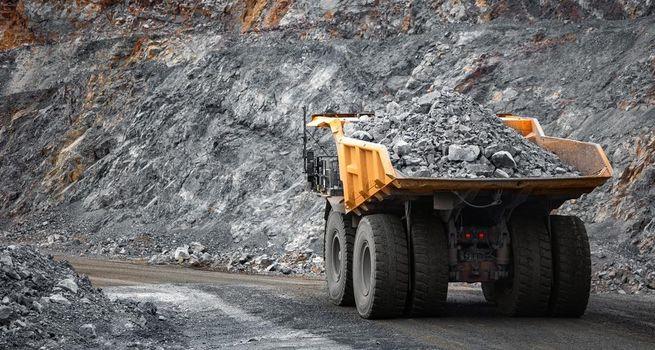
Potash is the commercial name for a group of minerals and chemicals that contain potassium, typically measured in terms of potassium oxide (K₂O) equivalence for consistency across the industry. The name itself derives from an early production method in which plant ashes were leached in pots to extract potassium salts—hence "pot ash."
In modern usage, potash refers primarily to two products traded in global commodity markets. The first is muriate of potash (MOP), which is the mineral sylvite or potassium chloride (KCl). MOP accounts for roughly 86% of global potash consumption and is the standard fertilizer-grade product used in broadacre agriculture worldwide. It is mined from underground deposits, primarily in Canada, Russia, and Belarus, or extracted from brine lakes and the Dead Sea.
The second major product is sulphate of potash (SOP), also known as potassium sulphate (K₂SO₄). SOP is considered a premium potash product because it is chloride-free and provides both potassium and sulphur to plants. This makes it preferred for chloride-sensitive crops such as fruits, vegetables, nuts, tobacco, and certain high-value horticultural products. SOP typically commands a price premium of 40–50% over MOP on a per-tonne basis.
A few other potash-derived products exist in niche applications, including potassium nitrate (NOP) and potassium magnesium sulphate (langbeinite), but MOP and SOP dominate commercial trade.
Understanding the distinction between MOP and SOP is essential for evaluating ASX potash companies. Most Australian potash projects target SOP production from brine resources in Western Australia's salt lake systems. This is a fundamentally different business from the conventional underground mining of MOP deposits in Canada or Europe. Brine-based SOP production involves pumping potassium-bearing saline groundwater into evaporation ponds, concentrating the salts through solar evaporation, and then processing the resulting crystals into fertilizer-grade SOP. The approach is capital-intensive but offers lower ongoing operating costs once the evaporation infrastructure is in place.
Types of Potash Deposits
Potash occurs in several geological settings, and the type of deposit determines the extraction method, product type, and cost structure.
Sedimentary Evaporite Deposits are the most common source of conventional MOP. These formed hundreds of millions of years ago when ancient seas evaporated, leaving behind thick layers of potassium-bearing salts (primarily sylvinite and carnallite) buried under layers of sedimentary rock. The world's largest evaporite deposits are found in Saskatchewan (Canada), the Perm region (Russia), Soligorsk (Belarus), and the South Harz region (Germany). Mining these deposits requires sinking deep shafts and extracting ore from underground workings, followed by surface processing to separate potassium chloride from sodium chloride and other impurities.
Brine Deposits occur where potassium-bearing salts have dissolved into groundwater in arid regions, creating subsurface brine aquifers beneath salt lakes (also called playas or salars). Western Australia hosts numerous such deposits, formed over millions of years as weathering of ancient rocks released potassium into groundwater systems that then accumulated in closed drainage basins. Brine deposits are the primary target for Australian SOP production, extracted through solar evaporation rather than conventional mining.
Dead Sea and Saline Lake Deposits represent a third category, where potassium-rich waters in terminal lakes are processed for potash. The Dead Sea operations of ICL (Israel) and Arab Potash Company (Jordan) fall into this category, as does the Great Salt Lake operation of Compass Minerals in the United States.
Understanding these deposit types is important for investors because each carries different capital requirements, operating cost structures, and technical risks. Australian brine deposits are geologically attractive but have yet to prove themselves commercially at scale.
The Potash Value Chain
The journey from raw potash mineral to applied fertilizer involves several steps. First, the potassium-bearing ore or brine must be extracted from the ground—either through underground mining, open-pit mining, solution mining, or brine pumping and solar evaporation. Second, the raw material must be processed to remove impurities and concentrate the potassium content to fertilizer-grade specifications. For MOP, this typically involves crushing, screening, flotation, and crystallisation. For SOP from brines, the process involves staged evaporation, selective crystallisation, and purification.
Third, the finished product must be stored, transported, and delivered to market. Potash is a bulk commodity, and logistics costs—particularly shipping—represent a significant component of the delivered cost to farmers. Companies with direct port access or proximity to major shipping lanes have a structural advantage. BCI Minerals' Mardie project, located on the Pilbara coast with planned direct shipping facilities, exemplifies this advantage.
Fourth, the potash is distributed to end users through a complex network of fertilizer blenders, agricultural retailers, cooperatives, and direct sales. In mature markets like North America and Europe, this distribution infrastructure is well-established. In emerging markets, distribution may be more fragmented, creating both challenges and opportunities.
Why Potash Matters for Agriculture
Potassium plays several critical roles in plant biology. It regulates water and nutrient transport through cell membranes, activates enzymes essential for photosynthesis and protein synthesis, enhances root development, and improves a plant's ability to withstand drought, frost, and disease. Soils that are deficient in potassium produce lower yields, weaker crops, and reduced nutritional quality in harvested produce.
Global potash application rates vary significantly by region. Developed agricultural economies in North America, Europe, and parts of East Asia tend to have higher per-hectare potash usage, while large farming nations in South and Southeast Asia, Africa, and Latin America often apply less potash than agronomists recommend, creating a latent demand pool as these regions intensify their agriculture.
This structural underpinning is one of the core reasons investors find the potash sector appealing: demand is tied to food production rather than discretionary consumption, and the long-term trajectory of food demand is essentially guaranteed to rise as population grows.
Potash Market Dynamics: Pricing, Contracts, and Trade Flows
The global potash market operates through a combination of long-term contract sales and spot market transactions. The benchmark pricing mechanism for MOP has traditionally been set through annual or semi-annual contract negotiations between major producers and large importing nations—particularly China and India. These contract prices then serve as reference points for the broader market.
In recent years, the pricing mechanism has become more complex. The disruptions caused by Belarus sanctions, COVID-19, and the Russia-Ukraine conflict introduced unprecedented volatility into a market that had historically been relatively stable. MOP spot prices ranged from approximately USD 200 per tonne in 2020 to over USD 860 per tonne at the 2022 peak, before settling to around USD 295 in 2024 and recovering to approximately USD 347.50 in 2025. For 2026, analysts generally expect MOP prices to remain in the range of USD 340–420 per tonne, with supply conditions viewed as adequate and some upside bias.
SOP pricing follows a different pattern. Because SOP is a specialty product with more fragmented production, pricing is less centralised and more influenced by regional supply-demand balances, product quality, and contract terms between specific producers and buyers. SOP prices are typically benchmarked as a premium to MOP, with the premium varying based on supply availability, crop economics, and agronomic trends.
Trade flows in the potash market are heavily influenced by geography. The largest importers of potash are China, Brazil, India, the United States, and Southeast Asian nations. Canadian potash (primarily from Nutrien and Mosaic) flows to all major markets. Russian and Belarusian potash has historically supplied Europe, China, India, and Brazil, though sanctions and logistics disruptions have redirected much of the Belarusian output toward China. Israeli and Jordanian potash from Dead Sea operations primarily serves Asian and European markets.
For Australian potash producers, the geographic proximity to China, India, Japan, South Korea, and Southeast Asia is a significant advantage. These markets collectively represent a large and growing share of global potash demand, and the shorter shipping distances from Western Australia compared to Canada or Europe could translate into meaningful freight cost savings.


 Nov 13, 2026





 Please wait processing your request...