
 CA
 NZ
 UK
 US
 IND

 AU

 Share
 X (Formerly Twitter)
 Whatsapp
 Facebook
 LinkedIn
 Telegram
 Email This Article
 Copy Link
 Summarize with AI
 Chat GPT
 Perplexity
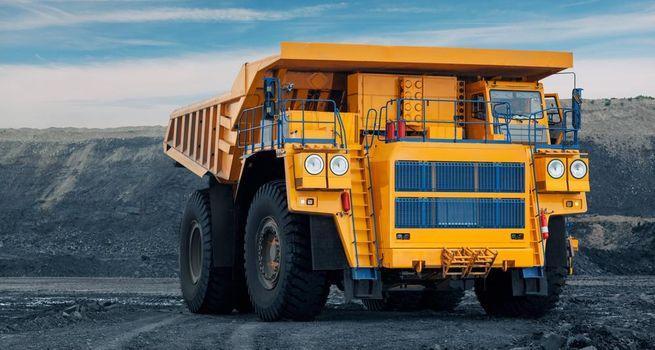
BCI Minerals (ASX:BCI) is the flagship potash and salt developer on the ASX. The company's 100%-owned Mardie Salt and Potash Project is located approximately 100 kilometres south of Karratha on the Pilbara coast of Western Australia. Mardie is primarily a salt project—designed to produce approximately 5.35 million tonnes per annum of high-purity salt—but it includes a significant SOP byproduct stream targeting around 140,000 tonnes per annum.
As of late 2025, the Mardie project was approximately 77% complete, with A$1.04 billion spent against a total budget of A$1.44 billion. The company is targeting first salt on ship by the December 2026 quarter, with SOP production ramping up thereafter. A scaled trial is underway to validate commercially viable SOP quantities, with pilot ponds commissioned and crystal formation progressing. BCI has estimated the SOP operation alone could deliver around A$99 million in EBITDA per year at full production.
With A$601 million in available funds against an estimated A$400 million in remaining construction costs, BCI appears well-positioned to reach production without requiring additional equity dilution. This makes it a relatively de-risked play compared to its earlier-stage peers.
BCI's primary revenue stream, once operational, will be salt production from the Mardie project. Salt is a bulk commodity with established global markets, and Mardie's coastal Pilbara location provides direct shipping access to Asian buyers. The secondary revenue stream will be SOP, which at 140,000 tonnes per annum represents a smaller but higher-value output. At recent SOP benchmark prices, this production could generate approximately A$99 million in annual EBITDA, according to the company's estimates.
BCI Minerals: The Exception
BCI Minerals stands apart from its ASX potash peers by virtue of its construction-stage project and substantial funding position. With A$601 million in available funds against approximately A$400 million in remaining construction costs, BCI has a credible path to production without further equity dilution. The company's Mardie project has committed debt facilities and offtake agreements that provide revenue visibility once production begins.
However, BCI is not yet generating revenue from potash or salt, so its financial performance still shows net losses reflecting construction-phase expenditure. Investors should model BCI's financial trajectory based on the Mardie project's expected production volumes, prices, and operating costs rather than historical financial statements.
Cash Positions
Cash is the lifeblood of pre-revenue resource companies. BCI Minerals' A$601 million in available funds (including debt facilities) is exceptional for the ASX potash sector and reflects the project's advanced stage and institutional investor backing. Most other potash companies hold cash in the single-digit millions at best, requiring periodic placements to continue operations.
Debt Levels
Most ASX potash companies carry minimal or zero debt, which sounds positive but reflects a less encouraging reality: lenders are generally unwilling to provide debt financing to exploration-stage companies without revenue visibility. The absence of debt simply means the companies have not yet reached a stage where debt becomes available or appropriate. BCI Minerals, with committed debt facilities as part of its Mardie project financing package, is the notable exception.
In summary, BCI Minerals Limited represents one of the most advanced and comparatively de-risked opportunities within the ASX potash sector, underpinned by the scale, funding visibility, and strategic positioning of its Mardie project. With construction well progressed, sufficient capital to reach production, and dual revenue streams from bulk salt and higher-margin SOP, the company is transitioning toward a critical inflection point as it approaches first production. However, as a pre-revenue developer, its near-term financial performance remains tied to execution milestones, cost control, and successful ramp-up. For investors, the focus should remain on delivery against timelines, operational performance post-commissioning, and prevailing commodity prices, all of which will ultimately determine whether Mardie translates its strong project fundamentals into sustained cash flow generation.


 Nov 13, 2026





 Please wait processing your request...