
 CA
 NZ
 UK
 US
 IND

 AU

 Share
 X (Formerly Twitter)
 Whatsapp
 Facebook
 LinkedIn
 Telegram
 Email This Article
 Copy Link
 Summarize with AI
 Chat GPT
 Perplexity
Highlights
- Share price declined 4.90% to AUD 7.57 on 17 March
- In FY25, the company reported record ROM coal production of 67 million tonnes, up 7% year-on-year
- Saleable coal production of 50.8 million tonnes, up 6%
- Revenue down 13% to $5.95 billion due to 17% lower realised coal prices
- Operating EBITDA of $1.437 billion with a 24% margin
- Cash operating costs decreased slightly to $92 per tonne
- Strong cash balance of $2.1 billion
- Fully franked final dividend of AUD 0.122 per share, 55% payout ratio
Shares of Yancoal Australia Ltd (ASX:YAL) dropped 4.90% on 17 March, closing at AUD 7.57. Ther is no price sensitive update that can drive the share performance. In February 2026, the company released FY25 financial and production results, reporting encouraging results.
The contrast between operational performance and declining share price illustrates the sensitivity of coal stocks to commodity price fluctuations, even when companies maintain disciplined cost structures and shareholder returns.
Share Price Reaction
Market participants appear to be factoring in the potential for continued pricing volatility in international coal markets. The reaction illustrates the high leverage of coal companies to commodity cycles: even with stable production and controlled costs, earnings and investor returns can fluctuate sharply with market pricing.
Operational Performance Remains Strong
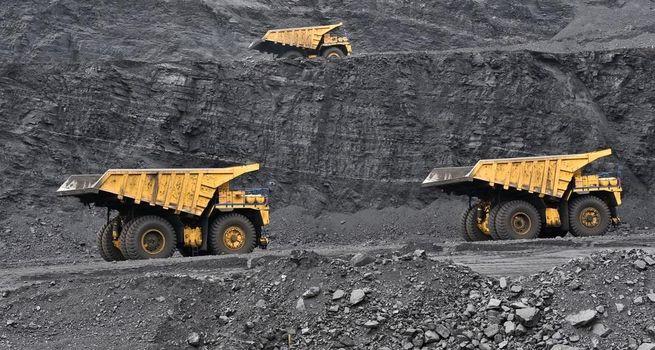
Yancoal delivered record production levels in 2025, with run-of-mine (ROM) coal reaching 67 million tonnes, up 7% from the previous year. Saleable coal production also rose to 50.8 million tonnes, marking a 6% increase. Attributable production for the year was 38.6 million tonnes, at the top end of guidance.
The company’s CEO highlighted the consistency of operations, pointing to record production in the fourth quarter and the highest first-half production in the past five years. This operational consistency helped offset some of the negative revenue impacts from declining coal prices.
Strong production results also reflect Yancoal’s ongoing focus on mine optimization, workforce productivity, and operational efficiency. The company achieved a 1% reduction in cash operating costs per tonne compared to 2024, demonstrating effective cost control even as volumes increased.
Margin and Cost Management
Operating EBITDA for FY25 reached $1.437 billion, yielding an EBITDA margin of 24% despite low international coal prices. Cash operating costs decreased slightly to $92 per tonne (excluding government royalties), benefiting from productivity gains and higher volumes.
However, the margin pressure is evident in the revenue contraction, highlighting the company’s dependence on commodity prices for profitability. While cost discipline helped mitigate some impact, the 17% decrease in realised prices weighed heavily on top-line results.
The company’s cost structure appears resilient, with cash operating costs remaining below guidance, but external price factors will continue to dominate earnings performance.
Cash Flow and Balance Sheet Strength
Yancoal ended 2025 with a substantial cash balance of $2.1 billion, reflecting operational cash generation. This positions the company well to manage potential volatility in coal markets while providing flexibility to pursue growth opportunities or return capital to shareholders.
Dividend payments remain a key part of the company’s capital allocation strategy. For FY25, Yancoal declared a fully franked final dividend of AUD 0.122 per share, bringing the total payout ratio to 55% when combined with the interim dividend. This approach aligns with its historical dividend policy, supporting investor income while maintaining balance sheet strength.
The company’s liquidity, combined with access to debt markets, provides a strong platform for continued investment and growth, including capital expenditure planned for 2026.
2026 Guidance and Strategic Outlook
Looking ahead, Yancoal projects attributable saleable production in the range of 36.5–40.5 million tonnes for 2026, building on 2025’s operational momentum. Cash operating costs are expected to range between $90 and $98 per tonne, allowing for moderate cost inflation while preserving cost competitiveness.
Capital expenditure is forecast at $750–$900 million, which includes projects deferred from 2025. This reflects ongoing investment in capacity maintenance and growth opportunities.
The company remains focused on operational efficiency, cost control, and maintaining liquidity to optimise shareholder returns. Management also aims to adapt product mix and supply agreements to current market conditions, seeking to optimise margins despite global oversupply concerns in coal markets.
Shareholder Returns and Capital Management
Yancoal has consistently returned capital to shareholders, with AUD 769 million returned during 2025 via dividends. The continuation of fully franked dividends demonstrates a commitment to shareholder income, even in periods of lower revenue.
The 55% payout ratio reflects a balanced approach, providing income while preserving cash for operational needs and future growth. The strong cash position also enables strategic flexibility for potential acquisitions, mine expansions, or other investment opportunities.
The company’s prudent capital management underscores the resilience of its balance sheet in navigating commodity cycles.
Market Implications and Investor Considerations
Yancoal’s FY25 results highlight the dual realities facing coal producers: operational efficiency and volume growth can offset some challenges, but revenue and earnings remain highly sensitive to commodity prices.
Investors are likely to monitor the following key variables in 2026:
- Realised coal prices and international market trends
- Execution of capital expenditure plans and production guidance
- Maintenance of cash operating costs and margin control
- Dividend sustainability and potential for additional shareholder returns
Yancoal Australia’s FY25 results exemplify the sensitivity of resource stocks to commodity cycles. While operational performance was record-setting, declining revenue due to lower realised coal prices led to a negative market response.
The company’s disciplined cost control, strong cash position, and continued dividend payments provide resilience, but near-term performance will remain heavily influenced by external market conditions. For investors, Yancoal represents a cyclical stock offering income through dividends, balanced against the inherent volatility of coal markets.


 Nov 13, 2026





 Please wait processing your request...